
So here’s how to choose a German shepherd puppy, or better to say what to look for in German Shepherd puppies while picking one for yourself. Adding a new German Shepherd puppy to your family is just really good thinking, although it takes a huge volume of planning and preparation ahead of bringing it to your home. Assuming that you are ready now and almost on the way to see the litter, we must say it would be unwise to go and pick the seemingly most beautiful one from the litter. Remember that you need to spend around 12 to 14 years with the one you choose today. It may turn out to be a very nice experience throughout life or maybe something like a nightmare, depending on whom you pick from a litter of 5-6 GSD puppies.
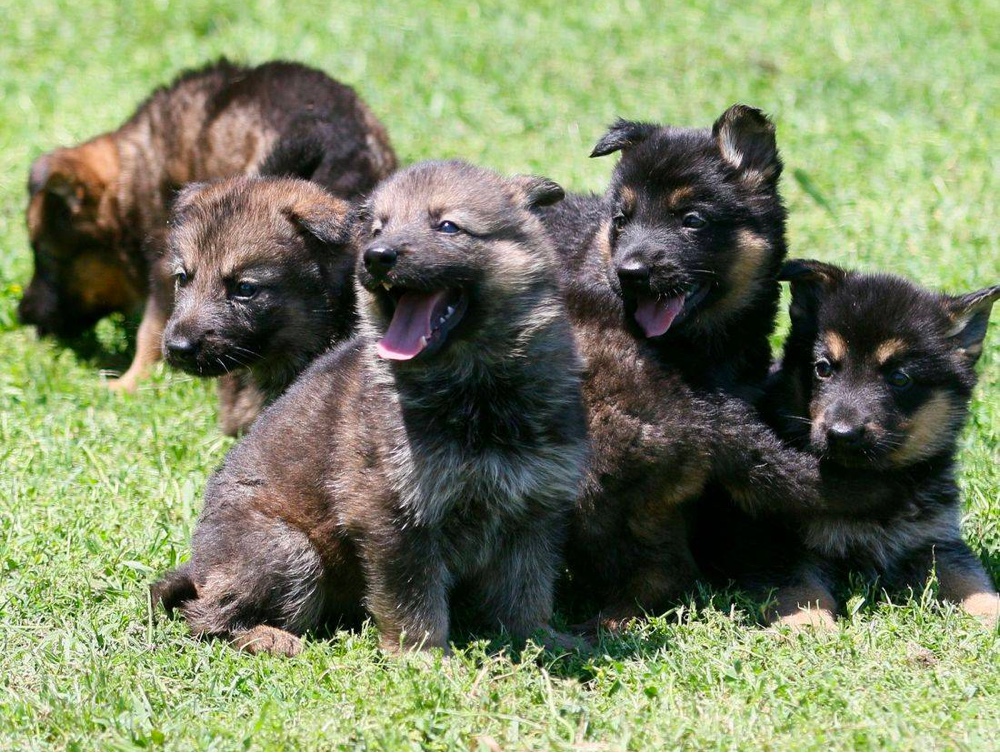
Picking a German Shepherd puppy is an art and a science both, as for picking puppies of any other dog breed! Temperament is what you need to look for in a GSD puppy, and it is so significant that you cannot give it an afterthought. Judging “temperament”, in a large dog like German Shepherd, is just the prime step when picking a puppy. This is what makes your adult German Shepherd Dog compatible or non-compatible with situations that you may come across at any point in time. A wise act in this regard is to watch out for all the puppies in a litter simultaneously. Before picking a puppy finally you are required to observe every single puppy together behaving with the other mates of the litter and with a stranger – you.
Avoid picking a shy German Shepherd puppy
A well-bred German Shepherd puppy should be assertive, inquisitive, and outgoing. Additionally, he should exhibit an unafraid approach toward everything and even a stranger. GSD puppies with steady nerves exhibit affection without a bit of restrained expression exhibited in their gesture and body language. It will be another unwise act if you let a cute face choose you. Don’t let the GSD puppy choose you. Many times you will find a puppy staying away quietly from the rest of his mates, and is not so playful. We won’t suggest you pick him in the first place, because he looks cuter than the rest. We won’t say he is mentally or health-wise not fit. Just carry out a small and easy experiment here. Take him aside and keep an eye to judge how he carries himself in such a situation. He should assert himself immediately if he is kept off his litter mates. He should come to you instantly without sniffing himself. A shy puppy won’t behave this way. A German Shepherd puppy that tucks his tail underneath and tries to keep a distance from a stranger , you cannot be a good choice as a pet. If shyness is in his gene, it is more than the world’s toughest job to bring him out of his shell, and the result can to detrimental for you and your family and other animals as he would grow as a shy adult German Shepherd Dog. Smart puppies will trust you in the first instance.
Choosing the right breeder for the right GSD puppy
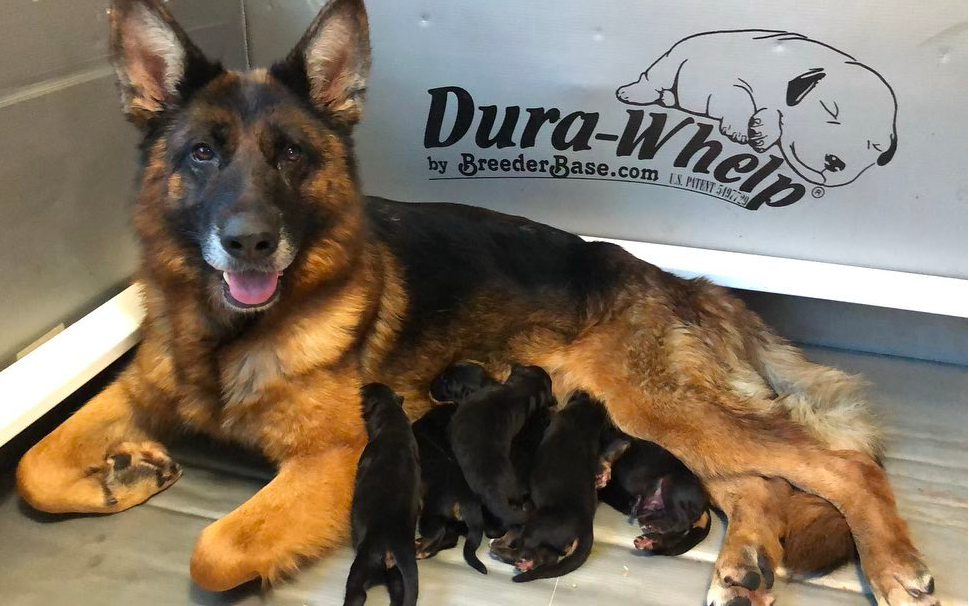
Shyness can be a breeding fault. Similarly, faulty breeding can generate a lot of genetic disorders that can put you in deep soup in the future, as today’s cute little puppy turns out to be a ferocious German Shepherd Dog with behavioral problems and/or other health issues, including, congenital heart disease, structural problem, digestive problems, etc. Choosing the right breeder is a top priority. Look for a breeder who has real technical know-how of German Shepherd breeding. Breeding for money has to be discouraged in the first place. A really knowledgeable GSD breeder will stress finding the right owner for his/her puppies than simply earning some dollars. Judging a breeder is important. Check out his dogs and judge how he/her keeps his animals. Check out both the damn and the sire of the litter. Gather all information about the parents and check out all documents of them. A reliable German Shepherd breeder is the one who will be interested in revealing everything you may want to know about his breeding program to his present litter.
German Shepherd puppies should be structurally and physically sound
All puppies in the litter presented before you should be healthy and structurally sound. Let all the puppies move around at their own will. Watch out if anybody is slightly limping. Any indication of limping will arise a whole lot of doubts. See if they are strong-boned, have the right angulations, have proper stifle curvature, good heads, good disposition, and desired expression. The right tail set, correct ear set, and coat condition are of high importance.
The general criterion to check while choosing German Shepherd Puppies
Coat condition is an indication of internal health. Poor coat indicates bad internal health. Reject puppies with running eyes and noses, bad breath, fragile health, thin bones, skin rashes, and non-energetic.
Disclaimer: PetVR shares general information based on our contributors’ firsthand experience with German Shepherds — it is not veterinary advice. Always consult a licensed veterinarian about your dog’s health, diet, or behavior. Read our full disclaimer.
The health tests to ask about, by name
This is the section that separates a good purchase from an expensive lesson. Asking “are the parents healthy?” gets you a yes from everyone. Asking for specific tests gets you either paperwork or a change of subject, and both answers are useful.
| Test | What to ask for |
|---|---|
| Hips | An OFA grade on both parents. OFA classifies hips into seven categories: Excellent, Good, Fair, Borderline, Mild, Moderate and Severe (retrieved 2026-08-12). Ask for the certificate number, not a photo |
| Elbows | Graded separately. OFA notes it “will not certify a normal elbow until the dog is 2 years of age” (retrieved 2026-08-12), so check the age at certification |
| Degenerative myelopathy | A DNA test result. Results are reported as N/N normal, A/N carrier, A/A at risk |
| Hemophilia A | A DNA test. Important because a carrier female passes every clotting test and is invisible without it |
| Pituitary dwarfism | A DNA test for the LHX3 mutation. Simple recessive, so carrier to clear produces no affected puppies |
Each of those has a full article on this site: hip dysplasia, elbow dysplasia, degenerative myelopathy, hemophilia A and pituitary dwarfism.
One thing worth understanding about carriers. For simple recessive conditions, a carrier bred to a tested-clear mate produces no affected puppies. So a carrier parent is not automatically a red flag. What matters is that the breeder knew the status before planning the mating.
What to watch for when you visit
Go in person, and go to where the puppies actually live.
- See the mother with the litter. Not a photo, not “she is at the vet”. Her temperament matters and so does how she is with her puppies.
- Look at where they are raised. Puppies reared in a home environment meet household noise, floors and handling during the period when that matters most.
- Watch the whole litter for a while rather than picking the one that runs at you first. The boldest puppy is not automatically the best fit, and the one hanging back may simply have just woken up.
- Handle the puppy gently and see how it recovers from mild restraint. You want a puppy that settles, not one that never objects at all or one that panics.
- Check the basics: clear eyes and nose, clean rear, no coughing, no pot belly, reasonable body condition.
- Ask what socialisation they have already had. Surfaces, sounds, people, car travel. This window does not reopen.
Walk away if: you cannot see the mother, you are asked to meet in a car park, several litters of different breeds are available at once, the price drops when you hesitate, or you are pushed to decide today.
Questions a good breeder will welcome
- Can I see the health test certificates for both parents, with numbers?
- What are you breeding for, and what do you want these puppies to go on and do?
- Have you bred this pairing before, and how did those puppies turn out?
- What happens if I cannot keep the dog in three years?
- What is in the contract, and can I read it before I pay?
- What have the puppies been exposed to so far?
- Which puppy do you think suits my household, and why?
And notice whether the breeder asks you questions. Someone placing a dog into the right home wants to know about your household, your experience and your schedule. Someone moving inventory does not.
Still deciding which type of German Shepherd suits you? Our guide to the different German Shepherd lines and types and our working line guide cover the differences that matter most.

 How to Teach Your German Shepherd Dog to Sit on Command