Dwarfism in German Shepherd Dogs is defined as a state in which the development of the dog is rather slow or delayed. In other words, dwarfism in German Shepherd Dogs and any other dog breeds is a condition of abnormally small body stature, which is characterized by a change in proportions of the body parts. However in German Shepherd Dogs and other dog breeds, there are very little-known cases of dwarfism that yield a close to what the perfectly proportioned structure of a dog is, but a significantly downsized version. Although all types of dwarfism originate from mal functional glands, an acceptable word for this kind of condition should be proportional or pituitary dwarfism in German Shepherds.
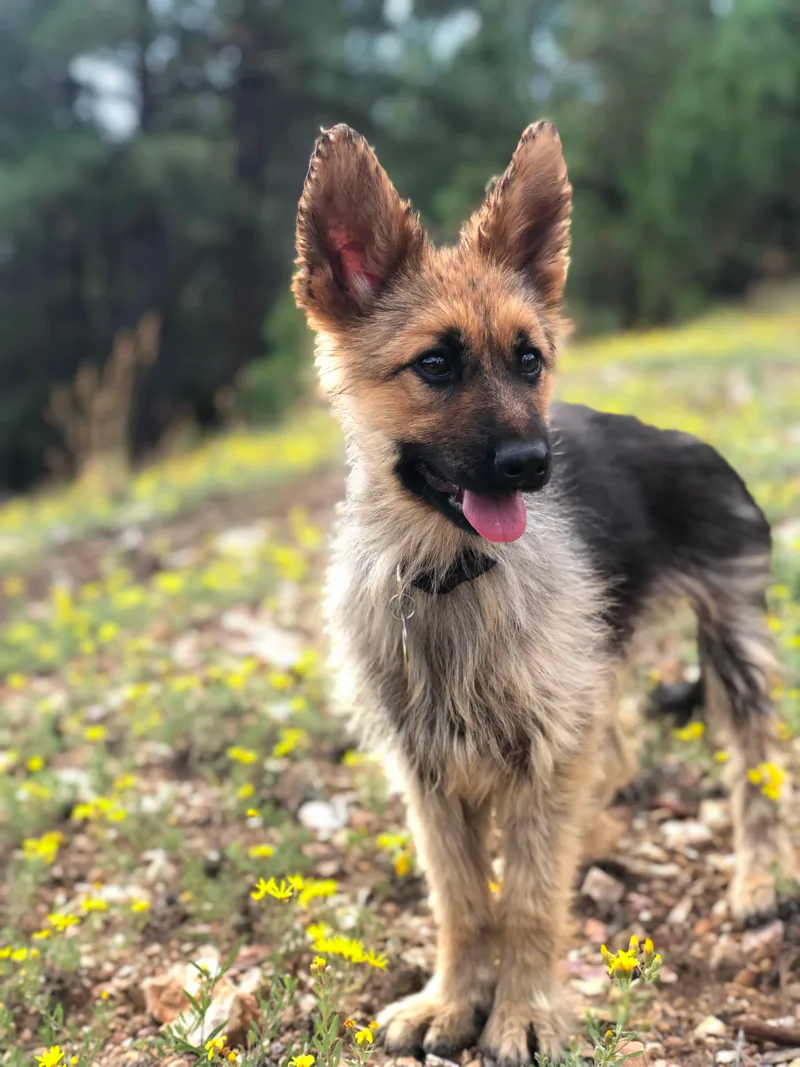
As a matter of fact, most people – especially German Shepherd Dog owners, do not know about this condition, called Pituitary Dwarfism in German Shepherds, although this is not very rare, yet not too commonly found either. The well-researched breeding program is highly recommended hereby to get rid of Pituitary Dwarfism in GSD. Too much line breeding programmed by some breeders has produced awesome and highly acclaimed specimens, but on the other level, the incidence of Pituitary Dwarfism in GSD had been shooting up in many parts of the world.
There are various kinds of dwarfism. Pituitary Dwarfism is in allusion to the pituitary gland in the body. The pituitary glands in German Shepherd Dogs regulate certain hormones in the animal’s body. The condition, Pituitary dwarfism in GSD is reduced growth triggered due to hormonal problems in the dogs, which means it is mainly caused due to malfunctioning of the pituitary gland of the dog.
What owners notice, and when
An affected puppy is usually normal at birth. The problem shows up as the litter starts to diverge.
Merck describes a “slower growth rate compared with littermates” becoming apparent after about 2 months (retrieved 2026-08-12). That comparison is the diagnostic gift here: you are not judging a puppy against a chart, you are watching it fall behind siblings you can see.
The coat is the other tell, and it is the distinctive one. Merck lists “retention of puppy coat, and lack of primary guard hairs”, with “bilaterally symmetrical alopecia” developing gradually (retrieved 2026-08-12).
In plain terms: the soft, fluffy puppy fur never gets replaced by the coarse adult guard hairs, so the dog keeps a woolly juvenile coat. Then hair is lost, evenly on both sides of the body, usually starting on the neck and flanks while the head and legs keep their fur. That symmetry is important, because it is what separates a hormonal cause from parasites, allergies or infection, which tend to be patchy or itchy.
So the combination to watch for is: a puppy that stops keeping up with its littermates, keeps its baby coat, and then loses hair evenly on both sides. Any one of those alone means little. Together they are a specific picture.
It is not only about size
The name focuses on growth, and that undersells the problem.
Panhypopituitarism means the pituitary is failing broadly, not only in producing growth hormone. Merck notes secondary hypothyroidism and hypoadrenocorticism among the consequences (retrieved 2026-08-12).
The pituitary is the gland that instructs other glands. When it develops abnormally, the thyroid does not get told to work properly, and the adrenal glands may not either. That is why an affected dog is not simply a small dog. It may be lethargic, cold-intolerant and poorly muscled for reasons that have nothing to do with its height.
It also means treatment is not just about growth. Merck lists levothyroxine supplementation alongside growth hormone or progestagen therapy (retrieved 2026-08-12), and the thyroid replacement is often the part that changes how the dog feels day to day.
This one really is a German Shepherd condition
Many conditions get labelled as breed problems on thin evidence. This is not one of them.
Merck states that juvenile-onset panhypopituitarism, the formal name for pituitary dwarfism, “occurs most frequently in German Shepherd Dogs“, and has also been reported in Spitz-type dogs, the Miniature Pinscher and the Karelian Bear Dog (Merck Veterinary Manual, retrieved 2026-08-12).
The cause is known and specific. Merck: “a mutation in the LHX3 gene, which encodes for a transcription factor necessary for pituitary development, is responsible. It is inherited as a simple autosomal recessive trait” (retrieved 2026-08-12).
Simple autosomal recessive means two things that matter enormously if you breed.
First, a puppy needs two copies to be affected, one from each parent. Second, a dog with one copy is a carrier: completely normal in size, appearance and health, and completely invisible without a test. Two healthy-looking carriers bred together are the usual way an affected puppy arrives, and it is why this appears in litters where nobody expected it.
And there is a DNA test. Merck notes that “genetic tests for the LHX3 mutation in several breeds are available” (retrieved 2026-08-12). That single fact is what makes this condition avoidable in a way most of the others on this site are not.
Brief Insight of Pituitary Dwarfism
In German shepherd dogs, dwarfism is a rare occurrence, although not too rare. Responsible breeders around the world have pulled down the chances of occurances of Pituitary Dwarfism in German Shepherds, through more scientific breeding programs and selective breeding strategies. The pituitary dwarfism found in the German shepherds is possibly a polygenic disarray of threshold nature, most of the researchers though believe it as an outcome of a simple autosomal recessive characteristic. In most species, the recessive gene may remain hidden for many generations. When two identical recessive genes are paired, the attribute of dwarfism showcases itself in the individual dog. Genes always function in pairs, and also only then when both the pair of genes is of the recessive alleles. The existence of one recessive gene in the individual does not affect its characteristics, the dominant partner dictates the terms or dominant phenotype characteristic of the individual. External disorders are not the only abnormality found in the pituitary dwarfs. Blood chemistry test of these specimens shows that some hormones are completely absent or may be present at a very low level than the normal requirement. The thyroid is governed by the pituitary. The thyroid gland controls the maturity process, metabolism, development, behavior, and physical and mental activities. This in turn can also be affected due to malfunctioning of the pituitary.
Pituitary Dwarfism in German Shepherds
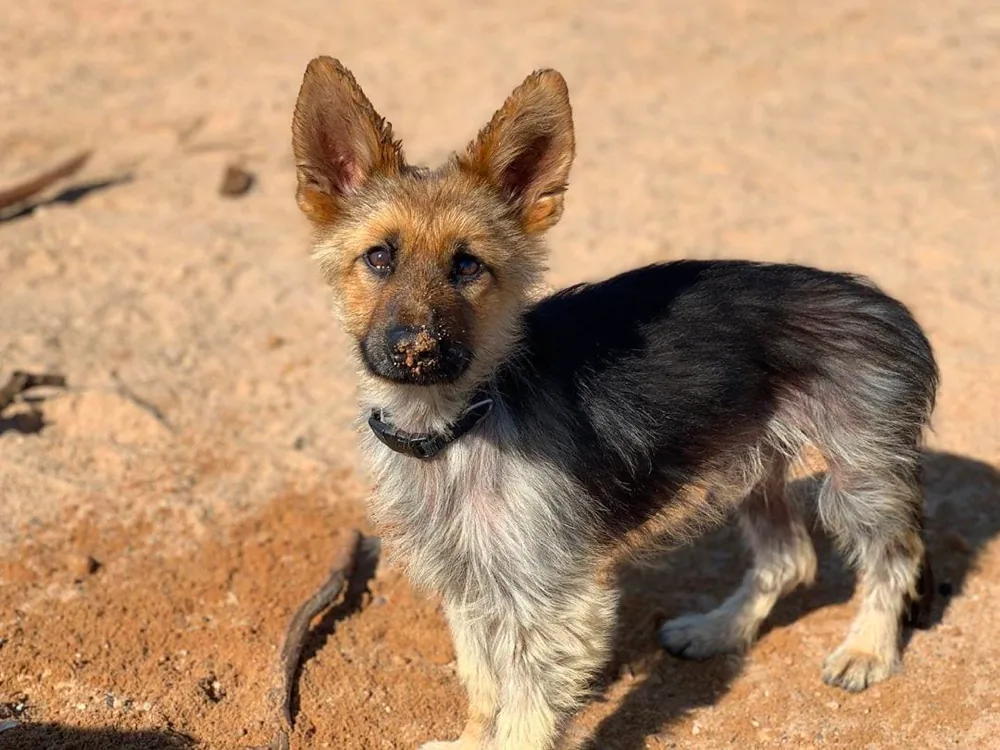
One problem we can anticipate in an attempt to breed German Shepherds with Pituitary Dwarfism, besides possessing a low fertility level, is whelping. Pituitary dwarfs in the initial stage of their life start off at normal size, which for German Shepherds is one pound. The size may vary by five to four ounces depending on the size of the litter. If a dwarf bitch is impregnated, artificially, of course, by a normal-sized GSD male, some of the puppies could be of normal size and the bitch may not be able to pass them or possibly even carry them without damage to them or herself. If a normal-sized carrier female German Shepherd is bred to a dwarf GSD male, it shouldn’t cause more of a problem than when two dwarf dogs with recessives genes are combined through matting. We have not yet come across any breeder, who has carried out such a mating.
It is quite usual for a GSD bitch to give birth to ten pounds of puppies and to carry the extra weight of fluid and placental tissues. For female German Shepherds with Pituitary Dwarfism, to carry this would be certainly impossible. The size and weight of pituitary dwarfs vary to a great extent. At birth, sometimes, the German Shepherd Dog and any other breed come out seemingly normal, with normal size and body weight, beautiful temperaments, active… apparently healthy as a whole. with maturity at about a few weeks or months, the symptoms of Pituitary Dwarfism become prominent. The condition becomes prominent when the growth plates close and the skeletal system fails to grow proportionately, which during further maturity stops growing absolutely. The body weight ceases to increase too. The little GSD would weigh far lower than a normal litter mate at maturity. Interestingly the experimentation with Pituitary Dwarfism in German Shepherds has shown that the eyes of dwarf dogs are highly sensitive to bright light. I have been studying the notes of Mr. Fred Lanting, who has been working with German Shepherds and have developed a good knowledge base on Pituitary Dwarfism in German Shepherd Dogs. Mr. Fred Lanting said in this regard, “there was something that had not appeared in the scientific literature but which I noticed in this litter, as well as in photographs of other litters: pituitary dwarfs seem to squint in bright sunlight more than do their normal siblings. Another facial characteristic of miniature Shepherds is a fox-like appearance, arising out of wide-set ears. I believe this to be a result of disrupted proportions of the skull vs. base of the pinna (ear shell), which to some extent is seen in Welsh Corgis also. A somewhat long and pointed muzzle is due partly to a shortening of the skull and, in some individuals, a slight overbite.”
The important thing every owner and breeder should know is that dwarfs are just the peak of an iceberg. The huge majority of hypopituitarism in German shepherd dogs (pituitary dwarfism in GSD) does not manifest itself as dwarfs but as stillborn and fading puppies. I believe GSD which produces dwarfs should have their breed examination written apart and to get rid of this they should be removed from the breeding programs honestly by the registration authorities by not registering their progeny. The instance for this kind of registration refusal already exists for “Hemophilia A”, and I would be glad to see this is also maintained for pituitary dwarfism in GSD and all other dog breeds.
Chance or Risk of Pituitary Dwarfism in GSD
An analysis of the Australian data has shown the expected chance of the birth of dwarf dogs, and that is 2 dwarfs out of 1000 puppies (0.2% chance), if “any male dog” is bred to “any female dog”, at random, without even sparing though over the science of breeding dogs. Moreover, it has also been reported that the recurrent risk for a good male or female bred to any dam or sire of a dwarf dog is 7 per 1000 (0.7% chance). The analysis of the said Australian data also shows that the recurrent risk for a parent of a dwarf bred to a half-sibling of a dwarf is 272 per 1000 (27.2% chance). The risk of a dwarf being bred to a parent of a dwarf is 235 per 1000 (23.5% chance).
How it is diagnosed
Merck lists the tools as hormone assays, challenge testing with exogenous thyrotropin or adrenocorticotropin, an IGF-1 assay, and genetic testing (Merck Veterinary Manual, retrieved 2026-08-12).
In practice that usually runs in two stages. Blood tests establish which hormones are missing and how the glands respond when prompted. The DNA test then confirms the underlying cause, and it is the only one of these that can also be run on a healthy relative.
Worth asking your vet directly whether the LHX3 test is appropriate, particularly if a breeder has other dogs from the same line.
Treatment, honestly framed
Treatment helps and it does not cure. Merck records that “affected dogs have shortened lifespans” (retrieved 2026-08-12).
What treatment does achieve is real: thyroid replacement addresses the lethargy and coat, and hormone therapy can improve growth and skin. Many affected dogs live as comfortable, much-loved family dogs. But nobody should promise you a normal life expectancy, and a vet who is careful with you will say so early.
If you have taken on an affected puppy, the practical asks are ongoing medication, regular monitoring of thyroid levels, and attention to skin care since the coat abnormality persists. Ask your vet what the monitoring schedule looks like and what it will cost annually, so the commitment is clear at the start rather than discovered later.
For breeders and buyers: this one is preventable
Most of the inherited conditions on this site can only be reduced in likelihood. This one can be designed out, because the inheritance is simple and the test exists.
The arithmetic of a simple recessive:
| Mating | Outcome |
|---|---|
| Carrier × Carrier | 25% of puppies affected, 50% carriers. This is the mating to avoid |
| Carrier × Clear | No affected puppies. Around half will be carriers |
| Clear × Clear | No affected puppies, no carriers |
Note the second row. A carrier is not a dog that has to be removed from a breeding programme, and treating it that way narrows a gene pool for no good reason. A carrier bred to a tested-clear mate produces no affected puppies. What matters is knowing the status before the decision, not after the litter.
If you are buying a puppy: ask whether the parents have been DNA tested for LHX3 and ask to see the results. Ask whether pituitary dwarfism has ever appeared in the line. And if a puppy in the litter is visibly smaller and still woolly at three or four months, ask about it directly rather than assuming it is the runt.
What else makes a puppy grow slowly
Small size alone is not dwarfism, and the alternatives are common.
Poor nutrition, a heavy parasite burden, and simply being the smallest of a large litter all produce a puppy behind its siblings. Exocrine pancreatic insufficiency causes weight loss despite a big appetite and shows up in young adult German Shepherds. Chronic illness of almost any kind slows growth.
The features that point specifically at pituitary dwarfism are the proportionate smallness, the retained puppy coat and the symmetrical hair loss. A puppy that is small but growing steadily, with a normal adult coat coming through, is a different question.
Our German Shepherd growth chart gives you something to compare against, and our guide to choosing a puppy covers what to ask a breeder about health testing generally.
 White German Shepherd: History, Temperament, Health and Care