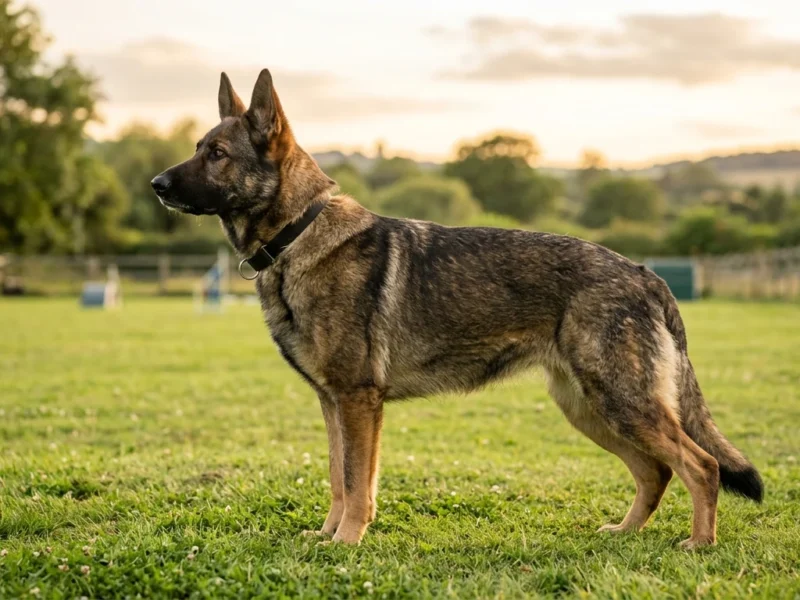
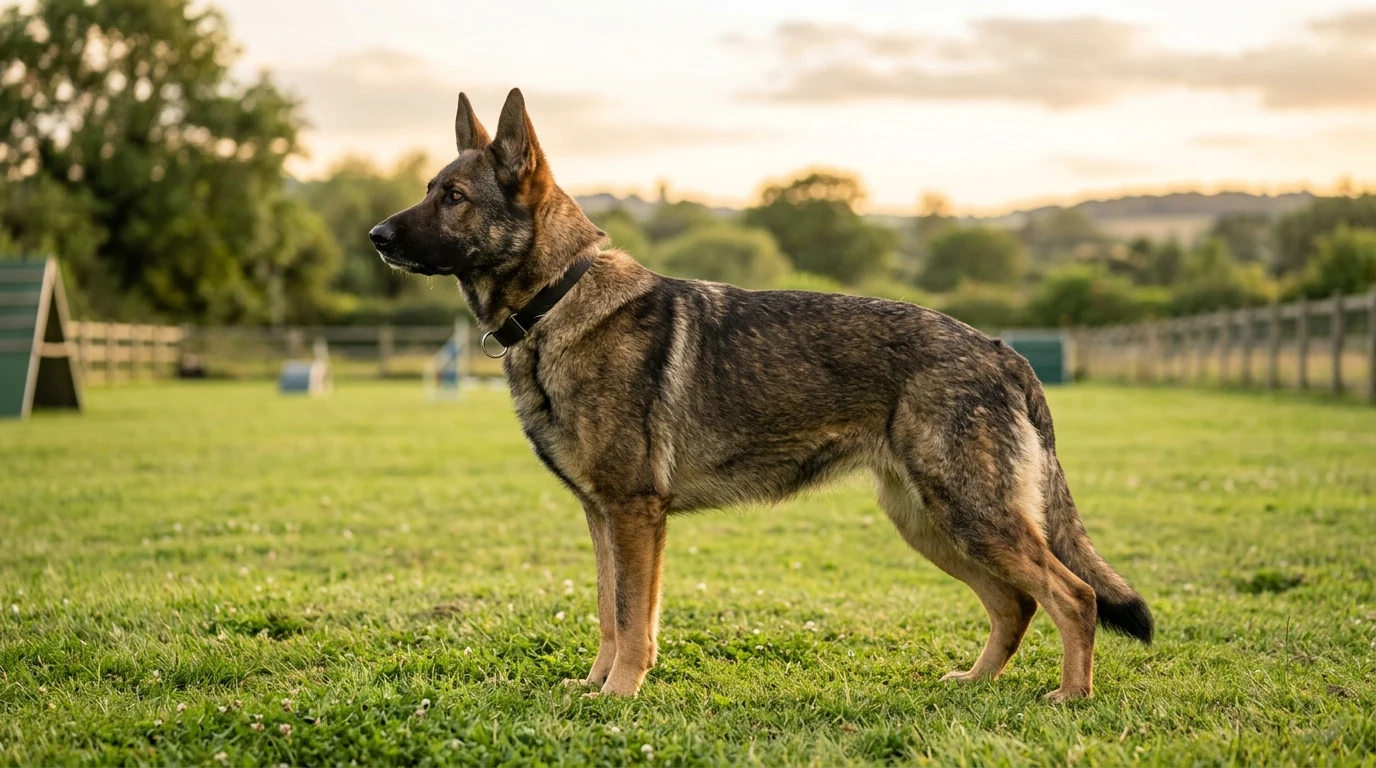
A working line German Shepherd is a German Shepherd bred for jobs, not for the show ring. Maybe a puppy is on offer, or a breeder has your deposit request open. In that case the honest answer up front is this: these dogs are wonderful for the right home, and a problem for every other kind. This guide gives you the facts to tell which one you have.
Below you will find a real side-by-side comparison of working, West German show, and American show lines. In addition, we cover verified price bands from US breeders, life-expectancy data, and a plain-spoken decision framework at the end.
What is a working line German Shepherd?
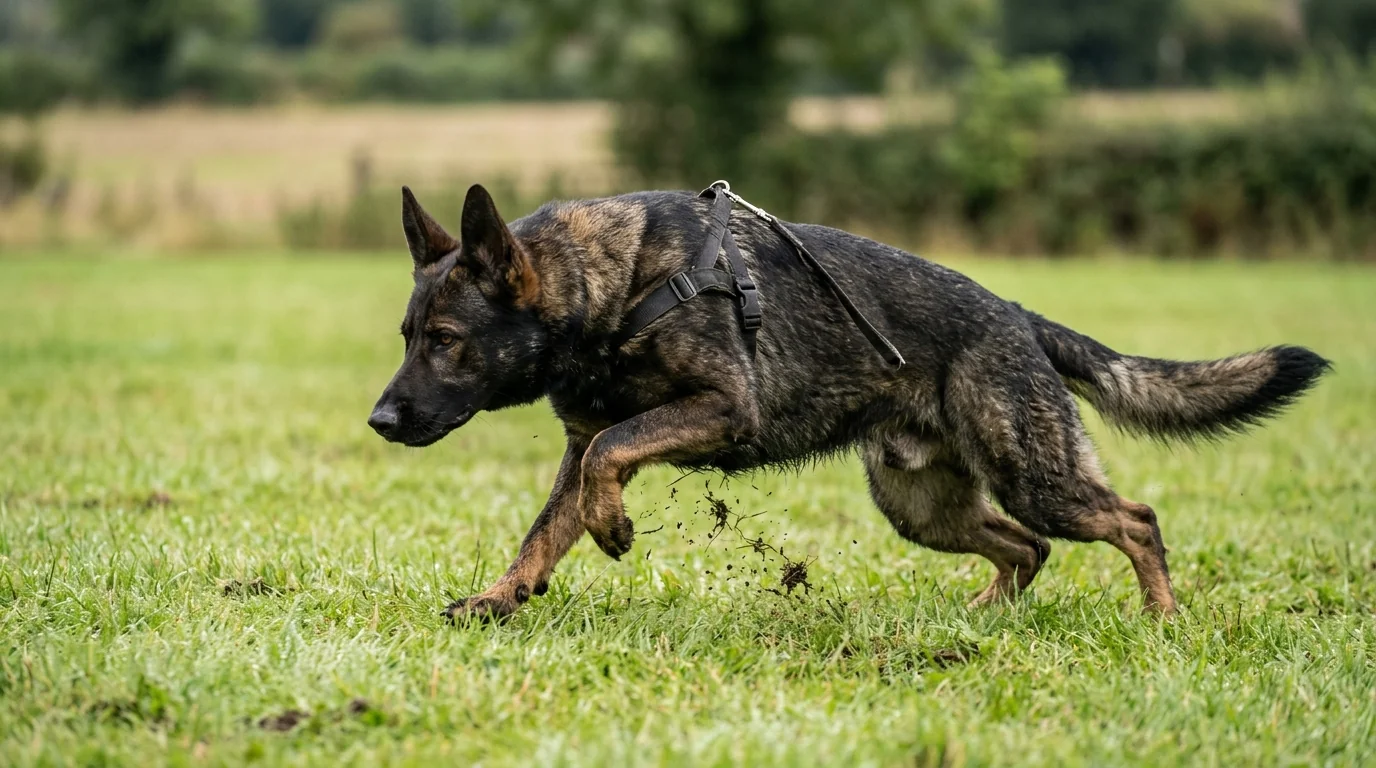
A working line German Shepherd is one bred to perform a task. That task can be police work, protection, herding, tracking, search and rescue, or detection. The parents are usually titled in a sport or a real-world job. Notably, the breeder selects for drive, nerve, and health rather than for coat, angulation, or ring wins.
The German Shepherd Dog breed itself was founded in 1899 by Max von Stephanitz through the Verein für Deutsche Schäferhunde in Germany (American Kennel Club, breed history, retrieved 2026-08-11). Notably, the original goal of the breed was a working herding and utility dog. In other words, working line breeders are continuing that original project. In contrast, show line breeders followed a different priority once conformation showing became popular after World War II.
If you are wondering whether a working line dog is a “real” German Shepherd, the answer is yes. In fact, all five recognized working lines are registerable as German Shepherd Dogs with the American Kennel Club. Registration only requires that the parents are registered and the breeder submits the paperwork. Importantly, AKC registration turns on verified parentage, not on which side of the split the dog comes from (AKC litter registration requirements, retrieved 2026-08-11).
How is a working line different from a show line?
Working lines and show lines started diverging around fifty years ago. As a result, they now look and behave differently enough that many people cannot tell they are the same breed. Similarly, the two show branches, West German show and American show, also differ from each other. Below is the plain comparison.
| Trait | Working line | West German show line | American show line |
|---|---|---|---|
| Primary breeding goal | Job performance (police, sport, herding, SAR, protection, detection) | Balance of looks and workability within the German SV system | Conformation ring wins |
| Coat | Sable most common; also solid black and black-and-tan; medium-length working coat | Rich red-and-black saddle; medium length | Black-and-tan saddle, often longer coat |
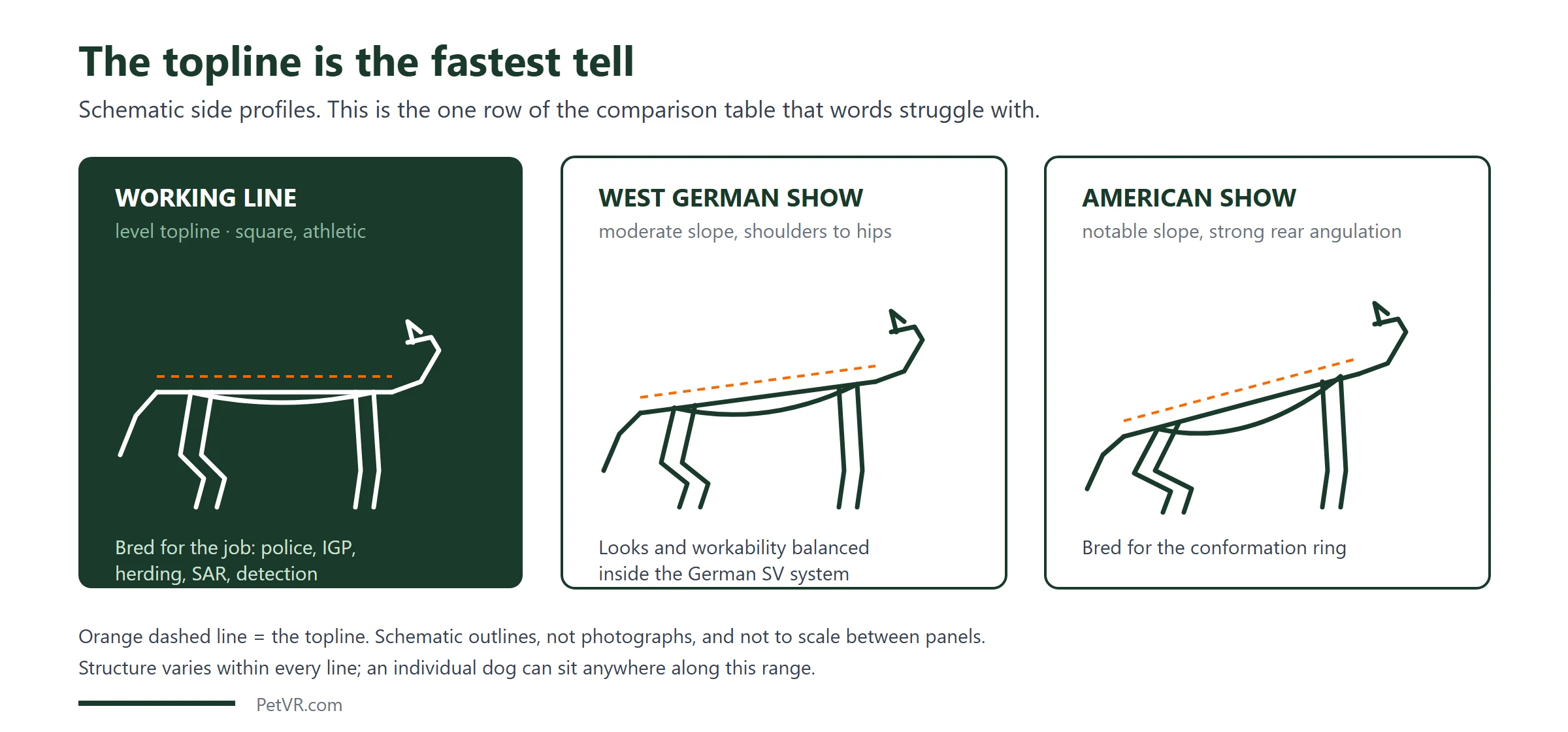
| Body shape | Straighter back, level topline, powerful hindquarters, athletic-square build | Moderate slope from shoulders to hips | Notably sloped back with strong rear angulation |
| Adult weight, males | ~66 to 88 lb, lean | ~66 to 88 lb | ~75 to 95 lb, often heavier build |
| Drive | Very high prey and defense drive; high biddability | Moderate drive, workable | Lower drive, milder temperament in most lines |
| Exercise need per day | Two hours minimum plus mental work | 60 to 90 minutes plus training | 45 to 60 minutes plus training |
| Ideal home | Sport handler, working handler, or an athletic family that will train daily | Active family with training experience | Family pet home with a fenced yard and regular walks |
The table sets the three line groups side by side because no single source in the current search results does, and because the differences between them are what most buyers are actually trying to resolve. Weight and exercise figures are typical ranges rather than absolutes.
A note on the price row that used to be here. This table previously carried US price bands, presented as though they had been compiled from the AKC breed standard and the OFA registry. Neither of those bodies publishes prices, so that attribution was wrong and the rows have been removed. Prices are discussed further down this page, where they can be given with the caveats they need.
The trait that matters most in a home is the middle one: drive. A working line dog is not a “more energetic” pet dog. It is a dog engineered to chase, hold, alert, retrieve, and stay focused on a task. As a result, it will find something to do with that engineering whether or not you have given it a job.
The five recognized working lines
When breeders and trainers say “working line German Shepherd” they usually mean one of five sub-lines. In other words, each has a different origin country and slightly different look and style, but all fall under the same working-line umbrella.
| Sub-line | Origin | Typical use today | US availability |
|---|---|---|---|
| DDR / East German | Former East Germany, pre-1990 border and military breeding | Protection sport, personal protection, SAR | Moderate. See our full DDR guide |
| Czech | Pohranicni Straze kennel, Czechoslovak border patrol. See our full Czech guide | IGP sport, prey-driven work | Moderate; often imported |
| West German working | German SV sport (Schutzhund, now IGP) | Sport, police, family working dog | High. Most common working line sold in the US |
| Belgian | Belgian KNPV pipeline | KNPV, police, protection | Low; usually imported |
| Slovak | Slovakian working programs | Police, detection | Rare in US pet homes |
If a breeder cannot tell you which of these lines the puppy comes from, that is a red flag on its own. In contrast, reputable working-line breeders name the line, the kennel prefix, and usually the titled parents on the same first page you visit.
Temperament and drive: what “high drive” actually means
The community answer to “what are these dogs like” is direct. A working line German Shepherd wants a job. Consequently, a dog with nothing to do will find its own work in your couch, your baseboards, or your neighbor. That is not marketing. The American Kennel Club scores every breed on “Mental Stimulation Needs” and warns that purpose-bred dogs denied the brain exercise they need “will create their own projects to keep their minds busy” (AKC breed profile, retrieved 2026-08-11).
Specifically, drive breaks down into three components you will see in daily life. Prey drive is the pull toward motion. For example, a ball, a squirrel, a running child, a bike, and a rolling ping-pong ball all fire the same circuit. Defense drive is the response to a threat, real or perceived. In particular, it is what makes the breed good at protection work and also what makes an under-socialized dog reactive at the door. Biddability is the desire to work with a handler. Working lines score high on all three. As a result, a trained person can channel that intensity into real work. In contrast, a novice owner without a plan will find the dog miserable and unmanageable.
Additionally, two calmer breed traits show up. Working lines tend to be aloof rather than friendly with strangers. In addition, they usually bond tightly with one or two family members rather than with everyone equally. That said, neither trait is aggression. Both need to be shaped by early, positive exposure to people, sounds, and other dogs. Consequently, an under-socialized puppy between 8 and 16 weeks of age can grow into a fear-reactive adult. That is true even with the best training later.
If you are used to a pet-line German Shepherd or a friendly Labrador, the difference in intensity will shock you. On the other hand, coming from a Belgian Malinois or a working border collie will feel different. Notably, the working German Shepherd will feel more handler-focused and slightly less frantic, though not by a wide margin. Meanwhile, modern positive-reinforcement methods are the training approach these dogs respond to. In contrast, the older dominance model, sometimes called pack theory, has been rejected by current veterinary behavior bodies and does not belong in your toolkit.
How to tell if a puppy is truly working line
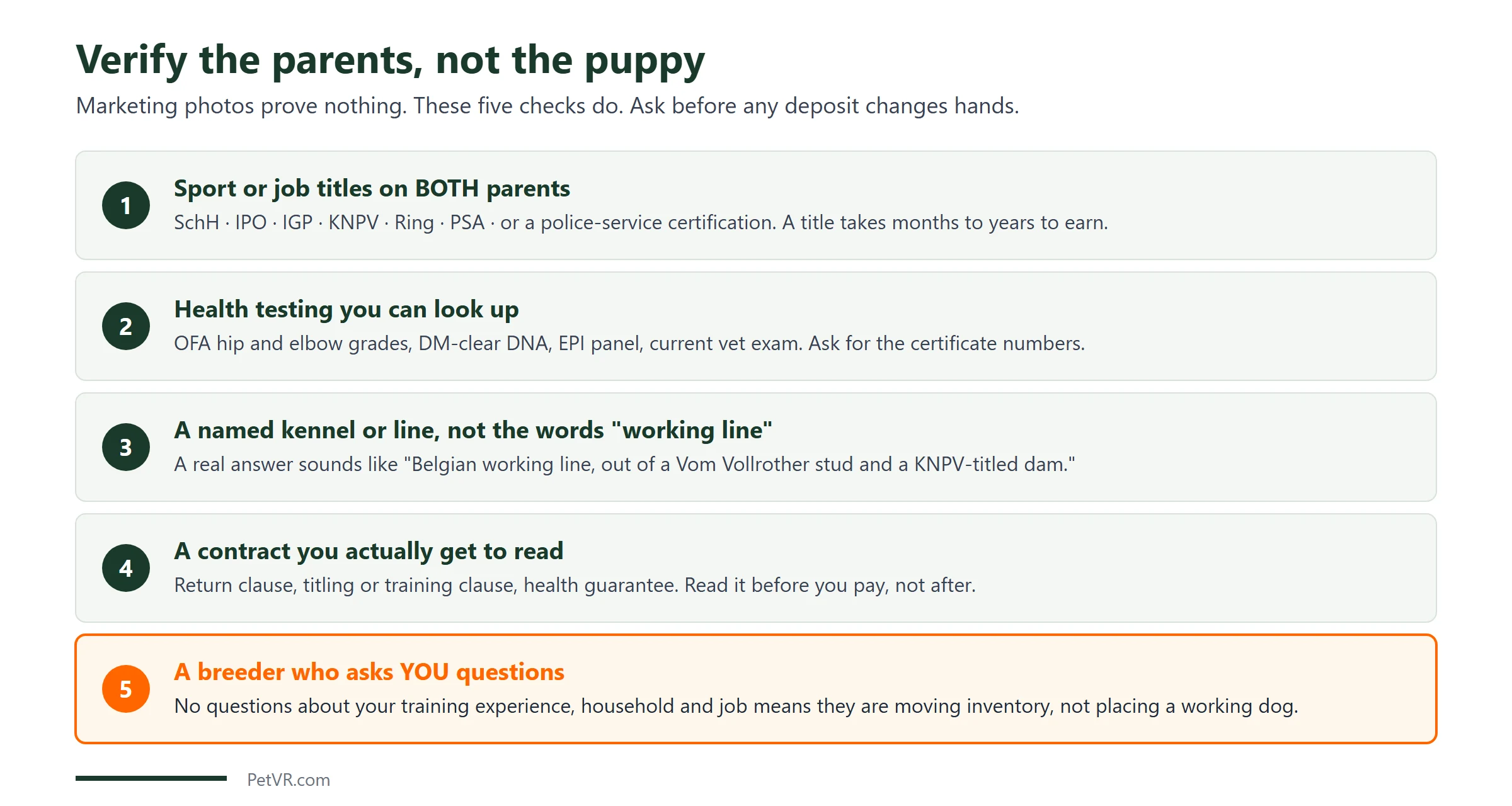
Marketing photos will not tell you. Titles, pedigrees, and a breeder who welcomes questions will. Here is what to look for on the parents, not the puppy.
- Sport or job titles on both parents. Working line ancestors typically carry SchH, IPO, IGP, KNPV, Ring, PSA, or a police-service certification. A title takes months to years of training. As a result, a puppy with two titled parents is more likely to inherit trainable working ability than one with none.
- Health testing you can verify. OFA hip and elbow grading, DM-clear DNA test, EPI panel, and a current veterinary exam. The Orthopedic Foundation for Animals hip grades run through seven grades: Excellent, Good, Fair, Borderline, Mild, Moderate, and Severe (OFA hip dysplasia grading, retrieved 2026-08-11). Ask for the certificate numbers so you can look them up.
- Named kennel or line, not just “working line”. Reputable breeders will tell you the specific pedigree, for example “Belgian working line, out of a Vom Vollrother stud and a KNPV-titled dam.”
- A contract you actually get to read. Working line contracts often include a return clause, a titling or training clause, and a health guarantee.
- A breeder who asks you questions. If the seller does not ask about your training experience, your household, and your job, they are moving inventory, not placing a working dog.
For a fuller vetting process, our guide on how to find a reputable German Shepherd breeder walks through the same checks in more depth.
How much does a working line German Shepherd cost?
Be clear about what the following figures are before you use them. There is no registry, breed club or veterinary body that publishes what a German Shepherd puppy costs. The ranges below are asking prices observed on breeder listings that also show titled parents and health test results. They are a rough orientation, not a measurement, they move with region and year, and you should treat any single number on any website, including this one, as something to check rather than something to rely on.
The reliable way to get a real figure is to ask three breeders in your own region what they charge and what it includes. With that said, working line pricing in the US in 2026 broadly splits into three tiers.
- Pet-quality puppy from a reputable working-line breeder: $2,500 to $4,500. No conformation or titling obligation. Parents are titled; puppy is placed on a limited registration with a spay or neuter contract.
- Green-titled prospect or promising sport puppy: $4,500 to $8,000. The puppy is selected as suitable for sport or working evaluation. Handlers typically pursue an IGP or PSA title with it. In addition, most listings include starter training or health guarantees.
- Import, fully titled, or working-tested adult: $8,000 to $15,000 and up. Adult dogs already titled overseas or already certified for police, protection, or detection work. Prices can pass $30,000 for a fully deployed police prospect.
Alternatively, backyard breeders and unregistered sellers may offer working line puppies for $500 to $1,500, and rescues occasionally have working line adults for a $300 to $600 fee. However, the lower price on a backyard puppy usually turns into higher costs later, because the parents are untested for hips, temperament, and health. Meanwhile, the rescue path can be excellent for the right handler. In contrast, it is difficult for a first-time GSD owner. The reason is that the dog will arrive with an existing training history that must be respected.
In addition, plan on $2,000 to $3,500 in the first year for food, crate, vet visits, and training classes, plus $1,500 to $2,500 per year afterward. Notably, working line dogs eat more than pet lines because they burn more calories, and they benefit from structured group classes for the first two years.
What actually moves the price
These factors are checkable in a way the number is not, which makes them the more useful thing to know:
- Health testing on both parents. Hip and elbow grades and the DNA panel. This is the cost worth paying for, and the first thing to ask for.
- Titles and working results on the parents. This is where the top of any range comes from, and for a pet home the difference may buy you nothing you need.
- Import and transport, which can be a large share of the total and says nothing about the dog.
- What is included: vaccinations, microchip, registration paperwork, and what happens if the dog later develops a condition the parents were screened for.
One warning that does not depend on price at all. A puppy priced far below everything else you have been quoted is a reason to ask more questions, not fewer. The usual explanation is that the health testing which makes up most of a responsible breeder’s cost was not done.
Health and lifespan
The typical working line German Shepherd lives 9 to 13 years. That falls in line with the breed as a whole and often at the upper end of the reported range. The reason is simple: working line breeders select for structural soundness, and dogs with early joint failure cannot pass their evaluations. As a result, well-bred working lines often carry cleaner hip and elbow scores than heavily-angulated show lines.
The main breed-specific health issues to know about are:
- Hip and elbow dysplasia. The single most common orthopedic problem in the breed. Buying from a breeder whose parents have OFA scores of Fair or better on hips is your best prevention. Our German Shepherd hip dysplasia article covers signs and options in depth.
- Degenerative myelopathy (DM). A progressive spinal-cord disease linked to a mutation in the SOD1 gene (Embark Veterinary, retrieved 2026-08-10). Notably, it is genetic, not autoimmune. A responsible working-line breeder tests both parents. Because the variant is recessive, two clear parents cannot produce a puppy carrying two copies of it. Be careful with absolute promises, though. Embark notes the mutation has incomplete penetrance, meaning other genetic and environmental factors also contribute, and that a second variant, SOD1B, is not covered by the standard test.
- Exocrine pancreatic insufficiency (EPI). More common in German Shepherds than in most breeds. Diagnosed by a low TLI blood value and treated with pancreatic enzyme replacement.
- Bloat, or gastric dilatation-volvulus (GDV). A large, deep-chested emergency. Feeding two smaller meals per day and avoiding heavy exercise right after eating reduces the risk. A prophylactic gastropexy at the time of spay or neuter is an option many working-line handlers choose.
Working lines mature more slowly and stay energetic longer than pet lines. As a result, expect an active dog well past the two-to-three-year window when most German Shepherds start to settle. In fact, many working-line owners describe the dog as “still a puppy” at four or five years old.
Is a working line German Shepherd right for you?
This is the question your future self will thank you for answering honestly. Work through these seven yes-or-no items before you pay a deposit.
- Can you commit to two hours per day of physical and mental work, seven days a week, for the next ten years?
- Do you already have training experience with a driven breed? Alternatively, are you willing to complete group obedience and then a sport or drive-channeling class with this dog?
- Is there a securely fenced outdoor area where the puppy will spend energy?
- Do you live in a home where a large, vocal, alert dog will not create conflict with landlords, neighbors, or family members?
- Are the humans in the household calm, consistent, and aligned on training rules?
- Can you afford $3,000 to $6,000 in the first year and $2,000-plus per year after that?
- If your circumstances change in three years, do you have a plan for the dog that is not “surrender to a shelter”?
If you answered no to two or more of these, a working line German Shepherd is likely not the right choice for your household right now. That said, this does not close the door on the breed. Alternatively, a well-bred West German show line or American show line will give you most of what people love about the breed. Importantly, those branches carry a temperament that fits a home more easily. As a result, our German Shepherd temperament guide can help you decide which branch matches your household.
If you answered yes to all seven, you are in a smaller group of owners who will actually get the best out of what these dogs offer. In that case, a working line will reward you in ways no other dog can.
Where to go from here
If you have decided a working line is a fit, start with the recognized sub-lines. For example, the DDR German Shepherd guide covers the East German bloodline in depth. In addition, our full types-of-German-Shepherds hub links out to every other recognized line and colour. When you are ready to look at specific breeders, our state-by-state German Shepherd breeder directories list vetted contacts by region.
Alternatively, if a working line is not the right fit right now, the same hub will point you to pet-line and show-line options. Those options may work better for your household.
Final Thoughts
A working line German Shepherd is a superb dog in the right hands and a difficult dog everywhere else. In fact, the difference is not luck or personality but honest matching of dog to household. If the seven-question checklist above lined up for you, take the time to find the right breeder. That means titled parents, verified health testing, and a contract you have read. As a result, you will end up with a partner that can genuinely go the distance. If the checklist did not line up, walking away is the responsible answer. In addition, it protects a dog that would otherwise fail in your home through no fault of its own.
The best resource you can bring to a working-line puppy is not a breed guide. It is a plan for the next ten years of the dog’s life. Everything else follows from that.
 Gray German Shepherd: Sable, Silver, or Blue?