- In This Guide:
- What to Expect at 10 Weeks: GSD Milestones
- Why Is My 10-Week-Old German Shepherd Biting?
- How Much to Feed a 10-Week-Old GSD
- What Should a 10-Week-Old German Shepherd Weigh?
- 10-Week-Old GSD Daily Routine
- Training a 10-Week-Old German Shepherd
- What Does a 10-Week-Old German Shepherd Look Like?
- 10-Week-Old GSD vs. 8 and 12 Weeks
- Before You Buy a 10-Week-Old GSD
- Frequently Asked Questions
Your 10 week old German Shepherd is biting everything in sight, ignoring every command you try, and looking at you like you’re the problem. Sound familiar?
“Ok so this is Freya, she is so destructive, she’s 10 weeks old and refuses to follow any commands and refuses treats, she is super stubborn, any tips or …”
, GSD owner community
The instinct is to train harder. The research says the fix starts with a nap. Most of what you’re experiencing right now isn’t a training problem, it’s an overtired puppy problem, and the solution is different from what most guides tell you.
This guide is general information, not a substitute for veterinary advice. Always confirm feeding amounts, vaccination status, and any health concerns with your vet.
By the end of this guide, you’ll know exactly what your 10 week old German Shepherd should weigh, how much to feed it, why it bites, and what to do today. This guide covers milestones, feeding, biting, weight, daily routine, training, appearance, age comparisons, and what to check before buying.
A 10 week old German Shepherd typically weighs 10-20 lb (4.5-9 kg) depending on sex and lineage, sources vary widely, so treat any single figure as a midpoint of a range, not a fixed target.
- Feed 3-4 scheduled meals a day using large-breed puppy kibble; avoid free-feeding to protect developing joints.
- Most biting is overtiredness, enforce a crate nap before reaching for a training tool. This is the core of The Overtired Bite Cycle: the puppy isn’t being aggressive, it’s exhausted.
- Sleep takes priority: puppies this age need roughly 16-20 hours of rest a day, an overtired puppy bites harder, ignores commands, and is impossible to settle.
- The secondary socialization window (6-12 weeks) is open right now, safe, controlled exposure to new sights, sounds, and people shapes lifelong temperament more than any obedience drill.
- Confirm vaccination status with your vet before exposing your puppy to high-dog-traffic public areas.
What to Expect at 10 Weeks: GSD Milestones
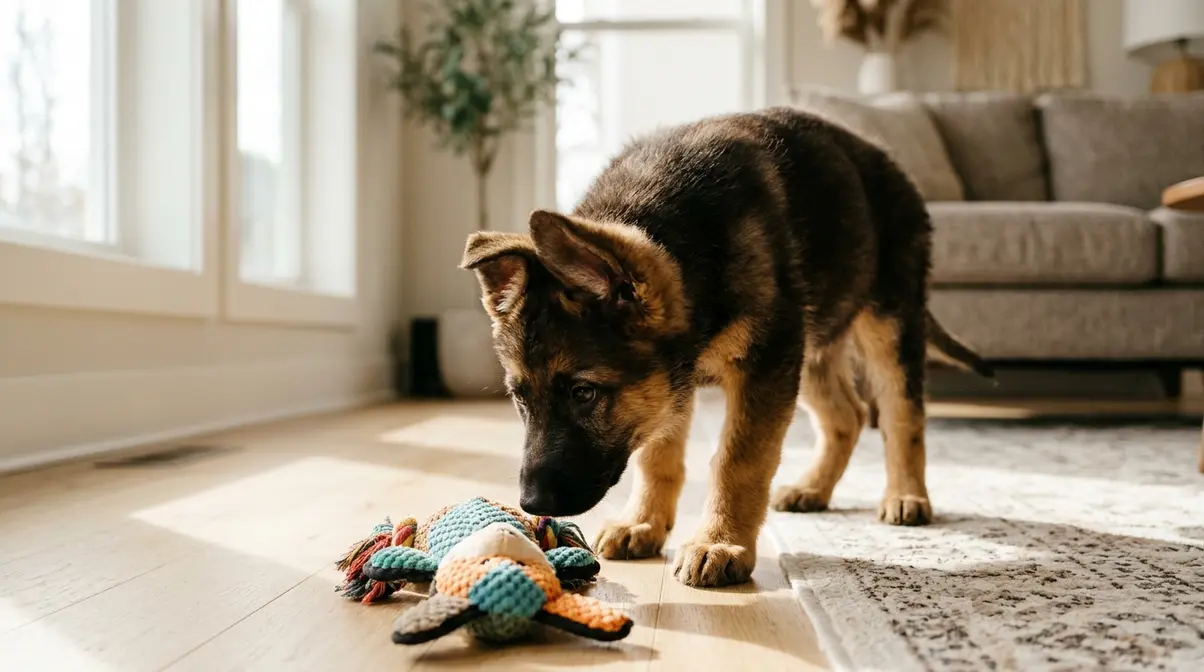
A 10 week old German Shepherd is in one of the most demanding, and most important, stages of its life. According to Tufts guidance on the secondary socialization window, the secondary socialization period runs from 6 to 12 weeks, the window when positive exposure shapes lifelong temperament (Tufts University Collaborative for Shelter Dogs, 2014). What happens in these weeks has more lasting impact on your dog’s personality than almost anything you’ll do in the years that follow.
For new owners, that’s both reassuring and a little daunting. The chaos you’re living through right now, the biting, the midnight whining, the puppy that seems impossible to tire out, is completely normal. And it’s temporary. You’ll see why the biting happens in the next section, where we introduce The Overtired Bite Cycle in full. For now, know that your puppy’s development at 6 weeks gives useful context for how quickly things change at this age.
The most urgent priority at 10 weeks isn’t obedience training. It’s calm, positive exposure to the world, because the window for that exposure closes at 12 weeks.
Key Milestones at 10 Weeks
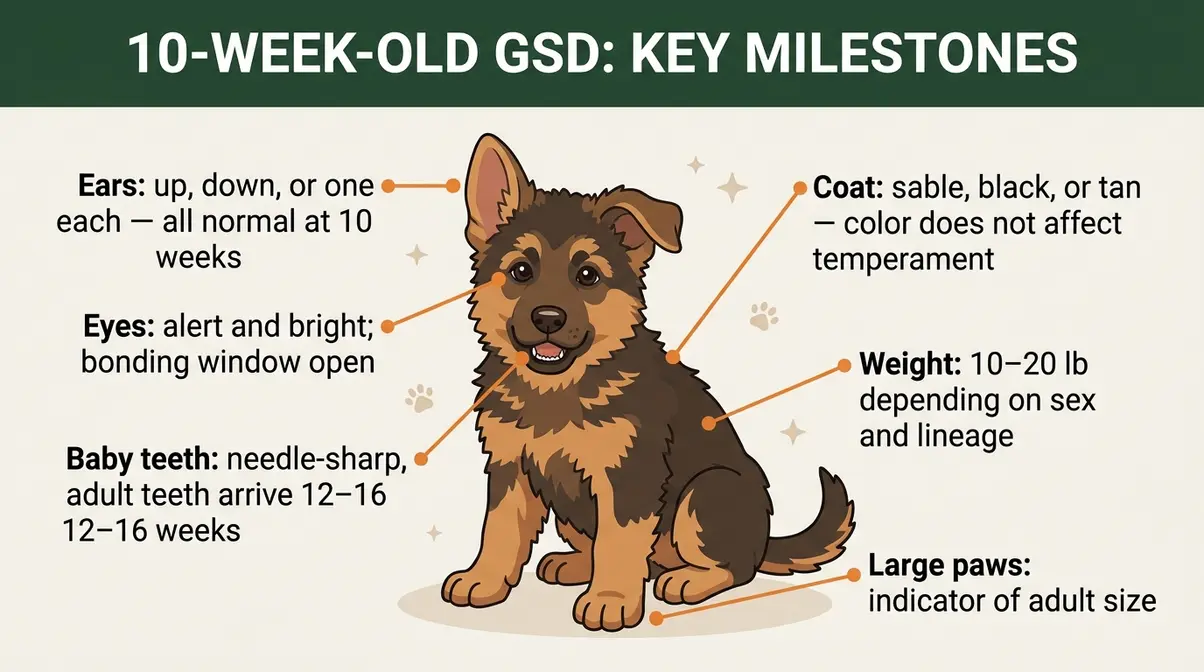
A 10 week old German Shepherd puppy is hitting several simultaneous milestones. Here’s what’s normal right now, so you can stop second-guessing every behavior:
- Sleep: Your puppy needs roughly 16-20 hours of rest per day. This isn’t laziness, it’s neurological development. An undertired puppy is a biting, frantic, unmanageable puppy.
- Teething: Baby teeth are fully in and needle-sharp. Adult teeth begin coming in around 12-16 weeks. The urge to chew everything is biological, not defiant.
- Bladder control: A useful rule of thumb, puppies can hold their bladder for roughly one hour per month of age, plus one. At 10 weeks (approximately 2.5 months), that’s a maximum of about 2-2.5 hours during the day.
- Socialization window: The secondary socialization period is in full swing. Every calm, positive experience right now, a stranger’s gentle hands, a car ride, a new floor surface, is being recorded in the puppy’s developing nervous system.
- Litter adjustment: Most puppies have been with their new owner for 2 weeks at this point. Some are still adjusting. Growling when picked up, hiding briefly, or startling at sounds is normal during this transition.
- Mental capacity: Short, positive interactions, 5 minutes maximum, are appropriate. Longer sessions overwhelm a puppy this age and trigger overtiredness.
Think of each week as a “Pupdate”, a check-in on sleep hours, meals eaten, weight gained, and first commands attempted. Tracking these weekly gives you data instead of anxiety.
One important reassurance: growling is not aggression at this age. A puppy that growls when you pick it up hasn’t yet learned that being handled is safe. Calm, consistent handling now, picking it up, touching its paws, looking in its ears, builds the adult dog’s tolerance for vet visits and grooming. According to the Texas A&M veterinary guide to the puppy timeline, puppies at 8-9 weeks are actively teething and chewing, and transitioning to scheduled meals (Texas A&M College of Veterinary Medicine).
Sleep, Bladder Control, and Teething
The three physical realities driving most of the chaos at this age are sleep, bladder control, and teething, and they’re all connected.
Sleep is the foundation. A 10 week old GSD that has been awake for 45 minutes is already heading toward overtiredness. By the 60-minute mark, many puppies enter a state where they bite harder, zoom frantically, and ignore every cue you offer. This is the first hint of The Overtired Bite Cycle, you’ll see the full picture in the biting section below. For now, the practical rule is simple: if your puppy has been awake for 45-60 minutes, put it in the crate. It needs sleep, not more stimulation.
Bladder control follows the one-hour-per-month rule. At 10 weeks, plan a potty trip every 1.5-2 hours during the day, always after waking, after eating, and after play. A puppy that has an accident indoors hasn’t failed training; it’s been given too long between trips.
Teething explains the intensity of the biting. Baby teeth are sharper than adult teeth, and the puppy has no frame of reference for how much pressure is too much. The Texas A&M veterinary guide to the puppy timeline confirms that puppies are actively teething and chewing at this stage. Adult teeth begin arriving around 12-16 weeks, which also explains the temporary ear flopping you may notice, more on that in the appearance section.
If your 10 week old GSD suddenly shifts from playful to frantic and bitey, check the clock. It’s probably been awake for 45 minutes. Put it in the crate. It needs a nap, not a training session.
Is It Better to Have a Male or Female German Shepherd?
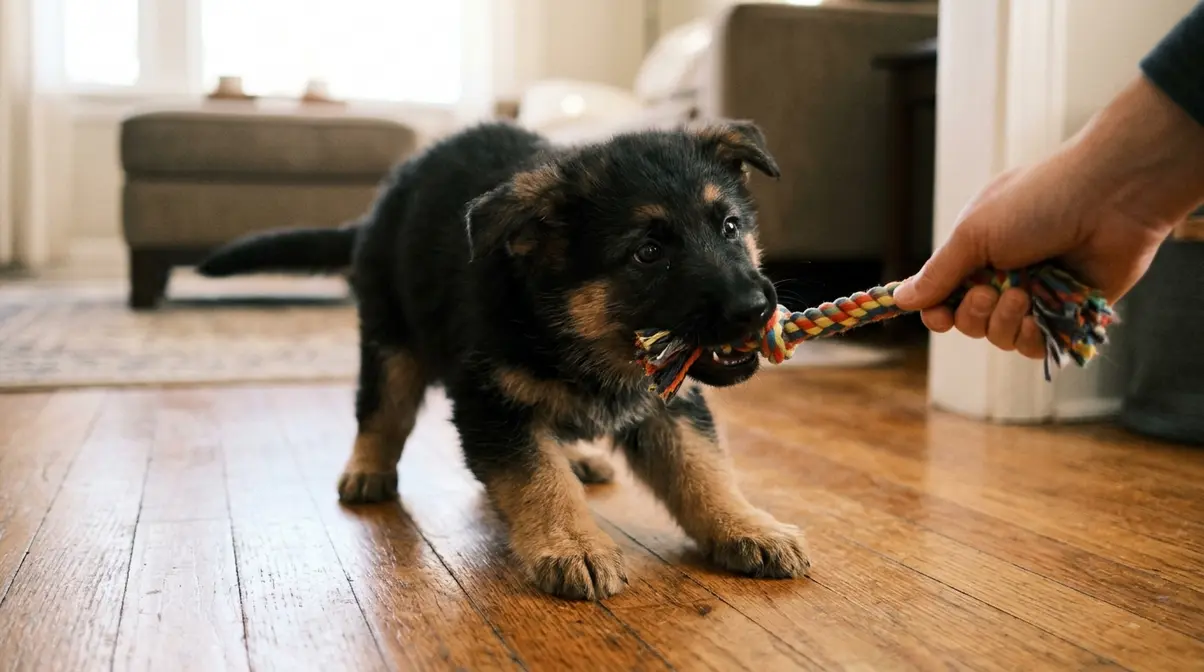
At 10 weeks, the behavioral differences between a 10-week-old female German Shepherd and a male GSD are minimal, personality varies far more by individual temperament and lineage than by sex at this age. If your puppy is a handful right now, its sex is almost certainly not the reason.
That said, general tendencies exist at maturity. Males tend to be larger and more boisterous; they may remain in an adolescent phase longer. Females often mature slightly faster and may be more focused during early training. Neither of these tendencies is a rule, they’re patterns that vary significantly by lineage, individual dog, and how consistently the owner trains.
The “are girl or boy puppies easier?” question comes up constantly in GSD communities. The honest answer: neither is universally easier. A 10 week old female German Shepherd and a 10 week old male GSD are equally capable of biting your ankles at midnight and refusing every treat you offer. Owner consistency matters more than sex at every stage.
Choose based on the individual puppy’s temperament, not its sex.
How Can You Tell If Your Puppy Likes You?
This is one of the most common questions new 10-week-old German Shepherd owners ask, and the answer is usually more reassuring than they expect.
Bonding signals at 10 weeks include:
- Following you from room to room without being called
- Seeking eye contact when you’re near
- Relaxing visibly when you hold it (muscles soft, not stiff)
- Bringing you a toy or a sock it found
- Choosing to sleep near you or on your feet
- Approaching you willingly when you crouch down and open your arms
If your puppy falls asleep on your feet, that’s not an accident. It’s choosing you as its safe place.
According to Tufts guidance on the secondary socialization window, the secondary socialization period from 6 to 12 weeks is when puppies form their strongest bonds with humans (Tufts University, 2014). That means right now, the weeks you’re living through, is the most important bonding window you’ll ever have with this dog.
The most cuddly phase for GSDs is roughly 8-12 weeks, when puppies are small enough to want close physical contact and haven’t yet developed the independence of an older puppy. This phase does fade as the puppy gains confidence, so enjoy the weight of a sleepy puppy on your lap while it lasts.
If your puppy is still avoiding eye contact or startling easily, it may still be adjusting to life away from its litter. This is normal for the first 1-2 weeks. If avoidance or fear persists past the 2-week mark with no improvement, mention it at your next vet visit.
The most urgent question most owners have at this stage isn’t about milestones, it’s about the biting. Here’s what’s actually happening.
Why Is My 10-Week-Old German Shepherd Biting?
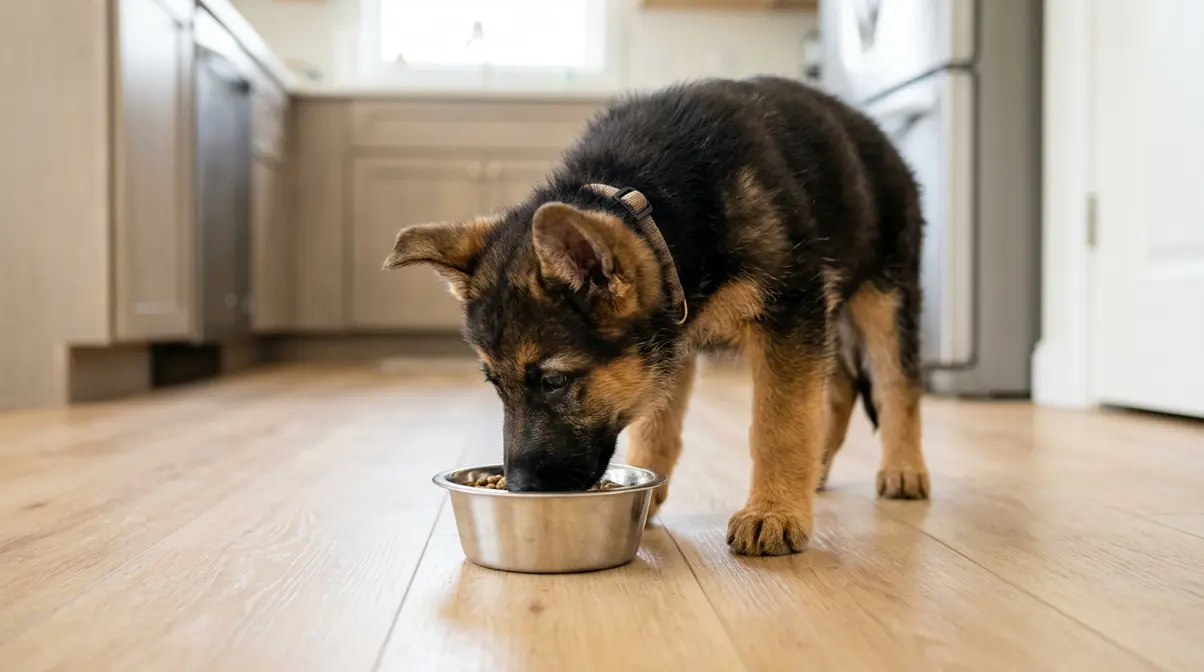
Most 10-week-old German Shepherds bite because they’re overtired, not because they’re aggressive. According to the county puppy development guide on bite inhibition.pdf), bite inhibition, the process of learning to control bite pressure, is a developmental process, not a training failure; a bite that hurts ends the play (Montgomery County, credited to Richmond SPCA). The fix for most biting at this age isn’t a correction, it’s a nap.
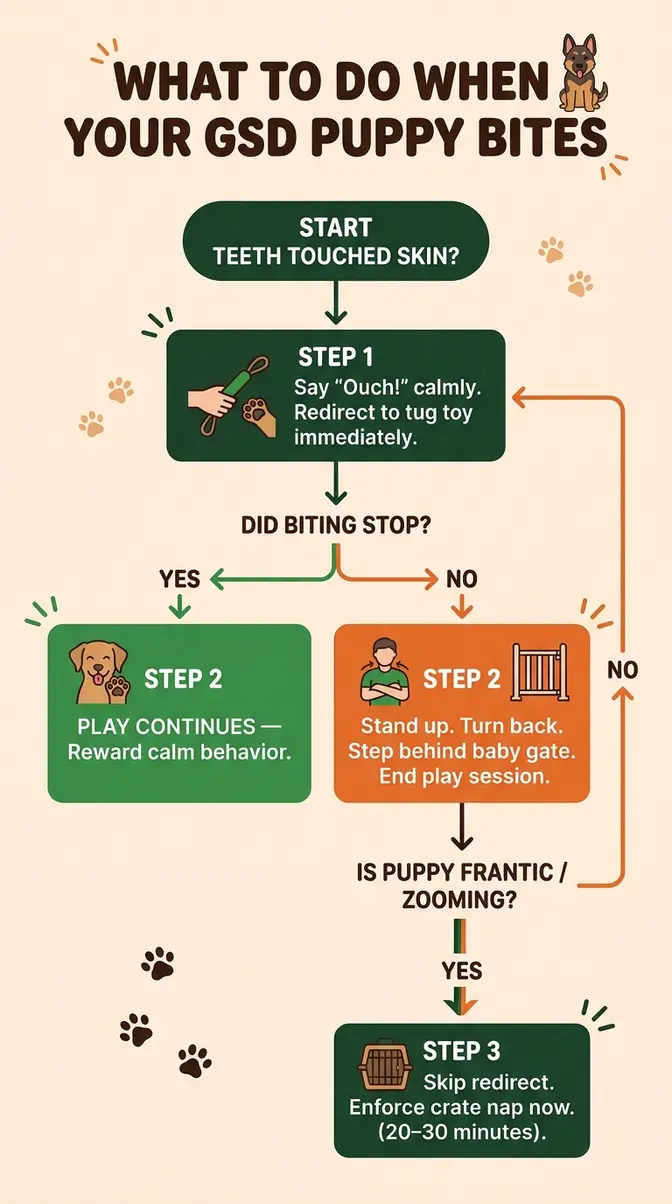
Understanding why the biting happens makes the solution obvious. The Overtired Bite Cycle, introduced below, explains most of what you’re experiencing right now. Once you recognize it, the “crazy nipping” stops feeling random.
Why Tired Puppies Bite More
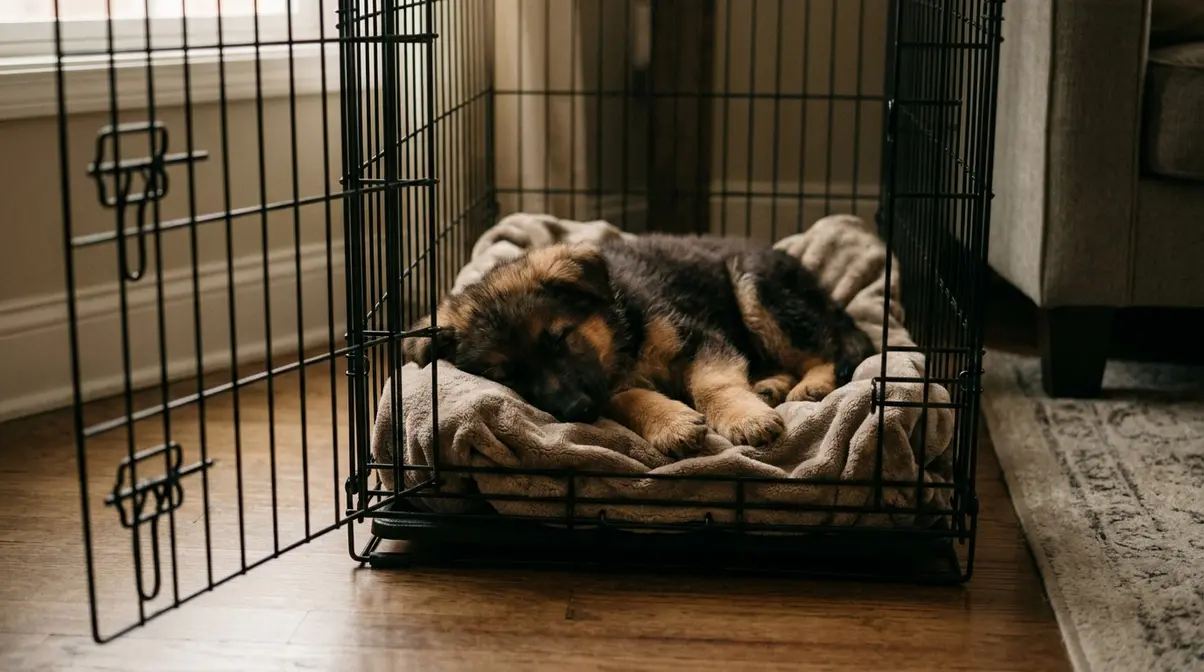
The Overtired Bite Cycle is the pattern where a puppy that has been awake too long becomes overstimulated, loses bite inhibition, and bites harder and more frequently. The counterintuitive fix is a forced nap, not more stimulation, not a correction, not a louder “no.”
Here’s what The Overtired Bite Cycle looks like in practice. Your puppy has been awake and playing for 50 minutes. It starts doing frantic zoomies, jumping at your ankles and legs. It’s ignoring every cue you give. The biting escalates, harder, faster, more frantic. Owners in GSD communities call this the “dino puppy” phase, and it’s a reliable sign the puppy has passed its overtiredness threshold.
Observable signs that your puppy is in The Overtired Bite Cycle:
- Frantic zoomies that don’t settle
- Jumping and biting at ankles and legs specifically
- Biting harder than usual, with less response to “ouch” or redirection
- Ignoring all commands it previously responded to
- Inability to settle even when you stop engaging
Adding more training or play when a puppy is in this state makes it worse. The correct response is to end the session immediately and put the puppy in its crate. The “crazy nipping” you’re seeing isn’t stubbornness, it’s a physiological state. The county puppy development guide on bite inhibition.pdf) describes bite inhibition as a developmental process where a bite that hurts ends the play, but a puppy in The Overtired Bite Cycle has temporarily lost access to that regulation.
Your puppy has been awake for 45 minutes. It’s now biting your ankles every time you walk. That’s not stubbornness, that’s The Overtired Bite Cycle in action. Crate it now.
The 3-Step Redirect Plan
Once you know the trigger, the fix is straightforward. Here’s the three-step plan for stopping biting in the moment:
Step 1: Redirect immediately.
The moment teeth touch skin, say “ouch” or “too much” in a calm, flat tone, not a yelp, which can actually excite some GSDs and escalate the behavior. Immediately offer a tug toy or rubber chew toy instead. Do this every single time teeth touch skin. Consistency is the mechanism, one missed repetition trains the puppy that biting sometimes works.
Step 2: Walk away.
If the puppy continues biting after the redirect, stand up, turn your back, and step behind a baby gate if one is nearby. End the play session completely. This teaches the puppy that biting = play ends. The lesson lands faster when the consequence is immediate and consistent.
Step 3: Enforce the nap.
If the puppy is already in The Overtired Bite Cycle, frantic, ignoring the redirect, biting harder, skip steps 1 and 2 entirely. Go straight to a crate nap. A 20-30 minute nap resets the puppy more effectively than any redirection technique applied to an already-exhausted animal.
| Do This | Avoid This |
|---|---|
| Calm, flat “ouch” or “too much” | Yelping (excites some GSDs) |
| Immediate redirect to a tug or chew toy | Chasing the puppy after it bites |
| Consistent response every single time | Rough play that escalates the energy |
| Crate nap when overtired | More training when the puppy is frantic |
| End play the moment biting escalates | Repeating “no” without changing the situation |
Normal Mouthing vs. True Aggression
The redirect plan works for normal mouthing. But how do you know if what you’re seeing is normal?
At 10 weeks, the vast majority of biting is normal developmental mouthing. True aggression at this age is uncommon, most behavior that looks aggressive is overtiredness, fear, or pain. Before labeling a 10-week-old GSD as aggressive, rule out all three.
| Normal at 10 Weeks | Call Your Vet or a Certified Trainer |
|---|---|
| Soft bites during play | Stiff body during biting episodes |
| Biting at ankles when excited | Resource guarding: growling over food or toys when you approach |
| Mouthing hands during petting | Repeated skin-breaking bites that don’t respond to any redirect |
| Growling during tug games | Unprovoked snapping at faces |
| Biting harder when overtired | Sudden escalation after a previously calm period |
| Startling and nipping when surprised | Biting accompanied by yelping when touched, limping, or ear-scratching |
The “10 week old german shepherd aggressive” concern is one of the most common anxieties in GSD owner communities. The honest answer: at 10 weeks, true aggression is rare. If you’re seeing stiff-body biting, resource guarding, or repeated skin-breaking that doesn’t respond to the redirect plan, that warrants a professional assessment, but it does not mean you have an aggressive dog. It may mean the puppy is in pain.
When to Call a Trainer or Vet
Clear triggers for when to make the call:
- Call your vet if:
- Biting is accompanied by pain signals, yelping when touched, limping, or repeated ear-scratching
- The puppy seems lethargic between biting episodes
- Biting escalated suddenly after a period of normal behavior
- You notice any discharge from eyes, ears, or nose alongside behavior changes
- Call a certified trainer if:
- You’ve applied the redirect plan consistently for 2 full weeks with no improvement
- The puppy is breaking skin regularly
- You or anyone in the household feels unsafe around the puppy
A note on destructive behavior: chewing baseboards, shoes, and furniture is separate from biting. A puppy that destroys your belongings isn’t being defiant, it’s teething and exploring. The solution is management (puppy-proofing) and appropriate chew toys, not punishment. We cover socialization to prevent fear-driven snapping and nipping in more depth if you’re dealing with fear-based behaviors alongside the mouthing.
With the biting plan in place, the next most urgent question is feeding. Here’s the exact answer.
How Much Should I Feed a 10-Week-Old German Shepherd?
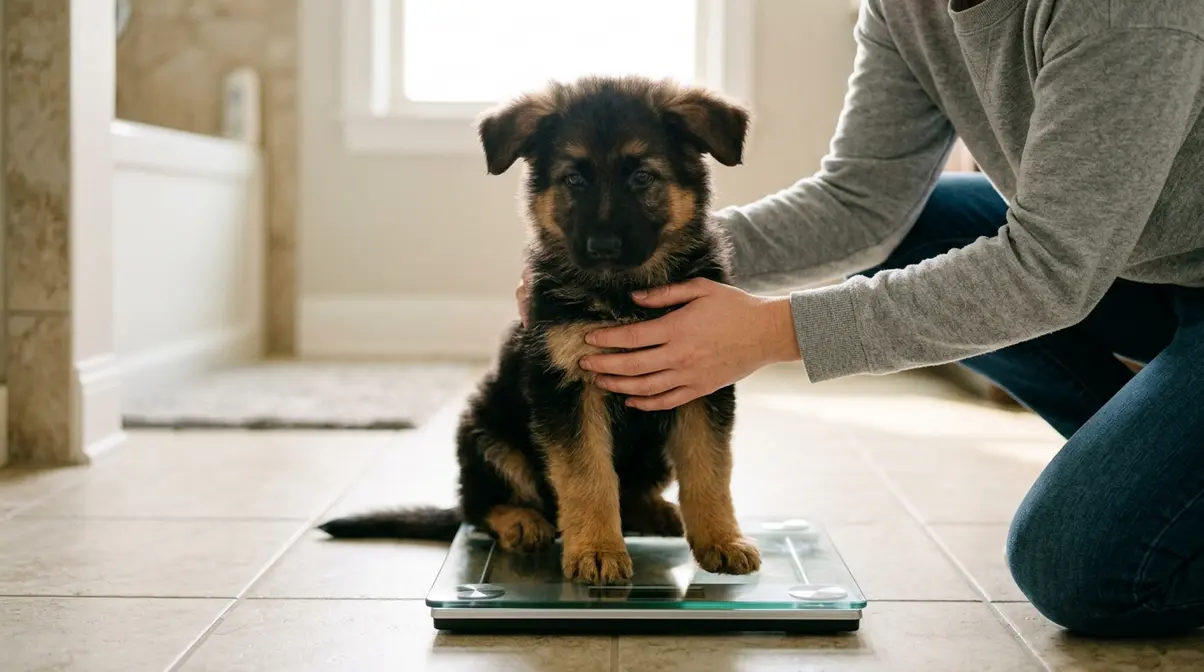
Feed a 10-week-old German Shepherd 3 to 4 scheduled meals a day using a high-quality large-breed puppy kibble. Avoid free-feeding, it removes your ability to monitor intake and can lead to overfeeding, which puts stress on developing joints. A rough starting point is 5-6% of the puppy’s predicted adult body weight, divided across meals. Introduce any new food over 7-10 days to avoid digestive upsets. Confirm exact portions with your vet, since individual puppies vary.
According to Cornell veterinary advice on overfeeding large-breed puppies, avoiding overfeeding, especially in fast-growing puppies of large breeds, and maintaining a healthy weight throughout life is essential for joint health (Cornell University Riney Canine Health Center). Overfeeding large-breed puppies, especially fast-growing ones, increases the risk of hip dysplasia and other developmental joint problems.
A hungry puppy also bites more, hunger amplifies overtiredness, which feeds directly into The Overtired Bite Cycle. The feeding schedule and the sleep schedule work together.
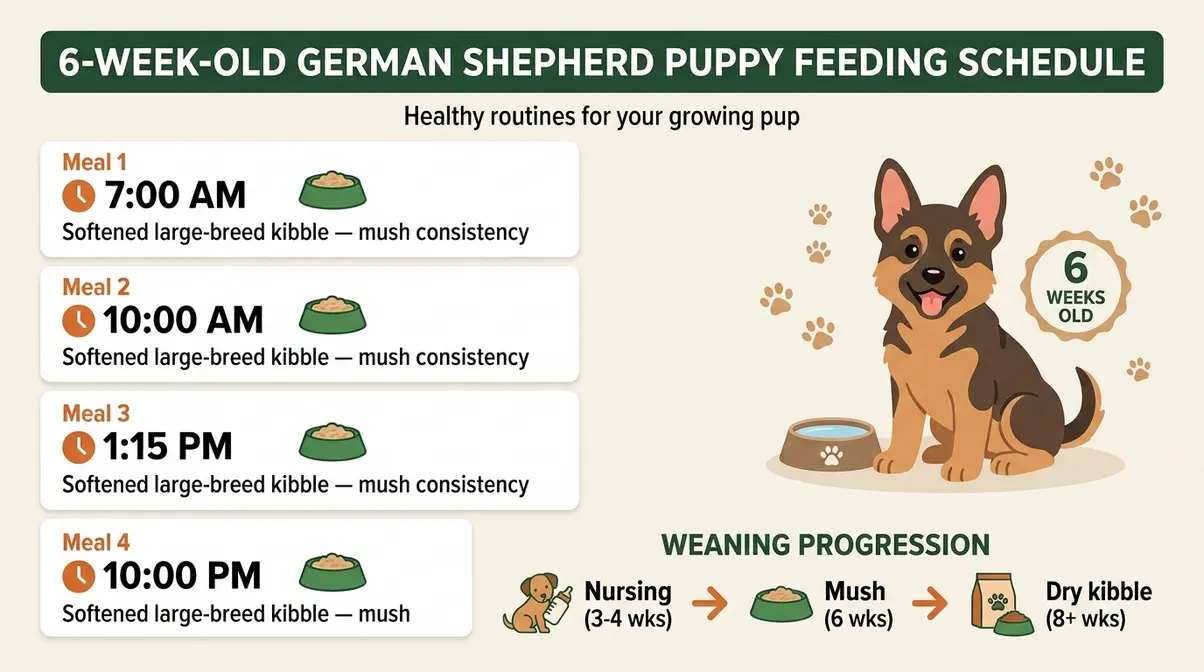
Feeding the right amount protects your puppy’s joints as much as it fills its stomach. The next section shows you exactly what a healthy weight looks like at this age.
Sample Feeding Schedule for a 10-Week-Old GSD
Four meals a day is appropriate at 10 weeks. The puppy’s stomach is small, its metabolism is fast, and spreading meals across the day helps maintain blood sugar stability. Many owners drop to 3 meals at 12 weeks, confirm that timing with your vet.
Sample daily feeding schedule:
| Time | Meal | Notes |
|---|---|---|
| 7:00 am | Meal 1 | After first potty trip of the day |
| 12:00 pm | Meal 2 | After midday potty + play session |
| 5:00 pm | Meal 3 | After afternoon potty trip |
| 8:00 pm | Meal 4 | Before final potty trip and bedtime settle |
The 5-6% calculation, worked example:
A male GSD typically reaches 30-40 kg (66-88 lb) at adulthood, depending on lineage. Using 5.5% as a midpoint of the 5-6% range shows how adult weight drives the daily total:
- At 30 kg adult weight: 30 × 5.5% = 1.65 kg of food per day ÷ 4 meals = ~413g per meal
- At 40 kg adult weight: 40 × 5.5% = 2.2 kg of food per day ÷ 4 meals = ~550g per meal
To see the full range at a single adult weight, consider a 30 kg adult: at 5% of body weight, the daily total is 1.5 kg (about 375g per meal across 4 meals); at 6%, it’s 1.8 kg (about 450g per meal). Your vet adjusts the percentage based on your puppy’s body condition score, ribs should be palpable but not visible. These are starting points, not fixed targets. Adjust based on your puppy’s body condition and your vet’s guidance at the 10-12 week check. For a full breakdown across every month, see the month-by-month puppy feeding plan for large-breed puppies.
Why large-breed puppy food matters: Large-breed puppy kibble is formulated with a controlled calcium-to-phosphorus ratio that supports healthy bone development without accelerating growth too fast. Standard puppy food, even high-quality standard food, can deliver too much calcium for a fast-growing large breed, which the Cornell veterinary advice on overfeeding large-breed puppies links to increased developmental joint risk. Don’t choose by price, choose by formulation.
What to Do If Your Puppy Is Extremely Picky
If your 10-week-old GSD is being extremely picky about food at every meal, you’re not alone, it’s one of the most common complaints in GSD owner communities, and it’s almost always fixable.
The three most common causes of picky eating at 10 weeks:
- Stress from litter separation: A puppy that just left its litter may be too anxious to eat normally for the first few days.
- Food transition too fast: Introducing new food over less than 7-10 days causes digestive upset that makes the puppy associate the bowl with discomfort.
- Treats given too freely: If the puppy has learned that refusing kibble eventually produces something better, it will wait you out. It’s not stubborn, it’s logical.
- Do this:
- Offer kibble at scheduled meal times
- Remove the bowl after 15 minutes, whether eaten or not
- Don’t top with wet food or treats as a habit, save high-value additions for training only
- Avoid this:
- Free-feeding (leaves food available all day)
- Hand-feeding every meal
- Switching foods every time the puppy shows disinterest
Digestive upsets, soft stools, mild vomiting, are common during food transitions. Introduce any new food over 7-10 days by mixing increasing proportions of the new food into the old. If soft stools persist for more than 3 days, call your vet.
If your puppy refuses treats during training sessions, it’s probably not hungry, or the treat value is too low. Before concluding your puppy is “extremely picky” or “stubborn,” try a small piece of plain cooked chicken. The reaction usually tells you everything.
Now that feeding is sorted, let’s check whether your puppy is actually growing on track.
What Should a 10-Week-Old German Shepherd Weigh?
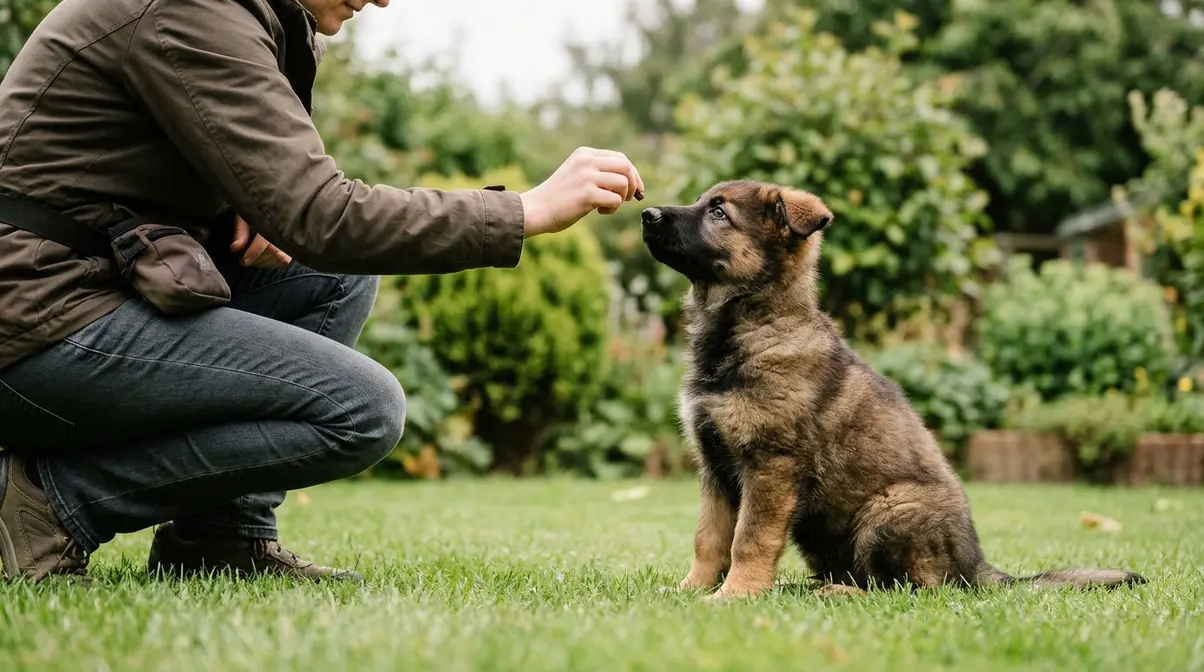
A 10-week-old German Shepherd puppy weight typically falls somewhere between 10 and 20 lb (4.5 to 9 kg) depending on sex and lineage, but sources vary significantly, and you should treat any single figure as a midpoint of a range, not a pass/fail target. The reason for the variation: different lineages (working vs. show lines), different measurement methods, and different sample sizes all produce different numbers. Week-over-week gain matters more than hitting a specific figure on any single day.
If your puppy is active, eating, and gaining weight week over week, it’s almost certainly fine. See German Shepherd puppy weight chart by week for the full growth picture beyond 12 weeks.
An underweight puppy may also bite more, hunger amplifies overtiredness. If you’re worried about weight and also dealing with intense biting, the two issues may be connected.
Average Weight at 10 Weeks (Male vs. Female)
Published sources give different weight ranges for a 10-week-old German Shepherd: some cite 10-15 lb, others 12-18 lb, and others 16-20 lb. These differences reflect different lineages and measurement approaches, not contradictions. Working-line males, bred for larger frames and higher muscle mass, tend toward the higher end of any range. Show-line dogs and females typically fall lower.
Here’s a practical summary of the average weight of a 10 week old German Shepherd across sources:
| Sex | Weight Range (lb) | Weight Range (kg) | Source Notes |
|---|---|---|---|
| Male | 14-20 lb | 6.4-9.0 kg | Working lines toward upper end; show lines vary |
| Female | 12-17 lb | 5.5-7.7 kg | Typically 10-15% lighter than males at this age |
Note: These ranges represent a cross-tabulation of available sources. Individual puppies may fall outside these ranges based on lineage, litter size, and individual genetics. Treat these as orientation points, not diagnostic thresholds.
According to a peer-reviewed review of hip dysplasia diagnosis and prevention, canine hip dysplasia is a polygenic developmental disorder characterized by hip joint laxity, and rapid weight gain in large-breed puppies is a recognized risk factor for developmental joint disorders (PubMed Central, National Library of Medicine). This is why monitoring weight as a range, rather than chasing a specific number, matters practically, not just statistically.
Week-by-Week Growth Table: 8 to 12 Weeks
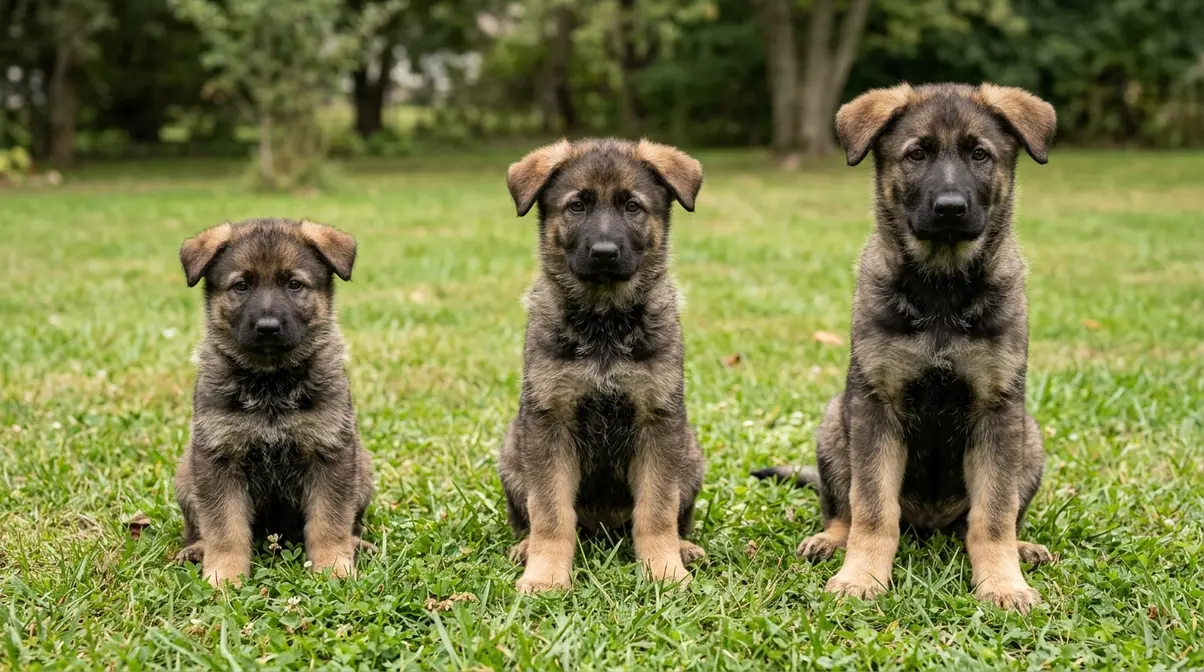
German shepherd puppy weight by week changes quickly during this period. A healthy puppy should gain approximately 1.5-2.5 lb (0.7-1.1 kg) per week at this stage, though individual variation is normal. Consistent week-over-week gain matters more than the exact figure on any given day.
| Week | Male Weight Range (lb) | Male Weight Range (kg) | Female Weight Range (lb) | Female Weight Range (kg) | Notes |
|---|---|---|---|---|---|
| 8 weeks | 13-18 lb | 5.9-8.2 kg | 11-15 lb | 5.0-6.8 kg | First week in new home for most puppies |
| 9 weeks | 13.5-19 lb | 6.1-8.6 kg | 11.5-16 lb | 5.2-7.3 kg | Interpolated from 8 and 10-week figures |
| 10 weeks | 14-20 lb | 6.4-9.0 kg | 12-17 lb | 5.5-7.7 kg | Primary focus of this guide |
| 11 weeks | 15-21 lb | 6.8-9.5 kg | 13-18 lb | 5.9-8.2 kg | Interpolated; 11 week old german shepherd puppy data is sparse |
| 12 weeks | 16-22 lb | 7.3-10.0 kg | 14-19 lb | 6.4-8.6 kg | Second vaccine round typically due; confirm with vet |
Rows for 9 and 11 weeks are interpolated from surrounding data points. Treat all figures as ranges with source variation; confirm with your vet at the 10-12 week check.
- Signs your puppy is growing healthily:
- Ribs palpable when you press gently, but not visible from a distance
- Waist visible when you look down from above
- Alert and active during awake periods
- Eating consistently at scheduled meal times
According to the Purdue research group overview of hip dysplasia management, maintaining a healthy weight throughout puppyhood reduces hip dysplasia risk (Purdue University Croney Research Group). The 12 week old german shepherd weight range in the table above also marks the typical timing for the second vaccine round, an important milestone for both growth tracking and health protection.
If your 10-week-old GSD weighed 14 lb last week and weighs 15.5 lb this week, that’s healthy growth. If it hasn’t gained anything in two weeks, call your vet.
What to Do If Your Puppy Seems Underweight
First, confirm the weight is actually low. If you’re wondering how big a 10-week-old German Shepherd should be, the ranges in the table above are your reference, a puppy at the lower end of the range for its sex and lineage is not automatically underweight. Use those ranges for your puppy’s sex, and remember that individual puppies, especially those from smaller litters or with smaller parents, may sit legitimately at the lower end without being underweight.
If your puppy is genuinely below the lower range for its sex, work through this checklist before panicking:
- Is it actually eating all 4 meals? A puppy that picks at food may be taking in less than you think.
- Could it have parasites? Intestinal worms are common at this age and suppress appetite significantly. Your vet can check with a simple fecal test.
- Are stools normal? Soft stools or vomiting alongside low weight warrants a vet call.
- When to call the vet, specific triggers:
- No weight gain in 2 consecutive weeks
- Ribs visible without pressing
- Lethargy during what should be awake/play periods
- Persistent soft stools (more than 3 days)
- Any vomiting
Worried your puppy is underweight? Weigh it on the same scale at the same time of day, 7 days apart. If it gained anything, it’s growing. If you’re concerned, confirm with your vet before changing its diet, adjusting food without guidance can cause more problems than it solves.
This is a YMYL-adjacent section: if you’re worried about your puppy’s weight, please discuss it with your vet before making any dietary changes.
Weight and feeding are the foundation. Now let’s build the daily routine that holds everything together.
What Does a 10-Week-Old GSD’s Daily Routine Look Like?
The most effective thing you can do in your puppy’s first week isn’t training, it’s building a predictable routine. A consistent schedule reduces biting (by preventing The Overtired Bite Cycle before it starts), cuts potty accidents, and helps your puppy settle faster at night. Here’s what a realistic day looks like.
According to shelter medicine guidance on puppy playgroups after vaccination, puppies should not be exposed to high-dog-traffic areas before completing their vaccination series (University of Wisconsin Shelter Medicine Program). Keep your routine’s socialization elements to controlled, low-risk environments until your vet confirms the vaccination schedule is complete.
A consistent routine is the foundation for everything that follows, including training. The next section shows you exactly which commands to start with and how to handle a puppy that refuses every treat.
Sample 24-Hour Routine for a 10-Week-Old GSD
Puppies at 10 weeks need a potty trip every 1.5 to 2 hours during the day, and always after waking, eating, and playing. Here’s a schedule that works with that biology rather than against it:
| Time | Activity | Notes |
|---|---|---|
| 6:00 am | Wake + immediate potty trip | Don’t delay, bladder control is minimal after sleep |
| 7:00 am | Meal 1 + short gentle play | Keep play calm in the morning |
| 7:30 am | Potty trip | Always after eating |
| 8:00 am | Crate nap | 1-2 hours; don’t skip this |
| 10:00 am | Potty + play | Moderate energy play; socialization exposure if safe |
| 11:00 am | Crate nap | Puppy has been awake ~1 hour |
| 12:00 pm | Meal 2 + potty | Midday meal; potty immediately after |
| 12:30 pm | Crate nap | |
| 2:00 pm | Potty + play | Good time for a 5-minute training session |
| 4:00 pm | Crate nap | |
| 5:00 pm | Meal 3 + potty | |
| 5:30 pm | Short play | |
| 6:30 pm | Crate nap | |
| 7:00 pm | Play + 5-minute training session | After nap = alert and food-motivated |
| 8:00 pm | Meal 4 + potty | Last meal of the day |
| 9:00 pm | Quiet settle time | No stimulating play; dim lights |
| 9:30 pm | Final potty trip + crate for night |
Alone time: At 10 weeks, the maximum alone time is approximately 1-2 hours during the day. Three hours alone is too long at this age. If you need to step away for more than an hour, use a puppy playpen, a contained safe zone with water, a safe chew toy, and a worn item of your clothing (the scent helps). Always ensure the playpen space is safe and free of hazards before leaving the puppy unsupervised.
Night settling: A puppy that turns hyperactive and bitey at night is overtired, not energetic. Crate nap, not more play. A ticking clock or a warm water bottle wrapped safely in a towel near the crate can ease litter separation anxiety at night. Before you follow this routine, your home needs to be safe.
Puppy-Proofing Your Home
Puppy Proofing your home before the puppy arrives, or right now if you haven’t, prevents both injury and the “destructive” behavior that frustrates so many new owners.
The 5 highest-risk items in most homes:
- Electrical cords, chewing a live cord is a medical emergency; use cord covers or cord clips
- Toxic plants, common houseplants including pothos, philodendron, and sago palm are toxic to dogs
- Cleaning products at floor level, move all products to high shelves or locked cabinets
- Small objects, coins, hair ties, children’s toys, and anything that fits in a puppy’s mouth
- Unsecured trash cans, use cans with locking lids or store them in a closed cupboard
Set up a puppy playpen as the puppy’s home base, a designated safe zone that includes a crate, a water bowl, and one or two safe chew toys. The puppy can be left here briefly without direct supervision. The playpen is where Puppy Proofing meets routine: the puppy has a safe space, and you have peace of mind.
That word “destructive” that owners use constantly? A puppy chewing your baseboards isn’t defiant. It’s teething and exploring. Management is the solution, not punishment. The routine and the proofing handle the practical side. But nobody warns you about the emotional side.
Dealing with Puppy Blues
Puppy Blues is the feeling of overwhelm, exhaustion, and sometimes genuine regret that many new owners experience in the first 2-4 weeks. It’s common. It’s normal. And it passes.
It happens because puppyhood is harder than most people expect. Sleep deprivation from middle-of-the-night whining, the constant vigilance required to prevent accidents and injuries, the gap between the calm, obedient dog you imagined and the dino puppy currently biting your ankles, all of it lands at once. The feeling is real even if the situation is temporary.
What actually helps:
- The routine above, predictability reduces anxiety for both owner and puppy
- Connecting with GSD owner communities who are living the same 3am experience
- Knowing that most puppies settle significantly by 12-14 weeks as they internalize the routine
Core vaccines should be given as a series during the puppy period, with a booster at 6 or 12 months, confirm the exact schedule with your vet (global vaccination guidelines for dogs and cats, WSAVA, 2016). Booking that first vet appointment early removes one source of new-owner uncertainty.
If you’re reading this at midnight wondering if you made a mistake, you didn’t. You’re in the hardest two weeks. It gets better, and it gets better faster once the routine is in place.
Once the routine is in place and the Puppy Blues start to lift, you’re ready to start training. Here’s where to begin.
How Do You Train a 10-Week-Old German Shepherd Puppy?
A 10-week-old German Shepherd can learn sit, down, come, and “look at me”, but only in 5-minute sessions, only when it’s not overtired, and only with a treat it actually wants. Training sessions for a 10-week-old German Shepherd should be no longer than 5 minutes, short, positive, and always ending before the puppy loses interest. Schedule training after a nap, not before, a puppy fresh from sleep is alert and food-motivated. A puppy in The Overtired Bite Cycle will ignore every cue you offer, not because it’s stubborn, but because it’s physiologically incapable of focusing.
Training at 10 weeks is really structured play with a food reward. The puppy isn’t being difficult, it’s either overtired, not hungry enough, or the environment is too distracting. Diagnosing the real cause is the skill that separates frustrated owners from successful ones.
Positive reinforcement is the foundation of all effective puppy training at this age. It works with the puppy’s natural learning process rather than against it, a puppy that associates training with good outcomes engages willingly. That’s the entire goal of 10 week old german shepherd training: build the habit of paying attention to you.
Which Commands to Start With at 10 Weeks
Four commands are worth your time at this age. Everything else can wait.
- Sit, the easiest command to lure, and it builds focus. Every training session starts here.
- Down, extends sit and teaches early impulse control. Takes longer than sit, some puppies need several sessions before the elbows consistently hit the floor.
- Come, the most important command you’ll ever teach. A reliable recall is a safety behavior. Start building it now, while the puppy is small and the stakes are low.
- “Look at me”, the attention foundation for all other training. A puppy that will make eye contact on cue is a puppy you can redirect in any situation.
- What NOT to start with at 10 weeks:
- “Stay”, attention span is too short for a sustained hold
- “Heel”, too complex for this developmental stage
- Any punishment-based correction, it damages trust during the socialization window, which is still open
10 week old german shepherd training doesn’t have to be formal. Mental enrichment counts too. Puzzle feeders, sniff games, and name recognition all build the same neural pathways as a formal training session. A mentally tired puppy bites less, mental fatigue is as effective as physical exercise at preventing The Overtired Bite Cycle. Five minutes of sniffing a Kong stuffed with kibble is training.
Step-by-Step: Teaching Sit, Down, and Come
Here’s how to teach each command, step by step. Keep each session to 3-5 repetitions per command, quit while the puppy is still succeeding. For more detail on the sit command specifically, see step-by-step reward-based sit training for young German Shepherds.
- Teaching Sit:
- Hold a treat at the puppy’s nose.
- Slowly move the treat back over the puppy’s head.
- As its bottom touches the floor, say “sit” once, calmly.
- Mark with “yes” or a clicker and give the treat immediately.
- Release with “ok” or “free.” Repeat 3-5 times maximum per session.
- Teaching Down:
- Ask for sit first.
- Hold the treat at the puppy’s nose, then move it straight down to the floor between the front paws.
- As the elbows touch the floor, say “down” once.
- Mark and reward immediately.
- Note: down takes longer than sit, some puppies need 3-5 sessions before the behavior is consistent.
- Teaching Come:
- Crouch down and open your arms, make yourself as inviting as possible.
- Say “come” once in a genuinely happy voice.
- When the puppy reaches you, reward enthusiastically, treats, praise, physical affection.
- Never call “come” to do something the puppy dislikes (nail trim, bath, end of play). Doing so poisons the recall, the puppy learns that “come” predicts something bad and starts avoiding it.
The “come” command is the most important one you’ll ever teach. At 10 weeks, it should feel like the best thing that ever happened to the puppy when it reaches you. Build that association now and you’ll have a reliable recall for life.
What to Do When Your Puppy Refuses Treats
This is the Freya scenario, the puppy that seems “extremely picky” and “stubborn,” refusing every treat during training. Before concluding it’s a character flaw, diagnose the actual cause.
The three most common reasons a puppy refuses treats during training a 10 week old german shepherd puppy:
- It’s not hungry. Training too close to a meal means the puppy has no food motivation. Try training 30 minutes before a scheduled meal, not after.
- The treat value is too low. Dry kibble is the lowest-value treat in most puppies’ hierarchy. The environment, the distractions, and the novelty of the task all require a higher-value reward.
- The environment is too distracting. A puppy that “knows” sit indoors but ignores it outside hasn’t generalized the command yet, that’s normal development, not stubbornness.
- The treat value hierarchy (highest to lowest):
- Plain cooked chicken (no seasoning)
- Small pieces of cheese
- Commercial training treats (soft, small, high-smell)
- Regular kibble
Start with the highest-value treat and work down as the puppy becomes more reliable. Once a command is solid in a quiet room with chicken, try it in a slightly more distracting environment. This is the distraction ladder, master each level before adding more.
If your puppy refuses every treat you try, train 30 minutes before a meal, in a quiet room, with a piece of plain cooked chicken. If it still refuses, it’s probably overtired, put it in the crate.
Now that you know how to train your puppy, let’s talk about what it should look like at this age.
What Does a 10-Week-Old German Shepherd Look Like?
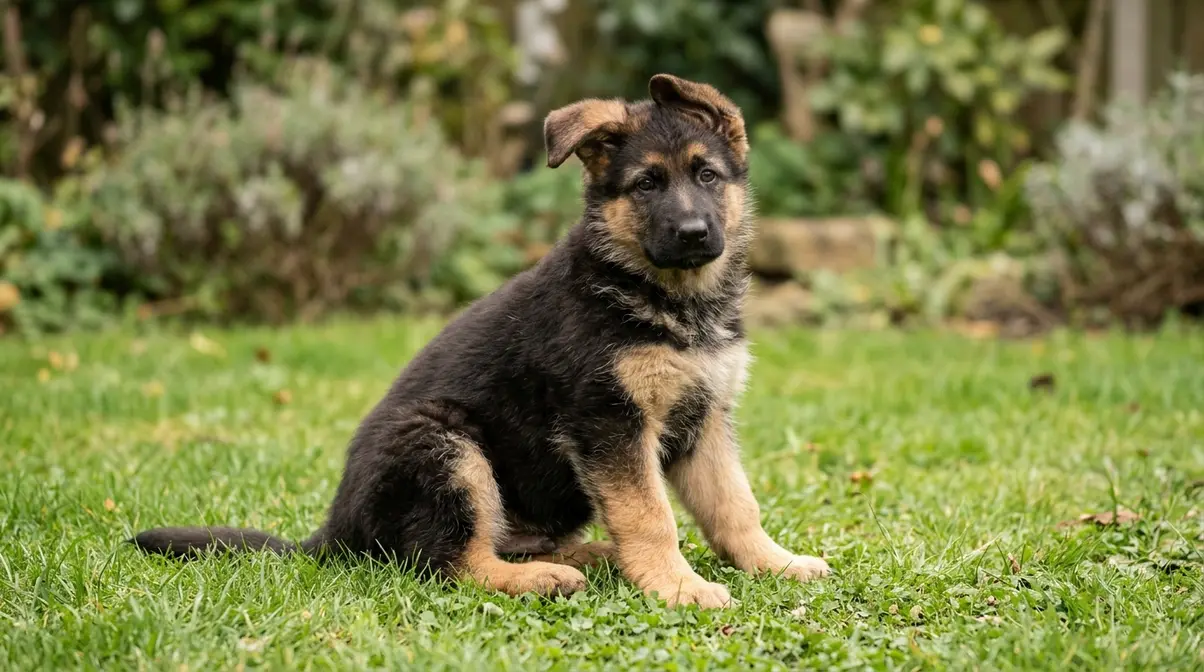
At 10 weeks, a German Shepherd puppy looks like a small, fluffy version of the adult dog, with one notable exception: the ears. Ear development is the most variable physical feature at this age, and it’s the source of more owner anxiety than almost anything else about appearance. Here’s what’s normal across coat colors, ear stages, and mixes.
According to the AKC German Shepherd Dog breed overview, the GSD is recognized in a range of coat colors, and ear development is considered a key breed characteristic that typically reaches full erect carriage by adulthood (American Kennel Club). Understanding what the breed overview describes helps owners recognize what’s normal at 10 weeks versus what warrants attention.
If you’re looking at puppies because you’re about to buy one, the next section covers exactly what to check before you commit.
Coat Colors at 10 Weeks
The German Shepherd comes in more color variations than most new owners expect, and 10 weeks is when those differences are most visually striking.
Standard sable and black-and-tan is the most common pattern. Sable puppies often appear darker or grayer at 10 weeks than they will as adults, the coat typically lightens or shifts in tone as the dog matures. The black saddle pattern on a tan base becomes more defined over the first year.
A 10 week old black German Shepherd puppy is a common source of questions. Solid black is a fully recognized color in the German Shepherd Dog breed. It carries no health implications and no temperament differences, the care needs are identical to any other color. A 10 week old german shepherd black puppy simply has two copies of the recessive gene for solid color. See what a solid black German Shepherd coat means for a full breakdown of the genetics.
A 10 week old white German Shepherd is similarly misunderstood. White is not albinism, the eyes are dark, not pink, and the nose is pigmented. White is a separate color variety produced by a different gene. The White Shepherd is recognized as a separate breed in some countries; in others it’s a color variant. Care needs are the same.
Short-hair vs. long-hair: The GSD comes in two coat lengths, the stock coat (short, dense, double-layered) and the plush or long coat (longer outer guard hairs). Both are normal. The long coat is produced by a recessive gene, so two short-coated parents can produce long-coated puppies. The 10 week old german shepherd short hair variety may actually look less fluffy than its long-coated littermates at this age.
Color doesn’t predict temperament or health. A 10 week old GSD of any color is the same dog with the same needs.
Ear Development at 10 Weeks
At 10 weeks, a German Shepherd’s ears may be up, down, or one of each, all are normal. Most GSD ears stand fully erect by 20 weeks, though the teething period (12-20 weeks) can cause ears that were up to temporarily flop back down. This is normal and temporary.
The cartilage in a puppy’s ear is still developing at 10 weeks. Ears that were standing at 8 weeks may go floppy again at 12 weeks when teething intensifies, then stand again at 16-18 weeks. This cycle can repeat several times. The 10 week old german shepherd ears question is one of the most searched appearance questions for this breed, and the answer is almost always “wait and see.”
If your puppy’s ears were up last week and are now flopped, it’s probably teething. They’ll come back up.
- When to be concerned about ear development:
- Ears that show no upward movement at all by 20 weeks
- Asymmetry accompanied by redness, discharge, or head-shaking (suggests infection or injury rather than development)
- Any ear that appears to be causing the puppy discomfort
For most owners, the 10 week old german shepherd ears question resolves itself by 5 months. If you’re still concerned at 20 weeks, mention it to your vet.
If your puppy is a mix, the appearance can vary significantly.
German Shepherd Mixes at 10 Weeks
A 10 week old German Shepherd mix can look dramatically different from a purebred depending on which parent’s genes are most expressed.
The 10 week old German Shepherd Lab mix (Sheprador) is the most common GSD cross and one of the most searched. At 10 weeks, a Sheprador typically has a slightly blockier head than a purebred GSD, a shorter muzzle, and a denser, shorter coat. The ears may or may not stand up, Lab genes often produce floppy ears that never fully erect. Body shape tends toward the Labrador’s stockier build.
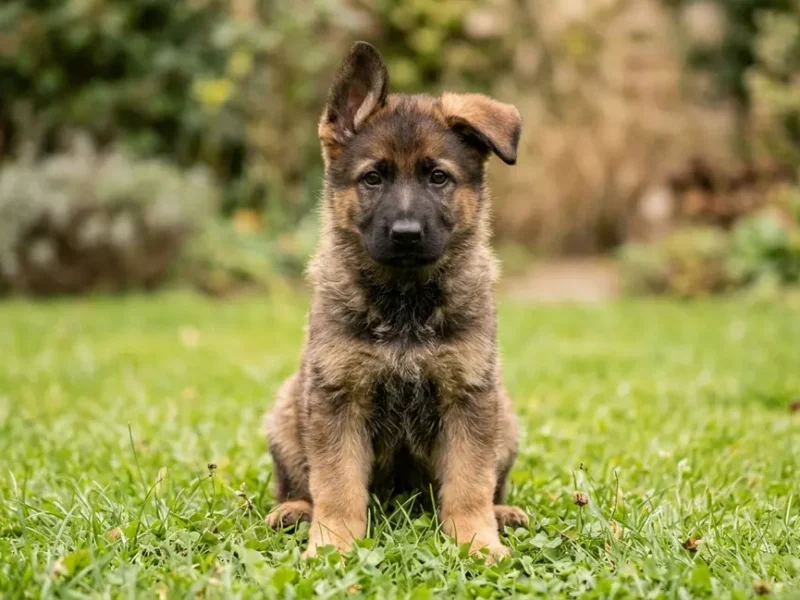
Other common 10 week old german shepherd mix combinations include the GSD Husky mix (Gerberian Shepsky) and the GSD Golden Retriever mix. Each has a distinct appearance at 10 weeks, the GSD’s pointed muzzle and alert expression may be more or less prominent depending on which parent’s genes dominate. If you’re looking at pictures of 10 week old German Shepherd puppies across these variations, the photo gallery above shows the range of appearances a purebred GSD can produce; mixes will vary further.
The 10 week old german shepherd mix question is most often asked by owners who aren’t sure what they have. If lineage matters to you, a canine DNA test can confirm the mix at any age.
If you’re at the stage where you’re comparing your puppy to others its age, the next section puts 10 weeks in context.
How Does a 10-Week-Old GSD Compare to 8 and 12 Weeks?
If your puppy is 8, 9, 11, or 13 weeks old, not exactly 10, here’s what changes week by week. The differences between 8 and 12 weeks are significant for feeding, socialization readiness, and training capacity. The comparison table below covers weeks 8-13 in one reference. Whether you’re searching for a 10 weeks old german shepherd or a 10-week-old GSD, the milestones in this table apply.
According to Tufts guidance on the secondary socialization window, the secondary socialization period from 6 to 12 weeks is when positive exposure shapes lifelong temperament (Tufts University Collaborative for Shelter Dogs, 2014). The practical implication for owners is urgent: the experiences your puppy has in the next 2 weeks will be easier to normalize than anything you introduce after 12 weeks. Use this time deliberately.
What Changes at 8 Weeks (2 Months)
At 8 weeks, approximately 2 months old, most German Shepherd puppies have just left the litter. The primary socialization period (3-6 weeks, primarily with littermates and the mother) has ended. The secondary socialization period (6-12 weeks) is in full swing.
A 2 month old German Shepherd is essentially the same developmental stage as an 8 week old German Shepherd. Owners searching for “2 month old german shepherd” and “8 week old german shepherd” are looking for the same information, the difference is just how they count age.
At 8 weeks, feeding is 4 meals per day with smaller portions than at 10 weeks, since the puppy is smaller. Transition to solid food is complete or nearly so for most puppies. The same sleep needs apply, roughly 16-20 hours per day, and the same potty interval (every 1.5-2 hours). The biggest difference between an 8 week old german shepherd puppy and a 10-week-old is simply two weeks of additional adjustment to the new home and routine.
By 11-12 weeks, several things shift.
What Changes at 11 to 12 Weeks
The 11 week old German Shepherd puppy is consolidating the behaviors and associations established at 10 weeks. Commands that were inconsistent at 10 weeks may become more reliable at 11 weeks, not because of additional training, but because the neural pathways are solidifying.
The socialization window closes at approximately 12 weeks. The practical implication for owners is urgent: the experiences your puppy has in the next 2 weeks will be easier to normalize than anything you introduce after 12 weeks. Use this time deliberately.
At 12 weeks, many owners drop from 4 to 3 meals per day. Confirm this timing with your vet, some puppies do better staying at 4 meals until 16 weeks. The 12 week old german shepherd weight continues to increase at roughly 1.5-2.5 lb per week. The second round of core vaccines is typically due around 12 weeks, confirm the exact timing with your vet, as schedules vary by clinic and WSAVA guidelines.
The 12 week old german shepherd puppy also marks the beginning of the teething intensification phase, adult teeth start coming in around 12-16 weeks, which explains any ear flopping and the increase in chewing behavior.
At 13 weeks, the socialization window has closed. The 13 week old german shepherd puppy’s focus shifts to reinforcing what was learned during the window, rather than introducing entirely new experiences. Training becomes slightly more effective as attention span increases, though 5-minute sessions remain appropriate.
Age-by-Age Comparison Table: 8 to 13 Weeks
| Age | Weight Range (lb) | Meals/Day | Key Milestone | Socialization Window |
|---|---|---|---|---|
| 8 weeks | 11-18 lb | 4 | Just left litter; primary bond with owner forming | Open (peak plasticity) |
| 9 weeks | 12-19 lb | 4 | Settling into new home; potty training begins | Open |
| 10 weeks | 12-20 lb (F: 12-17 lb; M: 14-20 lb) | 4 | Teething intensifies; The Overtired Bite Cycle peaks | Open |
| 11 weeks | 13-21 lb | 4 | Commands beginning to consolidate | Open (closing soon) |
| 12 weeks | 14-22 lb | 3-4 | Second vaccines due; socialization window closes; ear flopping possible | Closing at ~12 weeks |
| 13 weeks | 15-23 lb | 3 | Post-window; reinforce existing socialization; teething continues | Closed |
Weight ranges are cross-tabulated estimates; 9, 11, and 13-week figures are interpolated from surrounding data points. The 10-week combined range (12-20 lb) spans the female lower bound (12 lb) to the male upper bound (20 lb); males typically start at 14 lb and females at 12 lb. Confirm all weight concerns with your vet. Meal frequency changes should be discussed with your vet before adjusting.
The biggest shift in this window is the close of the socialization window at 12 weeks. Everything you do between now and then has outsized long-term impact.
If you’re still deciding whether to get a puppy, the next section covers what to check before you buy.
What to Check Before You Buy a 10-Week-Old GSD
If you’re searching for a 10-week-old German Shepherd puppy for sale, here’s what to check before you commit. A healthy 10-week-old GSD should be active, curious, and eating well. Here’s the checklist.
Before you buy, what to verify:
- Health records: First round of core vaccines completed (confirm exact timing with your vet; WSAVA guidelines apply)
- Breeder health tests: OFA hip and elbow certifications for both parents, this is the standard for responsible GSD breeders
- Temperament: The puppy approaches you willingly when you crouch down; it’s curious, not cowering or snapping unprovoked
- Physical condition: Ribs palpable but not visible; eyes clear; no discharge from nose or ears; coat clean and not dull
- Litter history: Puppy has been with its litter until at least 8 weeks, earlier separation increases behavioral risk significantly
- Contract: Health guarantee and return policy in writing before any money changes hands
A healthy puppy at this age is alert, interactive, and has a good appetite. Lethargy, persistent hiding, or a pot-bellied appearance (common sign of worms) are reasons to ask questions before committing.
For a 10 week old German Shepherd for sale from a responsible breeder, the OFA certifications for the parents are non-negotiable. Hip dysplasia has a strong genetic component, checking breeder health tests before you buy covers exactly what paperwork to ask for and what red flags look like.
Once you bring your puppy home, everything in this guide applies from day one. The feeding schedule, the biting plan, the routine, start them immediately. The first week sets the tone for the next year.
Frequently Asked Questions
How much should I feed a 10 week old German Shepherd?
Feed a 10-week-old German Shepherd 3 to 4 scheduled meals a day using a high-quality large-breed puppy kibble. Avoid free-feeding, it removes your ability to monitor intake and can lead to overfeeding, which puts stress on developing joints. A rough starting point is 5-6% of the puppy’s predicted adult body weight, divided across meals. Confirm exact portions with your vet, since individual puppies vary significantly by lineage and body condition.
Is it better to have a male or female German Shepherd dog?
Neither sex is universally better, the right choice depends on your lifestyle and the individual puppy’s temperament. Males tend to be larger and more boisterous at maturity; females often mature slightly faster and may be easier to train in the early months. At 10 weeks, behavioral differences between males and females are minimal. Meet the individual puppy before deciding, personality varies more by lineage than by sex.
Can I leave my 8 week old puppy alone for 3 hours?
Three hours is too long for a puppy this young, at 8-10 weeks, most puppies need a potty trip every 1.5 to 2 hours. Use a puppy playpen with water, a safe chew, and a worn item of your clothing if you need to step away briefly. The general rule is one hour per month of age, plus one, so a 10-week-old can hold it for roughly 2-2.5 hours maximum. If you need to leave longer than that regularly, discuss options with your vet.
What age is the hardest puppy stage?
There’s no single hardest age, but 8-12 weeks is consistently the most demanding for new owners. At 10 weeks, you’re dealing with needle-sharp teething, almost no bladder control, boundless energy, and a puppy that hasn’t yet learned any commands. Most owners find things improve significantly by 12-14 weeks as the puppy starts to understand the routine. If it feels overwhelming right now, that’s normal, it’s called the Puppy Blues, and it passes.
Are girl or boy puppies easier?
Neither is consistently easier, individual temperament and the owner’s consistency matter more than sex. Female GSDs may be slightly easier to train in the early months because they tend to mature faster; males may be more food-motivated, which can help with treat-based training. At 10 weeks, the difference is minimal. Choose the puppy whose temperament fits your home, not its sex.
What age are puppies most cuddly?
Puppies are typically most cuddly between 8 and 12 weeks, when they’re still small enough to want close contact and haven’t yet developed the independence of an older puppy. A 10-week-old German Shepherd that falls asleep on your feet or seeks you out when startled is showing strong bonding behavior. This phase fades as the puppy gains confidence, enjoy it. Consistent, calm handling during this window builds the adult dog’s tolerance for being held and groomed.
How can you tell if a puppy likes you?
A puppy that likes you will follow you around, seek eye contact, and relax when you hold it. Other signs include bringing you a toy, sleeping near you or on your feet, and approaching willingly when you crouch down. A puppy still adjusting may avoid eye contact or startle easily, this is normal in the first 1-2 weeks. Consistent, positive interactions build trust faster than any training technique.
What calms puppies down at night?
A puppy that turns hyperactive and bitey at night is almost always overtired, the fix is a crate nap, not more play. Puppies at this age need roughly 16-20 hours of sleep per day; a predictable bedtime routine (last potty trip, quiet crate time, no stimulation) helps them settle faster. A ticking clock or a warm water bottle wrapped safely near the crate can ease litter separation anxiety. If night settling stays difficult after 2 weeks, mention it at your next vet visit.
Your First Week Action Plan for a 10-Week-Old GSD
For new owners of a 10 week old German Shepherd, the first week is about three things: establishing a routine, managing The Overtired Bite Cycle, and protecting the socialization window before it closes at 12 weeks. A puppy this age typically weighs 10-20 lb depending on sex and lineage, needs 3-4 meals a day, and requires a potty trip every 1.5-2 hours. Research and owner consensus consistently show that routine, not training intensity, is what separates calm first weeks from chaotic ones.
The Overtired Bite Cycle is the thread connecting everything in this guide. The feeding schedule prevents hunger-amplified overtiredness. The routine prevents the puppy from being awake long enough to enter the cycle. The 5-minute training sessions are scheduled after naps, not before. Even the socialization work, calm, controlled exposure to new experiences, happens during awake windows, not when the puppy is already frantic. The Freya scenario at the start of this guide isn’t a training failure; it’s an overtired puppy that needed a nap and a schedule.
Start with the feeding schedule and the 24-hour routine today. Once those are in place, add 5-minute training sessions after each nap. Give it 7 days before you decide anything is “not working.” Most owners who reach out in GSD communities at week two are describing a completely different puppy than the one they had at week one, because the routine kicked in, the Puppy Blues started lifting, and the puppy started sleeping when it was supposed to.
 6 Week Old German Shepherd: Complete Puppy Care Guide