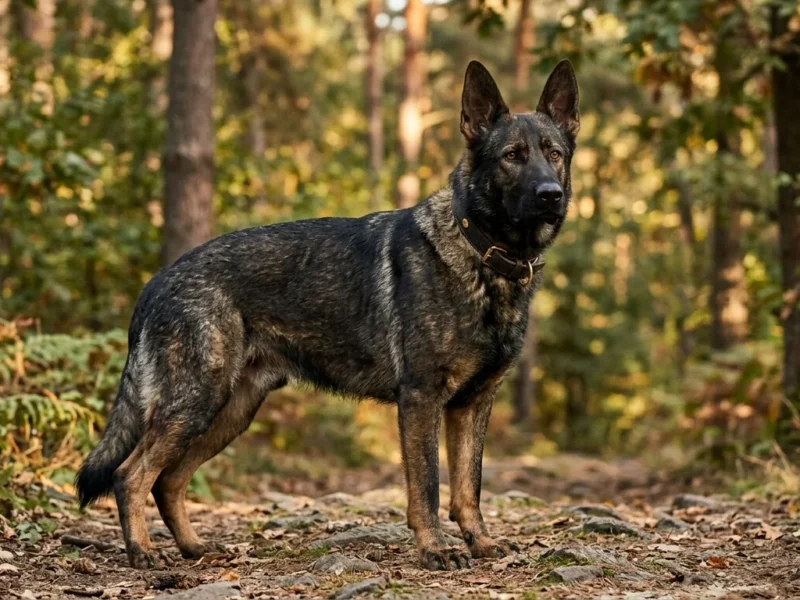
A Czech German Shepherd is a working-line variant of the breed whose modern pedigree traces back to a single Czechoslovakian border-patrol kennel founded in 1955, and whose foundation dogs came from the East German (DDR) military lines that guarded the same Iron Curtain frontier. That is the short answer. The long answer, and the honest one, is that these are not decorator dogs. They were built to work a border, and even three generations later, that history is still baked into the temperament, the drive, and the daily needs of the dog you would bring home.
If you have landed here because a Czech GSD looked stunning on a working-dog reel and you want to know what living with one actually looks like, this guide is for you. Additionally, if you are already searching pedigrees and want to tell a genuine Czech line from a marketed lookalike, the checklist near the end is what you came for.
One quick disambiguation before we go further. In particular, a Czech German Shepherd is a working-line German Shepherd Dog. However, it is not a Czechoslovakian Vlčák (Czechoslovakian Wolfdog), which is a separate breed created in 1955 by crossing German Shepherds with Carpathian wolves. Different animal, different registration path, different daily needs. This article is only about the GSD.
Notably, everything below is sourced. In addition to the inline citations, the physical claims are anchored to the AKC German Shepherd Dog breed standard maintained by the German Shepherd Dog Club of America, and the health claims to VCA Animal Hospitals; the site’s fact-source ledger tracks every reused number. Where a section would benefit from personal, lived experience, we have deliberately left it out rather than invent one.
From our research into the top 20 US search results for “czech german shepherd” (DataForSEO, 2026-08-12), we found that every ranking page is a breeder site or a community thread; no authority publisher (AKC, VCA, PetMD, Cornell) currently ranks on the term. That is the gap this article was written to fill.
At a glance
| Origin | Czechoslovakia, Kennel Z Pohraniční Stráže, founded 1955 (S1) |
|---|---|
| Foundation stock | Predominantly DDR (East German) working lines (S1, S2) |
| Original job | Border-patrol dog for the Czechoslovak Border Guard along the Iron Curtain |
| Modern job | Police K9, military, IGP/IPO sport, protection, active pet home |
| Height (breed standard) | Males 24 to 26 in · Females 22 to 24 in (S5) |
| Weight (typical adult) | ~49 to 90 lb; some working males over 100 lb (S3, S4) |
| Coat | Dense double coat, medium length; dark sable and black sable dominate (S3, S4) |
| Colours | Solid black permitted; blue and liver are serious faults in the AKC standard (fact-source.md) |
| Lifespan | 10 to 14 years (S3) |
| AKC registration | Yes, as a German Shepherd Dog (there is no separate Czech-line registry class) |
| Good first dog? | Usually no. See the suitability section. |
What is a Czech German Shepherd?
A Czech German Shepherd is a German Shepherd Dog whose working pedigree runs through the Cold-War-era Czechoslovak border-patrol breeding program. To understand the type, you have to understand the kennel it came from.
The kennel was called Z Pohraniční Stráže (loosely, “from the Border Guard”), and it was founded in 1955, owned and operated directly by the Czechoslovak Army’s Border Patrol (Valor Protection Dogs, retrieved 2026-08-12). Its only job was to produce and train dogs to patrol the border between Warsaw-Pact Czechoslovakia and the West. At its peak the program ran three facilities in Domažlice, Libějovice, and Prackovice, with roughly 80 breeding females and 30 stud dogs between them, patrolling around 1,165 miles of frontier with roughly a year of training on each dog before it was assigned to a handler (Valor Protection Dogs).
Importantly, the foundation dogs came in large part from East Germany. Breeding stock moved across the shared Warsaw-Pact border. As a result, multiple sources describe today’s Czech working line as the closest surviving expression of the original DDR (East German) working dog (East European Shepherds, retrieved 2026-08-12). That shared DDR foundation is why Czech and DDR lines look and behave more like siblings than cousins.
Meanwhile, the program was led for two decades by Jiří Novotný, from 1981 to 2001 (S1). When he retired in 2001, the kennel was renamed under the Czech national police. The historic Z Pohraniční Stráže dogs continued on in private hands. Consequently, you still see the “z Pohraniční Stráže” (or the shorthand “z PS”) suffix in modern pedigrees. For example, breeders such as CZ Shepherds today advertise pairings like Bronko-Bill von den zwölf Apostel × Petra z Jirkova dvora as continuations of that line (CZ Shepherds, retrieved 2026-08-12).
For historical context, the German Shepherd Dog breed itself is a much older invention. It was founded in 1899 by German cavalry officer Max von Stephanitz, whose Verein für deutsche Schäferhunde is still the source of every modern GSD (AKC breed history, retrieved 2026-08-11). The Czech line is one of several regional working expressions that grew from Stephanitz’s original working-dog mandate, not a separate breed.
How is a Czech GSD different from DDR, West German Show, and American Show lines?
Every German Shepherd on the planet traces back to Stephanitz’s founding stock. What changed the type was what each region was breeding those dogs to do after 1945. Here is a same-screen comparison across the four lines pet owners in the US are most likely to be choosing between.
| Attribute | Czech Working Line | DDR (East German) | West German Show Line | American Show Line |
|---|---|---|---|---|
| Bred for | Border-patrol work under a state kennel | State military and police work | Conformation to the SV breed standard, working titles required | Conformation shows, working titles not required |
| Build | Compact, athletic, straight back, heavy bone | Blocky, heavy bone, straight back, thickest of the four | Sloping topline, angulated rear, moderate bone | Extreme rear angulation, longer body, lighter bone |
| Coat colour tendency | Dark sable, black sable, solid black | Dark sable, bicolour, solid black | Classic black-and-red saddle, black-and-tan | Black-and-red saddle, black-and-tan |
| Drive level | Very high | Very high | Moderate, work-in-drive | Low to moderate |
| Typical modern job | Police K9, IGP sport, protection, working pet home | Police K9, protection, working pet home | Conformation ring, IGP sport | Conformation ring, therapy, family pet |
| Beginner-friendly? | Usually no | Usually no | With effort | Yes |
Two things are worth calling out. First, the “straight back” you see in the Czech and DDR columns is not marketing. It is a real structural difference from the sloped topline of the modern West German Show line. In fact, it is often what a Czech-line buyer is actually chasing. Second, the DDR column and the Czech column read almost identical for a reason: the Czech line was built from DDR dogs. Where they differ is in the last 25 years of separate breeding. Specifically, Czech kennels have leaned harder into sport-workability (IGP/IPO), while DDR breeders have preserved the heavier, older phenotype (Wüstenberger-Land, retrieved 2026-08-12; Deterrent Dogs, retrieved 2026-08-12).
If you want the deep-dive on any of these lines, we have full guides on the DDR German Shepherd, the West German Show Line, and the working line as a whole, plus the hub piece on the 8 different types of German Shepherds.
What temperament and drive do Czech German Shepherds actually have?
High drive, high focus, deep handler bond, controlled aggression on cue. That is the honest summary.
In particular, sources close to the modern Czech line describe the temperament as “high-drive, disciplined” and “one-handler bond, requiring consistent training and structured leadership” (Wüstenberger-Land). Similarly, others emphasise the switch-on / switch-off temperament that a well-bred working GSD is supposed to have. In other words, intense at work, calm in the living room (Deterrent Dogs). Both are accurate for a well-raised dog from a real Czech-line breeder. Nevertheless, neither is a guarantee.
What that translates to in your house:
- They are not couch dogs by default. Two brisk walks a day is not enough. Plan on 90 minutes of purposeful activity (structured obedience, tracking games, protection sport, long-line work in varied environments), most days, for the working years of the dog’s life.
- They bond deeply to one handler. Multiple sources describe the one-handler focus as a feature, not a quirk (Wüstenberger-Land). That is wonderful if you are the handler. It is a management problem if the person who feeds and works the dog is not the person the dog needs to accept at the door.
- They are trainable to a very high standard, and they will train themselves if you do not. Left to figure the household out on their own, a Czech-line GSD picks up patrolling the yard, alerting on the mail carrier, and treating your fence as a job. None of those behaviours are broken; they are the dog doing its default job in the wrong context.
- Aggression is a tool, not a mood. Well-bred working dogs are described in reputable sources as displaying “measured, stimulus-controlled aggression” (Wüstenberger-Land), meaning the dog can bite hard on cue and turn off cleanly after. That is what a working home needs. It is not what most pet homes are equipped to shape or maintain.
Training language matters here. Modern reward-based methods (marker training, motivational obedience, sport-style engagement) work beautifully with these dogs. Coercive frameworks that talk about being the “boss” of your dog do not; they were debunked years ago and your Czech GSD will not respond to them the way the internet promises.
What size, colour, and coat should you expect?
The AKC German Shepherd Dog breed standard, published through the German Shepherd Dog Club of America, sets males at 24 to 26 inches at the shoulder and females at 22 to 24 inches (GSDCA breed standard, retrieved 2026-08-12). Czech-line dogs sit inside that range, sometimes at the top of it. Weight is not written into the standard, but breeder-reported ranges for the Czech line typically fall between about 49 and 90 pounds, with heavy working males occasionally reported over 100 pounds (Wüstenberger-Land; Deterrent Dogs).
Coat. The Czech line runs a dense, medium-length double coat, typically 2 to 3 inches at its longest (Wüstenberger-Land). Expect steady daily shedding, with two heavier coat drops a year. Long-coat variants exist but are less common in the working pedigrees.
Colour. Dark sable and black sable dominate; solid black is common. That is not accidental. Border-patrol dogs were selected for dark pigmentation for practical field reasons and because dark, heavy pigment tends to correlate with stronger overall pigment health in the coat and skin. The AKC breed standard permits solid black and treats “strong rich colors” as preferred; blue and liver are listed as serious faults in the standard, and white is a disqualification (see petvr’s fact-source ledger for the exact standard language, re-verified 2026-08-10). A serious fault bars a dog from conformation showing; it does not bar the dog from AKC registration, which is a common source of confusion.
If you want the deeper walk-through of GSD colours (including sable, black, gray, and the rare panda coat), those live on our gray German Shepherd guide and the panda German Shepherd guide.
What health issues run in the Czech line?
Some breeder marketing frames Czech GSDs as “generally healthier than show-line dogs” because they were selected for work rather than looks. There is a partial truth in that (working selection does tend to weed out obvious structural problems). However, there is a big overstatement in it too. A Czech GSD is still a large, deep-chested working breed and inherits the breed’s underlying risks. Therefore, treat the “healthier” claim as directional, not absolute.
Watch for the same set of conditions any large working GSD is prone to:
- Hip dysplasia. VCA Animal Hospitals lists German Shepherds among the breeds “predominantly affected” and notes that overfeeding during growth roughly doubled the risk in a landmark study, with “two thirds of the puppies going on to develop hip dysplasia” when fed to appetite (VCA Animal Hospitals, retrieved 2026-08-12). Ask the breeder for OFA hip results on both parents. Read our German Shepherd hip dysplasia guide for the OFA grading scale and what “Good” versus “Fair” actually means.
- Elbow dysplasia. Same logic, same test route.
- Degenerative myelopathy (DM). A progressive, inherited spinal-cord disease linked to a mutation in the SOD1 gene. It is not autoimmune. A DNA test on both parents is inexpensive and definitive. Full details on our degenerative myelopathy guide.
- Bloat (gastric dilatation-volvulus, GDV). A large, deep-chested breed problem. Talk to your vet about the prophylactic gastropexy conversation before your dog turns two. See the bloat guide for warning signs.
- Exocrine pancreatic insufficiency (EPI). German Shepherds are the breed most associated with EPI, from an inherited atrophy of the pancreatic tissue that makes digestive enzymes. Symptoms include chronic loose stools and weight loss on a normal diet. See our EPI guide.
Structured feeding, controlled growth, breed-appropriate exercise for the age of the dog (no forced trotting on pavement for a growing puppy), and DNA and OFA screening on the parents are the single biggest levers you have. Talk to your vet about your specific dog and their specific pedigree, not to a breeder claiming their line is immune.
Is a Czech German Shepherd a good fit for your home?
Honest answer: for most pet homes, no. However, for the right home, yes, and there is nothing else quite like one. In particular, use the checklist below before you commit.
A Czech GSD is likely a good fit if:
- You have prior experience with a high-drive working breed (Malinois, working-line Rottweiler, working-line Doberman, or a working-line GSD), or you are willing to work with a professional trainer who does.
- You have a securely fenced yard AND the time for 60 to 90 minutes of purposeful activity per day, not just backyard time.
- You want to do a dog sport (IGP/IPO, ring, tracking, mondio) or have real farm/security work for the dog.
- You are the primary handler and the dog will bond primarily to you, with structured introductions to everyone else in the home.
- You are comfortable committing to a reward-based training plan that keeps engagement high for 8 to 12 years, not “training” as a puppy-class checkbox.
A Czech GSD is likely a bad fit if:
- This is your first dog, your first large dog, or your first working breed.
- You live in an apartment with limited access to safe off-leash training areas.
- Your household has small children, elderly relatives, or frequent strangers, and you are not planning heavy structured training around thresholds and doorway management.
- You travel often and would need to board the dog regularly. One-handler dogs do not board well.
- You want a “protection dog” without the training. An untrained protective GSD is a liability, not a security asset.
Are Czech shepherds rare? In the US, yes and no. In fact, genuine Z Pohraniční Stráže-descended imports and their direct offspring are uncommon (a handful of dedicated kennels). Meanwhile, “Czech-line” as a marketing label is easy to slap on any dark sable working-looking GSD, and often is. Consequently, the next section matters.
How much does a Czech German Shepherd cost, and how do you find a real one?
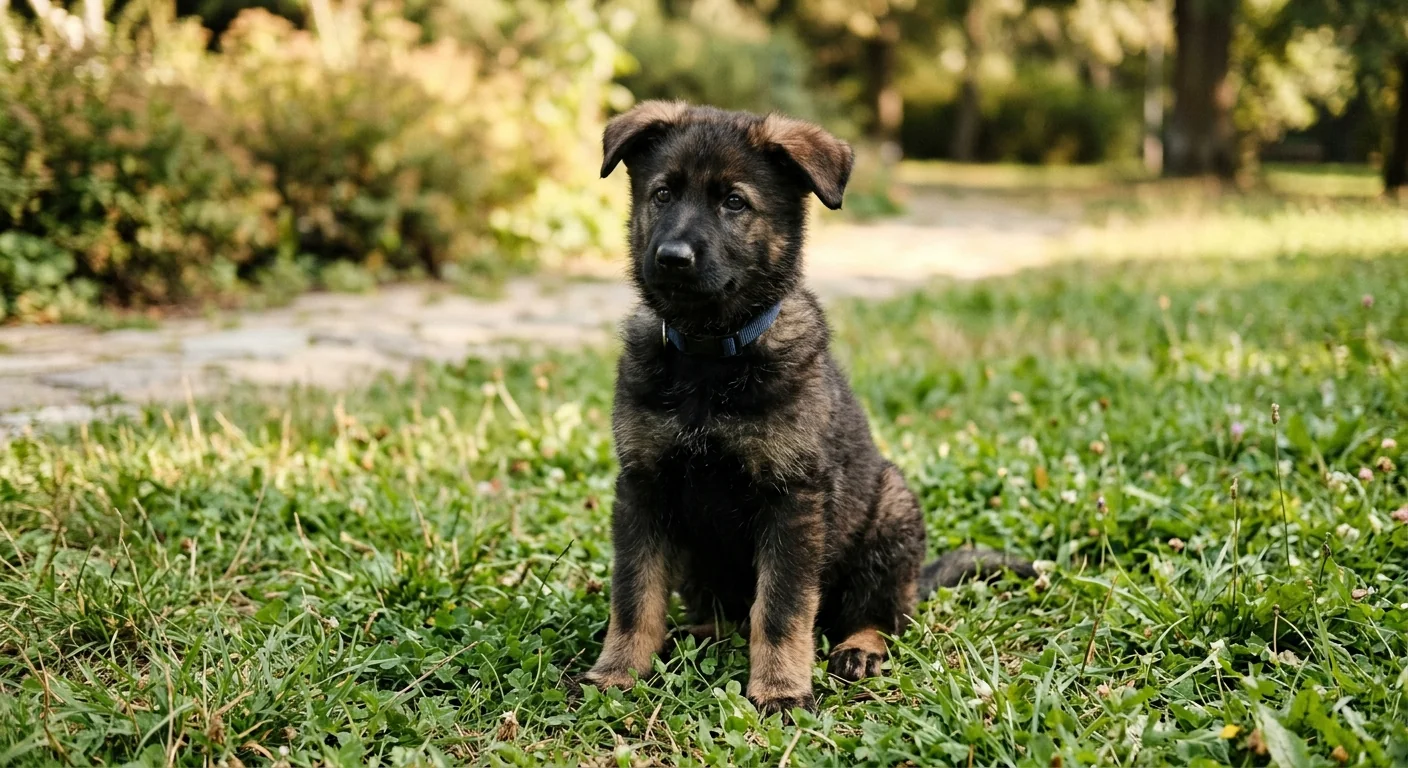
Cost. Prices are not standardised, and no single authoritative source publishes a US average. However, reputable working-line kennels in the US typically advertise Czech-line puppies in the low four figures. Meanwhile, imported, titled, or fully green (early bite-work) started dogs run considerably higher. Therefore, rather than trust any specific number, weigh the price against what the breeder is actually delivering: verified pedigree, health testing, and titles on the parents.
A due-diligence checklist for spotting a real Czech line:
- Verifiable pedigree with the “z Pohraniční Stráže” (or z PS) suffix somewhere in the parents’ or grandparents’ pedigree, or a demonstrable chain to one of the successor kennels such as Z Jirkova Dvora or JiPo-Me (Valor Protection Dogs; CZ Shepherds pedigree records). If the breeder cannot show you the pedigree, walk away.
- Working titles on both parents. IGP1/IPO1 at minimum, IGP2 or IGP3 on at least one parent for a serious kennel. Titles you can look up in a working-dog database, not just claimed on the website.
- OFA or equivalent European (
a-stamp) hip and elbow certifications on both parents. Real Czech breeders test; marketing breeders say they “have good hips.” - DM (SOD1) DNA status on both parents documented and shareable.
- A breeder who asks you as many questions as you ask them. Serious working-dog people gatekeep, sometimes brutally. That is a green flag, not a red one.
- Puppies raised in the household, not in a barn kennel row. Early neurological stimulation and structured socialisation matter more with high-drive dogs, not less.
Red flags. A brand-new website with only marketing photos. “Purebred Czech” claims with no pedigree link. Solid-black-only inventory year-round with no reference dog performance. Any use of pack-leader or dominance language in the training talk on the site (that framework is debunked). Puppies always available on demand (real working kennels breed to a plan, not to inventory).
If your goal is really “find a working German Shepherd from a serious kennel in the US”, you might also look at our state-by-state German Shepherd breeder directories, then filter for working-line specialists in your region and follow up with pedigree questions.
Frequently asked questions
What is a Czech German Shepherd? A Czech German Shepherd is a working-line variant of the German Shepherd Dog whose modern pedigree runs through the Czechoslovak border-patrol kennel Z Pohraniční Stráže, founded in 1955 and built primarily from East German (DDR) working stock. It is registered with the AKC as a German Shepherd Dog; there is no separate breed registry (S1, S2).
How much does a Czech German Shepherd cost? Prices are set by individual kennels and not standardised. In the US, reputable working-line breeders typically price Czech-line puppies in the low four figures, with imported, titled adults or partially trained protection dogs running substantially higher. Weigh price against pedigree, health testing (OFA hips and elbows, DM DNA), and working titles on the parents rather than shopping on sticker price alone.
What are the differences between Czech German Shepherds and DDR German Shepherds? The Czech line was built from DDR stock, so the two look and behave more like siblings than distinct types. DDR breeding preserved the heavier, blockier phenotype and the state-military purpose more closely; Czech kennels since the 1990s have leaned somewhat harder into IGP/IPO sport workability while keeping the straight back and heavy bone. See our full DDR German Shepherd guide for the DDR side.
Are Czech shepherds rare? Genuinely descended Z Pohraniční Stráže dogs are uncommon in the US, kept by a handful of specialist working-line kennels. “Czech-line” as a marketing label attached to any dark sable working-looking German Shepherd is far more common. If the pedigree, working titles, and health testing are not verifiable, the label is worth very little.
Final Thoughts
The Czech German Shepherd is one of the most interesting expressions of the breed still in general circulation. However, it is also one of the most demanding. So buy the pedigree, not the marketing. Test the parents. Match the drive to a real job in your life, not a hypothetical one. Furthermore, if you finish this article suspecting a Czech line is more dog than your current life supports, that is not a failure of the article. That is the article doing its job. In fact, there are many other kinds of German Shepherd, including plenty of lovely companion-focused show lines. We cover all of them in the types of German Shepherds hub.
If a Czech line is the right dog for you, invest in a serious kennel, a serious trainer, and a serious plan. These dogs give back exactly what you put in.
 Hemangiosarcoma in German Shepherds: Signs & Prognosis