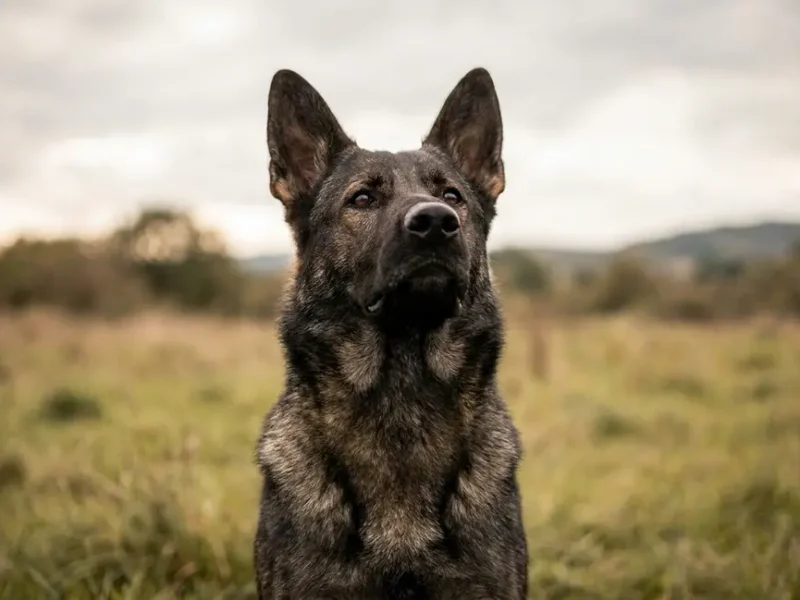
VCA Hospitals says the breed is very trainable but needs consistent leadership (VCA Hospitals, content by LifeLearn Inc.). Their intelligence helps, yet it also means a bored or inconsistent household gets a clever dog that invents its own rules. If you’re deciding whether you can handle one, or you’re already struggling with one, you want a realistic picture, not a flat yes.
PetVR’s answer is two-sided. The PDSA says the breed is intelligent, loyal and loves to be kept active, but VCA Hospitals says it needs consistent leadership (PDSA) (VCA). This guide is for intermediate readers weighing ownership or fixing problems. It covers methods, puppy ages, behaviour problems, exercise, off-leash work and when another path fits better. For background on the breed itself, see the complete German Shepherd guide.
- German Shepherds learn fast, so most training problems come from the owner’s routine, not the dog’s ability.
- Consistent rules shared by the whole household matter more than any single technique.
- Reward-based training works best, in short and regular sessions.
- Daily exercise and mental work prevent boredom, barking and destructive habits.
- Start early with socialization and boundaries, and expect maturity to take years.
Table of Contents
- So, Are German Shepherds Easy to Train?
- Is a German Shepherd Right for a First-Time Owner?
- Dog Training for German Shepherds: Methods That Work
- When to Start: Puppy Stage and Age
- German Shepherd vs Other Breeds, and Male vs Female
- Behaviour Problems That Make Training Harder
- Exercise, Mental Work and Off-Leash Reliability
- Is It a Good Idea to Have Two German Shepherds?
- When a German Shepherd May Not Be the Right Fit
- Next Steps
- FAQ
So, Are German Shepherds Easy to Train?
Yes, with a condition. VCA Hospitals says the breed is very trainable but needs consistent leadership (VCA). Good German Shepherd training is less about whether the dog can learn and more about whether you can keep teaching it every day.
The breed was bred for herding. The PDSA describes these dogs as loyal, intelligent and fond of being kept active, so they can be easy to train (PDSA). Their quick minds also create the catch. The American Kennel Club notes that high intelligence and strong willingness to work mean a German Shepherd needs consistent, ongoing training, and that a bored one is a destructive one (American Kennel Club). For more on how fast they pick things up, read about German Shepherd intelligence and learning speed.
Picture an owner whose dog learns “sit” in minutes, then ignores it a week later. The dog hasn’t forgotten. It learned the command, then learned that the command is optional, because the rules changed between family members or the reward stopped. Fast learners absorb your inconsistency as quickly as your lessons.
So, are they difficult? Only when the owner’s side is weak. Ease depends on the account an owner can give of their own routine: do the same cues get used by everyone, does the dog get a daily job, and does practice happen outside the kitchen? One dog can fairly be called easy in one home and hard in another.
The working-dog background matters here. A breed made to herd and guard wants a task. Without one, it will make its own, and you may not like the choice. A job can be simple: obedience practice, a scent game, carrying a toy on a walk.
Which dog is hardest overall is not a useful question. A better one is whether you know how to train the things you want this dog to do. If you can break a behaviour into small steps, reward it reliably and repeat it daily, a German Shepherd will reward you quickly. If you can’t yet, that’s a skill you can learn, and the rest of this guide covers it.
Why Some German Shepherds Are Hard to Train
Boredom is the first cause. The American Kennel Club says a bored German Shepherd is a destructive German Shepherd (AKC).
The second cause is loopholes. If a rule applies on Monday but not Tuesday, the dog learns that testing is worthwhile. The third is missing structure: no daily routine, no clear start and end to training, no expectation of focus.
Consider a dog that obeys at home and ignores you outdoors. It hasn’t gone stubborn. Outdoors is more exciting, and the dog was never taught the cue there. Practise in new places in small steps. The exercise section below covers the fix for boredom, and you can read more on what GSD temperament really involves.
Is a German Shepherd Right for a First-Time Owner?
A first-time owner working full time is staring at a puppy photo and wondering if it will work. It can, but only with planning.
A German Shepherd can suit a beginner who is willing to learn. It is a harder match for a beginner who wants a low-effort pet. Use this checklist:
- Time: you can give daily exercise, training and play, not just weekend bursts.
- Calm firmness: you can set rules without shouting or losing patience.
- Consistency: everyone at home uses the same cues and rules.
- Mental work: you will provide games, scent work or short training sessions every day.
- Support: you’re willing to join obedience classes and ask a trainer for help early.
The downsides are real. The breed needs daily exercise, daily mental work and steady training effort. Read about the daily exercise a GSD needs before committing. Who should not own one? People who are away most of the day, who dislike structured routines, or who expect the dog to train itself. If that sounds like you, a calmer breed may make everyone happier.
Obedience classes help beginners because a trainer can spot timing errors you can’t see yourself.
Dog Training for German Shepherds: Methods That Work
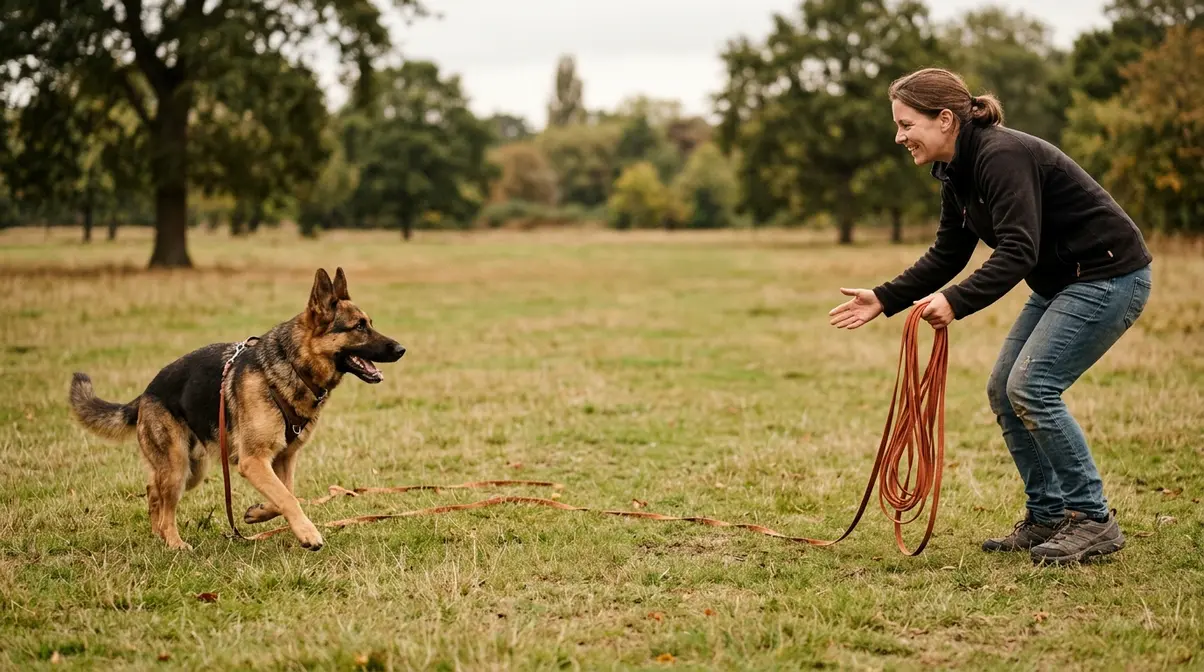
Reward-based training, one household rule set and short sessions work best. The American Kennel Club says consistency and positive, reward-based training will yield excellent results (American Kennel Club). Here is how to train a German Shepherd, step by step, with the reasons each step matters.
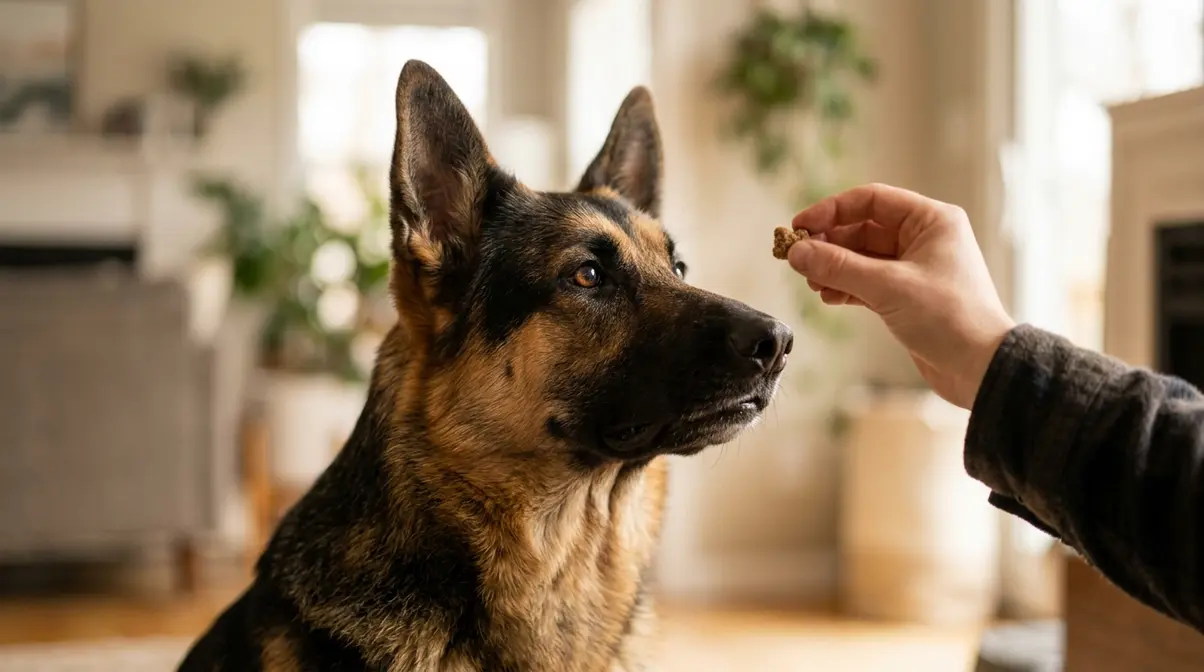
- Use reward-based training. Positive reinforcement means rewarding behaviour you want so the dog repeats it. Use food, play or praise within a second of the right behaviour. VCA Hospitals says consistent training with positive reinforcement is best (VCA). The reason is simple: a dog repeats what pays, and a clever dog works out quickly what pays most.
- Agree one rule set. PDSA says everyone in the family needs to follow the same rules (PDSA). Write down the cues (sit, down, come) and who uses which word. American Standard Dog Training on YouTube advises empowering all the owners of the dog, even the kids, so that you have to listen to everyone in the household.
- Keep sessions short. Five to ten minutes of focused work, several times a day, beats one long session that ends in frustration. Stop while the dog is still keen, so the next session starts with enthusiasm.
- Teach one thing at a time. Start in a quiet room, then add distractions, then new places. A cue learned in the kitchen is not yet learned in the park.
- Fade the treats gradually. Move from rewarding every success to rewarding the best ones, so the behaviour holds without constant food. Keep praise and play in the mix throughout.
- Add structure daily. Training is a habit, not a course you finish. Fold a few cues into meals, walks and doorway moments.
Now the common failures. The classic one is a family where each member uses different commands: one says “down,” another says “lie down,” a third says “off.” The dog hears noise, not a rule. Fix it by agreeing on one word per behaviour and putting the list on the fridge.
Late rewards are another failure. If the treat arrives three seconds after the dog stands up from a sit, the dog may think it was paid for standing. Keep treats in a pouch, close at hand, so timing is quick.
A third failure is jumping to distractions too fast, then blaming the dog. If your dog fails a cue at the park, go back to a quieter place and rebuild. A fourth is training only when the dog is already wound up or exhausted, when learning is hardest.
If training seems to be failing, check the household rules first, then reward timing, then the exercise level. That order solves most cases.
This approach does not replace professional help. If your dog shows fear or aggression, work with a qualified trainer rather than relying on a routine like this alone.
For a closer look at how this plays out day to day, see this step-by-step approach to training.
When to Start: Puppy Stage and Age
The American Kennel Club says a German Shepherd may not reach adult maturity before the age of two or three, and that males tend to reach it later than females (AKC). That slow timeline explains most of the hard stages.
Are German Shepherds easy to train as puppies? Mostly yes, because they are eager and attentive. Start early. The AKC says the breed needs consistent, ongoing training from an early age, and that early socialization and puppy classes are vital (AKC) (AKC). Training doesn’t end when puppy class does; it continues for life.
What is the hardest age? Adolescence is the usual answer. The dog looks grown, has plenty of energy, and still has a puppy’s judgment. Because maturity can take two or three years, that phase can feel long. Many owners find that earlier lessons seem to vanish. They haven’t; they need refreshing with calm, short repetition. Expect to repeat the basics rather than start over.
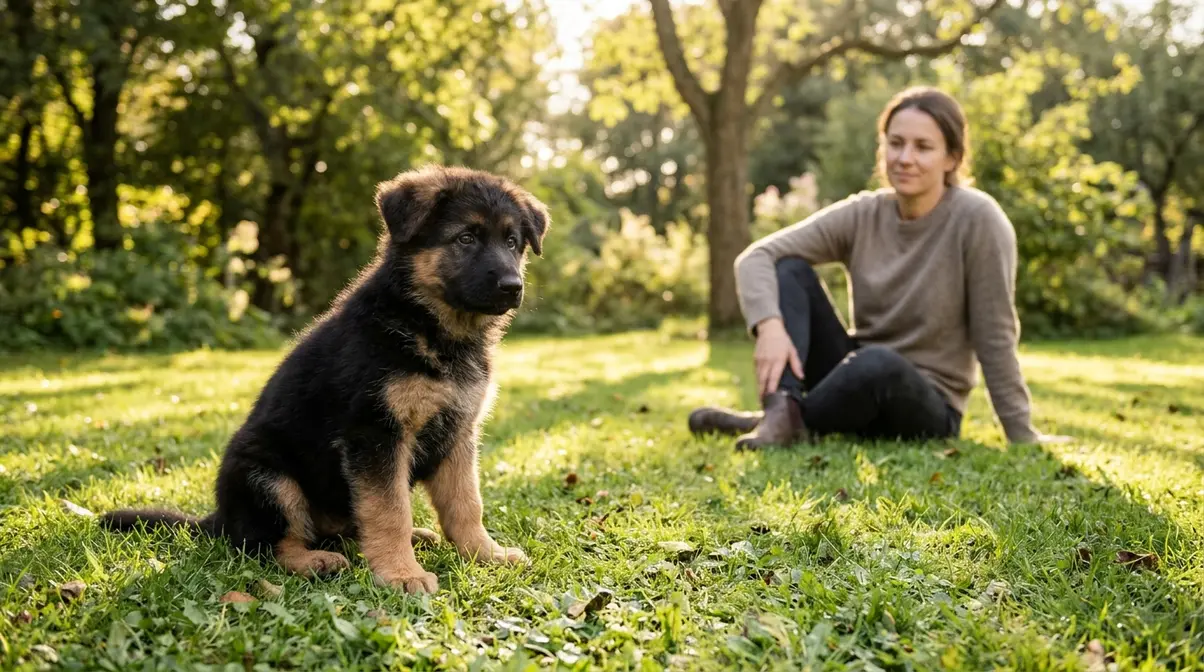
Picture an owner of a puppy chewing everything. Chewing is normal exploration, so manage the environment first: put shoes away, offer chew toys, and reward the dog for choosing them. Then add short training sessions. Telling the puppy off after the damage is done teaches little.
Socialization is the careful introduction of a puppy to people, places, sounds and other dogs so it grows into a confident adult. Keep early experiences calm and positive, such as meeting a calm new person at a distance the puppy can handle. If the puppy hides, let it retreat and try again with more space. Set early boundaries too: where the dog sleeps, what is chewable, and what each cue means.
Be careful with exercise. Cornell University College of Veterinary Medicine advises avoiding repetitive high-impact or forced activity, such as long-distance running on hard surfaces, during the rapid growth phase (Cornell University College of Veterinary Medicine). Regular, age-appropriate play is fine.
Watch for warning signs. The Ohio State University Indoor Pet Initiative says growling, snapping, biting, stiffening and cowering are not normal puppy behaviours (Ohio State University Indoor Pet Initiative). If you see them, contact a vet or qualified trainer early rather than waiting for the puppy to grow out of it.
Potty training is a matter of routine. Take the puppy out after sleeping, eating and play, reward success right away, and clean accidents without punishment. Speed varies by dog and by how consistent you are. For more, read about house training a German Shepherd puppy, training a six-week-old puppy and puppy training from the first weeks.
German Shepherd vs Other Breeds, and Male vs Female
No honest ranking settles whether German Shepherds are easier than Belgian Malinois or golden retrievers. Compare drive, energy and the experience the owner needs. A Malinois is typically more intense, so it suits experienced handlers, while a golden retriever is often milder. For the full comparison, see GSD compared with Belgian Malinois.
Boys or girls? No reliable figure says one sex trains more easily. The American Kennel Club says males tend to reach maturity later than females (AKC). Read more on male or female GSD trainability.
Behaviour Problems That Make Training Harder
A dog barking at every passer-by from the front window is a common scene. Barking and reactivity are usually workable problems, not proof the dog is a lost cause.
Reactivity means over-the-top responses to triggers such as dogs, people or noises. Are German Shepherds aggressive? VCA Hospitals says that without dedicated training they may develop overprotective or reactive behaviors (VCA). The American Kennel Club says a dog who is not exercised enough will become frustrated and likely to develop undesirable behaviors (AKC). Training and meeting the dog’s exercise needs are the first things to look at.}
To stop barking, start with exercise and mental work, then control the view: block the window or limit access. A dog that rehearses barking all day gets better at it. Reward quiet moments, and use the same cue and response every time. Don’t shout; to the dog, that sounds like joining in.
For overprotective behaviour, teach calm greetings, keep distance from triggers, reward the dog for looking at you, and practise with a handler who stays relaxed. Work at a distance where the dog can still take a treat, then close the gap slowly over many sessions. Rushing this is the usual way it goes wrong.
The Ohio State University Indoor Pet Initiative says aggressive and fearful behaviour is not normal in puppies (Ohio State). If you see worrying aggression, biting or a dog that seems scared, call a vet to rule out pain, then a qualified trainer. This routine is not enough for serious aggression. See also common behaviour problems in GSDs.
Exercise, Mental Work and Off-Leash Reliability
A German Shepherd needs a minimum of two hours of exercise every day, including walks and off-lead time in a safe area, with extra play and training on top (PDSA). Without that, training slows.
Think of a dog tearing around after a short walk. That energy isn’t defiance. The American Kennel Club says that as a very active, athletic breed, the German Shepherd requires lots of exercise (AKC). A tired, satisfied dog can focus, while an under-exercised one treats every cue as a distraction from what it really wants to do.
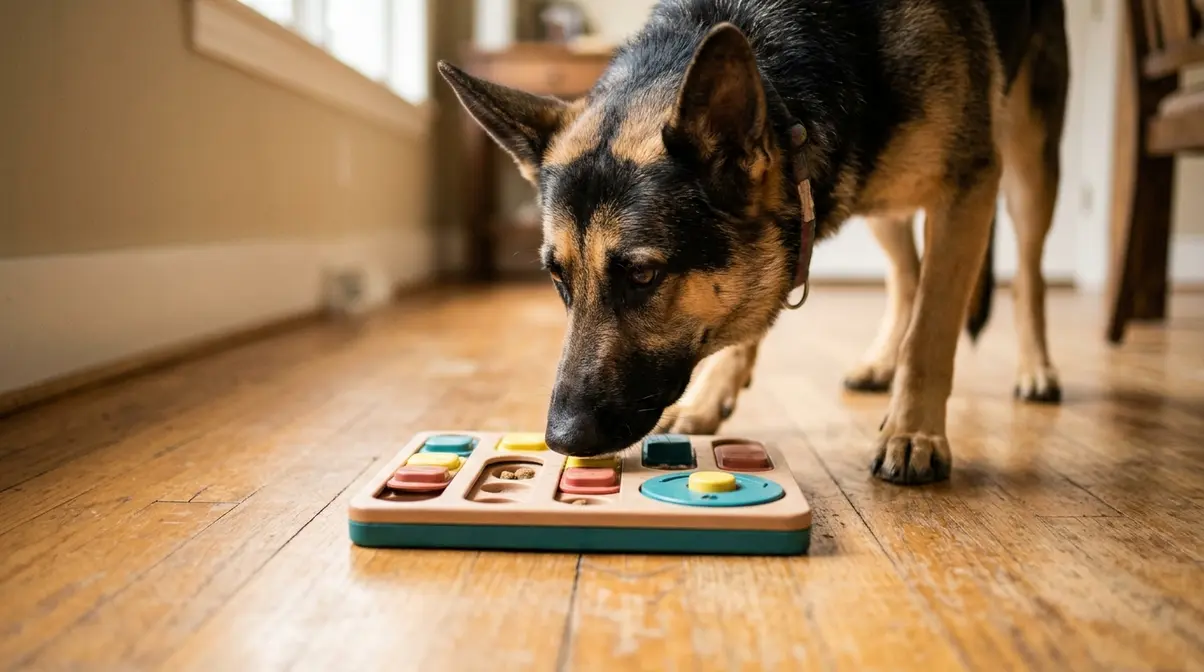
Mental work counts too, because thinking tires a dog differently from running. Build a daily routine you can tick off:
- Morning walk with sniffing time
- Ten minutes of cue practice
- Off-lead exercise in a safe area
- A scent game or puzzle feeder
- Evening training session
- Calm settling time
American Standard Dog Training on YouTube says it does not want you to heel around your neighbourhood with 100% attention. The takeaway: let the dog sniff and relax on walks, and save focused work for set sessions.
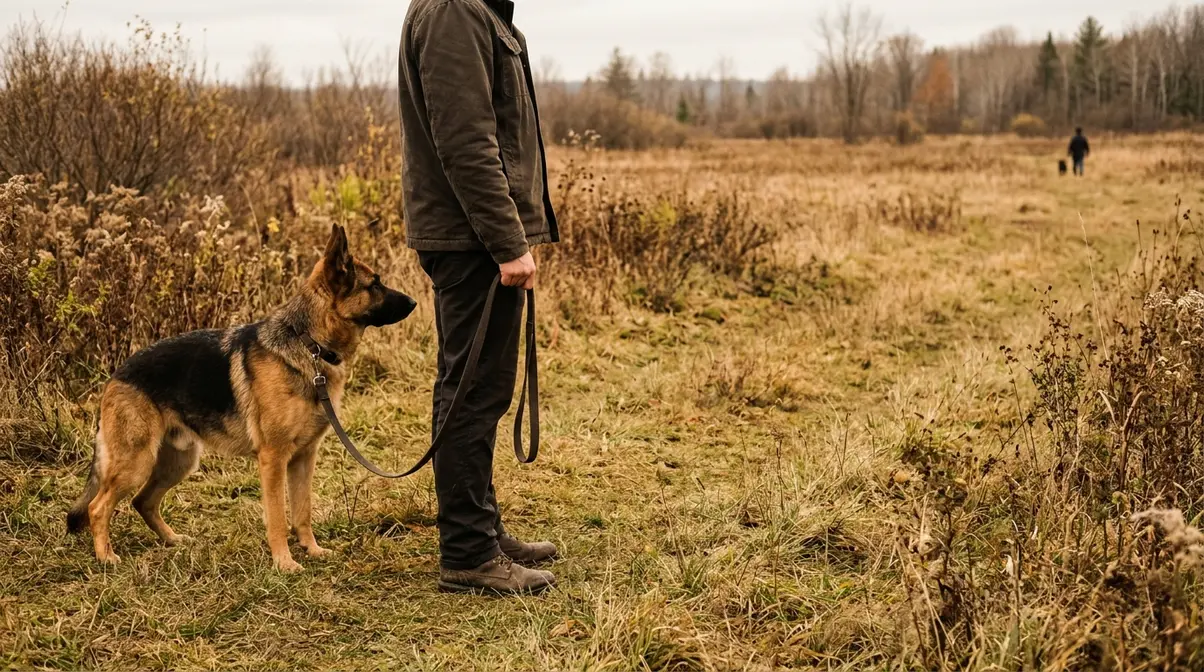
Are German Shepherds easy to train off leash? They can learn it, but reliability is gradual. Start on a long line in quiet places, reward every check-in, and add distractions slowly. Skipping steps is the usual cause of failure. Don’t expect a fixed timeline, and keep the dog on a line near roads or wildlife until recall is solid in busy settings. Learn more in teaching a reliable down off-lead.
Is It a Good Idea to Have Two German Shepherds?
A second dog is a good idea only if you want one for good reasons. The Ohio State University Indoor Pet Initiative says the first thing to consider is whether you really want another dog just for the sake of having one (Ohio State University Indoor Pet Initiative). The Ohio State University Indoor Pet Initiative adds that sometimes a new dog works out as a great companion, but there is no way to know in advance (Ohio State).
A second dog doesn’t fix a bored first dog. It means two dogs to exercise, train and manage, and two sets of habits learning from each other, good and bad. An owner considering a second puppy while the first dog still ignores recall faces extra work. The sensible step is to finish basic training with the first dog, then check that the household has the time and energy for double the work.
On pairing, Ohio State’s Indoor Pet Initiative says that in its experience conflict is least likely between a male and a female, next between two males, and most likely between two females (Ohio State). That’s a tendency, not a guarantee, so a good pairing on paper can still clash.
Introduce dogs on neutral ground, keep early meetings short and calm, and feed them apart. Get a trainer’s help early if tension rises. If your first dog already shows reactivity or guards resources, solve that first, because a second dog usually makes it harder.
When a German Shepherd May Not Be the Right Fit
The first-time owner section above covers fit in full. In short, a German Shepherd can be the wrong match when daily time, energy or patience is limited.
An owner with little time faces long workdays, a quick walk before dark, and a dog left alone for hours. The breed’s exercise and training needs go unmet. The result is a bored, frustrated dog and a frustrated person, with barking, chewing and pulling that feed on each other. That isn’t a failure of the dog.
A calmer, lower-drive breed may fit better in that home. Another option is an adult dog whose temperament is already known, though it still needs structure and daily work.
If you have the will but lack the skills, a professional trainer can bridge the gap, especially with reactivity or overprotective behaviour. Ask for reward-based methods and for a plan you can follow at home. Be wary of anyone who promises a finished dog in a short course.
The limit of this advice is that fit depends on your life, not on the breed alone. Be honest about your week, not the week you hope to have. Choosing differently isn’t giving up; it’s good judgment for you and the dog.
Next Steps
Ready to start? Do these in order, and treat the list as a weekly routine rather than a one-off plan.
- Write one rule set and share it with everyone at home, including children, so every cue means the same thing.
- Choose reward-based methods and keep sessions short, ending while the dog is still keen.
- Begin socialization early, calmly and positively, and let the puppy set the pace.
- Plan at least two hours of daily exercise, with training on top.
- Add daily mental work: scent games, puzzles and short practice sessions.
- Join an obedience class for feedback on your timing.
- Call a vet or qualified trainer if you see fear, biting or aggression.
A reader starting this week might begin with only the rule list and one five-minute session on the first day. By the end of the week the routine feels normal, and that is the point. Reaching a trained German Shepherd is mostly a question of routine. Keep it steady, and the dog’s quick mind works in your favour.
FAQ
Do German Shepherds like to be hugged?
Many tolerate hugs from people they trust, but plenty dislike being squeezed. Watch the body language: a stiff posture, turned head or lip licking means stop. Teach children gentle petting instead, and reward calm contact.
What’s the best dog to pair with a German Shepherd?
No breed is guaranteed. A second dog’s temperament, energy and sex all matter. A male and female pairing is least likely to clash, according to Ohio State’s Indoor Pet Initiative (Ohio State). Introduce slowly and watch early interactions.
What is the hardest age with a German Shepherd?
Adolescence is usually hardest. The American Kennel Club says a German Shepherd may not reach adult maturity before two or three (AKC). Stay consistent, exercise well, and refresh basics often.
how can we train a dog?
Use rewards for behaviour you want, keep sessions short, and have everyone follow the same rules. VCA Hospitals says consistent training with positive reinforcement is best (VCA). Practise in new places gradually, and add daily exercise and mental work.
 German Shepherd and Bulldog Mix: Which Bulldog Parent Changes the Dog