You have a German Shepherd, a work schedule, and a nagging worry that one hour isn’t enough. Maybe you cut the morning walk short this week, or you’re staring down a new 9-to-5 and wondering whether your dog is going to cope. German Shepherd exercise needs are genuinely demanding, and getting it wrong shows up fast in chewed furniture, restless pacing, and a dog that won’t settle.
The good news is that the answer isn’t just “walk more.” By the end of this guide, you’ll have a clear daily target for your dog’s age, a sample routine you can start tomorrow, and honest answers to the questions that keep you up at night. This guide covers daily targets, life-stage differences, what to do when you miss a walk, and how mental stimulation can save the day when time runs out.
German Shepherd exercise needs are genuinely demanding: most healthy adult German Shepherds need 60 to 90 minutes of physical exercise daily, split into at least two sessions, plus 15 to 20 minutes of mental stimulation, and brain work can partly fill the gap on days when a full walk isn’t possible.
- Daily target: 60-90 minutes of structured exercise for healthy adults, split into sessions (PitPat recommends a floor of at least 90 minutes; yfvets.co.uk gives a 60-90 minute window)
- Puppies: follow the 5-minute rule per month of age to protect developing growth plates, the soft cartilage at the ends of a puppy’s long bones
- Mental work counts: nose work, training sessions, and puzzle toys can settle a GSD as effectively as a longer walk alone
- Missed walks: one skipped day won’t harm a healthy adult, but a consistent pattern of under-exercise leads to destructive or anxious behavior
- The Exercise-Enrichment Balance: physical activity and mental stimulation are two equal halves of a GSD’s daily needs, treat both as non-negotiable
How Much Exercise Does a German Shepherd Need Each Day?
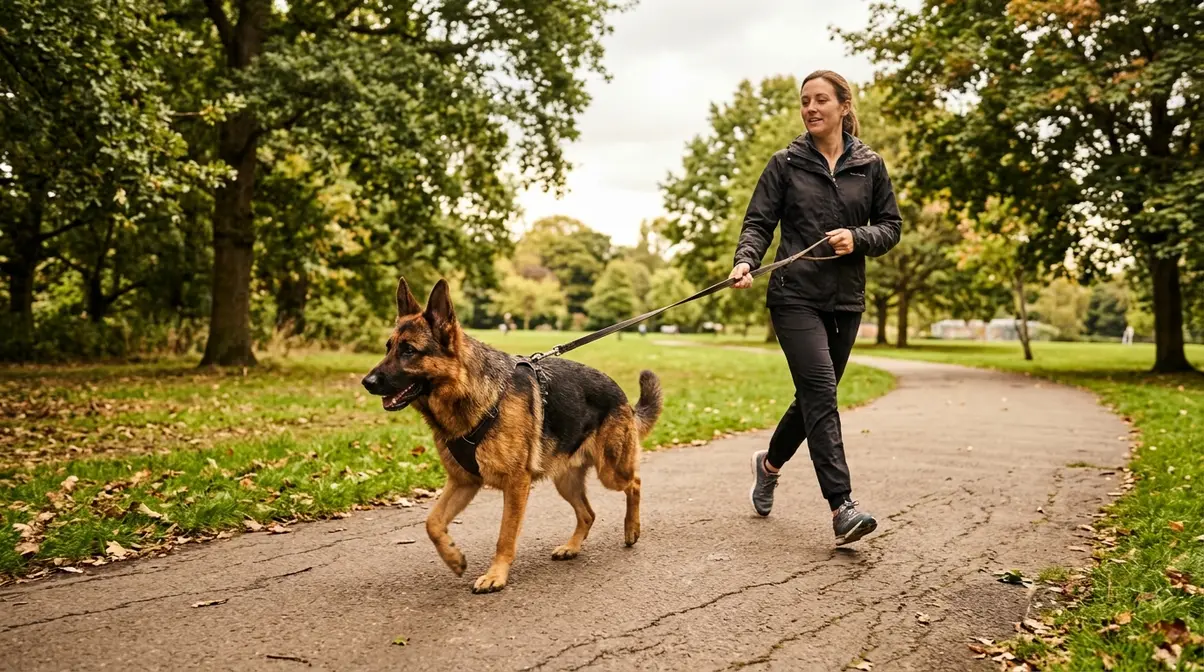
Adult German Shepherds need at least 90 minutes of structured physical exercise daily, split into at least two sessions. The PitPat exercise guide sets this as the floor for healthy adults, while the vet-authored yfvets.co.uk breed guide gives a 60 to 90 minute window. Either way, those sessions should be paired with 15 to 20 minutes of mental stimulation daily.
That combination is what this guide calls the Exercise-Enrichment Balance: physical activity and mental work as two equally weighted halves of a GSD’s day. Sources don’t fully agree on the exact range, and that disagreement reflects real variation in individual dogs rather than a contradiction. The section below explains why the figures differ and gives you a practical decision rule for your specific dog.
The Daily Exercise Target for Adult German Shepherds
German Shepherd exercise needs vary more than a single number suggests. The PitPat exercise guide recommends at least 90 minutes per day for healthy adults, while the vet-authored yfvets.co.uk breed guide gives a 60 to 90 minute window. Owner consensus on r/germanshepherds lands around 60 to 90 minutes with two or three training sessions woven in. These aren’t contradictions, they reflect real variation in individual dogs.
The figures differ for good reason. Working-line GSDs, bred for police and military work, typically need more than show-line or pet-bred dogs. A younger adult at peak energy needs more than a calmer six-year-old. Health status, individual temperament, and even the weather all shift the target. For a comprehensive overview of the breed’s characteristics, see this complete breed guide for German Shepherd owners.
The practical decision rule: start at 60 minutes and watch for behavioral signals. Restlessness, chewing, excessive barking, or digging after a walk are signs the target hasn’t been met. A healthy 3-year-old working-line GSD may need 90-plus minutes; a calmer 6-year-old show-line dog may be content with 60 to 70 minutes split across morning and evening.
One more distinction worth making: structured exercise, intentional walks, fetch, or training at a purposeful pace, produces different results from free roaming in a backyard. A yard gives your dog access to space, but it doesn’t provide the sustained engagement, varied terrain, or social stimulation of a real walk. Count structured time; don’t assume unstructured backyard roaming fills the gap.
Is One Hour Walk a Day Enough for a German Shepherd?
How much exercise a German Shepherd needs is the question most owners are really asking when they search this topic, and the honest answer is that one hour is the bare minimum, not the target. A single 60-minute walk, especially a slow on-leash neighborhood stroll, leaves most adult GSDs under-stimulated. The yfvets.co.uk breed guide recommends 60 to 90 minutes, and PitPat sets at least 90 minutes as the floor for healthy adults.
If you’re reading this because you only managed one walk today, you’re not alone, and you’re not failing your dog. The real gap for most owners isn’t walk length, it’s the absence of mental stimulation. A 60-minute walk plus a 15-minute nose-work session gives your GSD more total stimulation than a 75-minute walk with no mental engagement. That’s the Exercise-Enrichment Balance in practice: when time is short on the physical side, the mental side can close the gap.
Sample Daily Routine for Working Owners
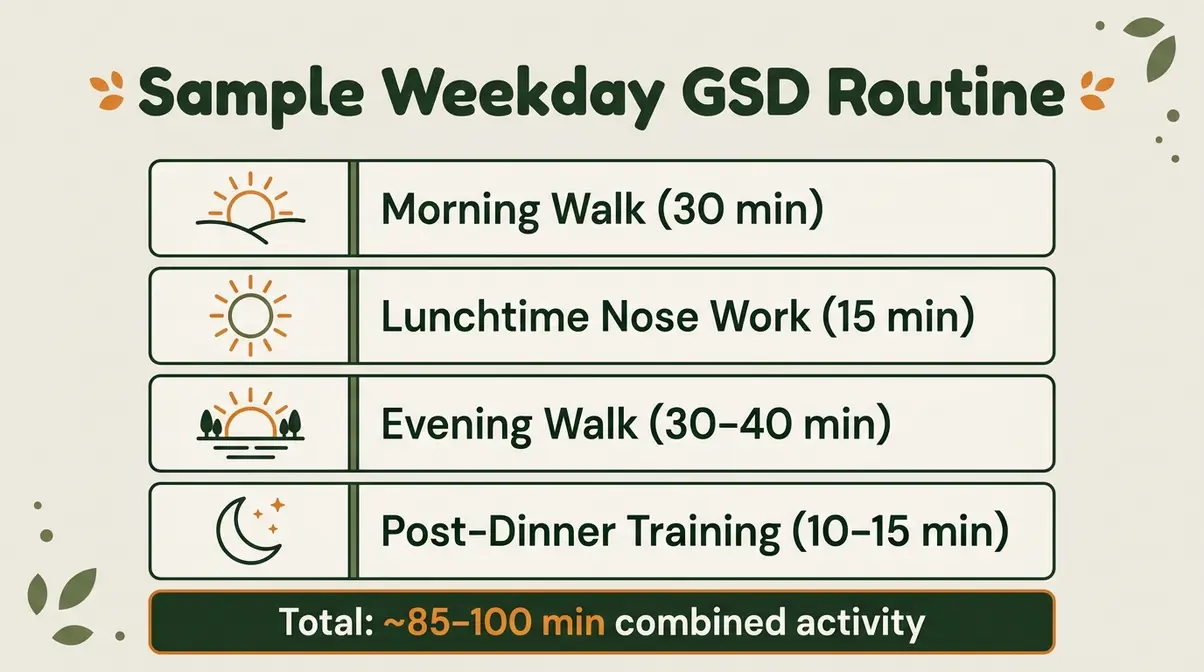
Here’s what a realistic weekday looks like for a GSD owner with a standard work schedule:
Standard Day (9-to-5 with a lunch break):
- Morning (30 minutes): Brisk walk before work, intentional pace, varied route if possible
- Lunchtime (15 minutes): Nose-work session, scatter kibble in three rooms and let your dog “find it,” or use a puzzle feeder
- Evening (30-40 minutes): Walk with a change of scenery where possible
- Post-dinner (10-15 minutes): Training refresher, “sit,” “stay,” “down,” “leave it”, or a flirt-pole session in the yard
Total: approximately 85 to 100 minutes of combined physical and mental activity.
“So, my pride and joy, my 6 year old German Shepherd, has recently had to adjust to my new work schedule.”
Owner on r/germanshepherds owner thread (owner experience, not expert guidance)
That routine above is exactly the kind of adjustment that works for this situation. The key is splitting activity across the day rather than relying on one long session. For short days when only 30 to 40 minutes of walking is possible, replace the missed walk time with a 20-minute mental stimulation session, hide-and-seek treats, a “find it” game, or a stuffed Kong. It’s not a perfect substitute, but it’s meaningfully better than nothing.
Splitting exercise into two or more sessions also reduces the risk of bloat in large breeds, which can be triggered by heavy activity around mealtimes. That’s one more practical reason to spread activity rather than front-load it.
German Shepherd Exercise Chart: Quick-Reference by Life Stage
The table below summarises the life-stage figures covered in this guide and the next section. It’s an original synthesis based on guidance from PitPat and yfvets.co.uk, treat it as a starting framework, not a rigid prescription.
| Life Stage | Age Range | Daily Physical Exercise | Mental Stimulation | Notes |
|---|---|---|---|---|
| Puppy | 8 weeks-6 months | 5 min × age in months, up to twice daily | Short play sessions, sniff games | Protect growth plates, no running on hard surfaces or jumping |
| Adolescent | 6-18 months | Gradually increase to 45-60 min | Obedience training, scent work | Growth plates not yet closed, avoid high-impact activity |
| Adult | 2-7 years | 60-90 min, split into 2+ sessions | 15-20 min nose work or training | Working-line dogs typically need the higher end of the range |
| Senior | 7+ years | 30-45 min low-impact | Gentle puzzle toys, short training refreshers | Watch for stiffness; reduce if the dog seems sore the next day |
Individual dogs vary. A vet check is the most reliable way to calibrate your specific dog’s targets, especially if they’re at the upper or lower end of a life stage.
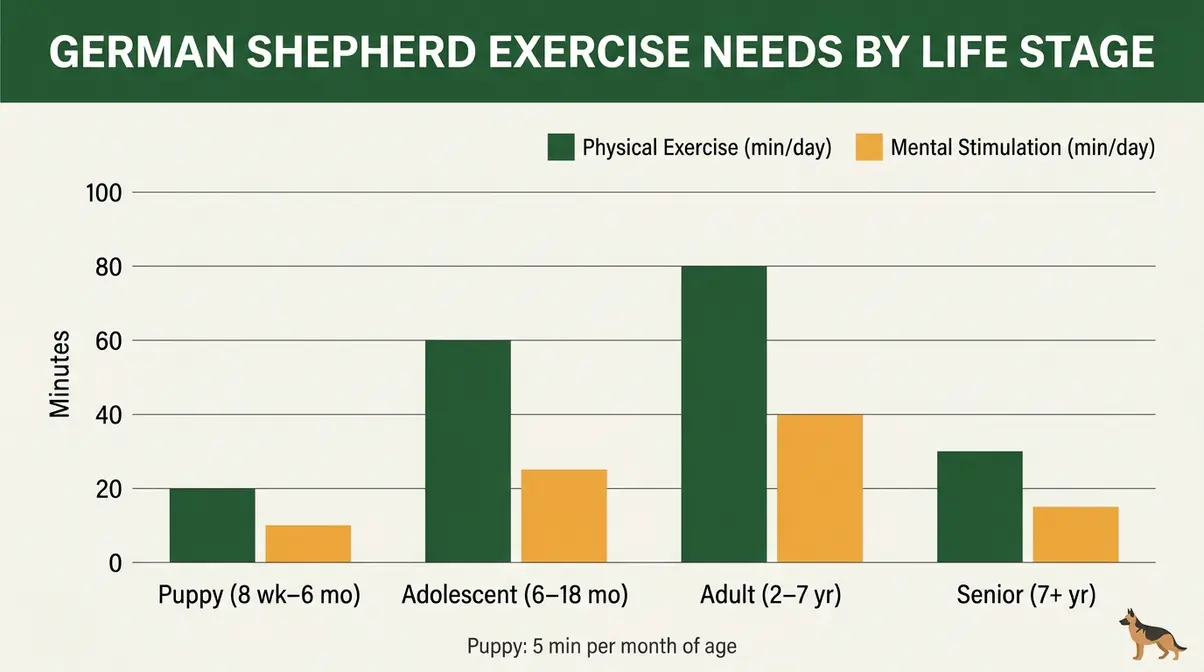
Those chart figures are averages, your GSD’s actual needs depend heavily on where they are in life, which the next section breaks down in detail.
How Do German Shepherd Exercise Needs Change by Age?
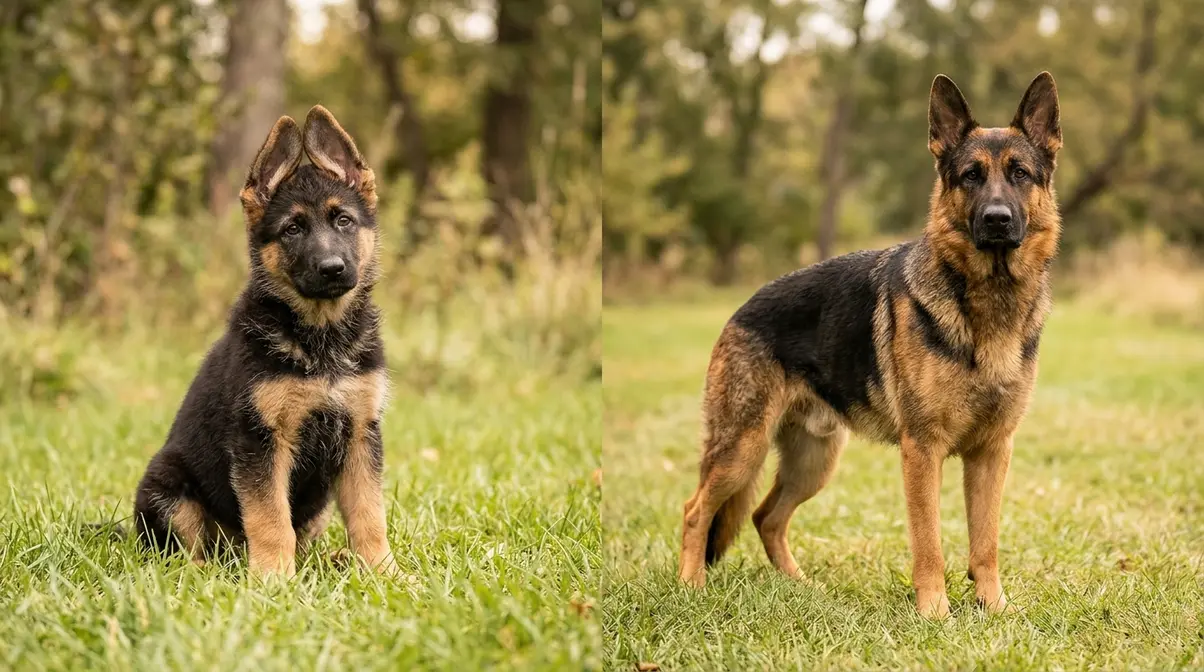
A German Shepherd’s exercise requirements shift significantly across their life, and not always in the direction owners expect. There are four distinct stages: puppy, adolescent, adult, and senior. The biggest risk isn’t at the senior end, where owners naturally slow down. It’s at the puppy stage, where enthusiasm and a growing dog’s apparent energy can lead to over-exercise before growth plates have closed, with consequences that can last a lifetime.
Puppy Exercise: The 5-Minute Rule Explained
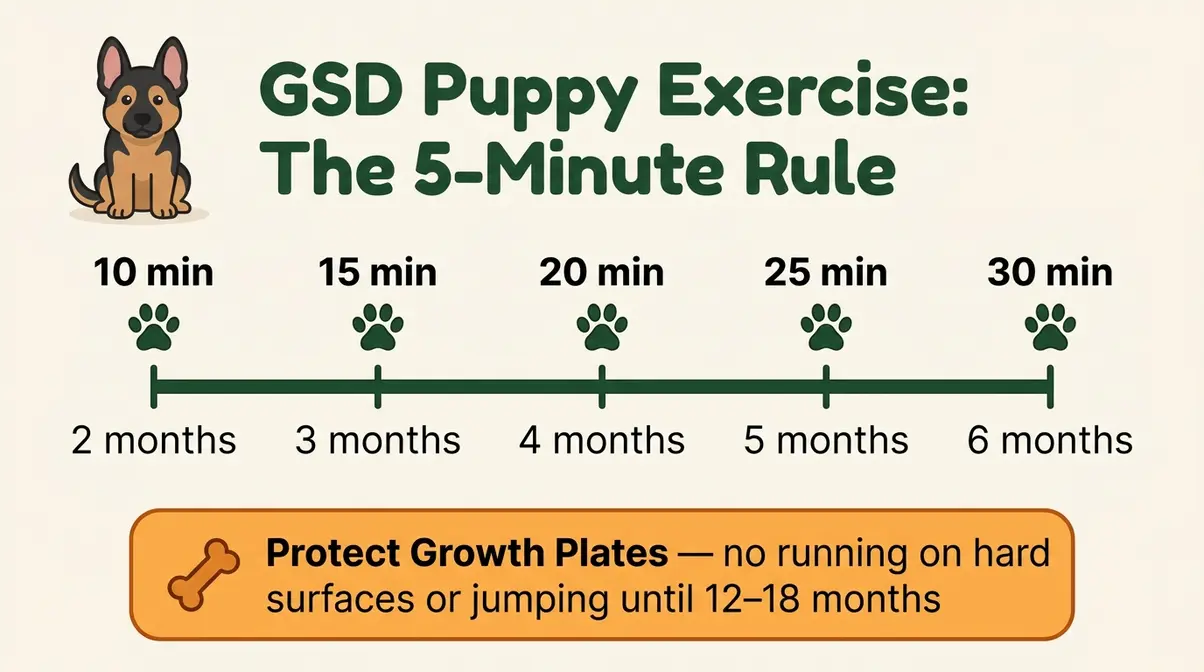
German Shepherd puppy exercise needs a clear formula: no more than 5 minutes of structured exercise per month of age, up to twice daily. A 3-month-old puppy gets 15 minutes per session; a 5-month-old gets 25 minutes. This isn’t arbitrary caution, it’s rooted in physiology.
Growth plates are the soft cartilage at the ends of a puppy’s long bones. In German Shepherds, they don’t fully close until around 12 to 18 months. Repetitive impact before closure, long runs, jumping, hard-surface fetch, can cause permanent joint damage. The yfvets.co.uk breed guide supports this guideline and the growth-plate caution for GSD puppies specifically. The American Kennel Club also notes that large-breed puppies are particularly vulnerable to joint problems caused by excessive exercise before skeletal maturity, reinforcing the importance of the 5-minute rule for breeds like the German Shepherd (American Kennel Club breed health guidance).
Watch for these warning signs of over-exercise in a puppy:
- Limping after a walk or play session
- Reluctance to move or get up the next morning
- Swollen joints or visible stiffness
- Whimpering when touched on legs or joints
If you notice any of these, stop exercise and consult your vet before resuming.
The practical alternative is mental stimulation, and this is where the Exercise-Enrichment Balance pays off most for puppy owners. Short training sessions, sniff games, and puzzle feeders tire a puppy without stressing their joints. A 4-month-old GSD puppy: two 20-minute sessions of gentle play and sniff games, plus a 5-minute sit/stay training session, no running on hard surfaces, no jumping.
These are general guidelines, consult your vet if you’re unsure about your individual puppy’s limits. To understand what a German Shepherd puppy at six months is like, including what to expect as the adolescent stage begins, we cover this in detail in our dedicated guide.
Once your GSD hits six months, the adolescent stage brings a new challenge: they look adult-sized, but their joints aren’t finished yet.
Adolescent German Shepherds (6-18 Months)
This is the most overlooked stage in most exercise guides, and one of the riskiest. Adolescent GSDs look fully grown by 6 to 8 months, and their energy levels are at their peak. That combination leads many owners to ramp up exercise too fast, not realising that growth plates don’t close until 12 to 18 months.
The guideline for this stage: gradually increase exercise from the puppy formula toward adult targets, aiming for 45 to 60 minutes by 12 months. Avoid high-impact activities, agility jumps, long runs on hard surfaces, repetitive stair climbing, until at least 18 months. This is also the highest-energy, most destructive life stage, which makes mental stimulation especially valuable. Obedience training and scent work burn energy without joint stress.
A 9-month-old GSD: 30 to 40 minutes of walking plus a 15-minute obedience session, hold off on agility and long runs until 18 months. Understanding when German Shepherds calm down can help set realistic expectations for this stage.
By the time your GSD reaches two years, the growth plates are closed and you can move to full adult targets.
Adult German Shepherds (2-7 Years)
This is the stage where the full daily target applies. Adult GSDs need 60 to 90 minutes of structured physical exercise daily, PitPat recommends a floor of at least 90 minutes, while yfvets.co.uk gives a 60 to 90 minute window, split into at least two sessions, plus 15 to 20 minutes of mental work.
Working-line GSDs, including police, military, and sport lines, typically need the higher end of the range. Show-line or pet-bred dogs may be content with 60 to 70 minutes. The behavioral signals are your calibration tool: a dog that’s restless, vocal, or destructive after its daily walk is telling you it needs more.
This is also the stage where the Exercise-Enrichment Balance matters most. A dog that gets 90 minutes of walking but no mental engagement will still be restless. A dog that gets 60 minutes of walking plus 20 minutes of nose work will often be calmer and easier to live with. A healthy 4-year-old GSD: 45-minute morning walk, 30-minute evening walk, 15-minute nose-work session after dinner.
As your GSD moves into their senior years, the target drops, but the need for daily activity doesn’t disappear.
Senior German Shepherds (7+ Years)
Senior GSDs need 30 to 45 minutes of low-impact exercise daily, shorter walks, gentle play, swimming if it’s accessible. According to the Spartan Shepherds exercise guide, reduced and low-impact exercise is specifically recommended for older GSDs with joint considerations.
German Shepherds are prone to hip dysplasia and arthritis as they age. Watch for stiffness after exercise, reluctance to get up, or a change in gait. If your dog seems sore the morning after a walk, reduce the duration by 25% for a week and monitor. Before changing a senior dog’s exercise routine significantly, a vet check is worth doing, especially if they haven’t had one recently.
Mental stimulation remains important at this stage. Puzzle toys, gentle nose work, and short training refreshers keep the mind sharp without stressing joints. A 9-year-old GSD with mild hip stiffness: two 15 to 20 minute gentle walks plus a 10-minute puzzle-feeder session, skip the fetch, add the sniff game.
Once you know the target for your dog’s age, the next challenge is fitting it into a real workday.
What Happens If You Miss a Walk or Work Long Hours?
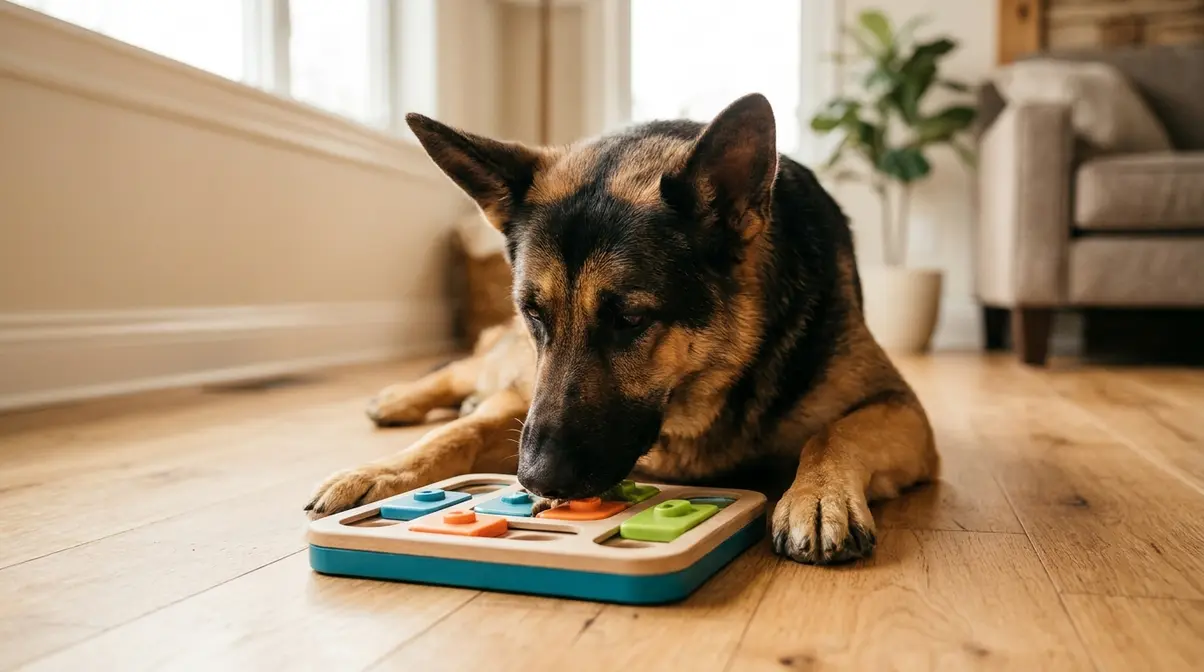
Work schedules, life changes, and imperfect days are real. A GSD owner who never misses a walk is rare, and the guilt that comes with a skipped session is usually more intense than the actual impact on the dog. One skipped day won’t harm a healthy adult GSD. The risk is a pattern of under-exercise, not a single missed walk. That’s the reassurance this section is built on, followed by the practical plan for making it work.
Can German Shepherds Be Left Alone for 8 Hours?
No source sets a specific safe “hours alone” limit for German Shepherds. That number doesn’t exist in the research, and pretending it does wouldn’t serve you. What the evidence does show is that the preparation matters more than the clock.
A GSD that gets enough physical and mental activity before being left alone is far better equipped for a quiet day than one that hasn’t. The 8-hour workday isn’t the problem, the problem is leaving an under-exercised, under-stimulated dog alone for that time. German Shepherds left without enough physical and mental activity can quickly become destructive, anxious, or vocal, the behavioral signals that the daily target isn’t being met.
Here’s a practical plan for working owners:
- Before work: 30 to 40 minute walk at a brisk pace
- During the day: puzzle feeder or stuffed Kong left in a safe space; consider a dog walker or doggy daycare for longer stretches
- After work: 30 to 40 minute walk plus a 10 to 15 minute training session
That totals 60 to 80 minutes of physical activity plus daytime enrichment, enough to manage a standard workday for most healthy adult GSDs. The r/germanshepherds owner thread confirms this approach, with owners reporting two 40 to 60 minute walks plus two to three 15-minute training sessions as a working routine (owner experience, not expert guidance).
“So, my pride and joy, my 6 year old German Shepherd, has recently had to adjust to my new work schedule.”
Owner on r/germanshepherds
That’s exactly the situation the routine above is designed for. A 6-year-old GSD is still in the adult stage, 60 to 90 minutes remains the daily target, but splitting it around a work schedule makes it manageable. If you’re seeing signs of distress even when exercise is adequate, that may point to signs of separation anxiety in German Shepherds rather than a simple exercise deficit, a distinction worth making with a vet or trainer.
Leaving the dog alone is one worry, skipping the walk entirely is another.
Is It Okay to Skip a Day of Walking a Dog?
No source directly addresses a single skipped day, and that gap is worth being honest about. Based on what the daily-need figures show, a healthy adult GSD can handle one missed walk without lasting harm. The risk is the pattern, not the day.
A dog that regularly gets less than 60 minutes of combined physical and mental activity will show behavioral signals before any lasting harm occurs: restlessness, chewing, barking, or digging. These are the early warnings, and they’re useful, because they tell you the routine needs adjusting before things escalate.
The practical substitute for a skipped walk: a 20-minute mental stimulation session. Nose work, hide-and-seek treats, or a training refresher can partially offset the missed physical activity. According to the PitPat exercise guide, the daily activity target is what a skipped walk falls short of, and mental work is the lever that helps close that gap. “Skipped the evening walk? Spend 15 minutes hiding kibble around the house for your GSD to find, it’s not a full replacement, but it’s meaningfully better than nothing.”
The emotional side of missed walks, whether your dog actually suffers, is worth addressing directly.
Do Dogs Get Sad If You Don’t Walk Them?
Sources don’t measure sadness in dogs directly, and claiming they do would be overstating the evidence. What the research does document is behavioral change: a GSD without enough physical and mental activity becomes destructive, anxious, or vocal. These observable signals are what owners interpret as unhappiness, and the underlying cause is the same whether you call it sadness or under-stimulation.
The fix is also the same: more activity and mental engagement. Behavioral signals like chewing furniture or excessive barking are the dog’s way of communicating that the daily target isn’t being met. They tend to appear before any lasting harm, which means they’re useful early warnings rather than signs you’ve already failed.
Walks also provide something a backyard session can’t fully replicate: sensory and social stimulation. New smells, varied terrain, passing dogs and people, and a change of environment all contribute to a GSD’s wellbeing in ways that go beyond exercise minutes. Even a short walk has value beyond the physical activity it provides.
The good news is that adjusting your routine around a work schedule is more manageable than most owners expect.
Adjusting the Routine Around a Work Schedule
Three realistic working-owner scenarios, and how to approach each:
Scenario A, Standard 9-to-5 with a lunch break: Morning walk (30 min) + lunchtime enrichment session (15 min nose work or puzzle feeder) + evening walk (30 min) + post-dinner training (10-15 min). Total: approximately 85 to 95 minutes of combined activity.
Scenario B, No lunch break: Longer morning walk (40-45 min) + puzzle feeder or stuffed Kong left during the day + evening walk (30 min) + short training session (10 min). Total: approximately 80 to 85 minutes.
Scenario C, Irregular hours: Split the daily target across whatever windows are available. Prioritize mental stimulation on short days, a 15-minute nose-work session and a 10-minute flirt-pole session can hold a GSD through a difficult day.
Useful tools for working owners: a puzzle feeder or stuffed Kong for daytime enrichment; a dog walker or doggy daycare for days when getting home at lunch isn’t possible; a flirt pole for a high-intensity 10-minute session when time is very short. These aren’t signs of failure, they’re sensible solutions that responsible owners use.
If you work from home two or three days a week, use those days to build up the activity bank, longer walks, a training session, a new scent game, so the office days feel less pressured.
Mental stimulation is the practical fix for time-pressed days, and it’s more powerful than most owners realise.
Mental Stimulation and the Best Activities for German Shepherds
What if you could tire out your GSD in 15 minutes? That’s not a trick, it’s the result of engaging a working breed’s problem-solving drive. Mental effort triggers genuine fatigue in German Shepherds, not just boredom relief. This is the Exercise-Enrichment Balance in practice: physical activity and mental work as two equal, interchangeable levers. Pull the mental lever harder on days when the physical one is short.
Why Mental Stimulation Matters as Much as Physical Exercise
Mental stimulation is the part of a GSD’s daily needs that most exercise guides skip over, and it’s arguably the more important half for a breed wired to work. German Shepherds were developed for herding, police work, military service, and search and rescue. Their brains are built to solve problems, track scents, and execute complex tasks. Mental effort, tracking a scent, learning a new command, working through a puzzle, triggers genuine fatigue, not just a distraction from boredom.
GSDs are consistently ranked among the most intelligent dog breeds, a characteristic that GSD intelligence and mental needs covers in depth. That intelligence is a double-edged trait: it makes them highly trainable, but it also means they need cognitive engagement as much as physical activity. A dog that doesn’t get it will find its own outlets, usually destructive ones.
The practical implication is specific: a dog that gets 90 minutes of walking but no mental work will still be restless. A dog that gets 60 minutes of walking plus 20 minutes of nose work will often be calmer and easier to live with. The PitPat exercise guide recommends mental stimulation alongside physical exercise as part of a complete daily routine, and owner consensus on r/germanshepherds consistently describes dogs that get training sessions alongside walks as “settled” and easier to live with compared to those that only walk (owner experience, not expert guidance).
The most effective mental activity for a GSD is one that uses their nose, here’s why nose work works so well.
Nose Work and Scent Games
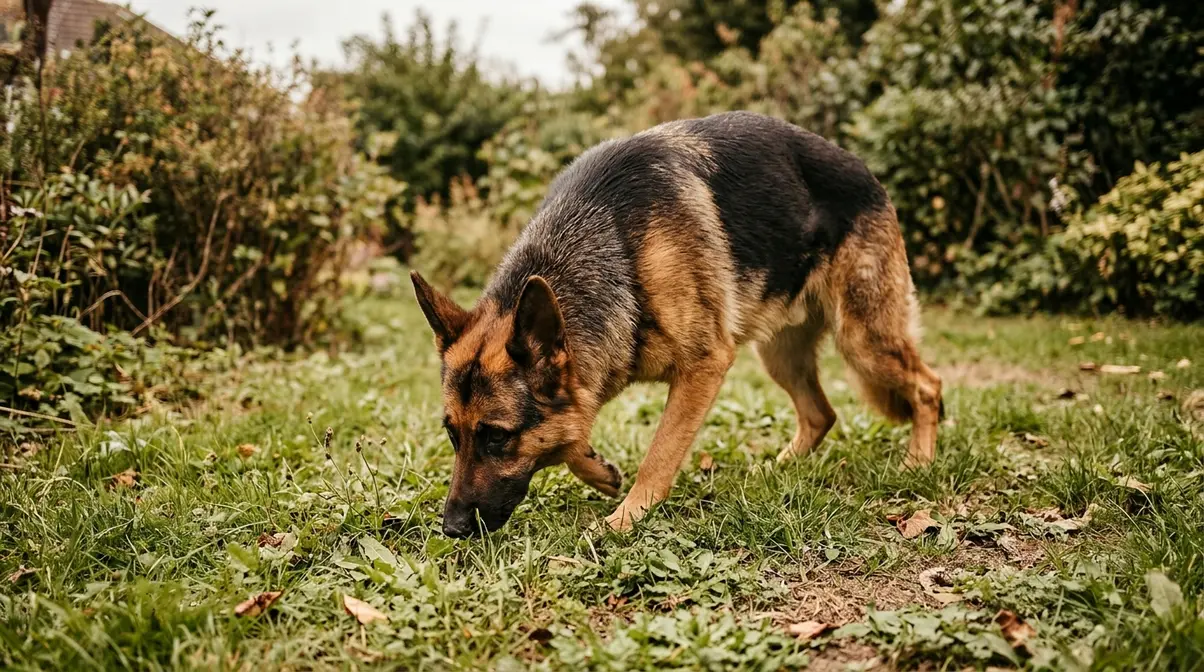
Nose work is a scent-detection activity where the dog searches for a hidden target odor or treat. It’s based on the same skills used in police and search-and-rescue work, and it’s accessible to any owner with a handful of kibble and three rooms.
GSDs have an exceptionally strong scent drive, and a 10 to 15 minute nose-work session engages the brain intensely enough to produce visible fatigue. This is one of the most efficient tools in the Exercise-Enrichment Balance toolkit, high cognitive output, zero joint stress, no equipment required.
Two starter activities to try tonight:
- Hide-and-seek treats: Scatter kibble around the house or yard and tell your dog to “find it.” Start in one room, then expand to two or three.
- Muffin-tin puzzle: Place small treats under tennis balls in a muffin tin and let your dog sniff them out. Add difficulty by covering only some cups.
Start with 5 minutes of hide-and-seek treats in three rooms, most GSDs are visibly calmer within 10 minutes of finishing. That’s the scent drive doing its job.
For owners who want a higher-intensity option that’s still joint-safe, a flirt pole delivers a lot of exercise in a short time.
Flirt Pole, Low-Impact Fetch, and Backyard Games
A flirt pole is a lure toy on a rope attached to a pole, essentially a large cat wand for dogs. A 10-minute flirt-pole session provides intense physical and mental exercise because the dog has to track, anticipate, and chase a moving target. It’s one of the most time-efficient tools for a GSD owner who needs to burn energy quickly.
Low-impact fetch means retrieve games on grass or in shallow water rather than on hard surfaces, with a “drop it” or “leave it” command added. That command turns a physical game into a training exercise at the same time, doubly efficient, and joint-safe for seniors and adolescents who can’t handle hard-surface running.
Two more backyard games worth adding to the rotation:
- “Which hand?”, Hide a treat in one fist and let your dog sniff to choose the correct hand. Simple, fast, and genuinely engaging for a high-drive breed.
- Improvised obstacle course, Use chairs, boxes, or garden furniture to create a simple course that requires the dog to think and move through it.
A 10-minute flirt-pole session plus a 5-minute “find it” game is a structured activity combination that can meaningfully offset a missed 30-minute walk on a short day. Note that this is structured, purposeful activity, not unstructured yard roaming, which is the distinction that matters. For a senior GSD with hip stiffness, low-impact fetch in the garden is the safer version of the same activity.
Put these activities together and you have a complete 15-minute mental stimulation routine you can use any day.
A 15-Minute Mental Stimulation Routine
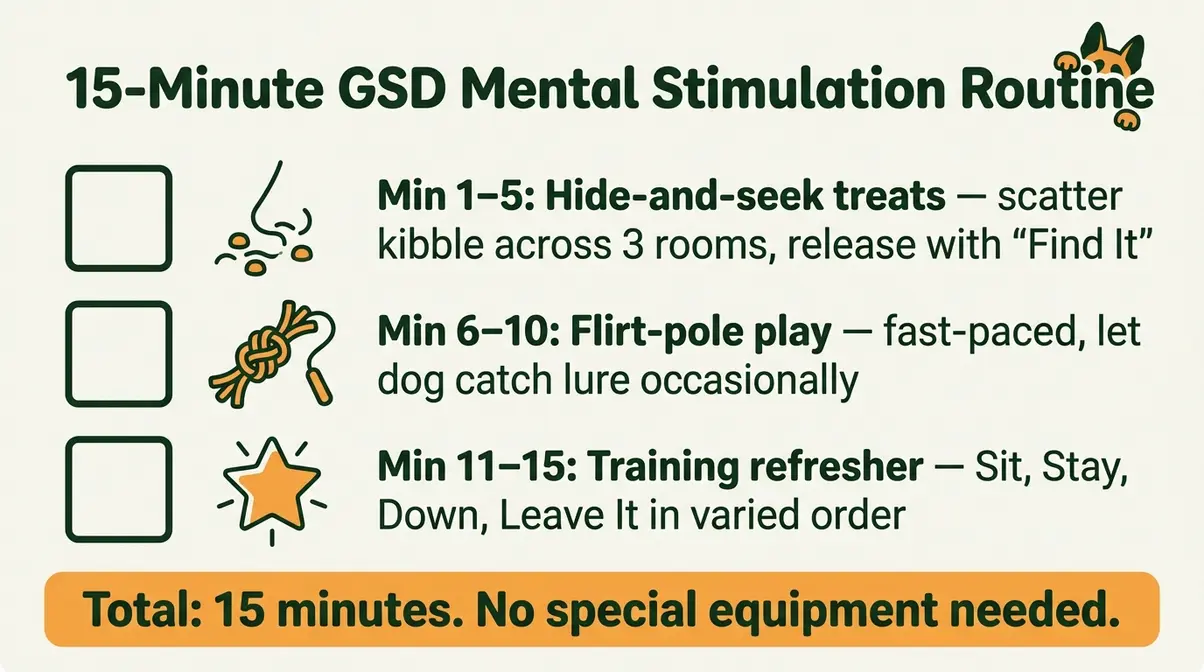
A 15-minute nose-work session can settle a German Shepherd more effectively than a 30-minute walk, because it engages the breed’s problem-solving drive, not just its body. Here’s a ready-to-use routine:
- Minutes 1-5: Hide-and-seek treats, scatter kibble across three rooms and release your dog with “find it.” Reset and repeat once.
- Minutes 6-10: Flirt-pole play in the yard, hallway, or any open space. Keep it fast-paced; let the dog “catch” the lure occasionally to maintain drive.
- Minutes 11-15: Training refresher, “sit,” “stay,” “down,” “leave it” in sequence. One repetition each, then vary the order to keep it cognitively demanding.
Total: 15 minutes, no special equipment beyond a flirt pole and your dog’s regular kibble.
This routine works before or after a walk, or as a standalone session on days when a walk isn’t possible. It doesn’t replace the daily walk, it fills the gap when the walk is short. This is the Exercise-Enrichment Balance in practice: 15 minutes of brain work that leaves most GSDs calmer than a 30-minute walk alone.
Knowing what to do is half the picture, knowing when not to exercise is the other half.
When Should You Skip Your German Shepherd’s Walk?
Most exercise guides only tell you to do more. This section earns its place by telling you when to do less. Specific conditions exist where exercise causes harm rather than good, and recognising them is part of responsible ownership. The yfvets.co.uk breed guide notes that German Shepherds are a high-energy breed that still requires careful management around health and environmental conditions.
When Not to Walk: Heat, Illness, and Injury
Three situations where skipping the walk is the right call:
- Heat: Pavement above 25°C (77°F) can burn a dog’s paw pads within minutes. GSDs are also prone to heatstroke in high humidity. Walk in early morning or evening during summer, and test the pavement with the back of your hand, if it’s uncomfortable for you, it’s harmful for your dog.
- Illness: Skip walks if your dog is vomiting, has diarrhea, is lethargic, or shows signs of a fever. A sick dog needs rest, not exercise. Pushing through illness delays recovery and can make things worse.
- Injury: Limping, reluctance to bear weight, or swollen joints are signals to stop immediately. Don’t walk a limping dog to “see if they warm up.” Rest today and call your vet, don’t push through it.
If you’re unsure whether your dog is well enough to walk, err on the side of rest and consult your vet. A missed walk is far less costly than an injury that sidelines your dog for weeks.
Signs You’re Over-Exercising Your German Shepherd
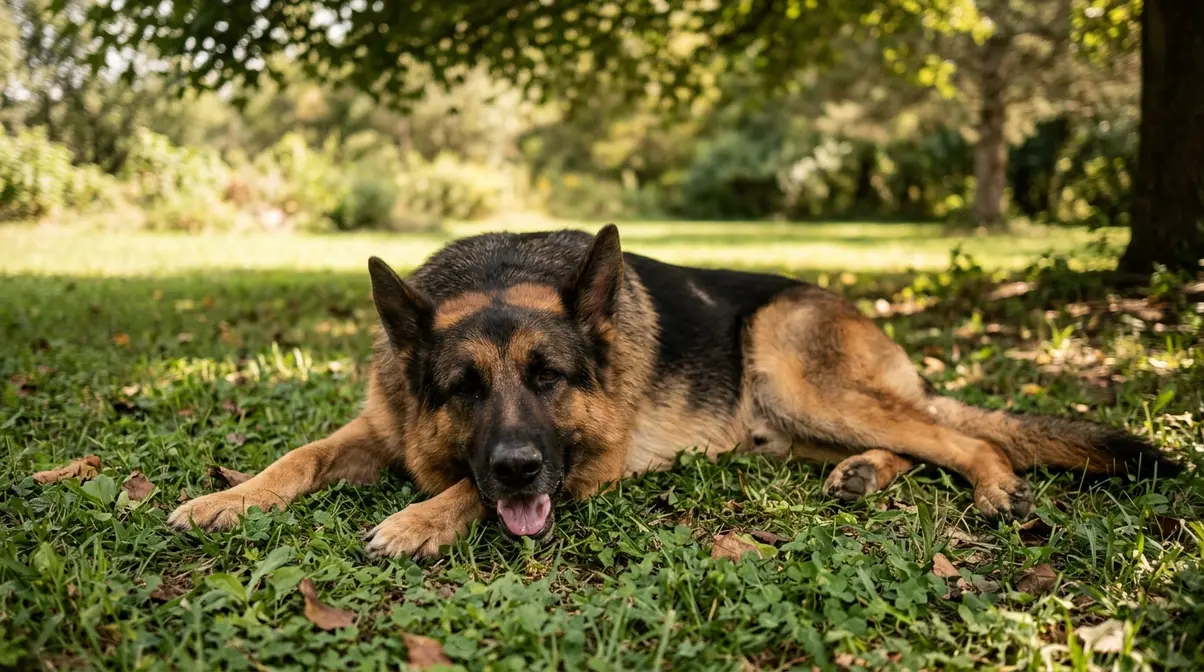
Even well-intentioned owners can push too hard. Knowing the warning signs is part of responsible ownership, and catching them early prevents longer-term damage.
Watch for these specific signals:
- Excessive panting that doesn’t resolve within 10 minutes of stopping
- Limping or stiffness the day after exercise
- Reluctance to start a walk, hanging back, sitting down, refusing to move
- Muscle soreness indicated by flinching when touched on the legs or back
- Unusual lethargy or irritability after exercise, rather than the normal calm
Puppies and seniors are most at risk, the signs appear faster and the consequences are more serious in both groups. A puppy that limps after a 30-minute walk is telling you the session was too long. Cut it to 15 minutes and add a nose-work session instead.
The action plan: reduce exercise duration by 25% for one week and watch for improvement. If signs persist or worsen, consult a vet before resuming the normal routine.
Frequently Asked Questions
Is One Hour Walk a Day Enough for a German Shepherd?
One hour is the bare minimum, not the target, for most adult German Shepherds. Most guidance puts the daily need at 60 to 90 minutes of physical activity, split into at least two sessions. A single 60-minute walk leaves many GSDs under-stimulated, especially if it’s a slow on-leash stroll. Add 15 to 20 minutes of mental work, nose work, a training session, or a puzzle feeder, to close the gap. If one hour is all you have, mental stimulation matters as much as extra walking time.
What Breed of Dog Needs the Least Exercise?
German Shepherds are not a low-exercise breed, they’re high-energy working dogs that need around 60 to 90 minutes of physical activity daily, plus mental stimulation. Breeds typically cited as lower-energy include Basset Hounds, Shih Tzus, and Bulldogs, though any dog needs some daily activity to stay healthy and settled. If your lifestyle can’t reliably support 60 to 90 minutes of daily exercise, a GSD may not be the right fit. Prospective owners should weigh this honestly before choosing the breed.
Can German Shepherds Be Left Alone for 8 Hours?
No source sets a specific safe “hours alone” limit for German Shepherds, so plan around daily needs instead. A GSD that gets a 30 to 40 minute walk before work, a puzzle feeder during the day, and a 30 to 40 minute walk plus training session in the evening can manage a standard workday well. Without enough physical and mental activity, GSDs can become destructive, anxious, or vocal. If your dog shows these signs despite adequate exercise, separation anxiety may be a separate issue worth discussing with a vet or trainer.
Is It Okay to Skip a Day of Walking a Dog?
One skipped day won’t harm a healthy adult German Shepherd, the risk is a pattern of under-exercise, not a single missed walk. What matters is the daily total over time: roughly 60 to 90 minutes of physical activity plus 15 to 20 minutes of brain work such as nose work, training, or puzzle toys. On a skipped-walk day, a 15 to 20 minute mental stimulation session helps offset the gap. A dog that regularly gets less than its daily target will show behavioral signals, restlessness, chewing, or barking, before any lasting harm occurs.
Are Dogs Happier After Walks?
Walks are one part of keeping a German Shepherd content, but they’re not the whole picture. GSDs need a balance of physical activity and mental engagement, without both, they can quickly become restless, destructive, or anxious, regardless of how long the walk was. Aim for 60 to 90 minutes of physical activity daily, split into sessions, plus 15 to 20 minutes of mental work. A shorter walk paired with a nose-work session often leaves a GSD calmer than a longer walk with no mental engagement.
Is It Cruel to Not Walk Your Dog Every Day?
Missing a single walk isn’t cruel, but a consistent pattern of under-exercise is a welfare concern for a working breed like the German Shepherd. GSDs are bred to have a job, and without enough physical activity and mental stimulation they can become destructive, anxious, or vocal, behavioral signs that their needs aren’t being met. Aim for 60 to 90 minutes of physical activity daily plus 15 to 20 minutes of mental work, spread across multiple sessions. On days when a walk isn’t possible, mental stimulation is the practical substitute.
Do Dogs Get Sad If You Don’t Walk Them?
Sources don’t measure sadness in dogs directly, but they do document behavioral change when German Shepherds don’t get enough activity. A GSD without sufficient physical and mental exercise can become destructive, anxious, or vocal, the observable signs that owners often interpret as unhappiness. Spreading 60 to 90 minutes of physical activity across the day, plus 15 to 20 minutes of nose work, training, or puzzle toys, helps meet the daily need. Walks also provide sensory and social stimulation, new smells, sights, and interactions, that a backyard session doesn’t fully replicate.
What to Change in Your German Shepherd’s Routine Starting Today
For most adult German Shepherds, daily exercise needs come to 60 to 90 minutes of structured physical activity, split into at least two sessions, plus 15 to 20 minutes of mental stimulation. Research from the PitPat exercise guide puts the floor at at least 90 minutes for healthy adults. The Exercise-Enrichment Balance, physical activity and mental work as two equal halves of a GSD’s daily routine, is the framework that makes this achievable on real-world days, including the ones where work runs long and the evening walk gets cut short.
The owners who struggle most aren’t the ones who skip walks, they’re the ones who don’t know that 15 minutes of nose work can close the gap. Now you do. The Exercise-Enrichment Balance isn’t about perfection; it’s about knowing which lever to pull when the other one is short. That knowledge turns a guilty skipped walk into a manageable trade-off.
Start with the 15-minute mental stimulation routine tonight, hide kibble in three rooms, run a 5-minute flirt-pole session, and finish with a training refresher. Then use the life-stage chart to check whether your current walk length clears the daily target for your dog’s age. If it does, you’re doing better than you thought. If it doesn’t, you now have a specific, practical plan to close the gap, one session at a time.
 Shave German Shepherd? Risks & Safe Alternatives