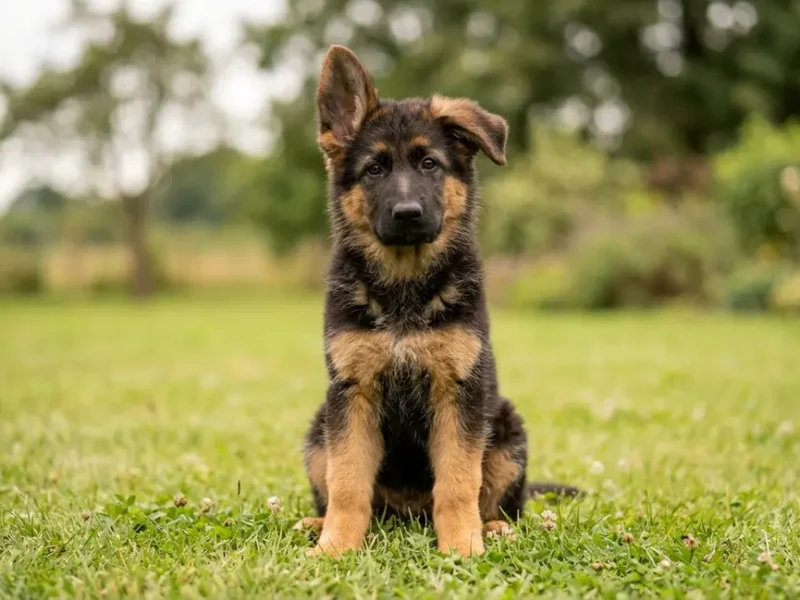
Your German Shepherd puppy is 4 months old, ears still flopped to the sides, and you’re starting to wonder if something is wrong. You’re not alone, and the short answer is reassuring: yes, German Shepherd ears do stand up naturally. No cropping, no bracing, and no surgery required for the vast majority of dogs.
The tricky part is that “naturally” doesn’t mean “on a fixed schedule.” Sources disagree on the exact age, teething throws a genuine curveball, and a small percentage of dogs never fully stand, so knowing the full picture matters far more than any single deadline. Do German Shepherd ears stand up naturally? Almost always, but the when is wider than most sources admit.
By the end of this guide, you’ll know the full ear development window, what causes ears to stay down, and exactly when, if ever, you need to act.
Yes, German Shepherd ears stand up naturally without cropping, most are permanently erect by 6-8 months, though some take up to a year.
- The Ear Development Window: Ears can go up and down from 2 to 8 months; one deadline fits no dog. This is the evidence-reconciled span that replaces the single false deadline most sources repeat.
- Teething causes a dip: Ears that were standing may flop again at 4-6 months, this is normal and temporary.
- Genetics matter: A small percentage of purebred GSDs keep soft ears permanently; it doesn’t affect health, hearing, or temperament.
- Don’t supplement calcium: Extra calcium won’t help and may harm a growing puppy, consult a vet before any intervention.
- Act if ears are still down past 8 months: That’s the point to ask a veterinarian, not before.
Do German Shepherd Ears Stand Up Naturally?
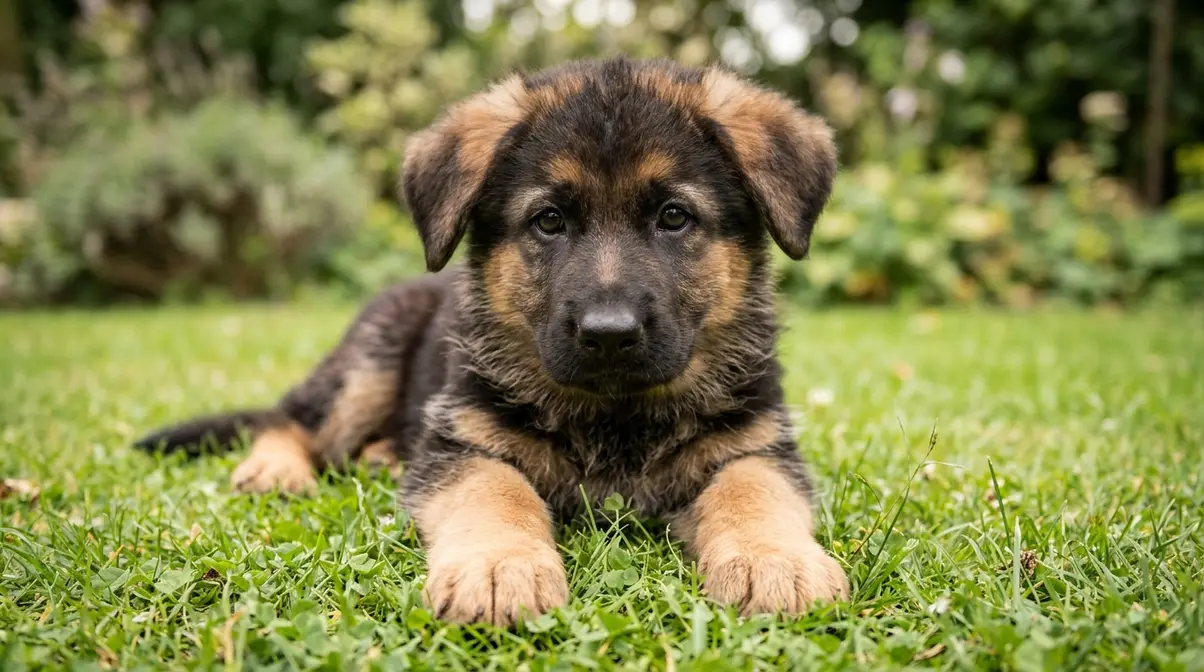
Yes, German Shepherd ears stand up naturally in the vast majority of dogs, no cropping, bracing, or surgery required. The AKC and FCI breed standards both specify erect ears as the expected outcome for a healthy purebred GSD. A small percentage keep soft ears due to genetics, which is a cosmetic variation, not a health concern.
GSD puppies are born with soft, floppy cartilage. That’s completely normal. Over the first several months of life, the cartilage gradually strengthens, and the ears rise on their own. According to Pedigree, German Shepherds are born with their ears down and should have them standing by a certain point in development, the process is driven entirely by cartilage maturation, not by anything the owner does or doesn’t do.
A small share of purebred GSDs inherit softer cartilage and never fully stand, regardless of care. According to 5 Myths of German Shepherd Ears (sauverdeschiens.org, 2024), genetics is the primary cause of permanently soft ears in purebred dogs. This doesn’t affect hearing, health, or temperament, it’s simply a deviation from the breed standard, not a medical problem. Understanding that distinction is exactly what worried owners need to hear.
There’s also a third, fully preventable cause: trauma. Rough handling, pulling, rubbing, or repeatedly folding a puppy’s ears, can damage the soft cartilage during the development window and prevent proper standing. This is distinct from genetics. If you’ve been gentle with your puppy, cartilage damage almost certainly isn’t the explanation. Most purebred German Shepherds develop fully erect ears without any intervention, with a small percentage retaining soft ears due to genetics alone.
The next step is understanding when to expect ears to stand, because the window is wider than most sources admit, and knowing that is what turns worry into patience.
When Do German Shepherd Ears Stand Up? Age-by-Age Timeline
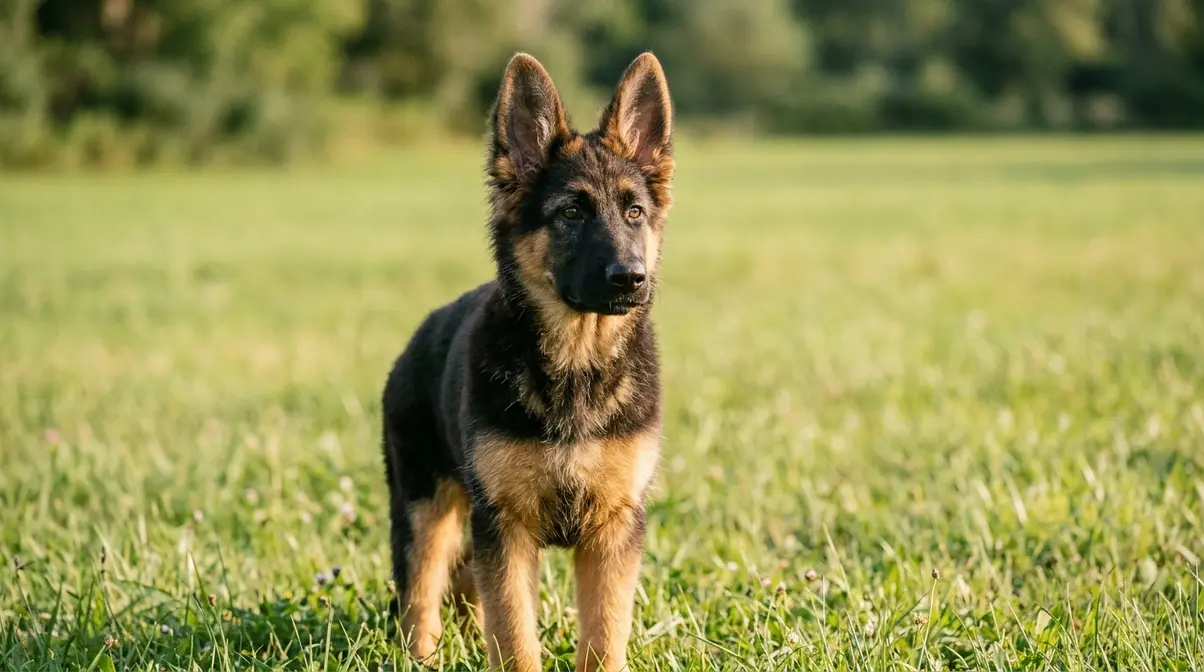
German Shepherd ears typically begin rising between 8 and 16 weeks, go through an up-and-down phase, and are permanently set by 6-8 months, though some dogs take up to a year. The process isn’t linear, and one ear commonly stands before the other.
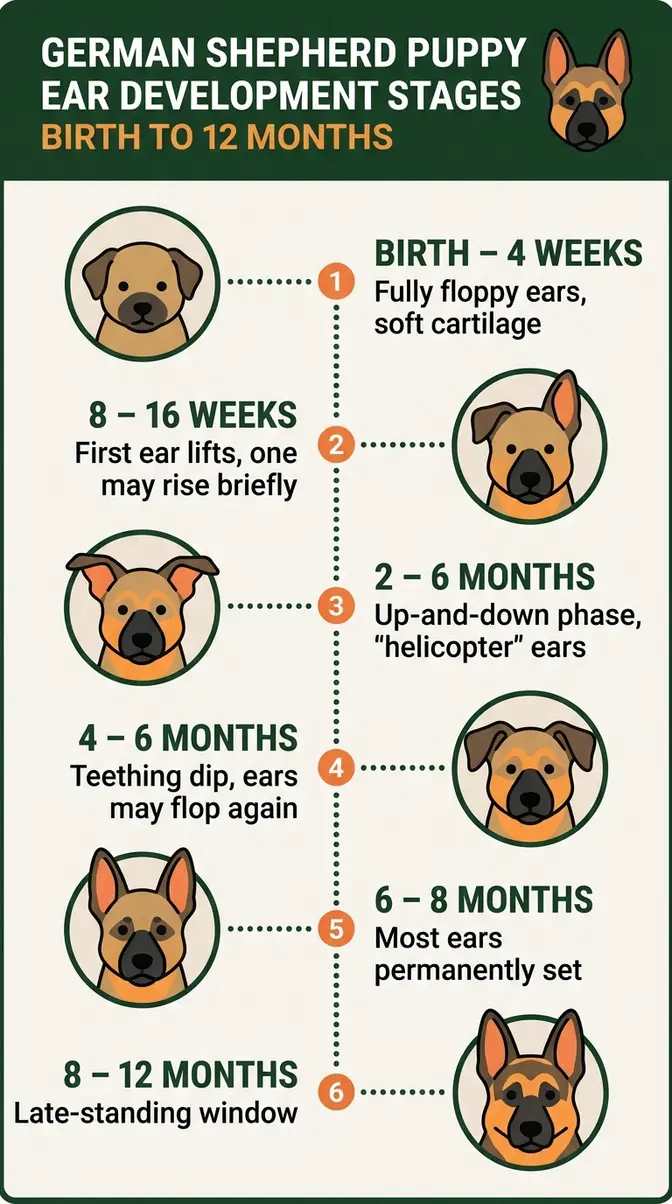
Here’s where this guide differs from most: different breeders and pet-care sites cite different deadlines, because they’re each describing the most common case rather than the full range. The table below names each source and its stated range, so you can see where the disagreement actually lives. This cross-tab is The Ear Development Window in full.
The Ear Development Window, Source Comparison Table
| Age | What to Expect | Source |
|---|---|---|
| Birth, 4 weeks | Ears fully floppy; cartilage is soft | Wustenbergerland |
| 8, 16 weeks | First ear lifts; one or both may rise briefly | Furbivo; Mittelwest |
| 2, 6 months | Up-and-down phase; “helicopter ear” common | Mittelwest; Pedigree |
| 4, 6 months | Teething dip, ears that were up may flop again | Mittelwest; Wustenbergerland |
| 6, 8 months | Most ears permanently set by this point | Mittelwest; German Shepherd Shop |
| 8, 12 months | Late-standing window; Southernwind notes “no validated deadline” | Sequoyah; Southernwind |
One owner in r/germanshepherds put the worry perfectly:
“I got my male German shepherd pup may 22 he was around 9.5 weeks they said, so he’s roughly 4 months old now and his ears really aren’t standing…”, GSD owner, r/germanshepherds
At 4 months, floppy ears are well within the normal development window, especially if teething has started. For a full picture of 5-month-old GSD ear development, the developmental context helps set realistic expectations.
German Shepherd ears can go up and down from as early as 8 weeks through 8 months, with teething between 4 and 6 months commonly causing a temporary drop, a range that multiple breeder and pet-care sources confirm (Mittelwest; Wustenbergerland).
Three phases within this window cause the most owner worry, and each has a different explanation.
The “Helicopter Ear” Phase: One Ear Up, One Down
Between 8 weeks and about 5 months, it’s extremely common for one ear to rise before the other. The cartilage in each ear strengthens independently, so asymmetric ears during this phase are not a sign of a problem, they’re the most common early stage of development.
GSD owner communities call this the “helicopter ear” look: one ear fully erect, the other still floppy or angled sideways. According to Furbivo, first ear lifting typically begins between 8 and 16 weeks. A 10-week-old puppy with one ear straight up and one completely flat is a textbook example, owners often describe it as alarming, but breeders describe it as the most common early stage.
Worth noting: the asymmetric phase can last several weeks. Both ears standing at exactly the same time is the exception, not the rule. If your puppy looks lopsided right now, that’s the development process working as intended.
The phase that worries owners most, though, isn’t the helicopter ear, it’s when ears that were standing suddenly flop back down.
The Teething Dip: Why Ears Drop at 4-6 Months
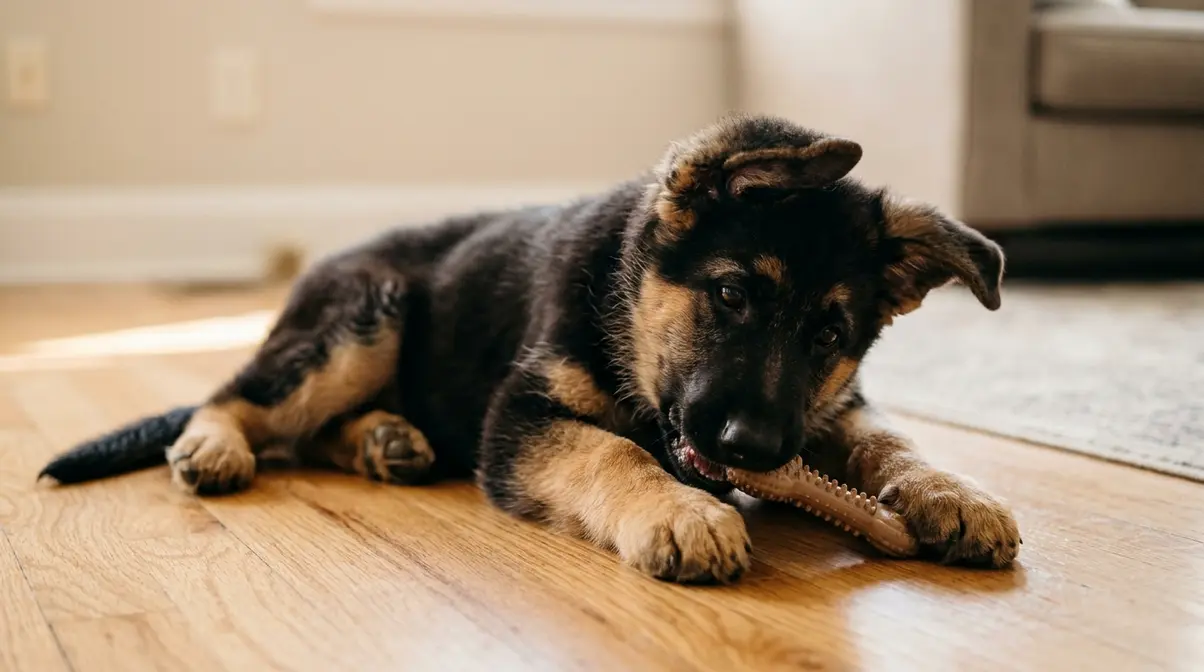
Between 4 and 6 months, puppies are cutting their adult teeth. The body temporarily redirects energy and nutrients toward tooth development, which can cause ear cartilage to soften during this period. According to Mittelwest, teething is a recognized factor in ear position changes, ears that had come up may drop completely during this phase, and that’s a normal part of the process.
A 5-month-old GSD whose ears stood confidently at 3 months, flopped flat during teething, and were fully erect again by 7 months is a pattern breeders describe as common. It’s not a permanent setback.
The teething dip is also why you shouldn’t panic if ears drop at 4-5 months. Wait until 6-7 months before reassessing, once adult teeth are in, the cartilage typically hardens again and ears rise back up and set permanently.
Once teething is done, most ears set for good, but what does “permanently set” actually look like, and when should you expect it?
When Are Ears Permanently Set?
Most GSD ears are permanently erect by 6-8 months. Both German Shepherd Shop and Mittelwest cite this as the typical window for final ear position. At what age do German Shepherds’ ears stand up for good? For most dogs, somewhere in that 6-8 month range.
Not everyone agrees on a hard deadline, though, and that’s worth stating plainly. Sequoyah German Shepherds notes that some dogs take up to a year, and Southernwind explicitly states there is “no scientifically validated week” for when ears should stand. At what age does a German Shepherd’s ears stand up? The honest answer is: usually by 8 months, sometimes later, and no single deadline applies to every dog.
Once the cartilage fully hardens, the position is permanent. It’s worth clarifying what “permanent” means here: adult GSDs move their ears expressively all the time. “Set” means the cartilage is firm and the resting position is erect, not that the ears are frozen in place. If ears are still soft past 8 months, that’s the point to consult a vet, not before.
An 8-month-old GSD with ears that have been fully erect for 6 weeks shows what owners describe as an unmistakable moment when they “locked in”, the ears simply stopped moving back down.
But what if your puppy is past the typical window and ears are still down? That’s where the next section comes in.
Why Are My German Shepherd’s Ears Still Down?
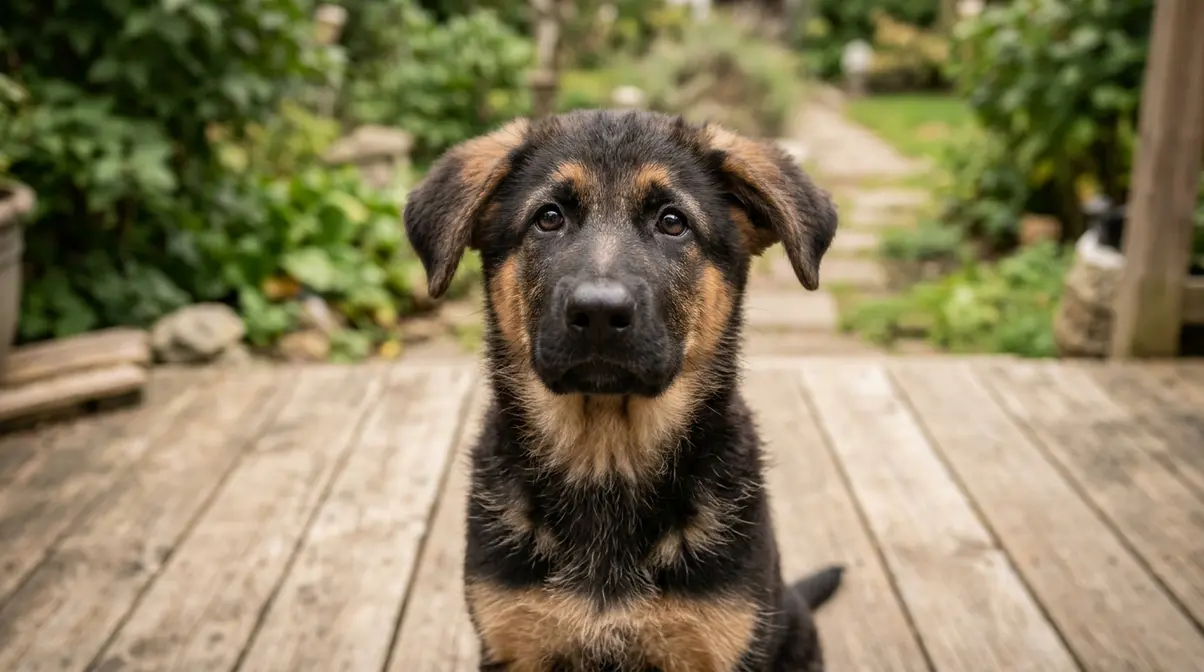
If your GSD’s ears aren’t up yet, the most likely explanation is that you’re still inside the normal development window. Three causes account for nearly all cases of ears that stay down: teething, genetics, and cartilage trauma. The good news is that two of the three resolve on their own. Here’s how to tell which cause applies to your dog.
Teething, Genetics, or Trauma? The Three Main Causes
If your puppy’s ears are flopped and they’re between 4 and 6 months old, teething is the most likely explanation, and it’s temporary. According to Mittelwest, teething and genetics are the two primary factors in ear position changes during development.
If ears have never stood and your puppy is past 6 months, genetics may be the explanation. According to 5 Myths of German Shepherd Ears (2024), a small percentage of purebred GSDs inherit softer cartilage that never fully hardens. This is permanent, but completely harmless. It doesn’t affect hearing, health, or temperament.
Trauma is the third cause, and the most preventable. Rough handling, pulling, folding, or repeatedly rubbing a puppy’s ears, can damage the soft cartilage and prevent proper standing. According to Central Coast German Shepherds, cartilage trauma from rough handling is a recognized cause of ears not standing properly.
Here’s a quick breakdown of all three:
- Teething (4-6 months, ears were previously up): Temporary. Wait it out.
- Genetics (past 6 months, ears never stood): Permanent but harmless. Consult a vet for options.
- Trauma (any age, history of rough handling): Preventable. Stop rough contact immediately and monitor.
One nutrition note worth adding: Mittelwest mentions that overall nutrition plays a minor role in development. However, extra calcium supplementation is not the answer, it may be harmful. That myth gets its full treatment in the next major section.
Before you decide to act, check whether any of these red flags apply, because some ear problems need a vet, not a wait-and-see approach.
Red Flags That Need a Vet Visit
If ears are not up and you notice any of the following signs, you’re no longer dealing with normal development, you may be dealing with a medical issue:
- Persistent head shaking, especially if repeated and vigorous
- Foul odour from the ear canal, a sign of infection, not development
- Visible swelling or redness inside the ear, warrants immediate attention
- Ear hematoma, a blood-filled swelling on the ear flap, often from trauma or shaking
- Discharge, scratching, or pawing at the ear, classic signs of otitis (ear infection)
- Sudden flopping of an ear that had been standing for months, in an adult dog, this is a medical signal, not a development phase
A 6-month-old GSD whose ear suddenly flopped after months of standing, accompanied by head shaking and odour, is showing infection signs, not a development phase. For more on ear infection warning signs, including how to distinguish normal variation from infection, PetVR’s ear-cleaning guide covers the distinction clearly.
If you notice any of these signs, contact your veterinarian, they’re not part of normal ear development.
If none of those red flags apply, the next question is simple: should you wait, handle gently, or take action?
A Simple Wait-or-Act Decision Path
Most owners with a puppy under 8 months and no red flags need to do exactly one thing: wait. Here’s a clear sequence to follow:
- Is your puppy under 8 months and showing no red flags? Wait and monitor. Ears still down at 4 months are almost always within the normal development window, the point to consult a veterinarian is closer to 8 months, not 4 (Central Coast German Shepherds).
- Are you handling the puppy roughly, or letting children pull the ears? Stop immediately. Handle gently and monitor over the next several weeks.
- Are ears still down past 8 months with no red flags? Consult a veterinarian before trying any intervention. This is the consensus threshold across the cited sources, not 4 months, not 6 months.
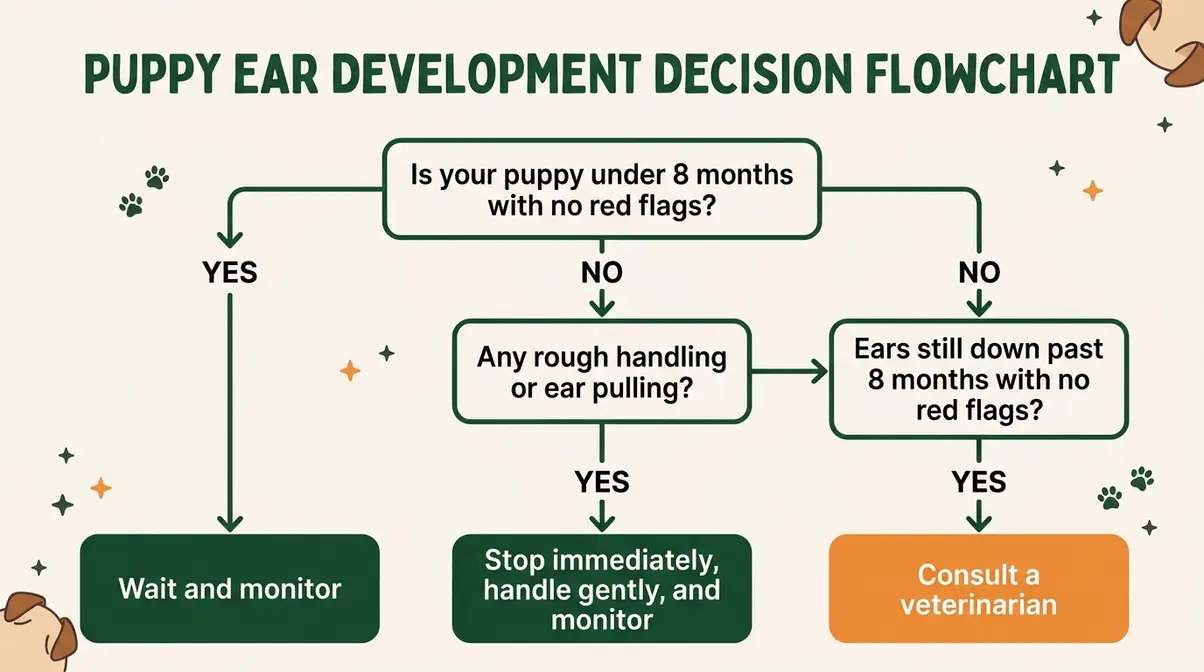
A 7-month-old GSD with ears still down, no red flags, and no rough handling history? The right answer is to wait one more month, then consult a vet if nothing changes.
Always consult a veterinarian before attempting taping, posting, or any supplement, the next section explains why.
If you’ve decided it’s time to act, here’s what the options actually involve, and which ones to avoid entirely.
How to Help Your German Shepherd’s Ears Stand Up Safely
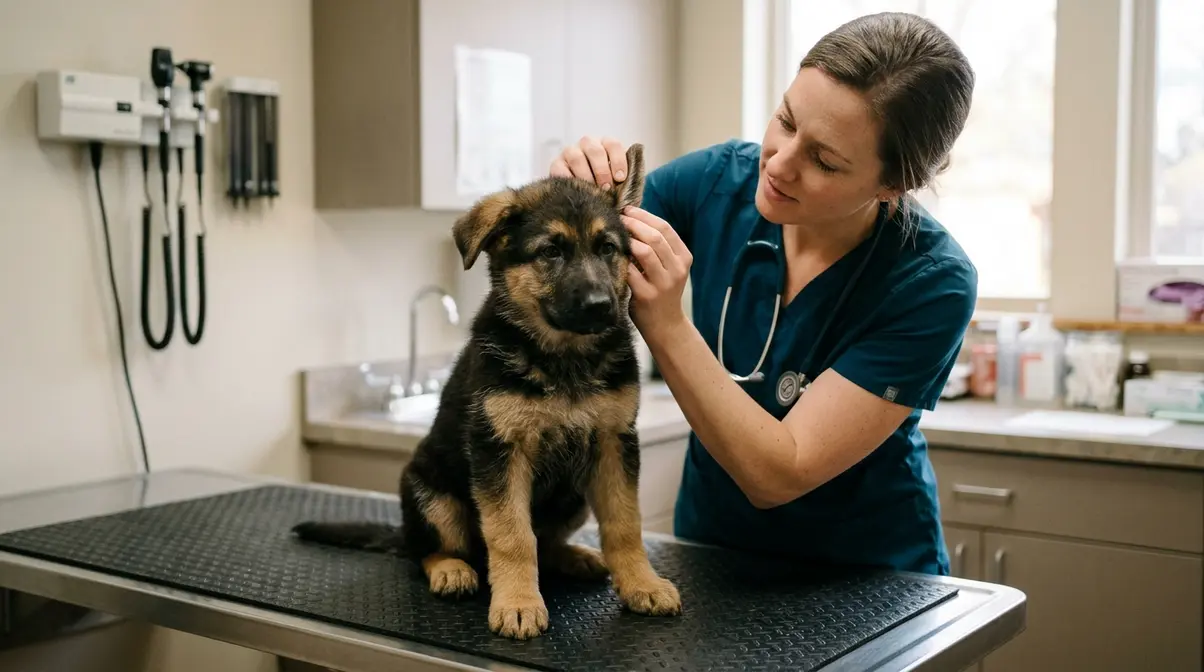
If your GSD’s ears haven’t stood by 8 months, posting and taping are the two interventions with breeder-consensus support. Both require a vet consultation before you start. Several popular “remedies”, extra calcium, marrow bones, gluing, don’t work, and some are actively harmful.
Posting and taping are the only interventions with any breeder-consensus support for ears that haven’t stood by 8 months, and both require veterinary guidance before you start (Sequoyah German Shepherds). Interventions are only appropriate at the far end of The Ear Development Window, at 8 months or beyond, not during it.
What Posting and Taping Actually Involve
Posting is a technique where a foam or moleskin support is placed inside the ear canal to hold it upright while the cartilage strengthens. Taping uses medical tape to hold the ear in the correct position from the outside. Both are temporary supports, the goal is to help ears stand at a point while the cartilage finishes hardening, not to force a permanent shape.
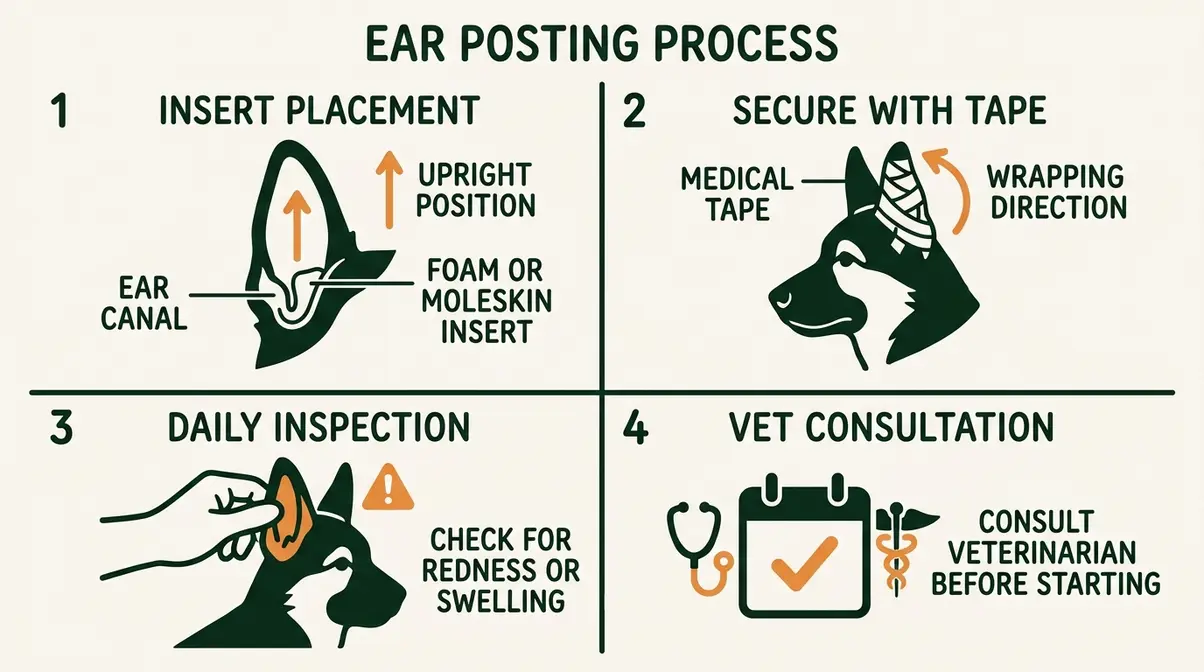
According to Sequoyah German Shepherds, posting technique and timing both matter, starting too early or using the wrong materials can cause more harm than good. Here’s a plain-language overview of the process:
- Consult a veterinarian or experienced GSD breeder first. They can assess whether your puppy’s cartilage is still soft enough to respond to posting.
- Use the correct materials. Foam, moleskin, or breathable medical tape are appropriate. Super glue and craft glue are not, they can cause skin irritation, chemical burns, and cartilage damage.
- Check the ear daily. Look for any irritation, odour, or swelling. These are signs to remove the posting immediately and contact your vet.
- Remove and reapply as directed. Never leave posting in place for more than a few days without checking. Your vet or breeder should give you a specific schedule.
A puppy whose ears were posted at 8.5 months by a breeder and stood permanently within 6 weeks is an owner-reported outcome that breeders describe as realistic, when technique and timing are right.
Always consult a veterinarian or experienced GSD breeder before posting or taping, incorrect technique can damage the cartilage further.
Before you try posting or taping, it’s worth knowing which popular remedies to skip entirely, because some of them are based on myths.
Myths to Ignore: Calcium, Chewing, and Gluing
There’s a lot of confident misinformation about helping GSD ears stand. Here’s a plain verdict on each:
| Myth | Verdict | Why |
|---|---|---|
| Extra calcium supplements will help ears stand | Myth, potentially harmful | Ear cartilage is made of collagen, not calcium phosphate. Supplementing calcium in a growing large-breed puppy can cause skeletal problems. Consult your vet before any supplement. |
| Chewing marrow bones exercises jaw muscles and helps ears | No evidence | According to 5 Myths of German Shepherd Ears (2024), there is no veterinary evidence for this mechanism. |
| Super glue or craft glue can be used for posting | Harmful, avoid | These can cause chemical burns, skin irritation, and cartilage damage. Use only materials recommended by a vet. |
| Rubbing or folding ears “exercises” the cartilage | Myth, causes trauma | This doesn’t strengthen cartilage; it can damage it and prevent proper standing. |
| Shaving inside the ear reduces weight and helps ears stand | No evidence base | No research supports this claim. Don’t do it. |
The calcium myth deserves a direct explanation: cartilage is not bone. It’s built from collagen fibers, not calcium phosphate. Giving extra calcium to a growing large-breed puppy doesn’t strengthen cartilage, it supplements a nutrient the cartilage doesn’t primarily use. Worse, excess calcium in a large-breed puppy’s diet is associated with skeletal development problems. The logic sounds reasonable; the biology doesn’t support it.
Before trying any supplement or intervention, consult your veterinarian, they can assess your specific puppy’s cartilage development.
So when should you actually call a vet, not just for red flags, but for the ear-standing question itself?
When to Ask a Vet Instead
A vet visit for ear development is a routine puppy check, not an emergency. Most vets can assess cartilage quality in a short appointment. Here are the three scenarios where that visit is the right move:
- Ears still down past 8 months with no red flags. A vet can assess cartilage quality and advise on whether posting is still likely to help, or whether genetics is the explanation.
- Any red flag from the checklist above. Infection signs, swelling, sudden flopping in an adult dog, these need professional assessment, not home intervention.
- Before starting any supplement, taping, or posting regimen. This applies every single time, not just once.
According to Wustenbergerland, a vet consultation is recommended for ears not standing past the typical window. A 9-month-old GSD owner who asked their vet about posting is a common scenario, the vet assessed the cartilage, confirmed it was still soft enough to respond, and recommended a specific posting technique. That’s exactly how the process should work.
When in doubt, a vet visit is always the right call, it’s the only way to know whether your puppy’s cartilage can still respond to intervention.
Now that you know everything about ear development, here are the answers to the broader German Shepherd questions that come up most often.
German Shepherd FAQ: Breed Traits, Intelligence, and More
This section answers the seven breed-curiosity questions that appear most often alongside the ear-development topic. They’re worth knowing, and a few connect directly to the ear-development window.
What Is the Hardest Age With a German Shepherd?
The adolescent phase, roughly 6 to 18 months, is widely considered the most challenging period with a German Shepherd. During this time, GSDs become more independent, test boundaries, and carry high energy that can tip into destructive behavior without consistent training and mental stimulation. The good news: this phase passes. A well-socialized GSD typically settles into a calm, loyal companion by age 2-3.
Worth noting for owners reading this guide: this adolescent window overlaps directly with the ear-development window. A puppy whose ears are still settling at 7 months is also entering this testing phase, so patience on both fronts pays off. For a deeper look at the hardest age with a German Shepherd and how to navigate it, PetVR’s temperament guide covers the adolescent phase in full.
How Far Can a German Shepherd Smell You?
German Shepherds have approximately 225 million scent receptors, compared to roughly 5 million in humans, a figure widely cited across canine biology references including the American Kennel Club’s breed resources. Research on canine olfaction suggests dogs can detect scents from up to a mile away under ideal conditions, though the practical range depends heavily on wind direction, terrain, and scent concentration. GSDs are used in search-and-rescue, narcotics detection, and tracking work precisely because of this capability.
That olfactory power also means your GSD knows you’re home before you open the door, and likely knows what you had for lunch. The scent-receptor advantage is one reason GSDs consistently rank among the top working breeds worldwide.
What Level of Intelligence Do German Shepherds Have?
According to Stanley Coren’s breed-intelligence assessment in The Intelligence of Dogs, German Shepherds rank third among all dog breeds for working and obedience intelligence. They can learn a new command in fewer than 5 repetitions and obey a known command on the first attempt 95% of the time.
That makes them one of the most trainable breeds, and one of the most demanding. A GSD that doesn’t get enough mental stimulation will find its own entertainment, and you probably won’t like what it chooses. For a full breakdown of German Shepherd intelligence ranking compared with other breeds, PetVR’s intelligence guide covers Coren’s methodology and what the ranking means in practice.
Do German Shepherds Like to Be Hugged?
Most German Shepherds tolerate hugs from people they trust, but they don’t naturally seek them out the way some breeds do. GSDs tend to show affection through proximity rather than physical restraint: staying close, leaning against you, or following you from room to room. A hug, from a dog’s perspective, involves one creature pinning another, not every dog finds that comfortable, even from a beloved owner.
Reading your individual dog’s body language matters. A stiff posture, pinned ears, or a turned head during a hug is a clear signal to give them space. A relaxed body and soft eyes mean you’re probably fine.
Who’s Stronger, a Pitbull or a German Shepherd?
German Shepherds and American Pit Bull Terriers are both strong, athletic breeds, but built for different things. GSDs are larger on average (55-90 lbs, compared to 30-65 lbs for most APBTs) and have a comparable bite force by most measurements, exact figures vary significantly by source and methodology, so no single PSI number should be treated as definitive.
In raw weight and size, the GSD typically has the advantage. In pound-for-pound muscle density and explosive power, the APBT is highly competitive. The honest answer is that both breeds are formidably strong, and the comparison matters far less than how either dog is trained and socialized.
Who Should Not Own a German Shepherd?
German Shepherds are a poor fit for owners who work long hours without a dog walker or daycare arrangement, live in small apartments without reliable outdoor access, or prefer a low-energy, low-maintenance companion. They shed heavily year-round, “German Shedder” is a community nickname for a reason, and require significant daily exercise plus consistent mental stimulation.
Prospective owners who can’t commit to regular training and early socialization will likely find the breed frustrating. More importantly, a GSD that doesn’t get what it needs will struggle. For an honest look at German Shepherd ownership requirements and lifestyle fit, PetVR’s breed facts guide lays out the lifestyle requirements plainly.
Can a Person Beat a German Shepherd in a Fight?
This is a common curiosity question, worth framing responsibly. A trained German Shepherd used in police or protection work is extremely difficult for an untrained person to stop. GSDs can reach approximately 30 mph, have a powerful bite, and are trained to hold on under pressure.
The practical answer for most readers: if a GSD is acting aggressively toward you, don’t fight. Create distance, avoid direct eye contact, stay calm, and don’t run. Contact animal control if the dog is a danger to others. The question of “winning” is far less important than getting safely away.
Frequently Asked Questions About German Shepherd Ears
German Shepherd ears stand up naturally in most dogs, but the timeline varies more than most sources admit. The questions below cover the most common concerns owners have during the development window, from the first ear that pops up to the final set at 6-8 months.
Do All German Shepherds’ Ears Stick Up?
Most purebred German Shepherds develop fully erect ears as they mature, but not all do. A small percentage keep soft or floppy ears because of genetics, the cartilage simply doesn’t harden enough to hold the ear upright. This doesn’t affect their hearing, health, or temperament in any way. Ear trauma from rough handling can also prevent ears from standing properly. If you’re concerned, a veterinarian can assess your dog’s cartilage.
Do German Shepherd Ears Stand Up on Their Own?
Yes, German Shepherd ears stand up on their own without cropping, bracing, or surgical alteration. Puppies are born with soft cartilage, so floppy ears in the first several months are completely normal. As the cartilage strengthens, ears rise naturally, usually by 6 to 8 months, sometimes up to a year. A small percentage of dogs keep soft ears due to genetics, which is a cosmetic variation, not a health problem.
When Do German Shepherd Puppies’ Ears Stand Up for Good?
German Shepherd puppies’ ears typically stand permanently by 6 to 8 months, though some dogs take up to a year. The process isn’t linear, ears often go up and down between 2 and 6 months, and one ear commonly stands before the other. Teething between 4 and 6 months can cause ears that were standing to flop again temporarily. Once the cartilage fully hardens, the position is permanent.
Why Do German Shepherd Puppy Ears Go Back Down During Teething?
During teething at around 4 to 6 months, a puppy’s body redirects energy and nutrients toward growing adult teeth, which can temporarily soften ear cartilage. Ears that were standing may flop completely during this phase, this is a recognized and common development pattern, not a permanent setback. Once teething is complete, usually by 6 months, the cartilage typically hardens again and ears rise back up and set permanently.
Should I Tape My German Shepherd Puppy’s Ears or Give Calcium Supplements?
Don’t give extra calcium or tape ears without consulting a veterinarian first. German Shepherd ears normally stand up on their own, and most interventions before 8 months are unnecessary. Extra calcium can harm a growing large-breed puppy’s skeletal development rather than help. Avoid rubbing or pulling a puppy’s ears, since cartilage damage can prevent proper standing. If ears are still down past 8 months, ask your vet about posting options.
What to Do Next If Your GSD’s Ears Aren’t Up Yet
German Shepherd ears stand up naturally in the vast majority of dogs, no cropping, no surgery, and no supplements required. Across multiple breeder and pet-care sources, the full Ear Development Window runs from birth to roughly 12 months, with most ears permanently set by 6 to 8 months (Mittelwest; German Shepherd Shop). Teething causes a temporary dip at 4 to 6 months, and a small percentage of dogs keep soft ears due to genetics alone, a cosmetic variation, not a health concern.
The Ear Development Window is the reason this guide exists. It replaces the single false deadline most sources give, because no one deadline fits every dog. If you’re worried at 4 months, you’re almost certainly still inside the window. That worry is understandable, but the evidence says patience is the right call.
Here’s your action plan: start taking a weekly front-and-side photo of your puppy’s ears today, note the date, and set a calendar reminder for the 8-month mark. If ears are still down at 8 months with no red flags, book a vet appointment. That’s it. One reminder, one photo series, one clear threshold, and you’ll know exactly when to act.
 German Shepherd Coat Types: Stock, Plush and Long