
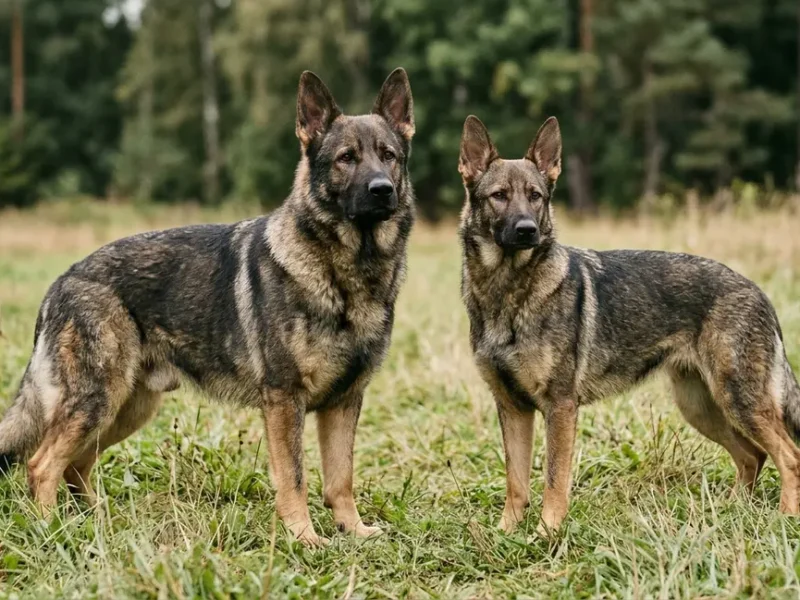
You’ve decided on a German Shepherd, now comes the question every GSD owner debates: male or female? The wrong choice doesn’t mean disaster, but years of mismatch between your lifestyle and your dog’s natural tendencies is a real cost.
“While males tend to be larger, stockier, and more clingy, females are often sleeker, more independent, and quicker to mature.”
This guide gives you a side-by-side comparison of size, temperament, training, guarding, and health, plus a clear recommendation by owner type. You’ll find a full comparison table, a feature-by-feature breakdown, sex-specific health data, and answers to all 12 common questions GSD owners ask before choosing.
Quick Verdict
First-time owner or family with young children: Choose a female, she matures faster, focuses more readily in training, and is less likely to test boundaries.
Experienced owner seeking a territorial guard dog or working companion: A male may suit you better, he’s larger, more imposing, and bonds intensely with one handler.
Key difference: Males are bigger and more territorial; females mature faster and are easier to manage. Full breakdown below.
The main difference between a male and female German Shepherd is size, maturity speed, and bonding style, but individual personality and socialization matter most.
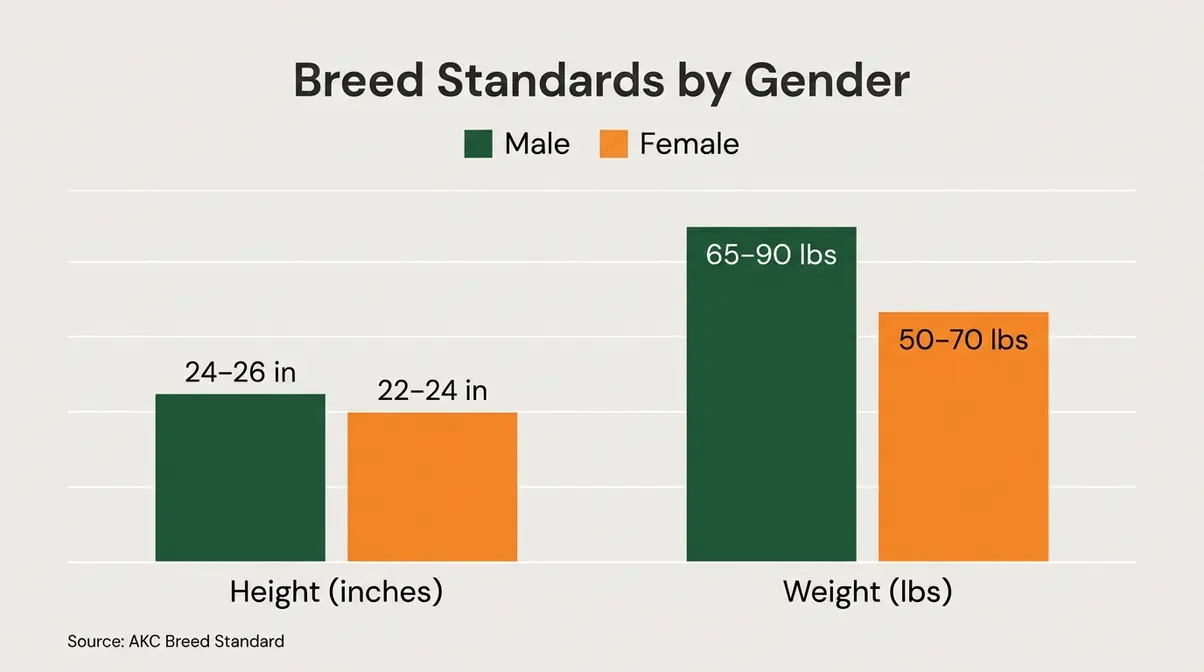
- Size: Males stand 24-26 in and weigh 65-90 lbs; females stand 22-24 in and weigh 50-70 lbs (American Kennel Club).
- Trainability: Females are generally easier to train; males need firmer, more consistent boundaries during adolescence.
- Guarding: Males guard territory; females guard people, choose based on the protection style you need.
- The Owner-Match Framework: Match gender to your experience level, household type, and primary use, not just preference.
Male vs Female German Shepherd: Side-by-Side Comparison
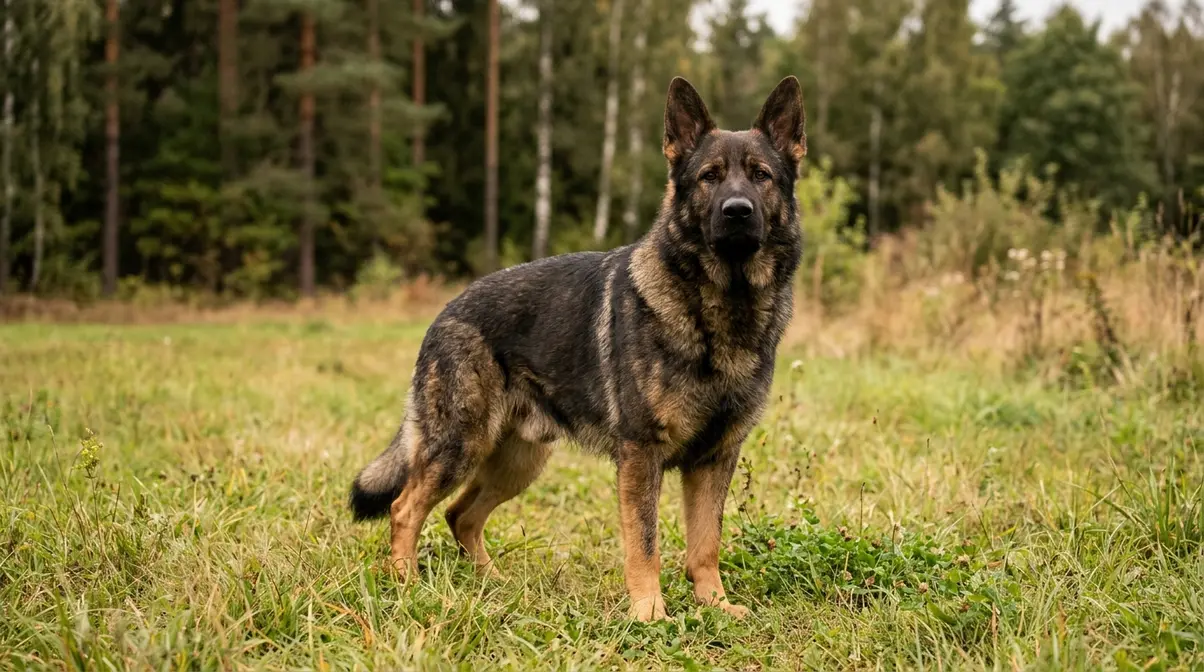
The main difference between a male and female German Shepherd comes down to size, maturity speed, and bonding style. According to the American Kennel Club breed standard, adult males stand 24-26 inches tall and weigh 65-90 pounds; adult females stand 22-24 inches and weigh 50-70 pounds. That size gap shapes everything from handling difficulty to how each gender approaches guarding. When it comes to german shepherd temperament male vs female differences, the most practical distinctions are bonding intensity, maturity speed, and whether the dog guards property or people.
Research on GSD temperament differences by sex shows that individual personality and socialization consistently outweigh gender as predictors of behavior.
| Feature | Male German Shepherd | Female German Shepherd |
|---|---|---|
| Height (adult) | 24-26 inches | 22-24 inches |
| Weight (adult) | 65-90 lbs | 50-70 lbs |
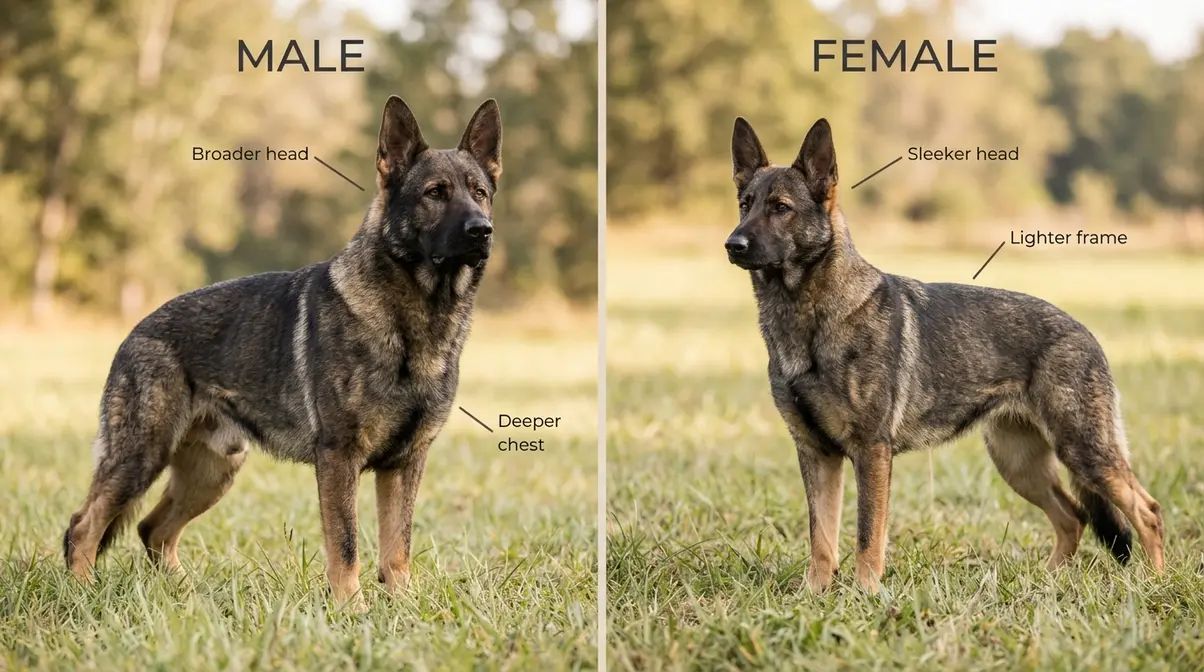
| Build | Stockier, broader head | Leaner, sleeker, wedge-shaped head |
| Temperament | Outgoing, intense bonding, “velcro dog” | Independent, selective affection, even-keeled |
| Trainability | Highly trainable; needs firm consistency | Slightly easier; eager to please, sensitive to harsh correction |
| Guarding Style | Territorial (property and boundaries) | People-focused (pack and family) |
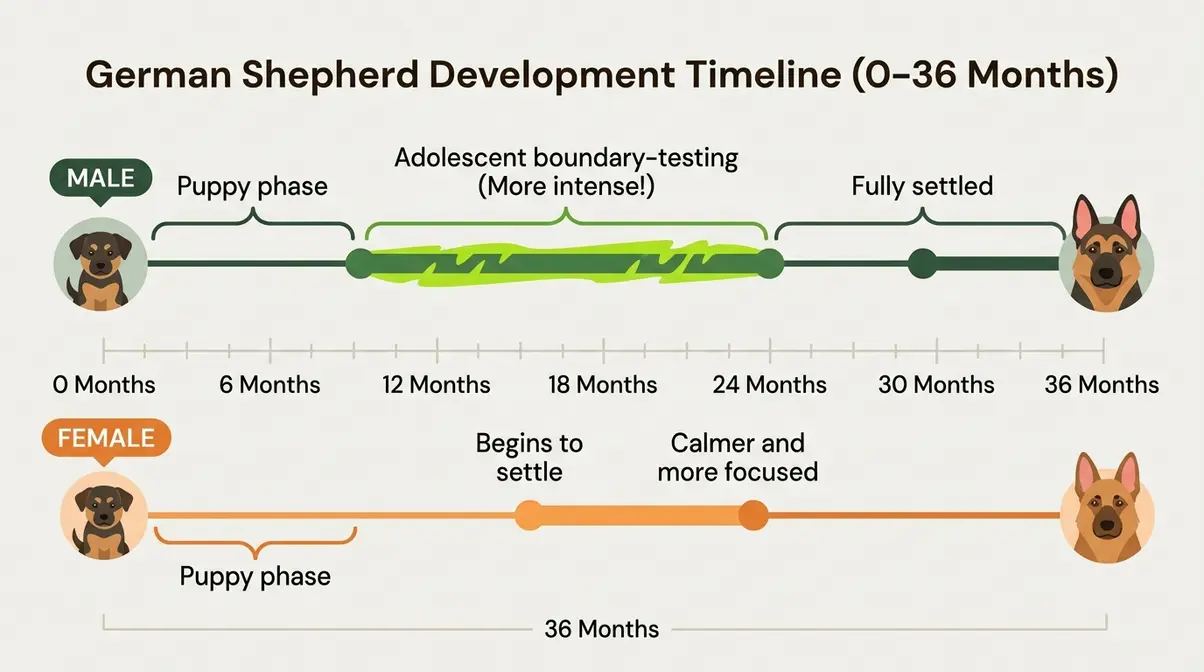
| Maturity Age | Up to ~3 years to fully settle | Faster; calmer and more focused earlier |
| Energy Level | High; “big puppy energy” into adolescence | High; settles sooner |
| Aggression Tendency | Dog-to-dog dominance if undersocialized | Can become selective with other females |
| Health Consideration | Joint disorder risk rises with early neutering | Heat cycles twice/year; spaying more complex |
| Best For | Experienced owners, territorial guarding, working roles | First-time owners, families, people-focused protection |
Sources: American Kennel Club; A-Z Animals (Aug 2024). Individual dogs vary, socialization and upbringing matter most.
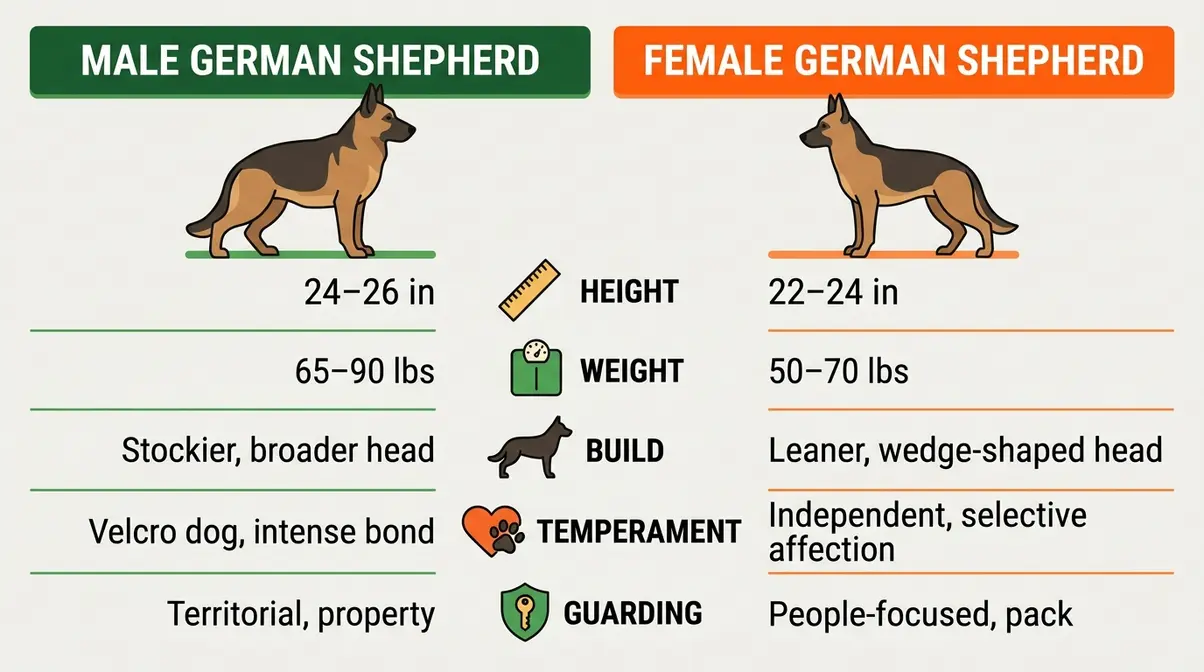
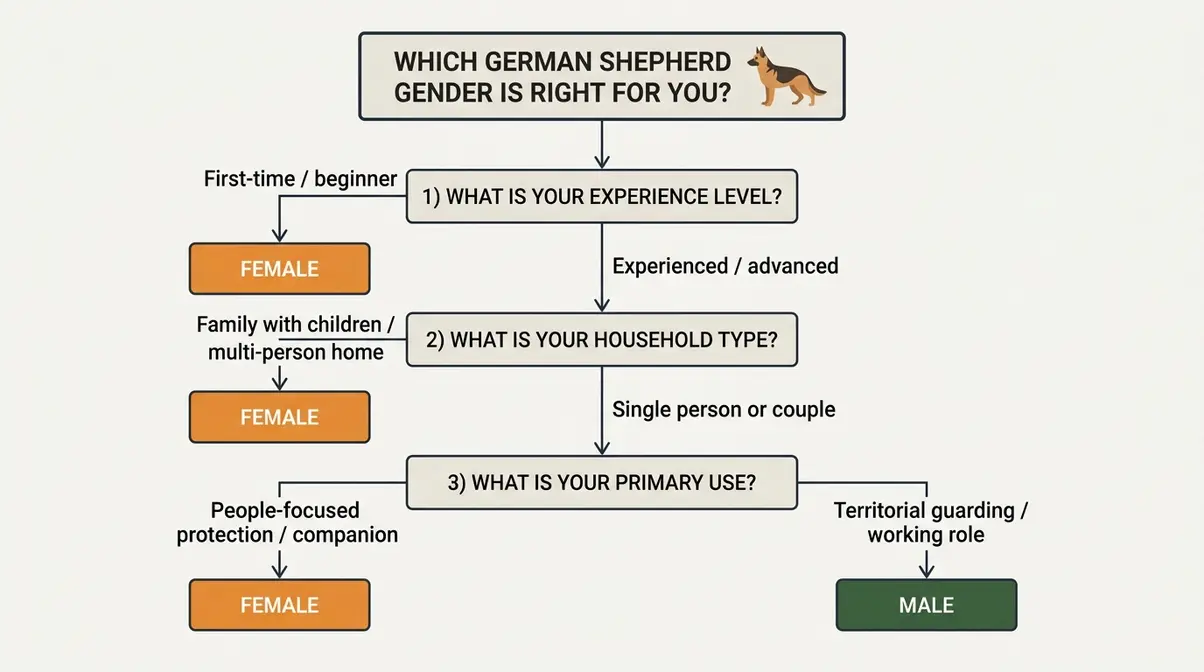
The Owner-Match Framework maps your experience level, household type, and primary use to the right gender. Use it as a starting point, the Who Should Choose sections below give specific scenarios for each axis.
Now let’s look at each gender in detail, starting with the male.
Male German Shepherd Overview
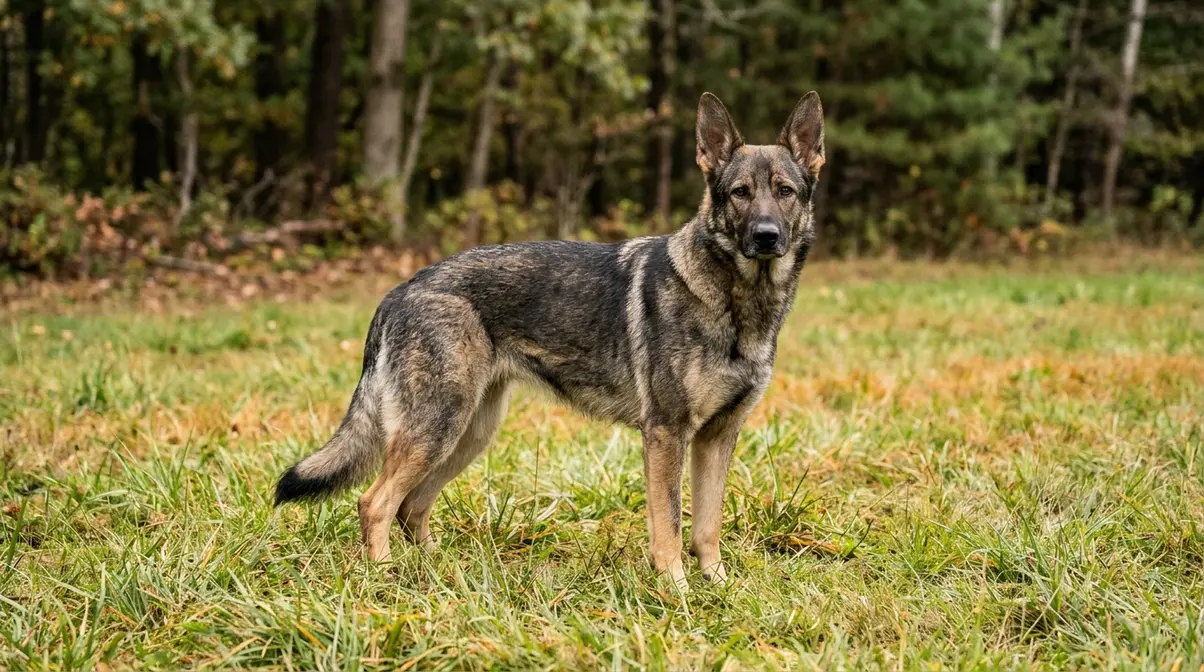
A male GSD is a large, intensely loyal dog who bonds deeply with his primary handler and retains an exuberant, playful energy well into adulthood. He suits experienced owners who can provide consistent structure through a longer adolescence, and who want a dog with a strong territorial presence.
Male vs Female German Shepherd Size and Physical Build
When comparing male vs female German Shepherd size, males stand 24-26 inches tall and weigh 65-90 pounds according to the American Kennel Club breed standard. Some breeder sources, including A-Z Animals (Aug 2024), note that working-line males can reach the higher end of that range, with certain breeders citing 85-95 lbs for fully filled-out standard males. The AKC range is the most widely used benchmark; the higher figure reflects individual variation rather than a separate standard.
The male’s build is distinctly stockier than the female’s, broader head, deeper chest, and a more angular frame overall. He takes up to roughly three years to fully fill out physically and mentally, according to A-Z Animals (Aug 2024), though this timeline is a commonly cited tendency from a general pet reference source rather than a confirmed veterinary benchmark. For a male and female GSD growth chart by age, growth tracking over the first two years gives the clearest picture.
That size has practical consequences. A 90-lb male needs more physical space, stronger leash handling, and a confident owner on the other end of the lead. If you have young children under five, a 90-lb male GSD can accidentally knock them over during play, factor that into your decision before you choose.
Size is only part of the picture, the male’s temperament is where the real differences show up.
Temperament and Bonding Style
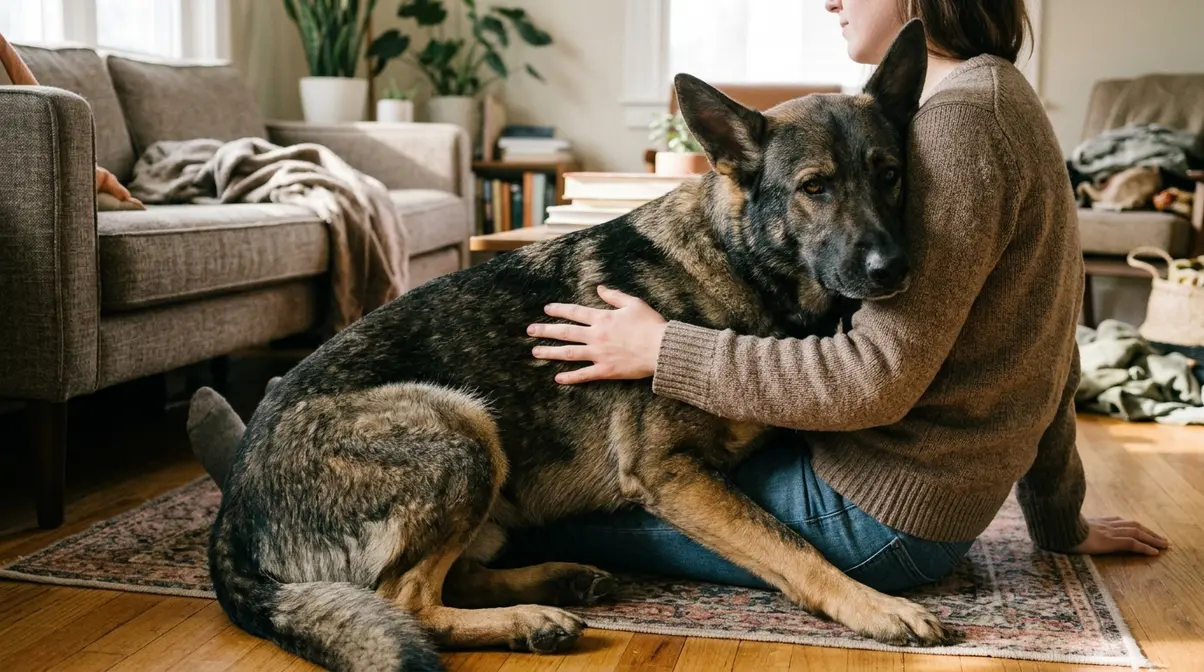
Male GSDs often form an intense bond with one primary person, usually the main trainer or feeder. According to Sequoyah German Shepherds, males frequently display velcro-dog behavior: following their person from room to room, seeking constant attention, and showing signs of distress when that bond is disrupted. An owner who works from home and can provide consistent attention will get the most out of a male GSD’s intense bonding style. A busy household where no single person is consistently present may find a female easier.
Male German Shepherds often retain “big puppy energy” for up to three years, making them rewarding but demanding companions for owners who can provide firm, consistent structure.
That playfulness and distraction persist well into adolescence. Between roughly 6 months and 2 years, males go through a boundary-testing phase that owners on GSD forums describe consistently: they push back against commands, get distracted by environmental stimuli, and may challenge household rules they previously followed. This isn’t stubbornness for its own sake, it’s a normal developmental stage that responds well to firm, positive-reinforcement training.
Males also tend to be more vocal about territory. Alarm-barking at strangers approaching the property perimeter is common, and the territorial instinct around the home boundary is stronger than in most females. That’s an asset for guarding; it’s a consideration for neighbors.
As a tendency, not a guarantee: individual personality, upbringing, and socialization shape a male GSD’s behavior more than sex alone. Some males are calmer and less clingy than described here; some are more so.
So who is the male GSD actually best for? Here are three specific scenarios.
Best For, Male German Shepherd
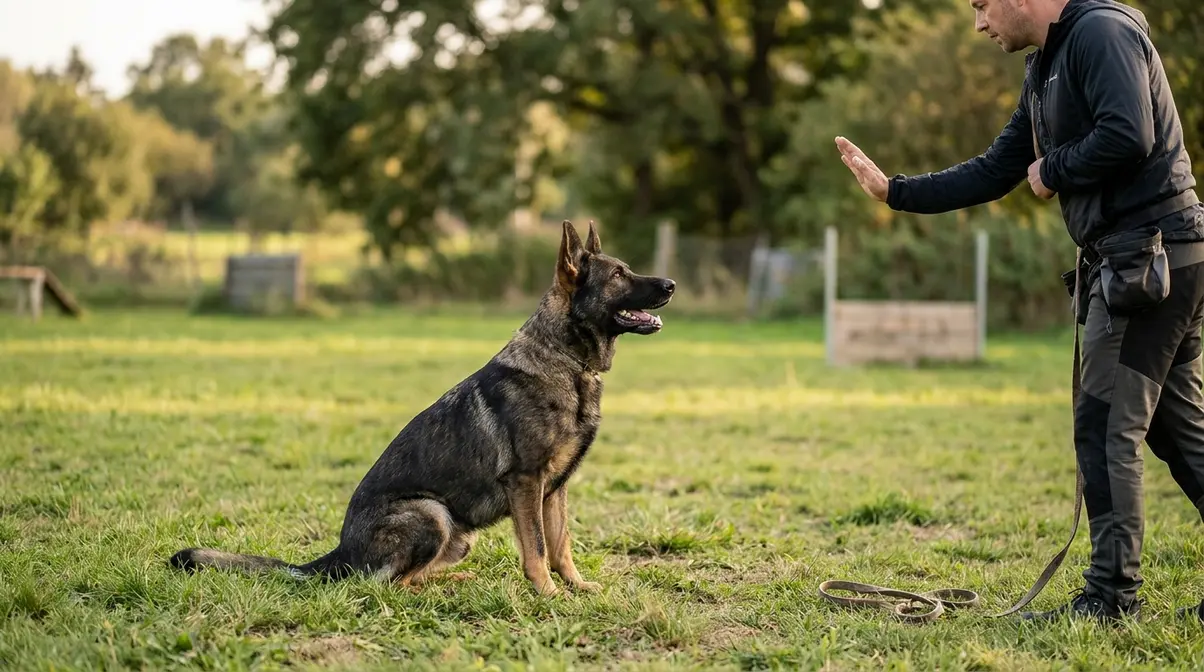
- Experienced owner wanting territorial guarding: The male’s imposing size, property-focused instinct, and alarm-barking make him well suited to a guarding role on a secured property.
- Owner working with a trainer: If you have access to professional training support and can commit to firm, consistent structure through a 2-3 year adolescence, the male GSD rewards that investment with deep loyalty.
- Single person or couple as primary handler: The male’s intense one-person bond is a feature, not a flaw, when you can be that person consistently.
Not ideal for: First-time owners without professional training support, or households where no single person can serve as the dog’s consistent handler.
Now let’s look at the female German Shepherd, a dog that surprises many owners with how different she is.
Female German Shepherd Overview
A female GSD is a leaner, more independent dog who matures faster than her male counterpart and distributes her loyalty across the household rather than fixating on one person. She’s often the more manageable starting point for first-time GSD owners, and that recommendation is backed by more than just breeder opinion.
Size and Physical Build
Female GSDs stand 22-24 inches tall and weigh 50-70 pounds, according to the American Kennel Club breed standard. Her build is leaner and more agile than the male’s, a sleeker, wedge-shaped head and a lighter overall frame that is still a substantial dog by any measure.
The size difference is meaningful in practice. A 70-lb female is easier for smaller adults or older children to manage on leash than a 90-lb male pulling toward a distraction. A family with a 10-year-old who will help walk the dog may find the female’s lighter build more manageable day to day.
The female’s temperament is where she really distinguishes herself from the male.
Female German Shepherd Temperament and Bonding Style
One of the most common misconceptions about female GSDs is that they’re “less protective” than males. They’re not, they protect differently. Where males tend to guard property and the perimeter, females tend to guard people and the pack. According to Sequoyah German Shepherds, females spread affection more evenly across the household and stay loyal to the family unit rather than fixating on a single primary handler.
The female German Shepherd personality is defined by independence and selective affection rather than the velcro-dog intensity of the male. She’s deeply loyal to her people, but she chooses when to seek closeness rather than demanding it continuously.
Female German Shepherds tend to mature faster than males, becoming calmer and more focused earlier, a key reason they’re often recommended for first-time GSD owners.
That independence is sometimes described as “less clingy,” but “self-directed” is a more accurate term. A female GSD isn’t cold, she’s deeply loyal. She simply doesn’t demand constant attention the way a male might. She may choose when to come for affection rather than seeking it continuously.
The people-focused protection instinct shows up practically. A female GSD in a household with three children is less likely to fixate on one child and more likely to monitor the whole group, a real advantage for family protection. Her environmental awareness is quick; she tends to sound an alarm when a family member is threatened, not just when a stranger approaches the fence line.
Females also mature faster than males. According to A-Z Animals (Aug 2024), the “big puppy energy” phase is shorter in females, they generally become calmer, more observant, and more focused earlier than males. This is a commonly cited tendency from a general pet reference source; for a verified timeline, consult an AKC resource or veterinary behaviorist. Understanding how the female GSD heat cycle works is another practical consideration for intact females.
As always: individual temperament and upbringing matter more than sex. Some females are more clingy than described here; some males are more independent. These are tendencies, not guarantees.
Here are the three situations where a female GSD is the clearer choice.
Best For, Female German Shepherd
- First-time GSD owner: Faster maturity and slightly easier training make the female more forgiving of early handler mistakes, the learning curve is more manageable.
- Family with young children: People-focused protection and even affection distribution suit a multi-person household where the dog needs to bond with everyone, not just one handler.
- Owner who wants independence: The female’s self-directed nature suits owners who can’t be home all day, she handles alone time with more ease than most males.
Not ideal for: Owners who want an imposing territorial guard dog patrolling the property perimeter, or households with an existing dominant female dog (same-sex tension can develop as both mature).
With both overviews in mind, let’s go criterion by criterion to see which gender wins each category.
Male vs Female German Shepherd: Feature-by-Feature Breakdown
The main difference between a male and female German Shepherd is size, maturity speed, bonding style, and guarding approach. Males are larger, more territorial, and bond intensely with one person. Females mature faster, are slightly easier to train, and protect people rather than property. Both are highly capable, the right choice depends on your household and what you’re asking the dog to do.
Are Male or Female German Shepherds Easier to Train?
Females have a slight edge in trainability, showing higher eagerness to please and sharper focus during adolescence. According to Mittelwest German Shepherds, females respond well to positive reinforcement from an early age and tend to stay focused during training sessions. They can be sensitive to harsh corrections, so punishment-based methods work against you, reward-based training is the clear path.
Females are generally considered slightly easier to train than males, with higher eagerness to please and sharper focus during adolescence, though both genders are highly trainable with consistent positive reinforcement.
Males are highly trainable too, don’t read this as “males are hard to train.” The difference shows up most during the 6-to-18-month adolescent phase, when males are more easily distracted by environmental stimuli and more likely to push back against commands. They need firmer, more consistent boundaries during this window; inconsistency is punished more quickly in a male than in a female.
A first-time owner using a puppy class will typically find a female GSD easier to keep focused during group sessions. An experienced owner with a structured training plan will get excellent results from either sex.
Trainability is one thing, but what about the question most owners ask about protection?
Which Makes a Better Guard Dog?
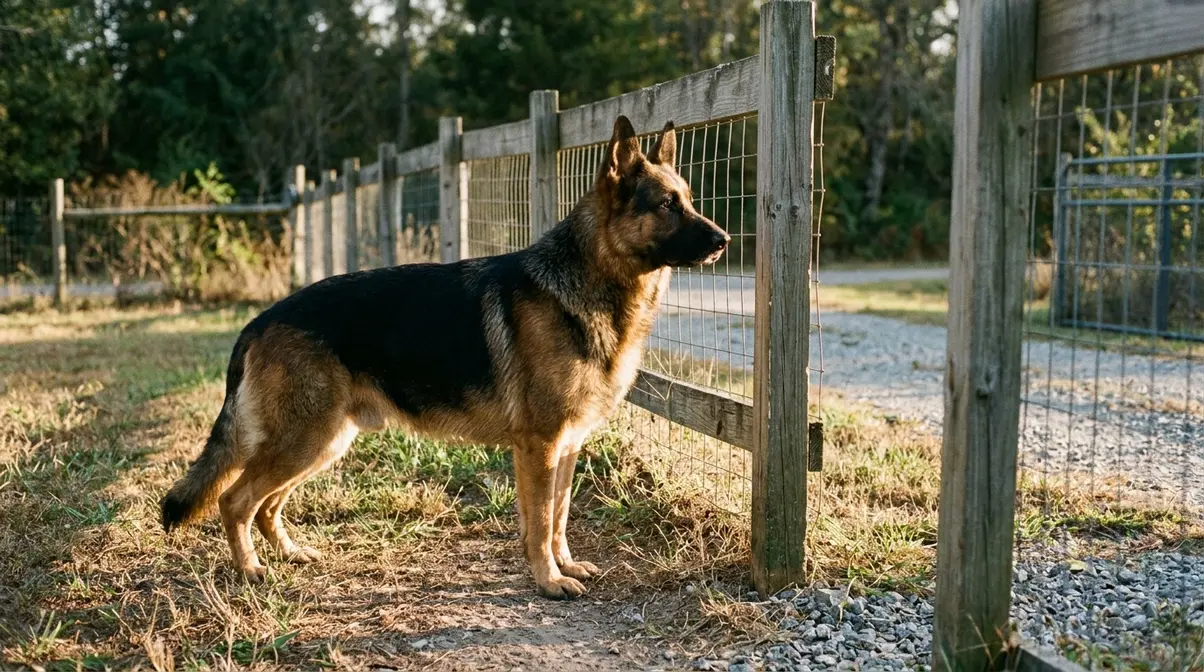
The answer is situational: males for territorial and property guarding; females for people-focused and pack protection. Neither is simply “better”, they guard differently, and the right choice depends on what you need protected.
Males are strongly territorial about property, boundaries, and space. They project an imposing physical presence, patrol the perimeter, and alarm-bark at strangers approaching the fence. That territorial instinct is a genuine asset for property security.
Females guard the pack. They’re quicker to notice a threat to a family member, excel at close-quarters alarm-barking when someone approaches a child or vulnerable person, and tend to stay positioned near their people rather than patrolling the perimeter. According to Valor Protection Dogs, in formal protection training, females tend to be quicker and more agile, while males are harder-hitting, a meaningful distinction for working-dog contexts.
Neither gender is inherently more aggressive. Early socialization is the dominant factor for either sex. If you want a dog that patrols your property line, a male may suit you better. If you want a dog that stays close to your children, a female often excels.
Guarding is about protection, but what about everyday affection?
Are Male or Female German Shepherds More Affectionate?
This is better framed as a difference in affection style rather than quantity. Males are more overtly affectionate, outgoing, attention-seeking, and prone to the velcro-dog behavior described earlier. They may follow you from room to room and act clingy if the primary bond is disrupted.
Females are more selective and independent. They spread affection across the household and are deeply loyal, but they’re less likely to demand constant attention. If you want a dog that greets you at the door every time and stays close all evening, a male GSD fits that profile. If you prefer a dog that’s affectionate on its own terms, a female suits you better.
According to Sequoyah German Shepherds, males often bond intensely with one person while females spread affection more evenly across the household, a pattern that holds across most owner reports from GSD communities.
Affection style also affects how each gender handles being left alone.
How Do They Handle Being Left Alone?
Females have a slight edge here too. Their more independent nature means they often handle alone time with less distress than males, whose intense bonding can tip into separation anxiety when the primary person is absent for long periods.
According to Central Coast German Shepherds, males bond intensely and may need gradual alone-time training, while females tend to be more independent by temperament. That said, this is a tendency, individual dogs vary considerably, and a well-trained male can handle alone time just as well as a female.
For either sex: build alone-time tolerance gradually from puppyhood rather than assuming the dog will adapt on its own. There’s no universal safe hour limit, individual training history, exercise level, and the dog’s specific personality all factor in. Consult a veterinarian or certified trainer before committing to a specific schedule.
Alone-time tolerance is closely tied to maturity, which brings us to one of the biggest practical differences between the sexes.
Which Matures Faster?
Females mature faster, both physically and mentally. They become calmer, more observant, and more focused earlier than males, and the adolescent boundary-testing phase is shorter.
Males, by contrast, can retain “big puppy energy” for up to roughly three years, according to A-Z Animals (Aug 2024). The adolescent phase, roughly 6 months to 2 years, involves more distraction, more boundary-testing, and a higher likelihood of dog-to-dog dominance issues if socialization is inconsistent.
The maturity gap matters most in the first 18 months. Plan your training intensity accordingly during that window rather than waiting for the dog to “grow out of it.” Consistent training accelerates the settling process for both sexes; waiting for a specific birthday is not a strategy. For a fuller picture of when German Shepherds typically calm down, the calming timeline varies by individual as much as by sex.
No single verified age applies to all dogs, use training, not a calendar, as your benchmark.
One more physical difference worth knowing: coat type and appearance can vary between males and females too.
Do Male and Female German Shepherds Look Different? Coat Types and Visual Differences
Both sexes come in standard, long-haired, and white coat variants. The sex-based visual differences, broader head, stockier build in males, apply across all coat types. In long-haired GSDs, the male’s fuller mane is often more pronounced than the female’s, though both carry the same flowing coat length.
In white German Shepherds, the size difference between sexes follows the same pattern as standard-colored dogs: males are larger and stockier, females leaner and more agile. GSD-Husky mixes follow similar sex-based size patterns, males are typically larger, but individual variation runs higher in mixed breeds than in purebreds.
Now that you know how the genders compare across every key trait, let’s look at the honest downsides of each.
Disadvantages of Each Gender
Every gender has real drawbacks, and knowing them upfront saves you from surprises later. Neither male nor female GSDs are low-maintenance dogs, but the challenges are different. Here’s what to expect from each, and how to manage the most common issues.
Disadvantages of Male German Shepherds
Males come with a specific set of challenges that are manageable with the right preparation, but they’re real.
- Roaming and escape behavior: Intact males have a strong drive to find females in heat. That instinct can override training and lead to fence-jumping or gate-breaking. Secure fencing isn’t optional, it’s essential.
- Urine marking: Marking behavior is more pronounced in intact males, especially in new environments or anywhere another dog has been. This can be a significant indoor management issue.
- Adolescent stubbornness: The 6-to-18-month boundary-testing phase is demanding. First-time owners without professional training support often find this window overwhelming, males push back harder and more persistently than females during this period.
- Dog-to-dog dominance: Intact or undersocialized males may show aggression toward other male dogs. Early, heavy socialization is the primary mitigation, not neutering alone.
According to Mittelwest German Shepherds, intact males may roam, mark, and show dog-to-dog dominance; early socialization is the most effective tool. Neutering reduces roaming and marking behavior but carries joint health implications covered in the next section.
Females have a different set of challenges, particularly around reproductive health.
Disadvantages of a Female German Shepherd
- Heat cycles: Intact females go into heat roughly twice per year, with each cycle lasting approximately 15-21 days, according to Wustenbergerland breeder resources; verify the exact duration with your veterinarian as individual cycles vary. During heat, she requires careful management to prevent unwanted breeding, this means supervision, separate housing from intact males, and ongoing monitoring.
- Spaying complexity: Spaying is a more involved surgery than neutering, longer procedure, longer recovery, and typically higher cost. The health benefits are significant (see the Health section), but the upfront commitment is greater.
- Same-sex tension: Females can become more selective and critical of other females as they mature. A household with two intact females may experience conflict as both dogs reach social maturity.
- Sensitivity to correction: Females respond poorly to punishment-based training. If your default training style leans toward correction-heavy methods, a female GSD will resist and shut down rather than comply.
Intact female German Shepherds go into heat roughly twice a year, with each cycle lasting approximately 15-21 days, a practical consideration for owners who choose not to spay. According to Wustenbergerland, spaying eliminates heat cycles and reduces same-sex tension; consult your veterinarian on timing and the best approach for your dog.
The spaying and neutering decision connects to something most comparison guides skip entirely: the health data.
Health and Neutering Considerations
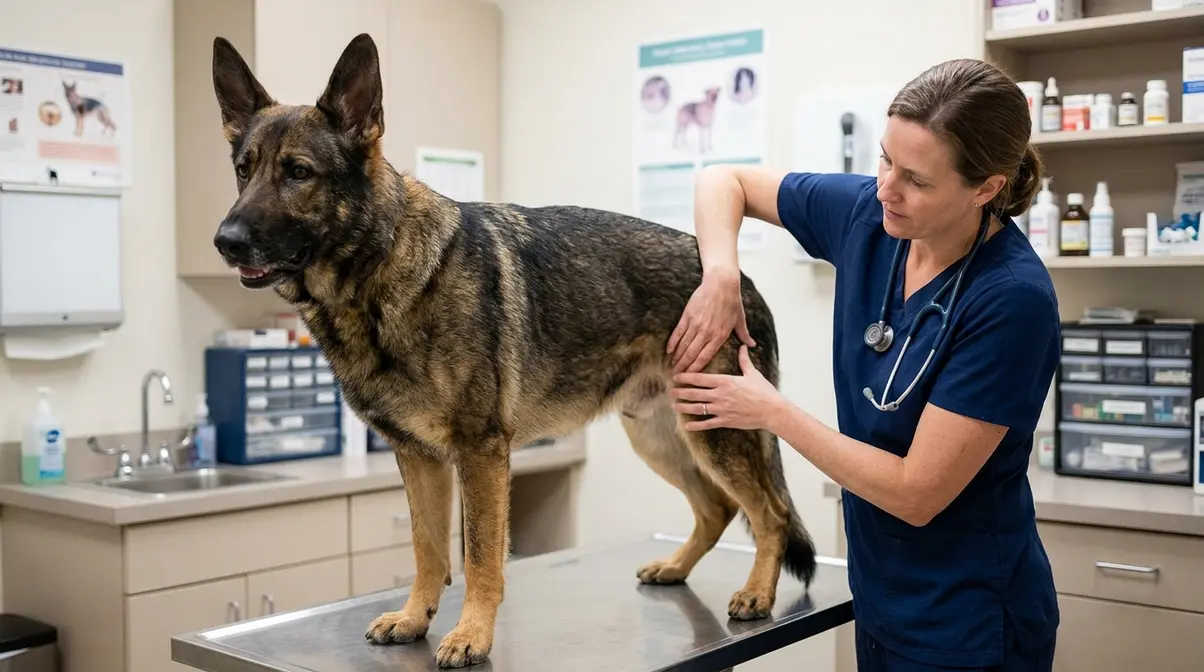
The timing of spaying or neutering affects health outcomes differently for males and females, and the data here is specific enough to influence your decision. Consult your veterinarian before making any spay/neuter decision; the information below is educational context, not a recommendation.
A Hart et al. neutering study published in Veterinary Medicine and Science in 2016 examined 1,170 German Shepherd Dogs and found striking differences in health outcomes based on neutering timing. Joint disorders, primarily hip and elbow dysplasia, were significantly more common in dogs neutered early.
A UC Davis study of 1,170 German Shepherd Dogs found that 21% of males neutered before one year of age had joint disorders, compared with 7% of intact males, a finding that underscores the importance of timing the spay/neuter decision carefully (Hart et al., Vet Med Sci, 2016).
The study identified four key health metrics across both sexes:
- Male joint disorders: 7% of intact males had joint disorders, compared with 21% of males neutered before one year of age, roughly a three-fold increase in risk.
- Female joint disorders: 5% of intact females had joint disorders, compared with 16% of females neutered before one year of age.
- Female urinary incontinence: 7% of females neutered before one year of age developed urinary incontinence, a condition rarely seen in intact females.
- Female mammary cancer: 4% of intact females developed mammary cancer, compared with less than 1% of females neutered before one year, illustrating that the timing decision involves genuine trade-offs rather than a simple answer.
These findings come from 2016 retrospective hospital data, meaning they reflect dogs already presenting at veterinary hospitals, not a random population sample. A separate 2020 multi-breed neutering study provided additional context using a different dataset: intact GSD males in that study had a 6% joint disorder rate; males neutered under 6 months had a 19% rate; those neutered at 6-11 months had an 18% rate; and those neutered at 1-2 years had a 9% rate. The slight difference in intact-male baseline between the two studies (7% vs 6%) reflects different study populations and methodologies, not a data error. The UC Davis neutering health report confirms that joint disorder risk roughly triples with neutering before one year of age.
Research suggests that waiting until physical maturity, typically 18 months to 2 years for GSDs, may reduce joint disorder risk. But the right timing depends on your individual dog, your household, and your veterinarian’s assessment. Don’t make this decision based on a comparison article alone.
With the health picture clear, let’s use the Owner-Match Framework to make the final call.
Who Should Choose a Male German Shepherd?
Choose a male German Shepherd if your situation matches one of these profiles.
The Owner-Match Framework points to the male when your experience level is intermediate to advanced, your household type is a single person or couple with one consistent handler, and your primary use is territorial guarding or a working role.
- You’re an experienced dog owner who can provide firm, consistent training through a 2-3 year adolescence. The male’s boundary-testing phase is real, it responds to structure, not waiting. If you’ve managed a high-drive dog before, you already have the tools.
- You want a territorial guard dog that patrols your property perimeter. The male’s imposing size (up to 90 lbs, 26 inches), alarm-barking tendency, and property-focused guarding instinct suit this role better than the female’s people-focused protection style.
- You’re a single person or couple who wants an intensely loyal companion and can be the dog’s primary handler. The velcro-dog bond a male forms with his primary person is one of the breed’s most celebrated qualities, when you can actually fill that role consistently.
- You work with a professional trainer and have a securely fenced yard. The combination of professional support and physical containment addresses the two biggest male-specific risk factors (adolescent boundary-testing and roaming).
According to Sequoyah German Shepherds, the male’s intense handler bond and territorial instincts make him the stronger fit for experienced owners who can provide consistent structure and a defined role.
- Not ideal for:
- First-time dog owners without professional training support
- Families with toddlers, a 90-lb male can accidentally injure small children during play
- Households with an existing dominant male dog
If those scenarios don’t fit, a female German Shepherd may be the better match.
Who Should Choose a Female German Shepherd?
Choose a female German Shepherd if your situation matches one of these profiles.
The Owner-Match Framework points to the female when your experience level is beginner to intermediate, your household type is a family with children or a multi-person home, and your primary use is people-focused protection, a companion role, or your first GSD.
- You’re a first-time GSD owner. Her faster maturity and slightly easier training make the learning curve more manageable. Early mistakes in handling are less likely to create lasting behavior problems than they would with a male in his boundary-testing phase.
- You have a family with young children. Her people-focused protection instinct and even distribution of affection across the household make her a natural fit for a multi-person home. She’s less likely to fixate on one child and more likely to monitor the whole group.
- You want a loyal companion who handles alone time with independence. The female’s self-directed nature suits owners who can’t be home all day. She bonds deeply without demanding constant attention.
- You already have a male dog in the household. Opposite-sex pairs generally get along better than same-sex pairs, adding a female to a home with an existing male reduces the likelihood of dominance conflict.
According to Central Coast German Shepherds, the female’s faster maturity and more even affection distribution make her the recommended starting point for first-time GSD owners and families with children.
- Not ideal for:
- Owners who want an imposing territorial guard dog patrolling the property perimeter
- Households with an existing dominant female dog, same-sex tension can develop as both mature
- Owners unwilling to manage heat cycles or cover the cost of spaying
Before we wrap up, here’s a quick note on how we put this guide together.
Our Methodology
This guide was built by synthesizing published sources across four categories: the AKC breed standard for size and physical data; the UC Davis Hart et al. (2016) study and its 2020 multi-breed follow-up for health and neutering data; breeder and trainer resources (Sequoyah German Shepherds, Mittelwest, Wustenbergerland, Central Coast German Shepherds, Valor Protection Dogs) for temperament and behavioral tendencies; and A-Z Animals for maturity timelines. No first-party hands-on testing was conducted, this is a research-based synthesis of published sources and owner community consensus. Where sources conflicted on figures (notably male weight ranges), both figures are shown with their sources named. PAA questions were checked against current search data and answered independently for featured-snippet extraction.
Now, the questions GSD owners ask most.
Frequently Asked Questions
Do male or female German Shepherds make better guard dogs?
Neither is simply better, they guard differently. Males are typically strongly territorial about property, boundaries, and space, projecting an imposing physical presence. Females tend to protect people and the pack rather than property, excelling at quick environmental awareness and alarm-barking when a family member is threatened. Choose based on the kind of protection you need. Socialization and individual temperament matter most for either gender.
What is the hardest age with a German Shepherd?
Adolescence is often the hardest stretch, especially for males. Male German Shepherds can be easily distracted and test boundaries, and they often take up to three years to fully settle down. Females tend to mature faster, becoming calmer and more focused earlier. Firm, consistent structure and early socialization help both genders through this stage. The 6-to-18-month window is typically the most demanding for either sex.
What not to do to a German Shepherd?
Avoid weak, inconsistent leadership, especially with males, who may become pushy or stubborn without firm, consistent boundaries. Avoid harsh corrections with females, who can be sensitive to punishment-based training. Don’t skip early, heavy socialization for either gender, because males in particular can develop adolescent dog-to-dog dominance without it. Positive-reinforcement training and consistency work best for both sexes.
What is a female German Shepherd?
A female German Shepherd typically stands 22 to 24 inches tall and weighs roughly 50 to 70 pounds, with a leaner, more agile build and a sleeker, wedge-shaped head. She tends to mature faster than males, is often independent and selective with affection, and protects people and the pack more than property. Individual temperament and upbringing ultimately shape her behavior more than sex alone.
Is it better to have a male or female German Shepherd dog?
Neither is universally better, it depends on your household. Females are generally easier to train and mature faster, which is why they’re often recommended for first-time owners. Males are larger, more territorial, and stay playful longer; they need firm structure and early socialization. Individual personality and socialization matter most. Match the dog to your experience level and lifestyle, not just your preference.
At what age do female German Shepherds calm down?
There’s no single verified age, but females generally mature faster than males, becoming calmer, more observant, and more focused earlier. Males, by comparison, can keep their “big puppy energy” for up to about three years. Individual dogs vary considerably, so rely on consistent training and socialization rather than waiting for a specific birthday. A structured routine and regular exercise accelerate the calming process for both sexes.
Do German Shepherds like to be hugged?
Affection styles vary by individual dog more than by sex. Males are often outgoing and eager for attention, sometimes acting as velcro dogs, while females tend to be more independent and selective with physical contact. Whether a particular German Shepherd enjoys hugs depends on the individual dog’s personality and how it was socialized. Let the dog’s comfort and body language guide how much physical affection you offer.
Can a German Shepherd be left alone for 8 hours?
A safe alone-time limit depends on the individual dog, there’s no universal rule. Males often bond intensely with a primary person and can develop separation anxiety more readily, while females tend to be more independent. Build alone-time tolerance gradually with early training for either sex. Consult a veterinarian or certified trainer before committing to a specific schedule, and ensure the dog gets adequate exercise before and after alone periods.
Are girl or boy German Shepherds easier to train?
Females are generally considered slightly easier to train. They tend to show higher eagerness to please and sharper focus, though they can be sensitive to harsh corrections. Males can be more distracted and stubborn during adolescence and need firm, consistent boundaries. Both genders are highly trainable and benefit from early socialization and consistent positive-reinforcement training. The difference is most noticeable during the 6-to-18-month adolescent phase.
What are the downsides of owning a German Shepherd?
Downsides depend partly on gender. Males can be stubborn, roam, or mark if intact, and may show dog-to-dog dominance without early socialization. Females go into heat roughly twice a year, and spaying is more complex and costly than neutering. Both sexes need heavy early socialization and consistent training to avoid behavior problems. Neither is a low-maintenance breed, plan for significant time and training investment.
Are two German Shepherds better than one?
It depends on the pairing. Males may show dominance toward other intact or dominant males and need early, heavy socialization. Females can become more selective of other females as they mature, sometimes preferring a more submissive companion. Opposite-sex pairs generally get along better than same-sex pairs. Consider your household’s other pets and your experience level, and consult a trainer before choosing a second dog’s gender.
Do female German Shepherds attach to one person?
Often less than males. Males frequently form an intense bond with one primary person, the main trainer or feeder, while females tend to spread affection more evenly across the household and stay deeply loyal to the family unit. Females can be fiercely protective of their specific people. Individual temperament and upbringing ultimately determine bonding patterns more than sex alone.
The Right GSD for Your Household
For most first-time owners and families, a female German Shepherd is the more manageable starting point. She matures faster, trains more readily, and spreads her loyalty across the household rather than fixating on one person. Males suit experienced owners who want a territorial guard dog or an intensely bonded companion. According to the American Kennel Club, males stand 24-26 inches and weigh 65-90 lbs; females stand 22-24 inches and weigh 50-70 lbs, a size gap that matters for handling, space, and day-to-day management.
The Owner-Match Framework gives you three reliable axes for this decision: experience level, household type, and primary use. Those criteria are more predictive than gender preference alone. The reader who started this article undecided now has a structured way to map their specific situation, not just a list of traits, to the right dog.
Before you commit, spend time with both male and female GSDs at a reputable breeder or rescue. Ask about the individual dog’s temperament, not just the sex. If you’re still unsure, our guides on GSD growth and development and when German Shepherds calm down can help you dig deeper, and a certified GSD trainer can help you match the right dog to your household before you sign any paperwork.

 German Shepherd Facts: The Complete Breed Guide