This article is for informational purposes only and does not replace a veterinary examination or diagnosis. If your German Shepherd shows signs of an ear infection, contact a licensed veterinarian. Do not attempt to treat an ear infection at home without veterinary guidance.
Your German Shepherd is shaking its head to one side, pawing at the same ear, and there’s a sour, yeasty smell you can’t ignore. Maybe you’ve noticed dark, coffee-ground looking debris in the canal. Your instinct is to clean it out or try something from the pantry, but that instinct can make a dog ear infection in a German Shepherd significantly worse, and here’s why: most home remedies either fail to reach the microbe causing the problem or actively damage the ear canal lining.
This guide explains exactly what causes German Shepherd ear infections, how to recognize the warning signs, what a vet will do, and, critically, how to break the cycle so it stops coming back. You’ll also find a clear “Safe vs. Avoid” table and answers to the questions GSD owners ask most.
German Shepherd ear infections are one of the breed’s most common health problems, and they almost always have an underlying trigger that needs to be addressed to stop them coming back.
- Head shaking, scratching, and a bad smell are the first signs most owners notice.
- Allergies and trapped moisture are the two most common root causes in German Shepherds.
- A vet exam and cytology swab are required to identify the microbe, home remedies cannot cure an ear infection.
- Vinegar, alcohol, and hydrogen peroxide can damage an inflamed or ruptured eardrum, avoid them entirely.
- Addressing the underlying trigger (allergies, moisture, diet) is the only way to break The Underlying-Cause Cycle of recurring infections.
Why Do German Shepherds Get Ear Infections?
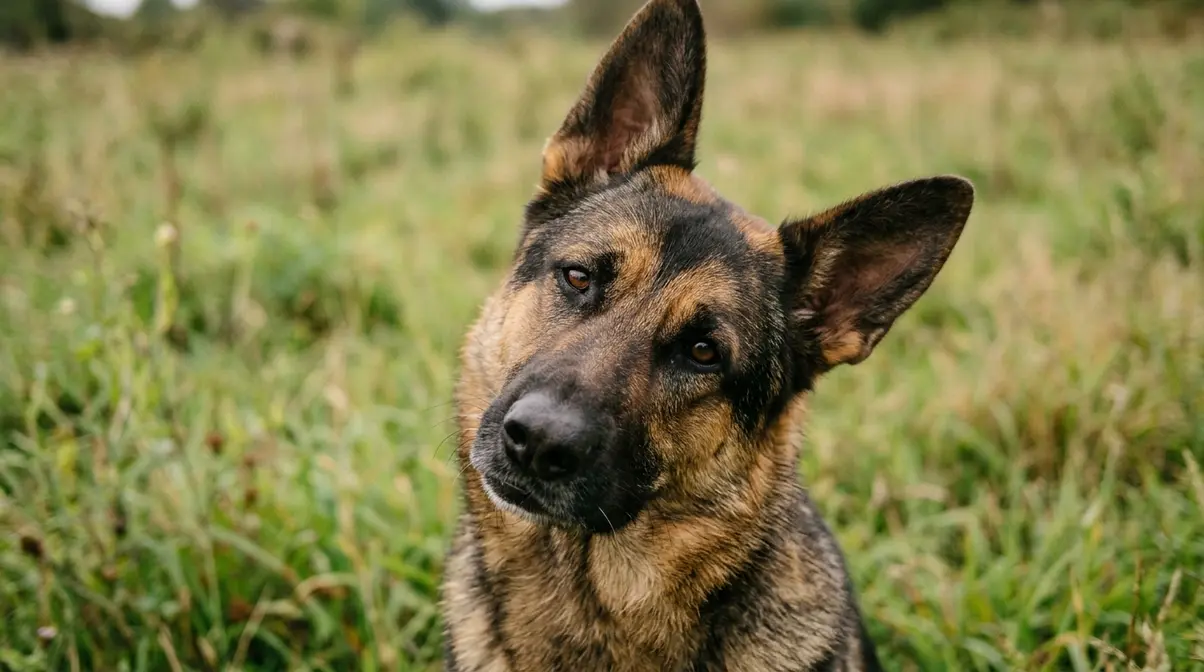
German Shepherd ear infections, known clinically as otitis externa (inflammation of the outer ear canal), are the breed’s single most common health disorder. A large-scale VetCompass study of 12,146 German Shepherds found otitis externa was the most frequently recorded disorder, affecting 7.89% of the breed, according to a VetCompass study cited in our overview of the most common health issues in German Shepherds. Almost every infection has a root cause, and treating the infection without identifying that cause is why so many GSD owners end up back at the vet three months later.
According to the Merck Veterinary Manual, yeast (Malassezia pachydermatis, a naturally occurring yeast organism) may be present in low numbers in healthy dog ears but frequently multiplies once otitis externa develops. This is a key detail: the yeast doesn’t cause the problem on its own. Something else changes the ear canal environment first.
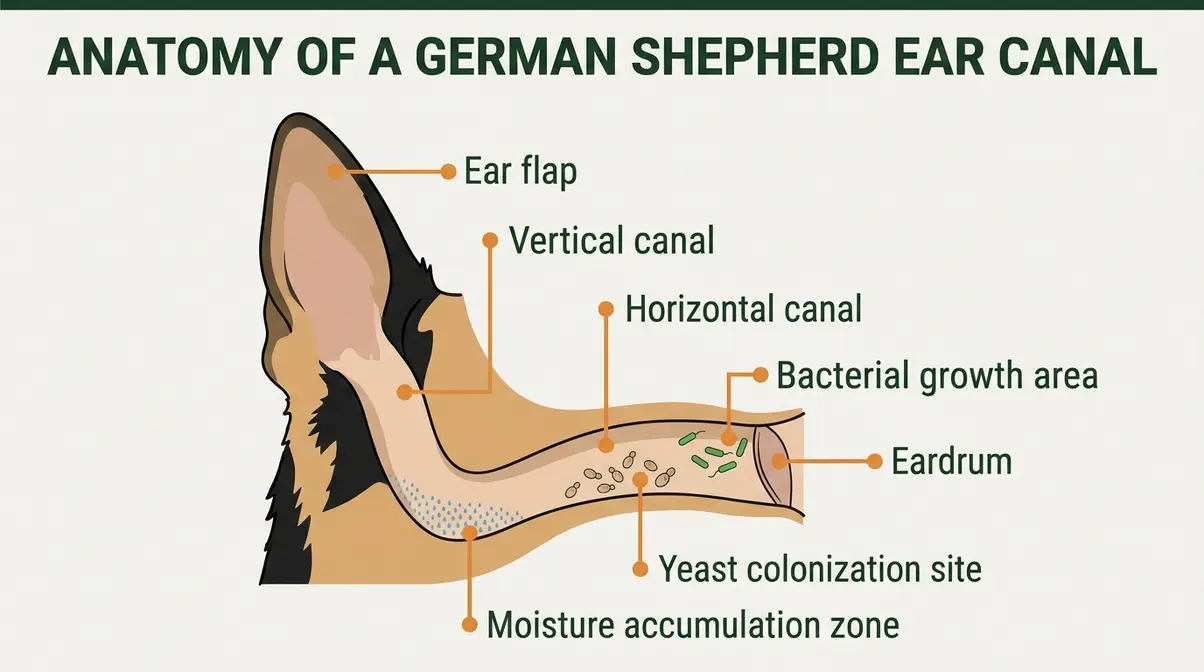
This is also where The Underlying-Cause Cycle begins: a root trigger (allergy, moisture, anatomy) fires the infection, the infection is treated, the trigger goes unaddressed, and the cycle repeats. Understanding the cause is step one. Knowing what to look for is step two.
Why Do Upright Ears Still Get Infected?
Most owners assume that a German Shepherd’s upright ears, the erect pinnae, protect against ear infections. Floppy-eared breeds like Cocker Spaniels trap more moisture, so a GSD should be safer, right? Not quite. While erect pinnae do allow better airflow than pendulous ears, the GSD’s wide, open ear canal and dense undercoat around the ear base still trap moisture effectively after swimming or bathing. The canal in large breeds is also longer and wider than in small breeds, creating more surface area for yeast and bacteria to colonize.
There’s another breed-specific risk that’s easy to overlook: grass awns, also called foxtails. These barbed seed heads lodge deep in the ear canal of working and outdoor GSDs, causing rapid-onset infection that doesn’t respond to standard drops because the physical irritant is still present.
Young German Shepherds aren’t immune either. A German Shepherd puppy ear infection is often linked to an immature immune system and early allergy exposure, making puppies more vulnerable than owners typically expect. If your puppy is scratching at one ear before six months of age, it’s worth a vet visit rather than a wait-and-see approach.
What Causes a German Shepherd Ear Infection?
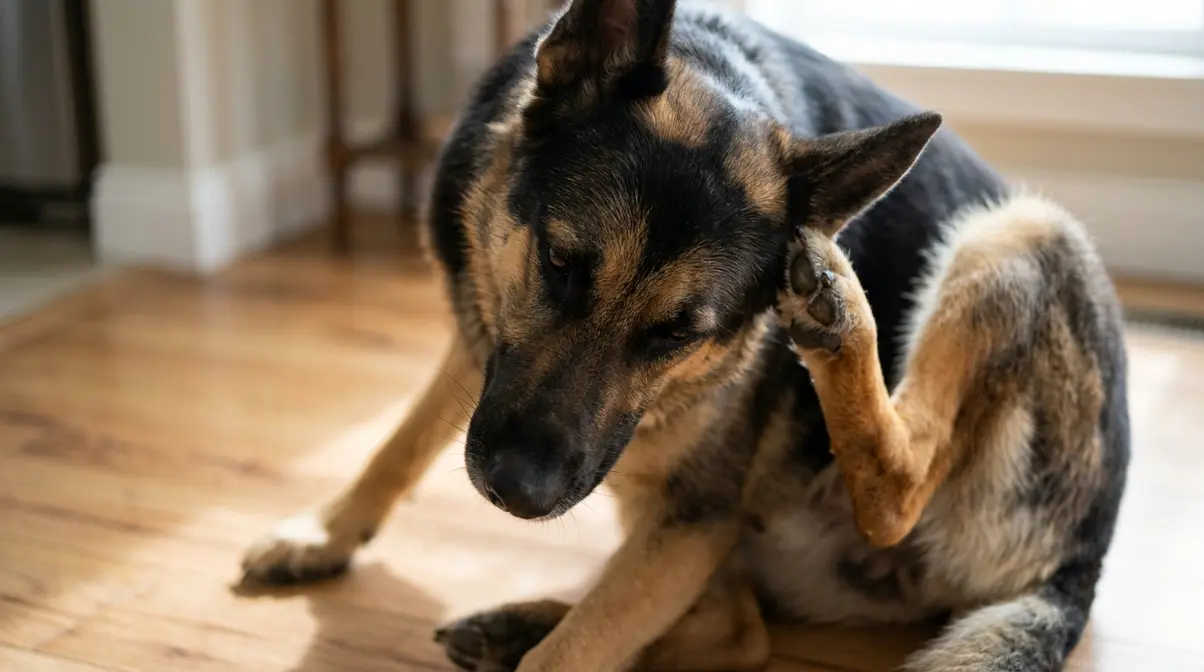
Food and environmental allergies are the most common underlying trigger for a dog ear infection in a German Shepherd. Veterinary dermatology research confirms that allergic skin and ear disease is among the most common breed-specific conditions in German Shepherds. A GSD that develops a one-ear infection every spring almost certainly has a seasonal environmental allergy, pollen, grass, or dust mites. One that gets infections after every swim likely has a moisture problem, not an allergy.
The most common microbes found on cytology (a simple in-clinic swab test that identifies the organism under a microscope) are:
- Malassezia pachydermatis, yeast overgrowth, secondary to allergy or moisture
- Staphylococcus, a bacterial species that colonizes inflamed ear canal tissue
- Pseudomonas, a more resistant bacterial species, common in chronic or recurrent infections
- Otodectes cynotis, ear mites, more common in puppies and dogs with outdoor exposure
- Grass awns, a physical trigger, not a microbe, but a cause of rapid bacterial infection
The microbe is almost always secondary to the trigger. Treating the microbe without addressing the trigger is what keeps ear infections coming back, that’s The Underlying-Cause Cycle in its simplest form.
Before you can address the cause, you need to recognize the signs, and some of them are easy to miss until the infection is already well established.
What Are the Signs of a German Shepherd Ear Infection?
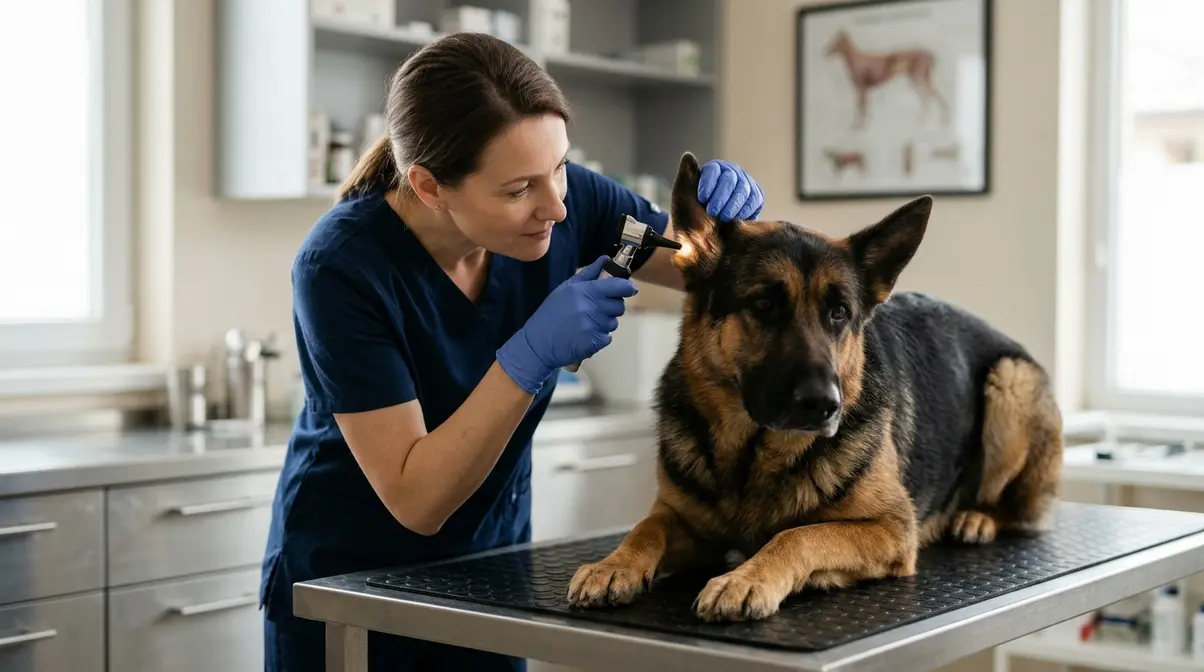
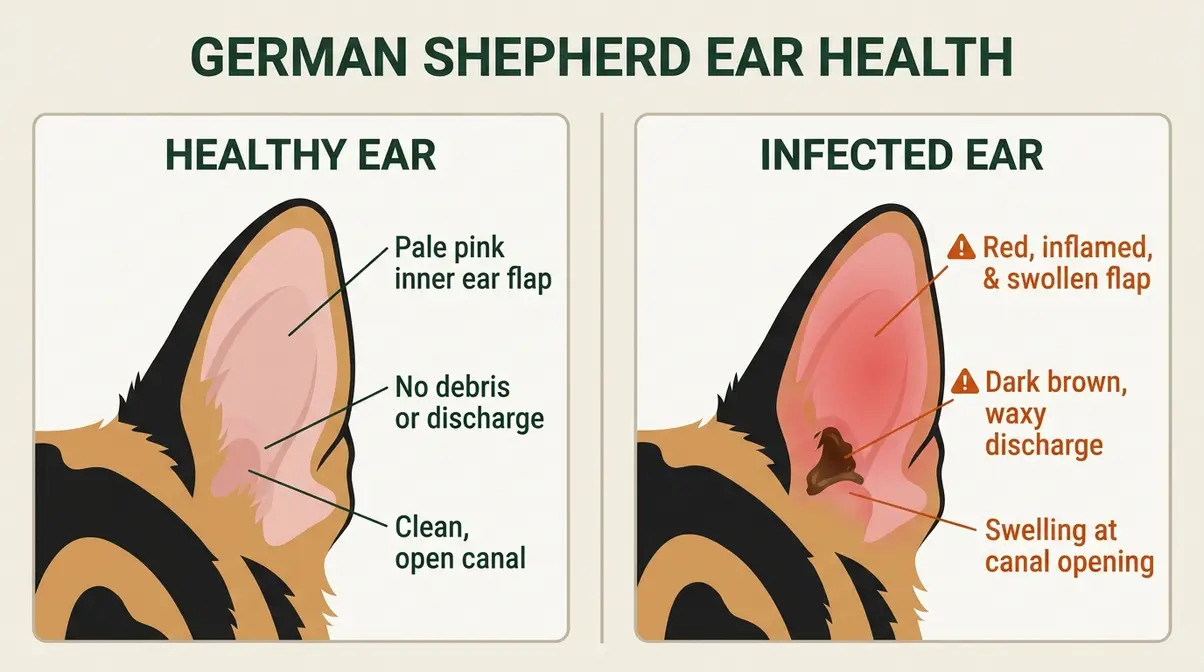
The first signs of a German Shepherd ear infection are usually head shaking, constant ear scratching, and a bad smell. A healthy GSD ear is pale pink, odorless, and has minimal light-colored wax, any deviation from that baseline warrants a closer look.
Catching it early matters because untreated infections spread deeper into the canal, and a surface-level infection can become a middle-ear problem that’s far harder and more expensive to treat.
For more detail on when to stop cleaning and see a vet, PetVR’s ear-cleaning guide covers the full process.
German Shepherd Ear Infection Symptom Checklist
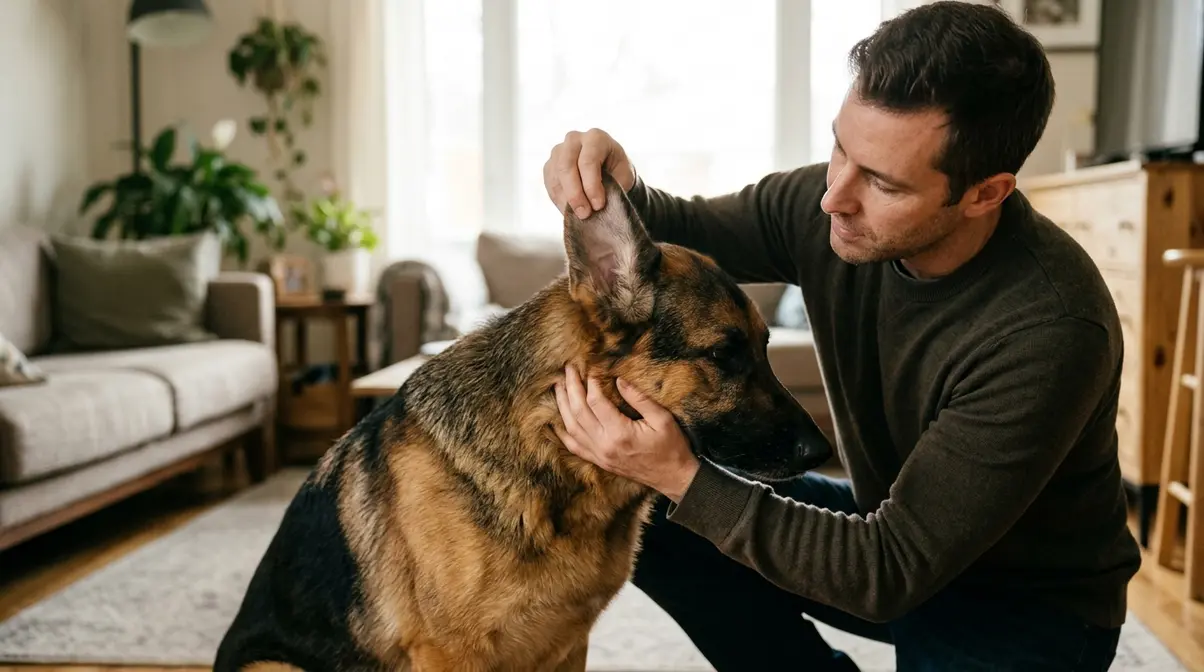
Here are the seven signs to watch for, in the order most owners notice them:
- Head shaking, especially one-sided; if your dog is shaking its head more than usual after a swim, that’s often the first sign an ear infection is brewing
- Constant ear scratching or pawing at the same ear repeatedly
- Bad smell, yeasty or sour (Malassezia yeast) or foul and pus-like (bacterial infection)
- Redness and swelling inside the ear flap or at the canal opening
- Discharge, dark brown or black (yeast or mites), yellow or green (bacterial), or bloody (urgent)
- Pain when the ear is touched, the dog pulls away, whimpers, or snaps
- Head tilt, an advanced sign that the infection may have spread deeper into the canal
A healthy GSD ear is pale pink and nearly odorless. One-sided infections are a particularly common pattern in German Shepherds, and they’re frequently linked to food or environmental allergies affecting one side more than the other.
Coffee-ground debris in the ear canal is one sign that deserves its own explanation, it often points to ear mites rather than a bacterial or yeast infection.
Ear Mites vs. Yeast vs. Bacterial Discharge, What’s the Difference?
| Type | Appearance | Smell | Likely Cause |
|---|---|---|---|
| Dark brown/black, crumbly | Coffee-ground looking debris | Minimal or musty | Ear mites (Otodectes cynotis) or yeast |
| Dark, waxy, greasy | Thick and sticky | Sour, yeasty, “corn chip” | Malassezia yeast overgrowth |
| Yellow or green, pus-like | Wet, runny | Foul, putrid | Bacterial infection |
| Bloody or pink-tinged | Wet | Variable | Urgent, possible ruptured eardrum |
The “coffee-ground looking debris” that owners describe in GSD communities is a classic mite presentation, but yeast can look nearly identical, which is exactly why a cytology swab is the only reliable way to tell them apart. Color alone cannot diagnose the microbe. Only a vet can confirm it.
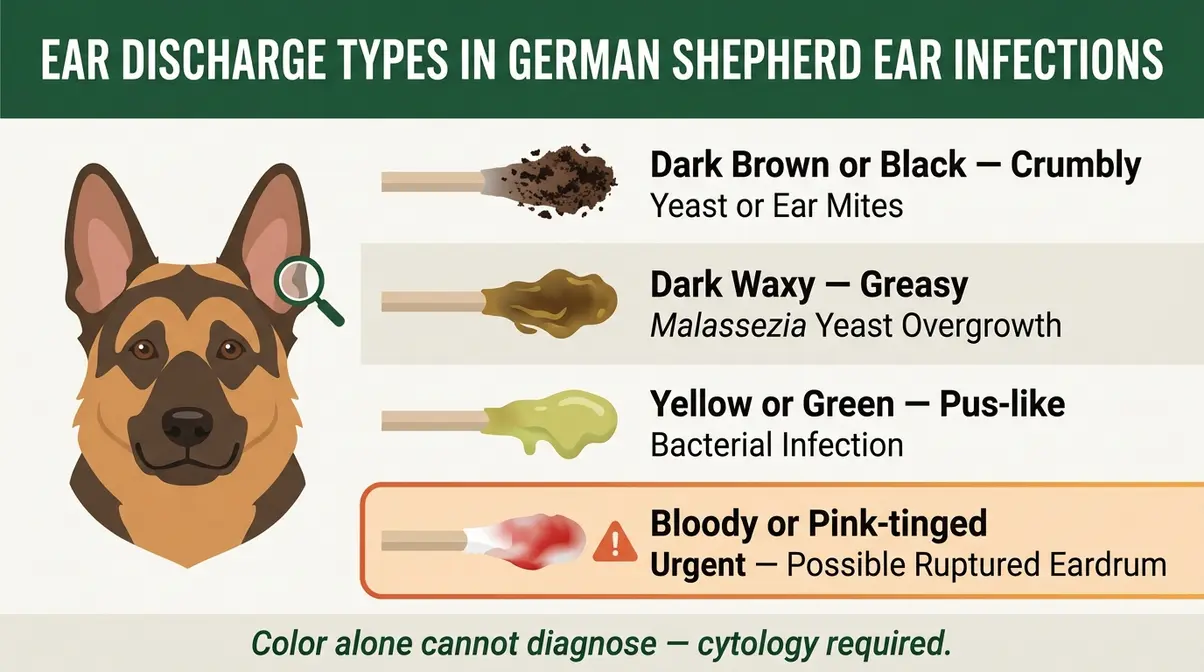
If the discharge is dark and smells yeasty or sour, a Malassezia yeast infection is the most likely culprit, and it has its own treatment pathway.
Red-Flag Signs That Need Same-Day Vet Care
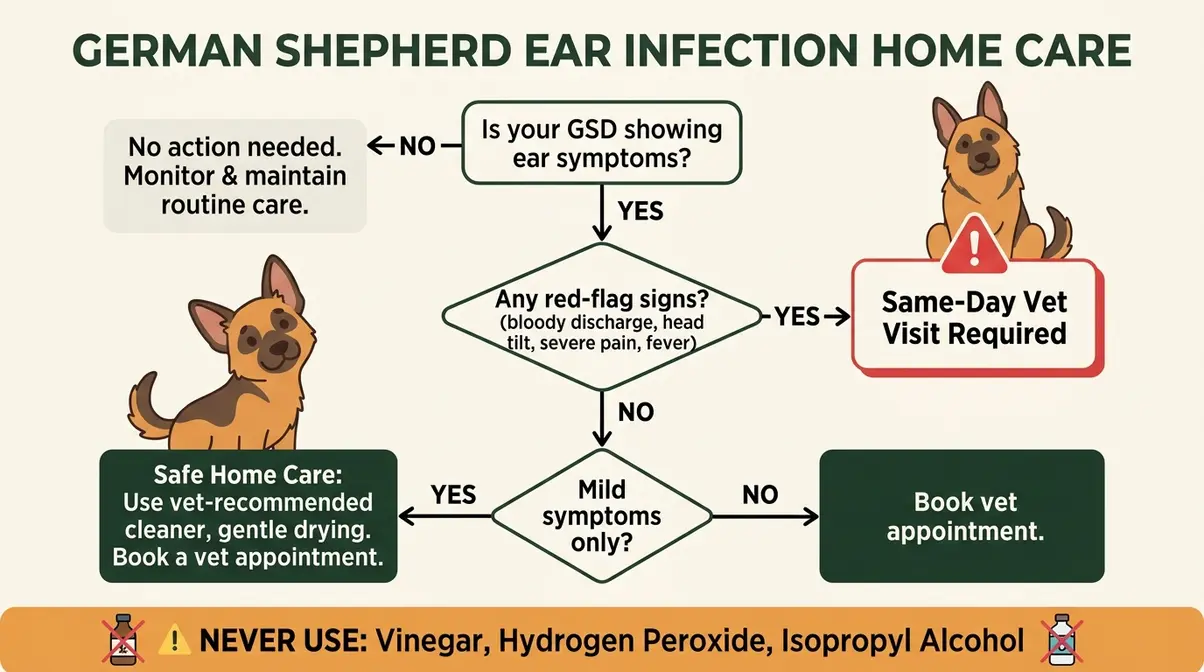
Some symptoms indicate the infection has spread beyond the outer canal. These require a same-day or emergency vet visit:
- Head tilt and loss of balance, the infection may have spread to the middle or inner ear (otitis media or otitis interna); this is a neurological emergency
- Bloody discharge or severe pain, possible ruptured eardrum; do not attempt to clean the ear
- Swollen ear flap, this is an aural hematoma, a blood blister that forms when repeated head shaking ruptures small blood vessels inside the ear flap; it requires surgical or medical drainage, not home treatment
- Fever, lethargy, or loss of appetite alongside ear symptoms, indicates possible systemic involvement
According to the Merck Veterinary Manual, purulent otitis externa is commonly associated with systemic signs such as anorexia, lethargy, and fever in severe ear canal infections. If your dog is showing any combination of these signs, don’t wait for a next-day appointment.
Yeast infections are the most common type of ear infection in German Shepherds, and they have a specific smell, appearance, and treatment pathway that’s worth understanding on its own.
What Is a German Shepherd Yeast Ear Infection?
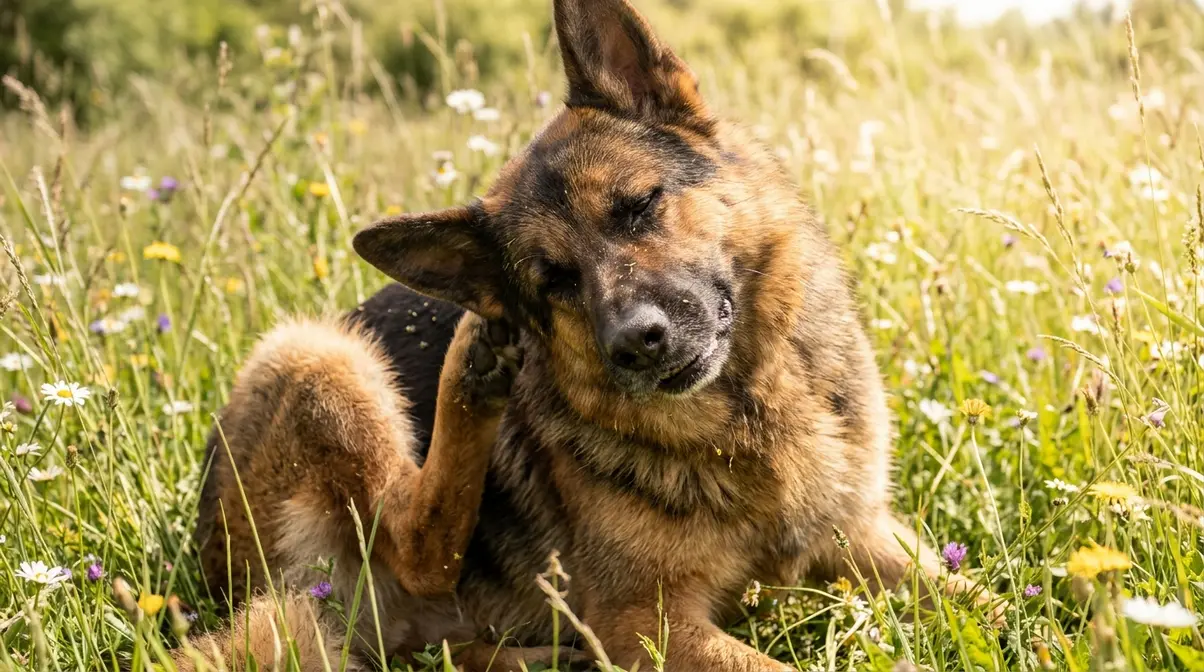
A German Shepherd yeast ear infection is caused by Malassezia pachydermatis, a yeast that lives naturally in small numbers in healthy dog ears but overgrows when your dog’s ear canal becomes warm, moist, or inflamed. The smell is usually the giveaway: a sour, musty, or “corn chip” odor that’s distinct from the more foul smell of a bacterial infection. Yeast infections need antifungal treatment, not antibacterial drops, which is why a cytology swab matters: the wrong medication won’t clear the infection.
For more on yeast overgrowth and skin infections in GSDs, PetVR’s skin-problems guide covers the full spectrum of related conditions.
How to Recognize a Yeast Ear Infection in Your German Shepherd
The most distinctive sign of a German Shepherd ear yeast infection is the smell. Malassezia produces a sour, musty odor that owners frequently describe as reminiscent of old bread or corn chips. That smell is noticeably different from the more pungent, pus-like smell of a bacterial infection, and it’s often the first thing you notice before you even look in your dog’s ear.
The discharge is typically dark brown to black, waxy, and sometimes greasy or crumbly. This is the “coffee-ground looking debris” that comes up repeatedly in GSD owner communities. Your dog’s ear canal lining becomes red and inflamed, and your dog scratches constantly, often rubbing the ear on furniture or the floor for relief.
If your GSD’s ear smells like corn chips and has dark, waxy debris, that’s a classic Malassezia presentation. Don’t start antifungal drops without a vet confirming it with a cytology swab, though. Yeast and bacteria can look similar, and using the wrong treatment wastes time while the infection progresses. According to the Merck Veterinary Manual, Malassezia pachydermatis frequently multiplies once otitis externa develops, making targeted diagnosis essential before treatment begins.
Yeast overgrowth rarely happens in isolation. In most German Shepherds, it’s driven by an underlying allergic condition that keeps the ear canal inflamed.
Why Allergies Drive Yeast Ear Infections in German Shepherds
Malassezia yeast overgrowth in German Shepherd ears is almost always secondary to an underlying allergic condition. Treating the yeast without addressing the allergy leads to recurring infections.
Here’s the mechanism in plain terms: food and environmental allergies inflame the skin lining of your dog’s ear canal. That inflammation raises the local temperature and moisture level, creating exactly the warm, damp environment Malassezia needs to multiply. Your vet prescribes antifungal drops, the drops clear the yeast, but the allergy continues to inflame the canal. Within weeks, the yeast overgrows again.
This is The Underlying-Cause Cycle at work in the most common GSD ear infection scenario. A dog that clears up with antifungal drops but relapses within a month is almost certainly an allergic dog. The cytology swab confirms yeast; allergy testing, either intradermal (skin-prick) or serum blood testing, identifies the trigger. When food allergy is suspected, your vet will likely recommend an 8-to-12-week novel-protein elimination diet, a protein your dog has never eaten before, such as venison or duck, as the diagnostic test. Veterinary dermatology research confirms that this allergy-driven pattern is among the most common breed-specific ear conditions in German Shepherds, which is why addressing the trigger, not just the yeast, is the only reliable path to long-term relief.
The owner scenario of one-ear recurring infections resolved by avoiding allergens and wiping the ear regularly is a textbook example of this allergy-driven yeast cycle, and it’s exactly what this guide’s prevention section addresses.
Whether the infection is yeast, bacterial, or mite-related, the next step is the same: a veterinary exam. Here’s what that actually involves.
How Do Vets Diagnose and Treat a German Shepherd Ear Infection?
A German Shepherd ear infection cannot clear up on its own and should not be left untreated. The vet pathway moves from otoscope exam to cytology to targeted medication, and the recheck appointment at two to four weeks is not optional. Stopping treatment early because symptoms improve is the most common reason German Shepherd ear infections fail to clear and become chronic.
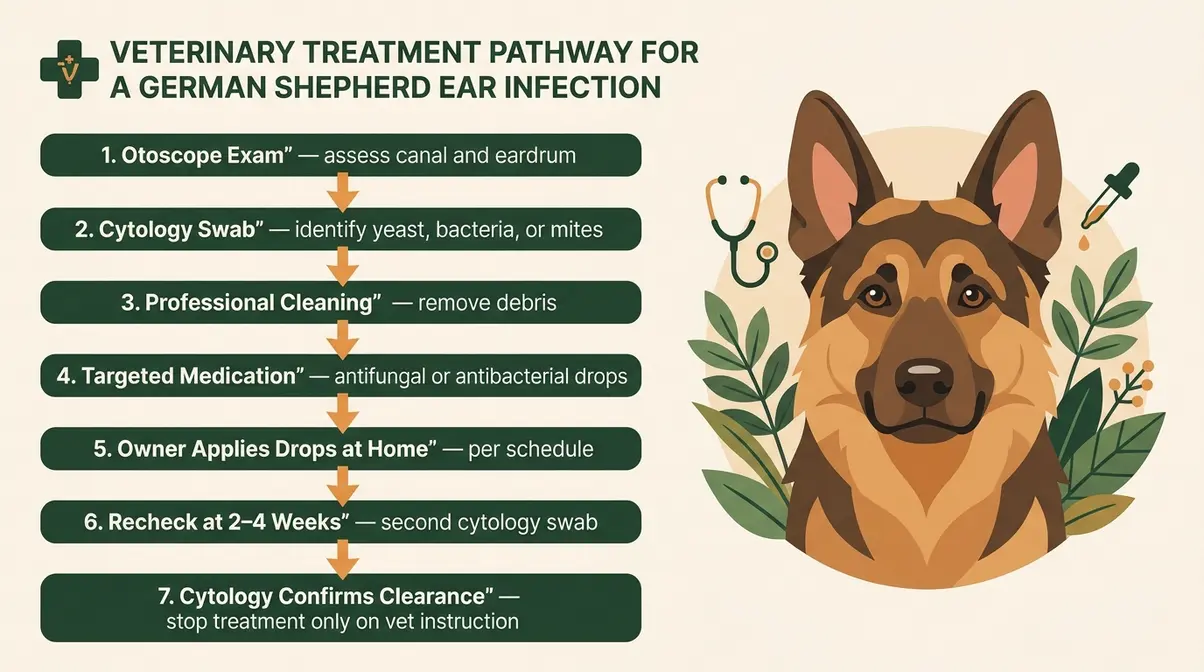
The Merck Veterinary Manual notes that otitis externa treatment involves thorough cleaning and targeted topical medication, with rechecks used to confirm resolution before stopping treatment. This recheck requirement is the most commonly skipped step, and the most consequential one.
What the Vet Exam Involves
A typical first exam for a GSD ear infection takes 15 to 20 minutes and gives the vet enough information to prescribe the right medication on the same visit.
The vet uses an otoscope, a lighted instrument that allows direct visual inspection of the ear canal and eardrum, to assess how far the infection has progressed and whether the eardrum is intact. This step matters because a ruptured eardrum changes which medications can be used safely. Some topical drops are ototoxic (toxic to the inner ear) and cannot be used if the eardrum is compromised, which is one of the clearest reasons why home treatment is risky without knowing the eardrum’s status.
Next comes the cytology swab: a cotton swab sample from the canal is stained and examined under a microscope in-clinic. It identifies yeast (Malassezia), the type and shape of bacteria present, and any mites. This takes minutes and directly guides the prescription.
Finally, professional cleaning removes accumulated debris, wax, and discharge so that medication can actually reach the canal wall. Owners shouldn’t attempt deep cleaning at home without vet guidance, particularly if the eardrum’s integrity is unknown.
Once the vet has the cytology result, treatment is targeted, and the medication type depends entirely on what the swab finds.
German Shepherd Ear Infection Treatment and Medication
Treatment follows a specific sequence based on the cytology result. Here’s the numbered pathway:
- Cytology result identifies the organism (yeast, bacteria, or mixed)
- Vet prescribes targeted drops, antifungal (ketoconazole, miconazole) for Malassezia; antibacterial (gentamicin, enrofloxacin) for bacterial infections; combination drops for mixed infections
- Owner applies drops at home per the prescribed schedule, typically once or twice daily
- Oral medication may be added for severe, deep-canal infections or when the dog won’t tolerate topical treatment; oral steroids reduce canal swelling in severe cases
- Recheck at two to four weeks, the vet takes a second cytology swab
- Cytology confirms the microbe is gone, not just that symptoms have improved
- Treatment stops only on vet instruction, never before the recheck confirms clearance
If your GSD’s ear looks better after five days but the vet prescribed a 14-day course, finish the course. The infection is still present even when symptoms ease, symptoms resolve before the microbe is fully eliminated. This is why the cytology recheck exists, and why skipping it is the single most predictable path to a chronic infection.
Before the vet visit, or while you’re waiting for an appointment, there are a few things you can safely do at home. There are also several things that can make the infection significantly worse.
Are German Shepherd Ear Infection Home Remedies Safe?
The instinct to treat your German Shepherd’s ear infection at home is understandable, but most home remedies either don’t work or actively make the infection worse. Safe home care means gentle drying and an ear cleaner your veterinarian has recommended, used before an infection develops or as supportive care while you wait for a vet appointment. What it cannot do is cure an active infection.
What’s Safe to Do Before the Vet Visit
Vinegar, alcohol, and hydrogen peroxide can cause severe pain and may permanently damage an inflamed or ruptured eardrum, they should never be used in a dog’s ear without veterinary approval. The Merck Veterinary Manual cautions that topical agents such as vinegar and alcohol can be irritating to an inflamed ear canal and should not be used without veterinary guidance.
Here’s a complete “Safe vs. Avoid” table for German Shepherd ear infection home remedies:
| Approach | Safe? | Why |
|---|---|---|
| Ear cleaner recommended by your vet (salicylic acid, gentle surfactant) | ✅ Safe (with vet guidance) | Removes debris without damaging the canal |
| Gentle drying after swimming or bathing | ✅ Safe | Reduces moisture that feeds yeast and bacteria |
| Apple cider vinegar (diluted or undiluted) | ❌ Avoid | Acidic, causes severe pain in an inflamed canal; can damage a ruptured eardrum |
| Hydrogen peroxide | ❌ Avoid | Irritates inflamed tissue; can damage the eardrum |
| Isopropyl alcohol | ❌ Avoid | Burns inflamed tissue; toxic if absorbed through the canal |
| Olive oil, coconut oil, tea tree oil | ❌ Avoid | No veterinary evidence base; oils can worsen yeast overgrowth |
| Human antifungal creams | ❌ Avoid | Not formulated for dog ear canals; may mask symptoms and delay diagnosis |
When an ear cleaner your vet has recommended is appropriate (for routine maintenance, not active infection treatment), here’s the correct 7-step routine:
- Gather supplies: an ear cleaner your veterinarian has recommended, cotton balls, and high-value treats to keep your dog calm
- Settle your dog in a calm, well-lit area where you can see into the ear clearly
- Gently lift the ear flap and inspect the canal for redness, discharge, or swelling
- Apply the ear cleaner per the label instructions, typically a few drops into the canal opening
- Massage the base of the ear for 20 to 30 seconds
- Allow the dog to shake its head, this brings loosened debris toward the outer canal; you’ll hear a squelching sound as the cleaner loosens debris
- Wipe the outer canal with a cotton ball to remove debris, never insert cotton swabs deeper than you can see
Stop immediately and call your vet if the dog yelps during cleaning, if you see blood, if the discharge is yellow or green, or if the dog won’t let you near the ear at all.
The sock trick and cup trick are two viral remedies that come up in GSD owner communities, here’s what they actually are and why they don’t apply to ear infections.
The Sock Trick, Cup Trick, and Other Viral Remedies, What They Actually Are
The sock trick, filling a sock with rice or salt and warming it as a heat compress, is a home remedy for human ear pain. It doesn’t treat dog ear infections. Heat does not kill yeast or bacteria inside the ear canal, and it doesn’t address the underlying microbe or trigger at all.
The cup trick, placing a warm cup near the ear for earache relief, has the same origin and the same limitation. These remedies come from human medicine, where they may offer mild comfort for pressure-related earache. They have no veterinary evidence base for dogs and are not appropriate for active infections.
If you’ve seen the sock trick recommended in a GSD Facebook group, it’s worth knowing it comes from human earache relief, it won’t cure a bacterial or yeast infection in your dog’s ear. The intent behind sharing these tips is good; the application is simply wrong for this situation.
If cost is the barrier to a vet visit, there are options worth knowing about, and some of them are more accessible than owners realize.
What to Do If You Can’t Afford a Vet
Cost is a real concern, and it’s one of the most common reasons owners search for German Shepherd ear infection home remedies. The honest answer: ear infections cannot be safely cured at home, and delaying care typically makes the situation more expensive, not less. An untreated infection can progress to otitis media (middle-ear infection), cause permanent hearing loss, or require surgery, all of which cost significantly more than an early exam and a course of drops.
That said, here are the most accessible lower-cost options:
- Call the vet’s office and explain the situation, many clinics offer payment plans, and some will advise over the phone on whether the case is urgent or can wait a few days for a scheduled slot
- Veterinary school clinics, supervised student clinics offer examinations at reduced cost, with full diagnostic capability
- ASPCA-affiliated low-cost clinics, availability varies by region, but these are worth checking in your area
- Telehealth veterinary services, a telehealth vet visit can often assess whether your GSD’s ear infection needs same-day care or can wait, which is a reasonable first step when cost is a concern
Even with the right treatment, some German Shepherds keep getting ear infections, and that’s almost always a sign that the underlying trigger hasn’t been addressed.
Why Does My German Shepherd Keep Getting Ear Infections?
German Shepherd ear infections that recur more than three times per year almost always have an unidentified underlying trigger, most commonly food or environmental allergies, that requires veterinary investigation, not just repeated treatment.
This is the heart of The Underlying-Cause Cycle, and it’s where the guide’s central insight becomes most practical. One GSD owner described it plainly:
“Mine tend to get ear infection in one ear, it was because of food and environmental allergies. I avoid his allergens and wipe his ear regularly.”
That’s not luck, that’s the prevention routine working exactly as it should. The infection stopped recurring because the trigger was identified and managed. Until that happens, treatment alone is a temporary fix.
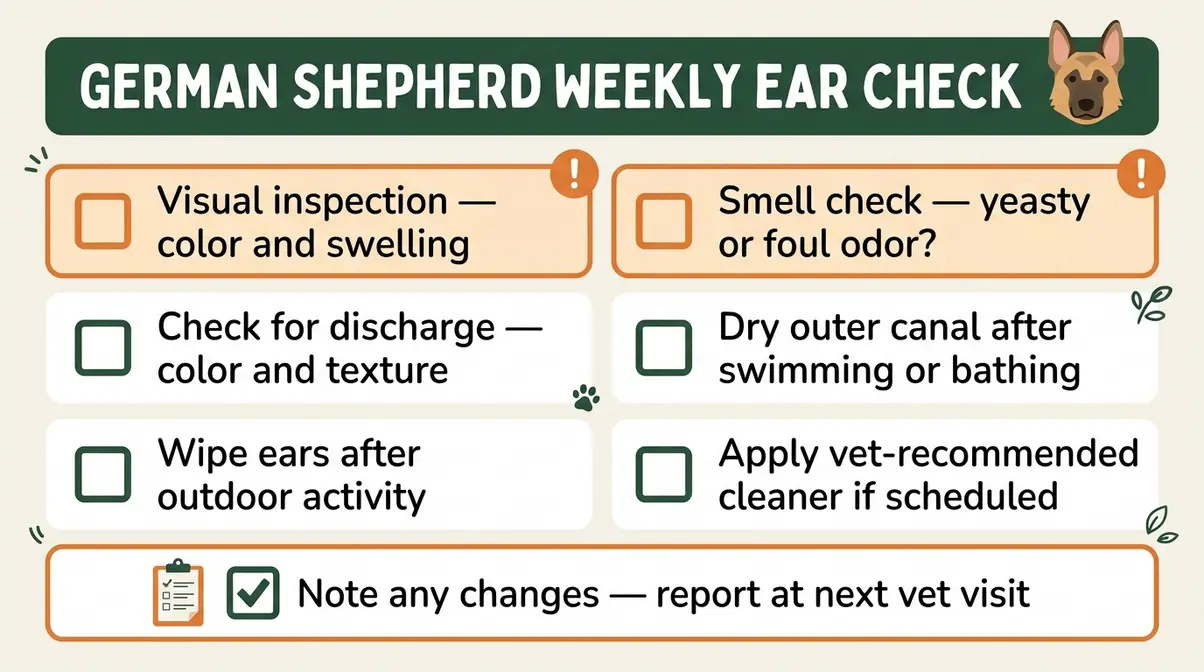
Why German Shepherd Ear Infections Keep Coming Back
A German Shepherd chronic ear infection, one that keeps returning despite treatment, almost always has one of four root causes. Understanding which one applies to your dog is the key to breaking the cycle for good.
There are four main reasons a German Shepherd ear infection won’t go away or keeps returning:
- Allergies (food and environmental), the most common cause; the allergy inflames the ear canal lining, creating the conditions for yeast and bacteria to overgrow repeatedly; treating the infection without addressing the allergy is a temporary fix
- Incomplete treatment, stopping medication when symptoms ease, before the cytology recheck confirms clearance, leaves residual microbes that recolonize quickly
- Trapped moisture, GSDs that swim regularly or live in humid climates without a consistent drying routine will have recurring infections regardless of how well the active infection is treated
- Anatomy, the wide GSD ear canal and dense coat around the ear base are persistent predisposing factors that can’t be changed, only managed
In GSD owner communities, the pattern of one-ear recurring infections is almost universally linked to food or environmental allergies. According to veterinary dermatology research, this allergy-driven recurrence pattern is among the most common breed-specific ear conditions in German Shepherds. If your dog has had three or more infections in a year, ask your vet about a referral to a veterinary dermatologist (a vet who specializes in skin and ear conditions) for allergy testing and a long-term management plan.
The prevention routine that breaks this cycle is simpler than most owners expect, and it starts with a weekly ear check.
Prevention Routine and Diet for Recurring GSD Ear Infections
Here’s the prevention routine that addresses all four causes of recurrence:
- Weekly ear check, visual inspection (color, discharge, swelling) plus a quick smell check; takes two minutes; catches infections early when they’re easier and cheaper to treat
- Drying routine after swimming or bathing, towel-dry the outer ear canal; never insert cotton swabs deeper than you can see
- Cotton balls at the ear opening during baths, prevents water from running into the canal while shampooing
- Ear cleaner on a schedule your vet recommends, frequency depends on your dog’s individual risk level; your vet will advise based on your dog’s history
- Wipe ears after outdoor activity, a damp cloth wipe reduces pollen, grass, and dust mite allergen load for environmentally allergic dogs
- Scheduled vet rechecks, don’t wait for symptoms to return; a recheck every six months catches early changes
- Dermatology referral if infections recur, three or more infections per year is the threshold for escalation
On diet: if food allergy is suspected as the trigger behind your dog’s recurring ear infections, the question of the best diet for your German Shepherd becomes a diagnostic one. The reliable test is an 8-to-12-week novel-protein elimination diet, a protein your dog has never eaten before, such as venison, duck, or rabbit. This must be vet-guided and strictly maintained for the full duration. Grain-free food is not the same as hypoallergenic; your dog can be allergic to a grain-free diet if it contains a protein they’ve been sensitized to. For a full breakdown of how to structure an elimination diet for testing food allergy, PetVR’s diet guide covers the process in detail.
Environmental allergy management, for seasonal triggers like pollen, grass, or dust mites, may require allergy testing, immunotherapy, or prescription medication. According to the Merck Veterinary Manual, recurrent otitis externa is frequently associated with underlying hypersensitivity disorders, and long-term management requires addressing the primary allergic condition rather than treating each episode in isolation. The owner quote above captures the practical version: avoid the allergens where possible, and wipe the ears after outdoor exposure to reduce the allergen load.
If you still have questions after reading this guide, the answers to the most common ones are below.
Frequently Asked Questions About German Shepherd Ear Infections
How Do I Treat My Dog’s Ear Infection at Home?
Ear infections in German Shepherds cannot be cured at home. A vet needs to examine the canal with an otoscope and run a cytology swab to identify the bacteria or yeast involved. Treatment usually means professional cleaning and prescribed medicated drops or ointment. Avoid vinegar, alcohol, and hydrogen peroxide, they cause severe pain and can damage an inflamed or ruptured eardrum. Contact your vet before attempting any home treatment.
Can a Dog’s Ear Infection Resolve Itself?
German Shepherd ear infections should not be left to clear up on their own. They almost always have an underlying cause, such as allergies or trapped moisture, that keeps triggering new infections. A vet needs to examine the ear and identify the yeast or bacteria involved. Severe or chronic cases may need oral medication. Book an exam rather than waiting; early treatment prevents the chronic damage that makes infections harder to resolve.
What Should I Do If My Dog Has an Ear Infection but I Can’t Afford a Vet?
Cost is a real concern, but ear infections cannot be safely cured at home, and common remedies like vinegar, alcohol, and hydrogen peroxide can cause serious harm. Contact a vet to discuss payment plans, or look into veterinary school clinics and telehealth services, which are often more affordable. Early care prevents the infection from spreading to the middle ear, which is far more expensive to treat.
Can You Get Rid of a Dog’s Ear Infection Without Antibiotics?
It depends on the cause, which only a vet can determine. Yeast overgrowth is treated with antifungal drops, no antibiotics needed. Bacterial infections require antibacterial drops, and severe deep-canal infections may need oral antibiotics or steroids. A cytology swab identifies the microbe and guides the right treatment. Rechecks confirm the infection is fully cleared before medication stops.
What Clears Up a Dog Ear Infection Fast?
There is no safe shortcut. Speed depends on getting the right diagnosis: a vet examines the canal, takes a cytology swab, performs a thorough cleaning, and prescribes targeted drops or ointment. Attend every recheck appointment, stopping treatment early because symptoms improve is the most common reason infections fail to clear. Addressing the underlying trigger (allergies or moisture) prevents the infection from coming back.
Stop Treating the Infection, Start Treating the Cause
For German Shepherd owners, ear infections are the breed’s most common health disorder, affecting nearly 1 in 13 dogs according to a VetCompass study of 12,146 GSDs. The best approach combines early vet diagnosis, targeted medication (antifungal or antibacterial based on cytology), full treatment completion with a recheck, and long-term management of the underlying trigger. The evidence consistently points to the same conclusion: the infection is rarely the real problem, the trigger behind it is.
Breaking The Underlying-Cause Cycle means identifying and managing the root trigger, not just treating the infection each time it appears. That cycle connects every section of this guide, from the anatomy that makes GSDs vulnerable, to the allergy that keeps inflaming the canal, to the incomplete treatment course that leaves residual microbes behind. The head shaking at 2 a.m. is the signal; the allergy or moisture problem is the cause.
If your German Shepherd is showing signs of an ear infection, book a vet appointment this week. If infections keep coming back, ask your vet about allergy testing and a referral to a veterinary dermatologist. The sooner the trigger is identified, the sooner the cycle stops, and the more of those 2 a.m. wake-ups you both get to skip.
 Grooming a German Shepherd: Routine and Schedule