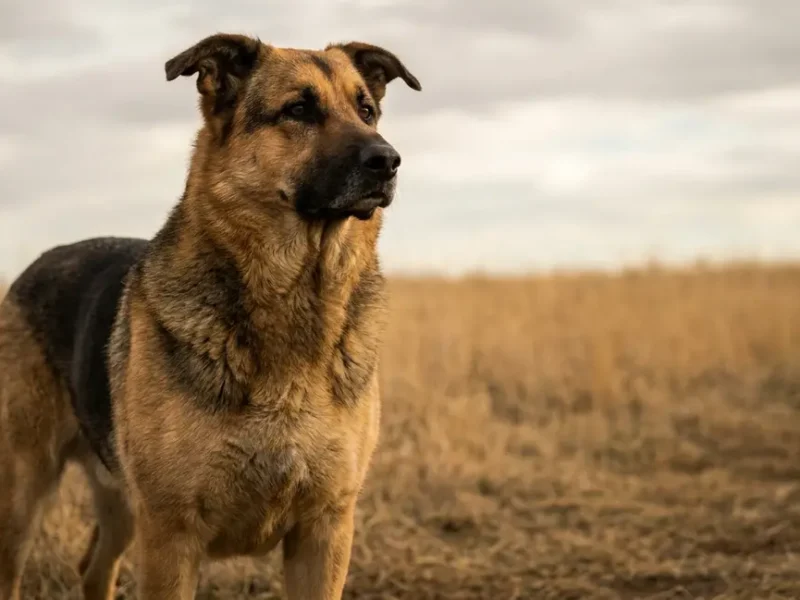
A French Bulldog stands 11 to 13 inches at the shoulder and weighs under 28 pounds (American Kennel Club). So a “German Shepherd and Bulldog mix” can mean very different dogs, depending on which Bulldog is the parent.
Picture an advert for a “Shepherd Bulldog” puppy that never says which Bulldog was involved. That missing detail matters more than the coat colour or the price. An American Bulldog cross, an English Bulldog cross and a French Bulldog cross differ in build, energy and breathing risk.
A mix is also unpredictable. Puppies in one litter can lean toward the Shepherd, toward the Bulldog, or land somewhere between. No breeder can promise which.
Below, you’ll find a side-by-side of the three Bulldog crosses and both parent breeds, covering size, temperament, health, exercise and buying checks. If you want to understand what each German Shepherd cross tends to inherit, this guide to German Shepherd crosses gives the wider picture. First, work out which Bulldog the cross involves.
Quick Verdict: Which Cross Suits Whom
The Bulldog parent decides size, energy and breathing risk. A cross with the American Bulldog suits an active home with space and time for training. A French Bulldog cross is smaller and fits a quieter life or a flat better, though flat-faced parents raise breathing questions.
An English Bulldog cross sits between the other two crosses in size, with a stockier, thick-set build, and shares the same breathing concerns. If you live in a small flat and want the shortest answer, lean toward the smaller, lower-energy cross and be ready to ask hard questions about parent health. The sections on size, temperament, exercise and health back this up. Next, see the three crosses side by side.
Which Bulldog Is in Your German Shepherd Mix?
The Bulldog parent changes the dog, and most pages never say which one. Ask the seller directly, because “bulldog mix” can mean three different animals.
A French Bulldog is a small companion breed. The AKC lists it at 11 to 13 inches at the shoulder and under 28 pounds (AKC). An American Bulldog is a larger, athletic working-type Bulldog. An English Bulldog is a stocky, heavy-set, short-muzzled breed. A German Shepherd French Bulldog mix usually looks like a smaller, sturdier Shepherd, often with a shorter muzzle and a more compact body. Ears, coat and muzzle length can come from either side.
| Feature | American Bulldog cross | English Bulldog cross | French Bulldog cross |
|---|---|---|---|
| General build | Usually heavier and more athletic than the other crosses | Stockier and thick-set, between the other two in size | Smaller and more compact |
| Likely energy | Higher, nearer the Shepherd | Moderate | Lower, nearer the Bulldog side |
| Breathing concern | Lower in general, but varies by muzzle | Higher with a flat face | Higher with a flat face |
| Best fit | Active home with space | Quieter home that checks health closely | Smaller home or flat |
These are general tendencies, not guarantees. Outcomes are unpredictable in any litter, and the table does not rank one cross above another.

Imagine a buyer told the puppy is simply a bulldog mix. The first question should be which Bulldog, and the second should be to see both parents. That answer shapes everything else you plan for.
With the parent identified, picture how the dog looks and grows.
American Bulldog cross
An American Bulldog cross is generally the most athletic of the three crosses. If you see a muscular tan-and-black pup, the Bulldog side may be American, but looks alone can’t confirm it. Expect a broad chest and strong build, and plan for a dog that needs real exercise and firm, consistent handling. Next, the English and French crosses.
French Bulldog breed dog and English Bulldog crosses
An English Bulldog cross tends to be stockier, while a French Bulldog cross is smaller and lighter. If you’re choosing between two advertised litters, compare the Bulldog parent first. On trainability, the AKC says French Bulldogs aren’t as stubborn as their reputation, and most do their utmost to please their humans and respond to the right motivation, usually food (AKC). Flat-faced parents raise breathing questions, covered in the health section. Now the size and coat question.
How Big Does the Mix Get and What Does It Look Like?
The German Shepherd Dog Club of America describes the desired height as 24 to 26 inches for males and 22 to 24 inches for females (German Shepherd Dog Club of America, 2026).
Size falls between the two parents’ ranges and depends on which Bulldog is involved. An American Bulldog cross is usually the heaviest of the three crosses and a French Bulldog cross the smallest. Think of it as a range, not a prediction. Reported weights vary widely, so no single average weight is reliable.
Three looks are common:
- Bulldog-dominant: a shorter, broader, heavier dog with a shorter muzzle and loose skin.
- Shepherd-dominant: a longer-legged, leaner dog with the pointed muzzle and upright ears.
- Blended: a mid-sized dog with Shepherd colouring and a squarer face, which is the most common picture people imagine.
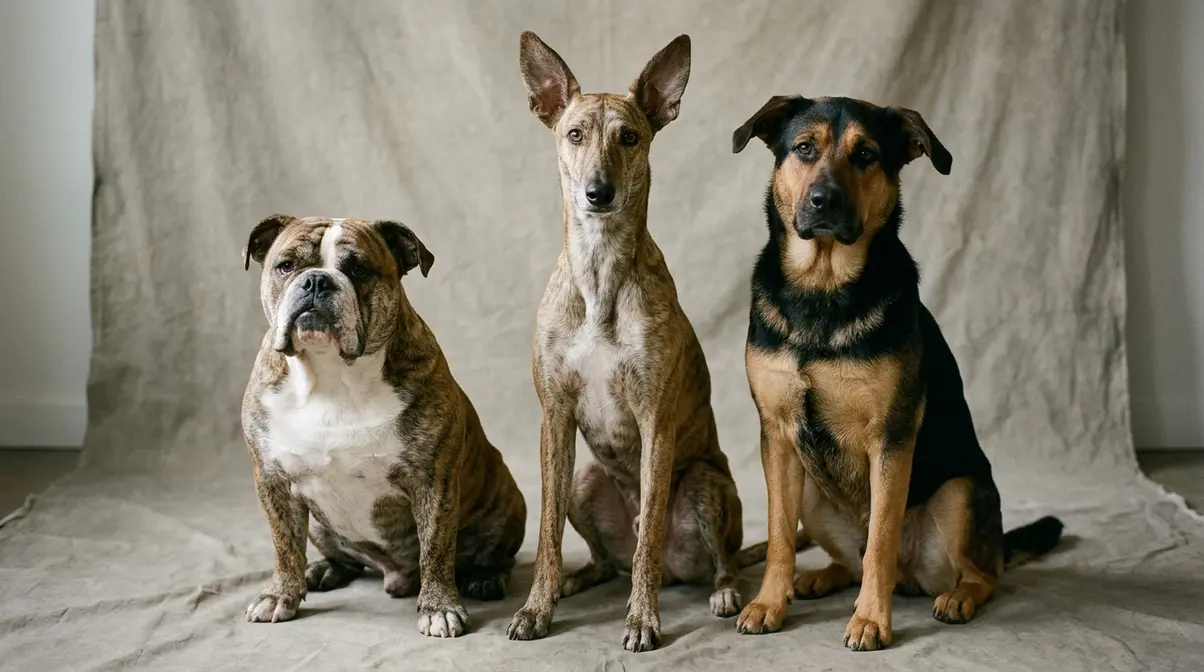
A Bulldog-dominant puppy can look cute and compact at eight weeks, yet the adult may fill out in ways the puppy doesn’t show. Meeting both parents is the best preview you’ll get. Looks aside, how does it behave?
Coat, grooming and shedding
Expect moderate to heavy shedding if the Shepherd coat dominates. If you own a dark sofa, you’ll see it quickly. Regular brushing keeps loose hair under control and keeps the skin healthy. A Bulldog-leaning coat is shorter but still sheds. For more on what coats a Shepherd can carry, see this guide to German Shepherd coat types explained. On to temperament.
What Is the Temperament, and Who Should Not Own One?
The mix is typically loyal, protective and strong-willed, and it is unpredictable in a mix. The German Shepherd Dog Club of America describes the Shepherd as direct and fearless but not hostile, self-confident, with a certain aloofness that doesn’t suit instant friendships with everyone (GSDCA, 2026).
A mix can inherit that watchful, territorial streak, plus Bulldog stubbornness. Which traits arrive varies from puppy to puppy, so no one can promise a calm or a guarded dog. Treat any claim about a “typical” mix temperament as opinion.
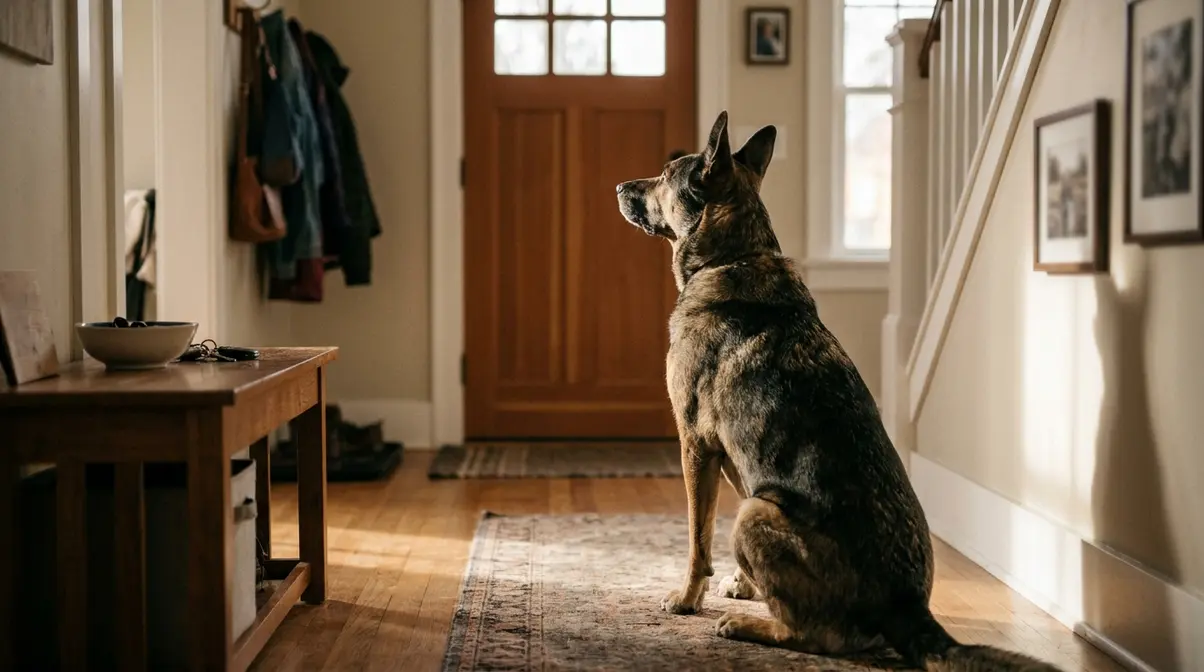
Consider a first-time owner with young children weighing a protective large dog. Protectiveness needs early socialisation, supervision and clear rules, or a watchful dog can become a worried or reactive one. A step-by-step approach to a protective dog is laid out in this plan for a protective dog.
Anyone who can’t give daily exercise, consistent training and steady socialisation should look elsewhere. Temperament shapes how much work the dog needs.
Who should not own this mix
Check this list honestly before you commit.
- You can’t give daily exercise, even on busy weeks.
- You can’t train consistently, with the same rules from everyone at home.
- You can’t socialise a protective dog with people, dogs and new places from puppyhood.
- You’re away for long hours, like a flat-dweller with a packed schedule.
- You want a dog that is friendly with everyone by default.
If two or more apply, a calmer, smaller breed is a safer choice. Next, daily exercise and training.
How Much Exercise and Training Does It Need?
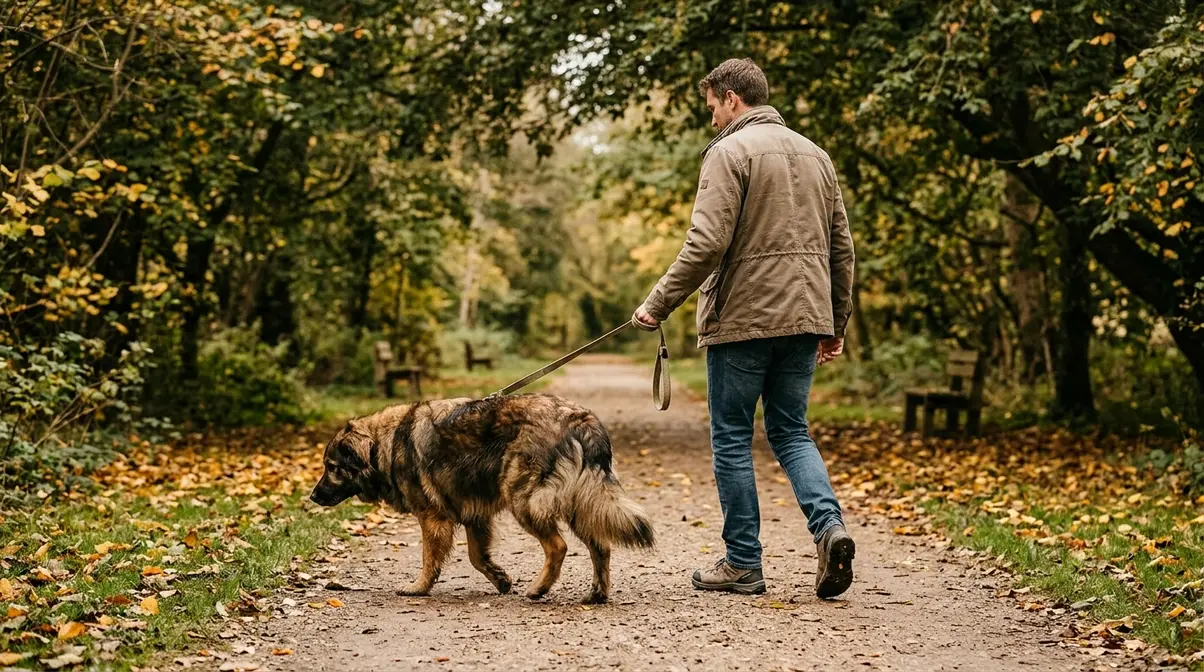
The Royal Kennel Club lists the German Shepherd Dog as large, needing more than 2 hours of exercise per day (The Royal Kennel Club). A mix’s energy sits between the two parents, nearer the Shepherd if that side dominates.
Use the parents as a bracket, not a prescription:
- Shepherd end: more than 2 hours daily (Royal Kennel Club).
- Bulldog end: see the next section for the lower figure.
- Your plan: start in the middle, watch the dog, and add activity if it becomes restless or destructive.
- Mix it up: walks, sniffing, play and short training sessions count together.
- Check breathing: in warm weather, shorten sessions for a flat-faced dog.
An owner with an hour a day can meet the lower end, but may struggle if the Shepherd side dominates. Exercise needs by age change too, as this guide to daily exercise by age explains.
Now the health risks, but first the lower end of the range.
Daily movement: the Bulldog end of the range
The Royal Kennel Club lists the French Bulldog as small, with up to 1 hour of exercise a day (Royal Kennel Club). The AKC adds that a Frenchie’s needs can be met with a short walk or outdoor play session each day (AKC). A mix may need more than a purebred Bulldog, because the Shepherd side brings stamina and a working drive. If you have an hour a day, you sit at the top of the Bulldog range and the bottom of the Shepherd range. Then training.
Start training the day the puppy arrives, and keep the rules identical for everyone.
- Reward the behaviours you want, using food or play.
- Stay consistent when the stubborn streak shows.
- Socialise early with people, dogs and places.
- Include every family member. American Standard Dog Training on YouTube advises empowering all the dog’s owners, even the kids, so the dog has to listen to everyone in the household.
Now the health risks.
Health Problems and Lifespan of the Mix
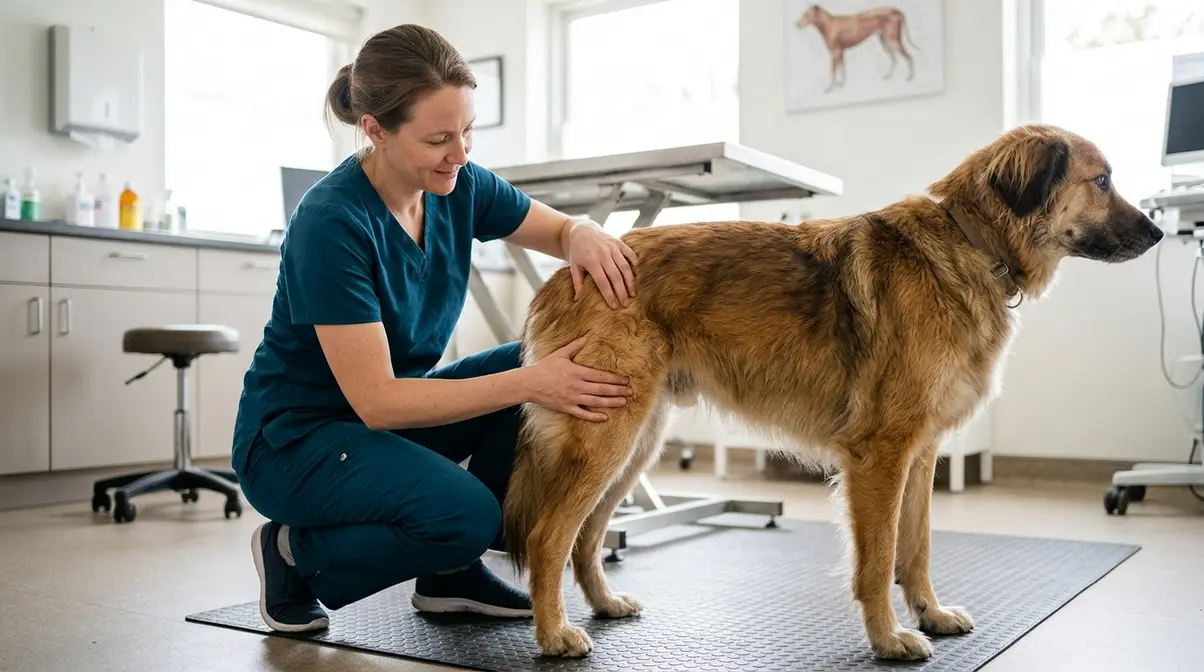
Cornell’s veterinary college notes that canine hip dysplasia is common in medium and large breeds including German Shepherds and Bulldogs (Cornell University College of Veterinary Medicine). Both parents carry hip problems, so ask for parent hip testing before you buy.
A mix isn’t automatically healthier. Mixed breeding does not guarantee health, because a puppy can inherit the weak points of both sides. Hip trouble comes from the Shepherd and the Bulldog, and breathing and skin trouble can come from the Bulldog.
Does a longer muzzle help breathing? In general, a longer muzzle may ease airflow compared with a very flat face, but it is no guarantee, and you should watch for noisy breathing at any age. No lifespan figure for the mix can be given honestly, since it depends on the parents and the individual dog.
A buyer should ask a breeder for hip scores. A good breeder answers readily and shows paperwork. For the wider list of Shepherd conditions, see this list of common German Shepherd health problems. Compare the mix with both parents next.
Hip and elbow dysplasia
A study in Frontiers in Veterinary Science found German Shepherd Dogs were significantly more likely to be reported with hip dysplasia and seasonal allergies than other purebred dogs (Frontiers in Veterinary Science, 2023). If you’re comparing litters, ask for both parents’ joint test results. Read more on elbow dysplasia symptoms and causes. Next, other inherited risks.
Heart, breathing and skin concerns
Aortic stenosis, a narrowing near the heart’s outflow, can affect any breed or mix, according to Cornell’s veterinary college (Cornell University College of Veterinary Medicine). From the Bulldog side, breathing and skin problems are common concerns in general. A longer muzzle may help. An owner who notices noisy breathing, especially after light exercise, should see a vet promptly. Skin issues are covered in this guide to skin problems and allergies in the breed. Then lifespan.
Lifespan and the mixed-breed myth
Many people assume a mix is hardier. A 2018 study in Frontiers in Veterinary Science found that purebred dogs classed as unhealthy were on average younger than unhealthy mixed dogs (Frontiers in Veterinary Science, 2018). That is a finding about when health problems appear, not a lifespan promise for any mix. Look at the parents’ health rather than the label on the puppy. Now compare with the parents.
Side-by-Side Comparison: Mix, German Shepherd and Bulldog
The mix falls between its parents on size and exercise. The table shows each side, with the mix column giving direction only.
| Feature | German Shepherd | Mix (direction only) | French Bulldog |
|---|---|---|---|
| Size | Large (Royal Kennel Club) | Between the two, depending on the Bulldog parent | Small (Royal Kennel Club) |
| Daily exercise | More than 2 hours (Royal Kennel Club) | Between the parents, nearer the Shepherd if that side dominates | Up to 1 hour (Royal Kennel Club) |
| Breathing risk | Lower | Varies with muzzle length | Higher with a flat face |
If you’re choosing among three dogs, the table shows how much of the Shepherd’s workload you’d take on. Then winners by use case.
Winner by Use Case
Match your own home to a row. These picks follow from the size, temperament and health sections above.
| Scenario | Best fit | Why |
|---|---|---|
| Active home | American Bulldog cross | Larger and more athletic, suits long daily exercise |
| Small flat | French Bulldog cross | Smaller with lower exercise needs, but check breathing |
| First-time owner | French Bulldog cross | Smaller and easier to handle, still needs training |
| Family with children, with caution | Any cross, only with early socialisation | Protectiveness needs supervision and clear rules |
No row is a guarantee, because every litter varies. Next, buying checks.
Buying a Puppy: What to Check Before You Commit
You’re reading an advert that shows a cute puppy and no parent details. A breeder should be willing to discuss health or genetic problems within the breed and give evidence of relevant health testing in their breeding stock, according to CVS Vets (CVS Vets). Prices vary widely, so compare the checklist rather than the figure.
- Ask which Bulldog. American, English or French changes everything above.
- Ask for parent health tests, especially hips and elbows.
- Meet the parents, or at least the mother, and see how they behave.
- Check the microchip. CVS Vets says puppies must be microchipped by 8 weeks before sale, with the breeder registered as first keeper (CVS Vets).
- Compare breeder and adoption. A rescue can tell you the dog’s known history, and many mixes wait in shelters.
- Walk away if the seller dodges questions or won’t show the puppies with their mother.

Then the methodology.
How We Researched
We read breed club and veterinary body pages, then compared the parent breeds against the same criteria: size, temperament, health, exercise and buying checks. PetVR did not test or breed any dogs. Finally, the recommendation.
Final Recommendation
Choose by scenario. An active household with space can handle an American Bulldog cross. A smaller home is better served by a French Bulldog cross, with close attention to breathing. An English Bulldog cross suits a quieter home that will check health closely.
Whatever you choose, ask which Bulldog is in the cross, and check both parents’ health tests before you pay a deposit. Your next step is to write your questions down and take them to the first breeder visit. Questions follow.
FAQ
Is a Malinois like a German Shepherd?
They’re related working breeds with a similar look, but the Malinois is generally leaner and more intense. Both need a lot of exercise, training and a job to do, so neither suits a casual owner.
Are German Shepherd doodles a thing?
Yes, people cross German Shepherds with Poodles, but the results vary. Like any mix, a doodle can lean toward either parent in coat, size and temperament, so check parent health and ask to meet both.
What dog is mistaken for a German Shepherd?
The Belgian Malinois, the Belgian Shepherd and some Shepherd mixes are often mistaken for a German Shepherd. Ear shape, body length, coat and muzzle all help tell them apart, though a mix can blur those lines.
 Goldendoodle German Shepherd Mix vs Each Parent: What to Expect