The maltese german shepherd mix is exactly what it sounds like, a designer crossbreed between a Maltese (4-7 lb) and a German Shepherd Dog (55-99 lb). That 50-pound gap between parent breeds is not a minor detail. It shapes whether a litter is even possible, what the puppy will look like, and how big it will grow. Most hybrid guides skip this part. This one doesn’t.
The consequence of that gap: unpredictable adult size, rare litters, and genuine ethical debate among veterinarians. By the end of this guide, you’ll know exactly what to expect from a Sheptese, and whether this cross is right for your home. We’ll cover size, temperament, grooming, responsible sourcing, and alternative GSD mixes worth considering.
The maltese german shepherd mix, nicknamed Sheptese or Malshep, pairs a 4-7 lb toy breed with a 55-99 lb working dog, producing adults that reportedly weigh 15-50 lb (dogbreedinfo.com). That size gap makes natural breeding impractical and adult appearance unpredictable.
- Adult size varies widely: reported at 15-50 lb, The Size-Mismatch Reality means you can’t know in advance where in that range your dog will land.
- Breeding is ethically debated: the size mismatch typically requires artificial insemination and carries a high C-section risk if the Maltese is the dam.
- Temperament blends both parents: expect alert, loyal instincts from the GSD side and an affectionate, spirited personality from the Maltese.
- Care is moderate-to-high: regular brushing, daily exercise, and early positive-reinforcement training are non-negotiable.
- Litters are rare: if you want this mix, verify any breeder’s ethics and health protocols carefully.
What Is a Maltese German Shepherd Mix?
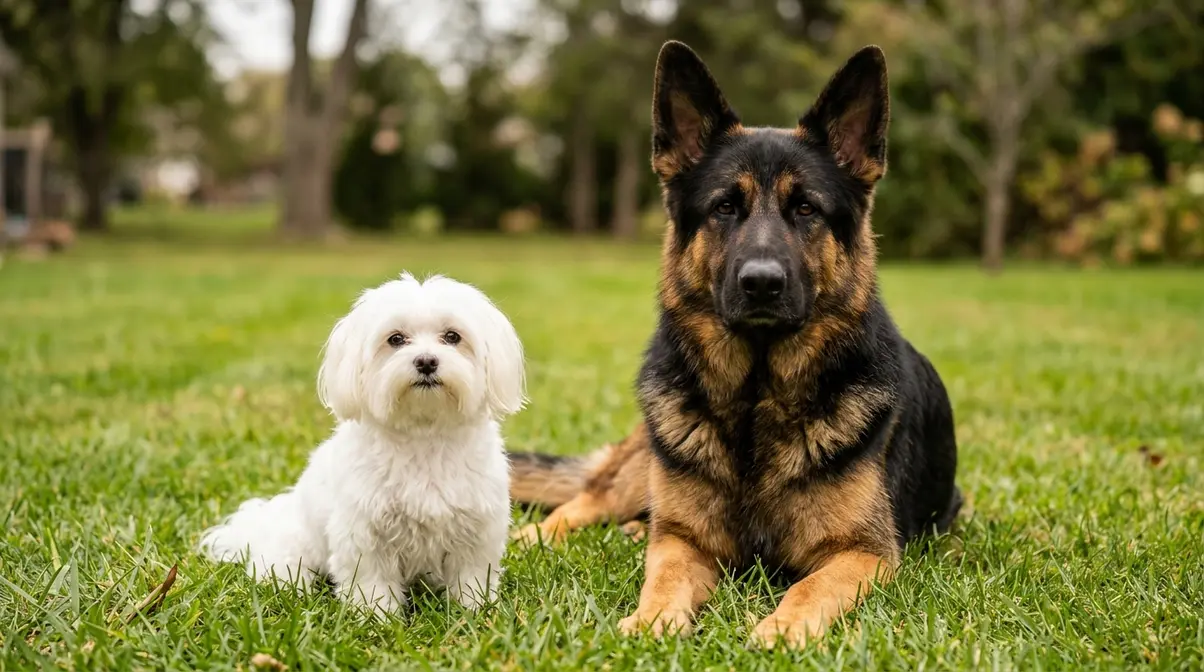
A maltese german shepherd mix, most often called a Sheptese or Malshep, is a designer crossbreed between a Maltese (4-7 lb) and a German Shepherd Dog (55-99 lb). The size gap between those two parent breeds makes this one of the rarest and most ethically debated hybrid crosses. Adult size and appearance are genuinely unpredictable, ranging from roughly 15 to 50 lb (dogbreedinfo.com).
The Size-Mismatch Reality is the central fact this guide builds around. That 50-pound gap between parent breeds isn’t a footnote, it determines whether a litter is even possible, what the puppy will look like, and how big it will grow. Competitors treat this gap as a curiosity. The honest position is that it makes this one of the most ethically contested designer crosses, not because the dogs aren’t real, but because producing them safely is genuinely difficult.
This is a first-generation (F1) cross with no breed standard, no predictable coat, and no guaranteed temperament. Compare that to established designer breeds like the Labradoodle or Goldendoodle, which have generations of selective breeding behind them. The Sheptese has none of that. What you get is a genuine lottery ticket, which some owners find exciting and others find alarming. For a broader look at what German Shepherd crosses are like overall, PetVR’s GSD mix guide gives useful context.
Community experience reflects this unpredictability well. One Quora user noted:
“As everyone mentioned, it depends on personality, but is most definitely a high possibility to have them live together without any issues.”
That’s the honest framing for this cross, highly individual, not guaranteed, but workable with the right approach.
Before going further, it helps to know the vocabulary, because this cross goes by several names depending on the source.
Sheptese, Malshep, and Other Names for This Cross
Dogbreedinfo.com uses Sheptese as the primary label for this cross, a portmanteau of Shepherd and Maltese. You’ll also see Malshep (Maltese + Shepherd), Shepshe (a less common variant), and malt-mix as informal shorthand in breed forums. Throughout this article, GSD refers to German Shepherd Dog, the standard abbreviation used in breed communities.
Multiple names exist because there’s no breed registry and no official standard. Different sources and forum communities coin different portmanteaus for the same dog. If you search “Sheptese” or “Malshep” in breed forums, you’ll find the same dog described under both names, sometimes in the same thread.
One point worth flagging: “Maltese cross” in a dog context means a Maltese mix, not the heraldic symbol. New searchers sometimes land on the wrong results because of this overlap. When you see “Maltese cross dog,” the writer means a designer crossbreed with Maltese parentage, not a breed category.
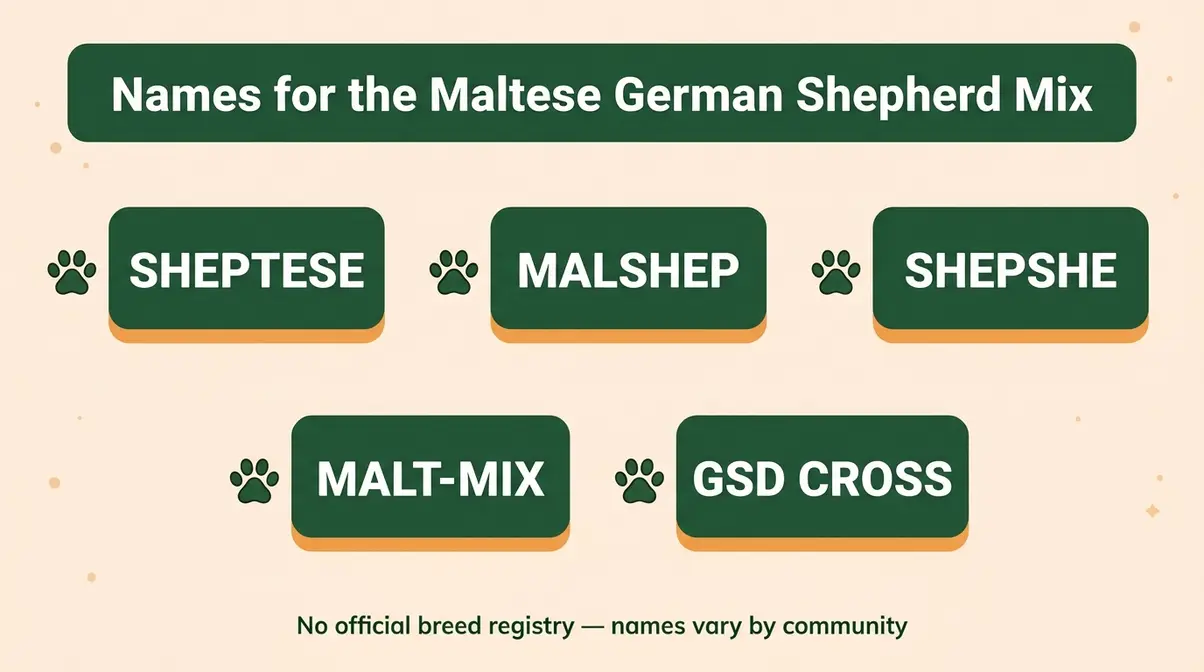
The Maltese German Shepherd mix goes by at least five common nicknames, Sheptese and Malshep are the most widely used in breed forums.
Whatever you call this cross, the most pressing question for most people is the same: how big will it actually get?
Is Breeding a Maltese and German Shepherd Realistic?
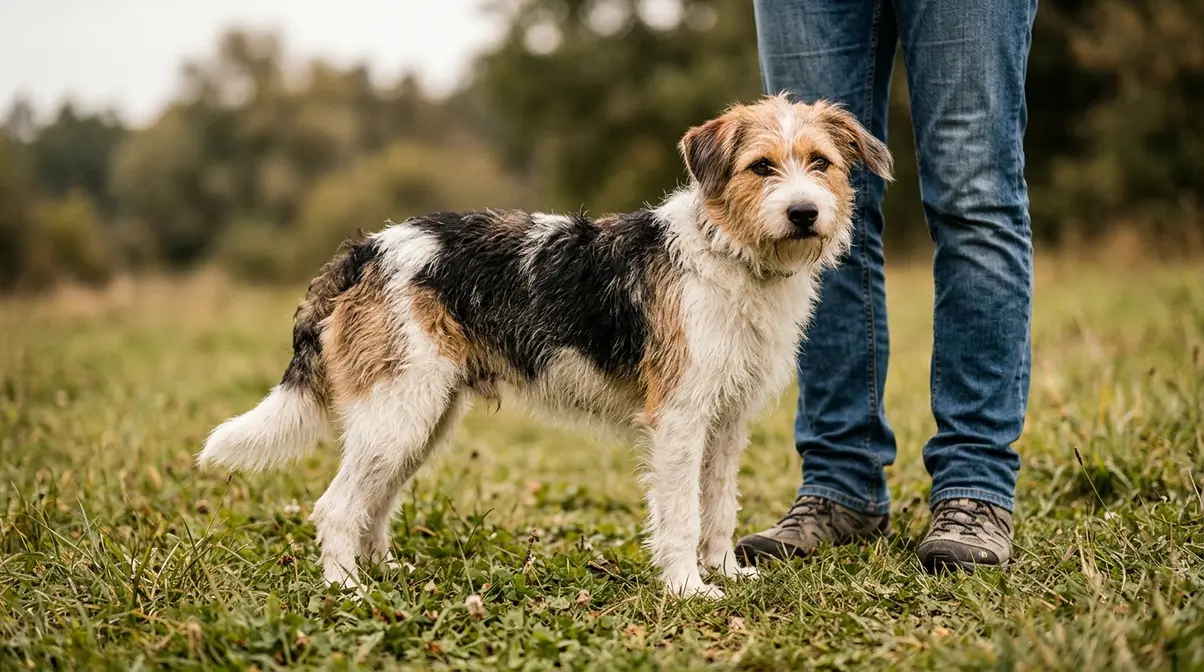
The size gap, 4-7 lb Maltese versus 55-99 lb GSD, makes natural mating physically impractical. Sources, including a documented video on this cross’s feasibility, confirm that producing this cross typically requires artificial insemination. That alone puts it outside the reach of casual backyard breeding.
If a Maltese female carries the litter, sources flag high complication rates and a likely C-section. Her small frame is simply not built to carry GSD-sired puppies to term safely. If a GSD female carries the litter, the risk is lower, but litter size and puppy size remain unpredictable. This cross is ethically debated among veterinarians, and that debate is worth naming plainly rather than burying.
Any breeder who makes this sound routine should raise immediate skepticism. The breeding challenges are real, documented, and the primary reason litters are so rare.
If you’re considering breeding or buying this cross, consult a veterinarian before proceeding.
Assuming you’re looking at an existing mix rather than breeding one yourself, the next question is what that dog will actually look like.
How Big Does a Full-Grown Maltese German Shepherd Mix Get?

A full-grown Maltese German Shepherd mix reportedly weighs between 15 and 50 lb, a range so wide it reflects the 50-pound gap between its 4-7 lb Maltese parent and its 55-99 lb German Shepherd parent (dogbreedinfo.com; Daily Paws; a-z-animals.com). That wide range is not a flaw in the data. It’s the honest answer. Any source that gives you a single number for this mix is misleading you.
The Size-Mismatch Reality plays out directly here. Because the parent breeds are so far apart on the size spectrum, the mix can inherit any point along that continuum. Here’s how the three-source data lines up:
| Parent / Mix | Adult Weight | Adult Height | Source |
|---|---|---|---|
| Maltese | 4-7 lb | 7-9 inches | Daily Paws |
| German Shepherd Dog | 55-99 lb | 22-26 inches | a-z-animals.com |
| Sheptese / Malshep | 15-50 lb | Variable | dogbreedinfo.com |
What determines where in that range a dog lands? Which parent’s genes dominate, birth order, and whether the GSD or Maltese was the mother all play a role. In F1 crosses, this is genuinely unpredictable, you won’t know until the puppy is fully grown.
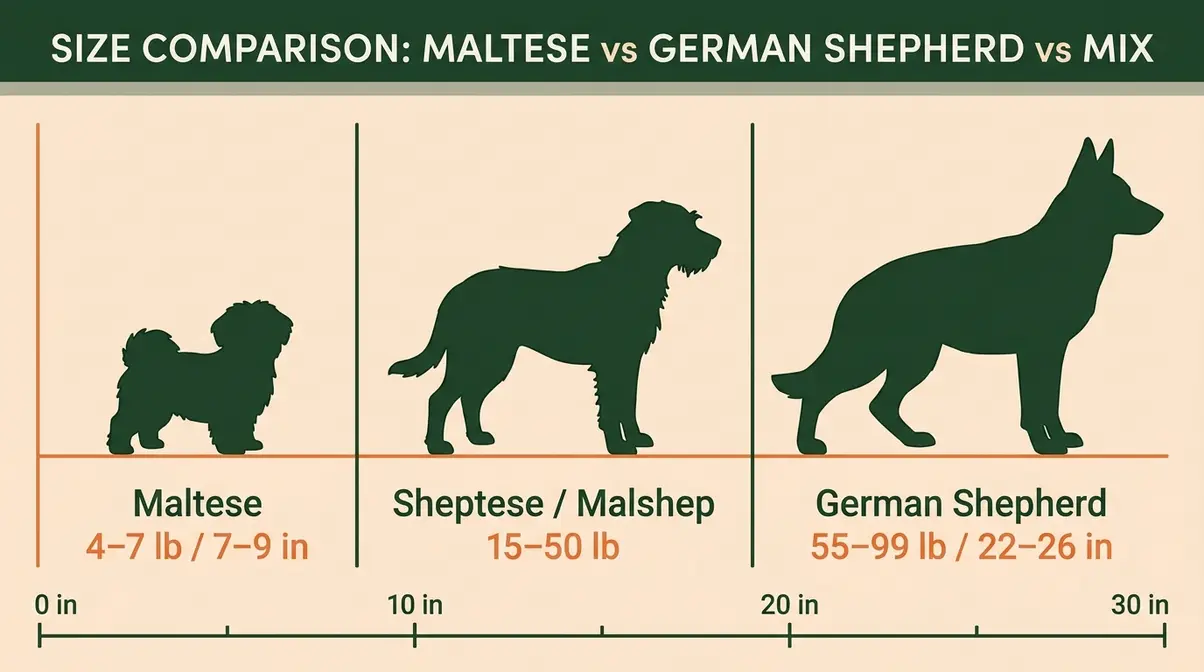
The Sheptese’s adult weight range of 15-50 lb spans the gap between two very different parent breeds, making size prediction impossible before the dog is fully grown.
Size isn’t the only variable. Coat type and color are just as unpredictable.
Coat Types and Colors in the Mix
Dogbreedinfo.com describes the Sheptese’s coat as shaggy, scruffy, or silky depending on which parent’s genes dominate. The Maltese contributes a long, silky white coat; the GSD contributes a dense double coat in black-and-tan, sable, or solid black. Any combination is possible.
Color patterns reported in the mix include black-and-tan (GSD-dominant), sable, white with patches (Maltese-dominant), and mixed patterns with no clear dominant. No single color is guaranteed, the same litter can produce dramatically different-looking puppies.
Coat type has direct grooming implications. A Sheptese with a silky Maltese coat will need daily brushing to prevent matting; one with a shorter GSD-type coat will need weekly brushing but will shed more on furniture and clothing. Knowing which coat type your dog has early helps you set up the right routine from day one.
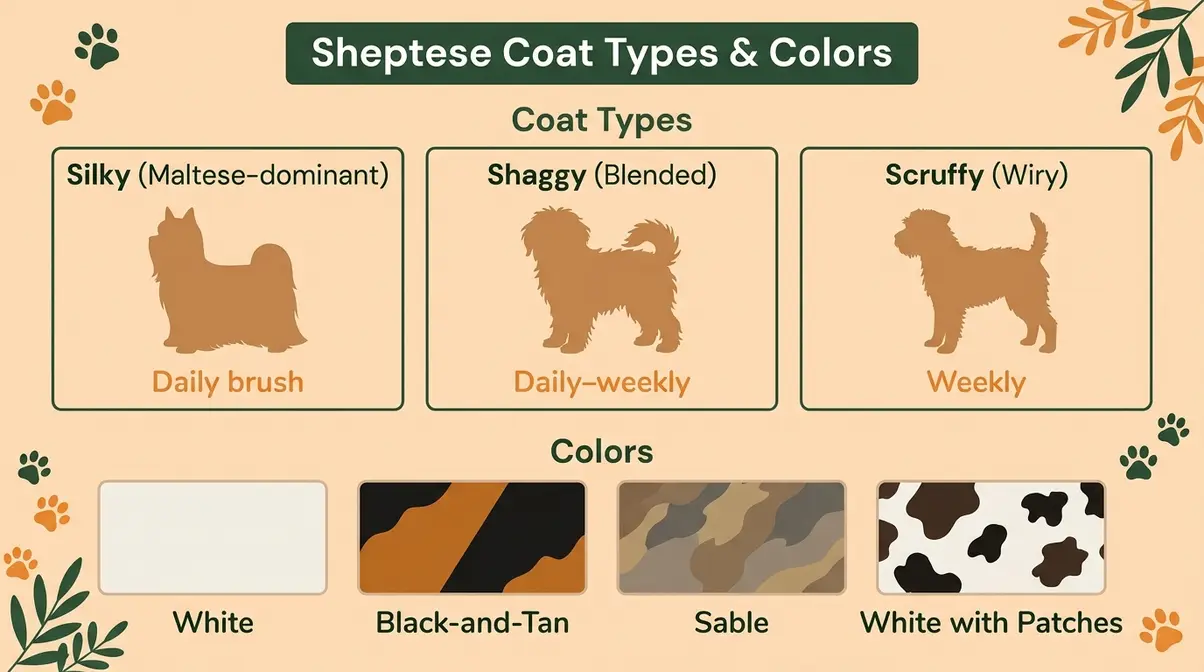
Coat type in the Sheptese ranges from silky and white to shaggy and black-and-tan, the grooming routine you need depends entirely on which type your dog inherits.
Coat and size are only part of the picture. The temperament blend from these two very different parent breeds is what most owners find most surprising.
What Temperament Does the Sheptese Have?

Picture a velcro lap dog crossed with a working patrol dog. That’s the temperament spectrum you’re navigating with a Sheptese. The maltese and german shepherd mix blends two very different personalities, and which traits dominate in any individual dog is unpredictable. According to dogbreedinfo.com, the Sheptese inherits alert, watchful instincts from the GSD side and an affectionate, spirited personality from the Maltese side, but which traits dominate depends on the individual dog. That unpredictability is the key thing to plan for.
Daily Paws describes the Maltese as affectionate, spirited, and playful. A-z-animals.com describes the German Shepherd as alert, loyal, and protective with a strong working instinct. Training and socialization strategy depends heavily on which of those trait clusters your dog expresses more strongly.
Do Maltese Dogs Like Being Held?
Maltese dogs generally enjoy close contact with their families. Daily Paws describes the breed as affectionate, spirited, and playful, traits consistent with a dog that seeks proximity and lap time. For the Sheptese, sources describe the mix as forming tight bonds with its people. A dog that leans toward the Maltese side may be a classic lap dog; one that leans toward the GSD side may prefer to stay close but not be picked up. Introduce handling gently, reward calm behavior, and watch each dog’s individual body language rather than assuming breed-wide preferences.
Beyond handling preferences, the mix’s exercise and training needs are shaped just as much by the GSD side as the Maltese side.
Exercise and Training Needs

The GSD parent contributes moderate-to-high exercise needs and a strong drive for mental stimulation. Plan for daily walks plus active play or puzzle toys. GSD-leaning dogs that don’t get enough mental engagement can become destructive, boredom is a real behavioral risk for this cross.
Early positive-reinforcement training is non-negotiable. Both the GSD’s alertness and the Maltese’s spirited personality respond well to reward-based methods; harsh correction tends to backfire with either breed. It’s worth noting that sources consistently point to moderate-to-high exercise needs from the GSD side, the Maltese parentage doesn’t make this a low-energy mix, even when the dog is on the smaller end of the size range.
Socialization from puppyhood is equally critical. The GSD’s watchful instincts can tip into wariness around strangers without early, positive exposure to new people and environments. Here are the four training priorities to address from day one, according to dogbreedinfo.com:
- Early socialization with people and other dogs across different environments.
- Daily mental stimulation, puzzle feeders, scent games, and training sessions.
- Consistent positive-reinforcement commands (sit, stay, recall) before bad habits form.
- Leash manners from the first walk, not after problems develop.
Training and exercise are manageable, but grooming is where many Sheptese owners are caught off guard.
Grooming and Day-to-Day Care

The Maltese German Shepherd mix’s coat, whether shaggy, scruffy, or silky, typically requires routine brushing to avoid tangles and matting (dogbreedinfo.com). Grooming needs are moderate-to-high regardless of coat type. Because the coat you get is unpredictable, plan for the higher-maintenance scenario until you know which type your dog has inherited.
Here’s the weekly routine broken down by task:
- Brush daily if the coat is silky or shaggy (Maltese-dominant); weekly if it’s shorter and denser (GSD-dominant).
- Bathe every 3-4 weeks or as needed, more frequently for dogs that spend time outdoors.
- Trim nails monthly to prevent discomfort and gait problems.
- Clean ears weekly, floppy or semi-erect ears trap moisture and are prone to infection.
- Check for matting behind the ears and under the collar every week, regardless of coat type.
On the “low-maintenance” question: the Sheptese is not a low-maintenance dog by grooming or exercise standards. A dog that looks like a fluffy Maltese but carries a GSD undercoat is a grooming surprise that catches owners off guard. If you want a genuinely low-effort dog, this cross is worth reconsidering before you commit. Honest expectations now prevent frustration later.
Now that you know what daily life with this mix looks like, the next question is how to find one, and whether you should.
Finding a Maltese German Shepherd Mix Puppy Responsibly
Can you actually find a Maltese German Shepherd mix puppy? Yes, but rarely, and with significant caveats. The breeding risks described earlier make any listing worth scrutinizing carefully. A puppy that exists is not proof that the breeding was done safely or ethically. According to a documented video on this cross, the challenges of pairing these two breeds are real and documented. Cornell University College of Veterinary Medicine provides general guidance on canine health and breeding risk that applies here.
The C-Section Risk and Breeding Ethics
Pairing a 4-7 lb Maltese with a 55-99 lb German Shepherd typically requires artificial insemination, carries high complication rates, and likely requires a C-section if the Maltese is the dam (a documented video on this cross; dogbreedinfo.com). The University of Pennsylvania School of Veterinary Medicine provides institutional context for companion animal breeding risk guidance.
If the GSD is the dam, risk is lower, but litter size and puppy size remain unpredictable. This cross is ethically debated among veterinarians, and that debate is worth taking seriously rather than dismissing. Any breeder who presents this as a routine, easy cross should prompt immediate skepticism. The difficulty is built into the biology.
If you’re considering breeding or buying this cross, consult a veterinarian before proceeding.
Knowing the risks, here’s what to check before you pursue any puppy of this cross.
Sourcing Checklist: Questions to Ask Before Pursuing a Puppy
A “maltese german shepherd mix for sale” listing with no health documentation is a red flag, not a bargain. Use these six questions to evaluate any breeder or rescue contact:
- Which parent was the dam (mother)? A Maltese dam carries significantly higher risk than a GSD dam.
- Was artificial insemination used? If the breeder says no, ask how natural mating was possible given the size gap.
- Were health tests performed on both parents? Ask for documentation, not just a verbal assurance.
- Can you see veterinary records for the litter? A responsible breeder will have them and will share them.
- Is the breeder transparent about the C-section risk and any complication history? Evasiveness here is a warning sign.
- Is adoption from a rescue a viable alternative? Dogs of this mix occasionally appear in shelters as owner surrenders, rescue is a responsible and often overlooked option.
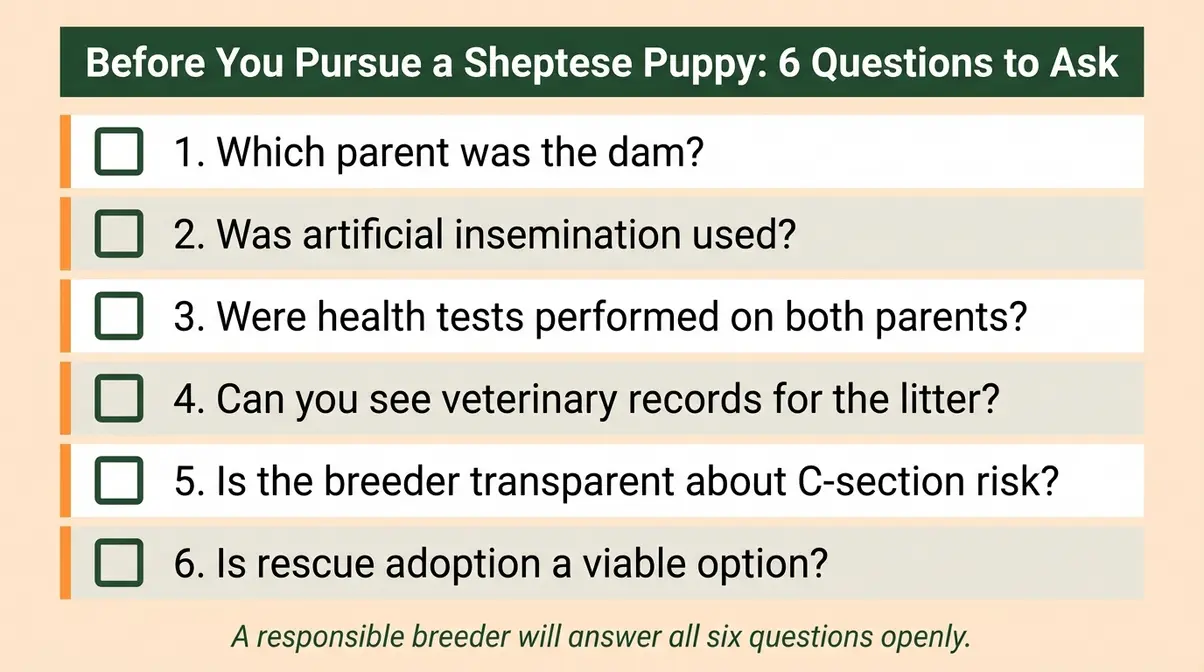
Use this six-question checklist to evaluate any breeder or rescue before committing to a Sheptese puppy.
If this cross feels too uncertain, there are other German Shepherd mixes worth considering, some of which are far more common and easier to source.
What Other German Shepherd Mixes Should You Consider?
Many breeds are crossed with the German Shepherd, and the Maltese cross is one of the rarest. The three most practical alternatives are the German Shepherd husky mix, the German Shepherd poodle mix, and the Maltipoo German Shepherd mix. If the Sheptese’s rarity and breeding risks feel like too much, these alternatives offer more predictable outcomes and established breeder networks.
According to a-z-animals.com, the German Shepherd husky mix and German Shepherd poodle mix are far more common than the Maltese cross, with more predictable adult sizes and established breeder networks.
| Mix | Adult Size | Temperament | Care Level |
|---|---|---|---|
| Maltese × GSD (Sheptese) | 15-50 lb (wide range) | Affectionate + alert; unpredictable blend | Moderate-high grooming; moderate-high exercise |
| Husky × GSD (Gerberian Shepsky) | 45-90 lb | High-energy, loyal, independent | High exercise; moderate grooming |
| Poodle × GSD (Shepadoodle) | 50-90 lb | Intelligent, trainable, lower-shedding | Moderate exercise; regular grooming |
| Maltipoo × GSD | 20-60 lb (estimated) | Affectionate + alert; variable | Moderate grooming; moderate exercise |
The Sheptese is the only mix in this table with a size range that starts in toy-dog territory (15 lb), a direct consequence of the Size-Mismatch Reality. The husky and poodle crosses don’t carry the same extreme size-gap problem, which is why their outcomes are more predictable and their breeders more established. For readers who want a GSD-type personality in a smaller, more manageable package, the Shepadoodle is the more practical choice.
For further comparison, PetVR covers how a German Shepherd and Chihuahua cross compares in size and temperament, another size-mismatched cross worth understanding. You can also explore a family-oriented German Shepherd and Bernese Mountain Dog cross for comparison, or read about a large-breed German Shepherd and Great Dane cross as another point of comparison.
Before you make any decision about this mix, here are the most common questions, answered directly.
Frequently Asked Questions
What dog is mixed with a German Shepherd?
Many breeds are crossed with the German Shepherd, and the Maltese German Shepherd mix, nicknamed Sheptese or Malshep, is one uncommon example. The most popular crosses include the husky (Gerberian Shepsky), the poodle (Shepadoodle), and the Maltipoo. Because parent breeds differ so widely in size and temperament, each mix produces a noticeably different dog. Compare size, temperament, and care needs before choosing any German Shepherd cross.
Do Maltese dogs like being held?
Maltese dogs are generally described as affectionate, spirited, and playful, traits that suggest a dog that enjoys close contact with its family. For the Maltese German Shepherd mix, sources describe the dog as forming tight bonds with its people. Whether a particular dog enjoys being held depends on which parent’s traits dominate and on early socialization. Introduce handling gently, reward calm behavior, and watch each dog’s body language rather than assuming breed-wide preferences.
Do Maltese Shih Tzu bark a lot?
Verified barking frequency data for Maltese Shih Tzu mixes isn’t covered in the sources used for this guide. For the Maltese German Shepherd mix specifically, sources describe alert, watchful instincts from the GSD side combined with a spirited Maltese personality, a combination that can produce a vocal dog. Early, consistent positive-reinforcement training and socialization are the most reliable ways to manage barking in this cross.
What’s the most low-maintenance dog?
No single low-maintenance dog can be named here, it depends on your lifestyle and what “low maintenance” means to you. For the Maltese German Shepherd mix, sources point the other way: moderate-to-high exercise needs, mental stimulation to prevent boredom, early training, and regular brushing are all required. Judge any breed by its exercise, training, and grooming demands rather than by size alone, small dogs aren’t automatically easy dogs.
What is the cleanest house dog?
The research here doesn’t identify a single cleanest house dog, cleanliness depends on coat type, shedding level, and individual habits. For the Maltese German Shepherd mix, coat type varies widely: a silky Maltese-dominant coat sheds less but mats easily; a GSD-dominant coat sheds more but is easier to brush out. Plan your grooming routine around your individual dog’s coat rather than a breed-wide assumption.
What breed of dog do vets not recommend?
The research here doesn’t list breeds vets advise against as a category. It does flag a veterinary-relevant concern specific to this cross: pairing a 4-7 lb Maltese with a 55-99 lb German Shepherd typically requires artificial insemination, carries high complication rates, and likely requires a C-section if the Maltese is the dam. If you’re considering this cross, consult a veterinarian before proceeding.
What dog should I not get?
No research here names dogs to avoid as a universal list, the right choice depends on your home and lifestyle. For this mix specifically, check three things first: unpredictable adult size (reported at roughly 15 to 50 lb), moderate-to-high exercise and training needs, and the breeding-risk concerns around crossing a small Maltese with a large German Shepherd. If those factors don’t fit your life, a more established cross is the smarter choice.
What is the absolute healthiest dog breed?
The research here doesn’t rank breeds by health, so no healthiest dog breed can be named. For the Maltese German Shepherd mix, sources highlight health risks tied to breeding: the size gap makes natural mating impractical, and attempted litters carry high complication risk for both mother and puppies. Ask a veterinarian about any individual dog’s health rather than relying on breed-level health labels.
What to Do Before You Commit to a Sheptese
For prospective owners, the Maltese German Shepherd mix, or Sheptese, is a genuinely rare cross that pairs a 4-7 lb toy breed with a 55-99 lb working dog, producing adults that reportedly weigh 15-50 lb (dogbreedinfo.com). PetVR’s position is clear: this cross is worth pursuing only with honest size expectations, early positive-reinforcement training, and careful breeder vetting. The best approach combines all three from the moment you start your search.
The Size-Mismatch Reality isn’t a footnote, it’s the central fact that determines whether this cross is right for you. That 50-pound parent gap shapes breeding feasibility, adult size, coat type, and care needs all at once. You came here with a question; you now have the full picture, including the parts most breed guides skip.
If you’re drawn to the GSD’s loyalty and the Maltese’s affection in a smaller package, use the sourcing checklist above before contacting any breeder, and consult a veterinarian about the breeding risks before committing. If the rarity and unpredictability feel like too much, the German Shepherd poodle mix or husky mix offer more established alternatives with more predictable outcomes.
This content is general information, not veterinary advice. Consult your veterinarian about any individual dog’s health or breeding questions.

 German Shepherd Exercise Needs: Age-Based Daily Guide