
If you are a German Shepherd owner, you should already know how energetic these adorable angels can be. German Shepherds have a reputation for being hardworking dogs and this reputation they clearly do live up to as you mostly would find them running around the yard, jumping from one spot to the other, and outright having fun.
Even though we enjoy the higher energy and positive temperament of the German Shepherd, there are days when a little less energy and a little more peace and quiet would be highly appreciated. If you belong to this category and are wondering “at what age does the German Shepherd actually calm down?”, then you certainly are on the right page.
In this article, we provide some useful information as to why the German Shepherd is highly hyperactive, help you figure out the right age at which they actually calm down, and even provide some useful tips that can help or assist you in calming down your German Shepherd companion. So, let’s get this article started.
The German Shepherd’s hyperactive trait is quite natural for the dog breed. However, as they get older, you should see a slight decrease in the level of energy they display. Most settle noticeably between two and three years old, and working-line dogs often stay high-energy for longer.
Why Are German Shepherds So Hyperactive?
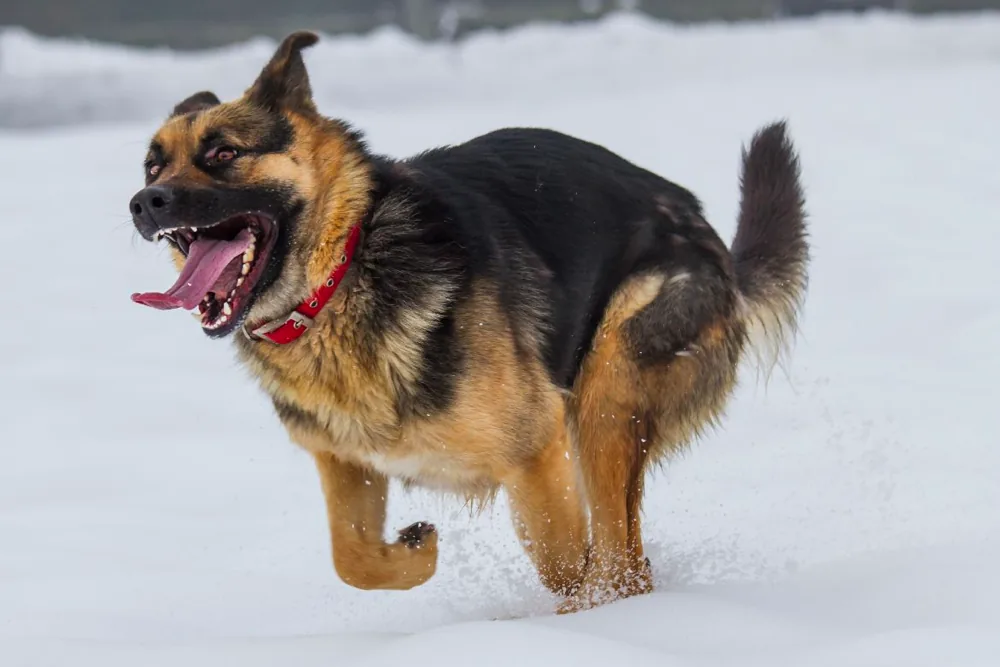
The Hyperactiveness of the German Shepherd is often caused by a lot of factors. Here are some of the factors responsible for their hyperactive trait;
Breed Origin and Genes
If you take a close look at the history and origin of the German Shepherd breed, you’ll know that they were originally bred to make herding dogs or canines. And as herding dogs, they were required to run around chasing cattle. This active lifestyle might be a good reason as to why German Shepherds are hyperactive.
Also, looking at the Genetic composition of the German Shepherd breed, you would find that they do possess the tyrosine hydroxylase gene, which is also known as the TH gene. This is a rare gene mostly found in Siberian Huskies, it is believed to cause hyperactivity in dogs as well as impulsiveness.
Hyperkinesis
What Attention Deficit Hyper-Activity Disorder or ADHD is to humans is exactly what Hyperkinesis is to dogs in general. This is a mental condition that can be found in some dog breeds like the German Shepherd. In fact, according to a study done in Finland, German Shepherds are said to have the highest prevalence of Hyperkinesis among other dog breeds.
Symptoms of Hyperkinesis in dogs include Hyperactivity, impulsiveness, fast heart rate, and a short attention span.
Lack Of Proper Physical Exercises
As we already know, German Shepherds are very active dogs and they do require a decent amount of physical exercises each day to stay healthy and also help them release any form of energy that might be stored within their bodies.
If these German Shepherd dogs don’t get their much-needed exercises, they can end up frustrated and this can translate to them being destructive, especially around the house. It is always important to engage them in activities like swimming, regular walks and even running.
Lack Of A Proper Mental Exercise
Mental Stimulation is just as good as physical stimulation and for dog breeds as smart as the German Shepherd, a lack of proper mental exercises can lead to frustration which can in turn lead to complete hyperactivity.
There are certain activities you can engage your German Shepherd dog in to improve their overall mental stimulation. Anything ranging from puppy puzzles to herding challenges and agility sports can help deal with this problem.
Innate Playfulness
The temperament of the German Shepherd dog is generally playful and this can be both good and bad. The adult German Shepherd dog can very much still just be a puppy at heart. According to research, German Shepherds, like most herding dogs, are known to be the most playful dog breed.
This can further translate into hyperactivity for the puppies as you would mostly find them running and jumping all over the place.
Stress and Anxiety
Stress and anxiety are two mental and physical conditions that could lead to hyperactivity in both humans and dogs. Anything can cause stress for your German Shepherd puppy, from sudden loud noises to a sudden change in the environment.
This can lead to other symptoms like excessive barking, licking, panting, and eventually, anxiety. Anxious German Shepherds are restless and can develop different responses which might look like excess energy.
To Get Some Attention
German Shepherds are some of the most loyal dog breeds you can ask for, they love every moment spent with their owners and sometimes might be extra playful when seeking attention from their owners.
Boredom can also be a great reason why German Shepherds are often hyperactive. If this is the case, indulge your German Shepherd some more. Spend some time with them and keep them engaged and entertained.
What Are The Signs That Your German Shepherd is Hyper-Active?
It is very important that you know the difference between a naturally happy German Shepherd and a hyperactive German Shepherd. It can be quite difficult to tell because both states do show high evidence of activity, but for a naturally happy German Shepherd, they do come with a relaxed state in which they can be distinguished by the happy, high tail that they wag. Also when a dog is happy, you can easily bring them in to pet them.
For a hyperactive dog, however, there are certain key differences to look out for along the way. A hyperactive dog usually comes with some slight evidence of aggression. They usually attempt to bite or bark at unusually high levels and often move around by lunging, jumping, and running for no particular reason or control. Playing with a hyperactive German Shepherd can be a lot rougher than usual.
When Does A German Shepherd Actually Calm Down?
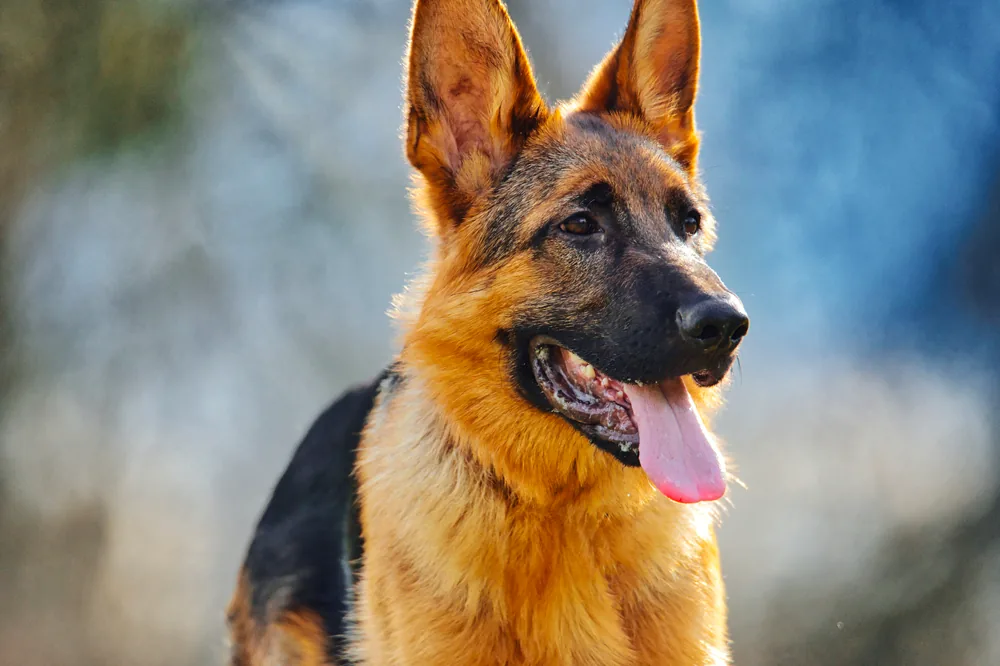
With all these reasons, it is pretty easy to understand why a German Shepherd becomes very hyperactive. But with that understood, when do they actually calm down? Most German Shepherds begin to settle noticeably between two and three years of age, with the sharpest change usually after the adolescent stretch ends. Working lines, bred for drive and stamina, commonly stay high-energy well past that.
Even though that is the generally accepted age range for German Shepherds to become calm, it is still important to note that all German Shepherds are unique and might have a different period to become calm.
Here is a proper German Shepherd timeline that shows you the actual hyperness of your puppy Stage by Stage;
Stage 1: The 3 weeks to 1 month German Shepherd
During this stage, your German Shepherd is still getting familiar with the world and is highly interested in exploring it. Now, they do show high curiosity at this stage, but their bodies are still too young to show hyperactiveness.
Stage 2: The 2 months to 4 months German Shepherd
Your German Shepherd puppy should have a short attention span at this stage in their life. Energy levels should slowly begin to increase and as such, they should become more playful around the house while still being very curious angels. You might experience some difficulty training them at this stage in their life.
Stage 3: The 5 months to 1-year German Shepherd
During this stage is when your German Shepherd should be most in their hyper state. This is because they would have a lot of natural energy to play with and would most likely be sexually mature at this stage.
Stage 4: The 2 years to 6 years German Shepherd
Other dog breeds should begin to see a decline in the level of hyperactivity at this stage, but for the German Shepherd, it might still linger for a bit. They do begin to calm down though as their attention span becomes sharper.
Stage 5: The 7 years and above German Shepherd
By the 5th phase or stage in their life, the German Shepherd puppy should become more focused and should start seeing a significant drop in their energy level. Hyperactivity should take a sharp decrease and your German Shepherd would most likely spend more of his or her time resting during the day.
Other sure ways that you can ensure your German Shepherd is calm can be through the training and socialization process. Always keep socialization and training as a priority when choosing the right breeder for you and even after receiving your puppy, these two should be very important to you.
Always ensure your puppies get the needed training by either you or a licensed professional. Training your puppy yourself can help you ascertain full command over them and even help you build a stronger bond with your puppy.
Socialization can also be done by you, properly ensuring your puppy is exposed to all the right stimulations to get them more used to or familiar with the world and help with eliminating any possible evidence of stress and anxiety in your dog.
What Are The Ways To Calm Your German Shepherd?
Now that we realize we can actually calm our German Shepherd dogs without possibly waiting 6 years to 8 years to fully keep them calm and in check, the next is to figure out how to do it. Try any of the following methods.
Always Regularly Exercise Your German Shepherd
As we have already established at some point in the article, regular exercises are very good for the German Shepherd dog. Exercise can help with the proper release of whatever pent-up energy might be stored up in your German Shepherd puppy.
The logic behind regularly exercising your German Shepherd is simple, if you keep them exercised often and feel tired often, they do not have the extra energy to be hyperactive and would mostly spend a lot of their time sleeping or resting.
Mentally Stimulate Your German Shepherd
Asides from physical exercises, it is important that we mentally exercise our German Shepherds to keep them happy and constantly active. Try mentally stimulating your German Shepherd dogs by involving them in various dog puzzles that are a bit challenging.
You can add a reward at the end of the puzzle to keep them interested for long. German Shepherds are highly intelligent dog breeds, so try to make it challenging enough to keep them going at it for a while.
Train And Socialize Your German Shepherds
We have already explained how crucial it is to properly train and socialize your German Shepherd dog. Training them can help knock out many of the bad habits that come with a hyperactive dog by keeping them under control. And since the breed is highly intelligent, their trainability level is also quite high.
Socialization, especially during the early stages of their growth is also quite crucial in shaping their growth. By properly socializing your German Shepherd, you can get them familiar with people and different situations or environments that could naturally keep them stressed.
Socialization also helps keep your dog tired because it takes a lot of energy to explore new stimulations or interactions and by the end of each socialization session, your German Shepherd could feel a lot more tired than they did at the start of the session.
Take your dog to some good dog parks so they get to meet with other pets and properly socialize. You can also consider taking them to new environments and letting them explore the environment by themselves.
Watch Their Diet
You might be wondering how watching your dog’s diet can significantly affect the level of hyperactivity your dog faces. Well, what you do feed your dog can have a positive or negative impact on the behavior and energy level of the dog.
Foods with low amounts of protein and a high dose of sugar can be quite detrimental to your puppy. These are high-energy foods that could leave your German Shepherd very hyperactive. Instead, invest in feeding them rich organic foods. If you need help coming up with a proper dietary plan for your dog, then you can consider consulting with your veterinarian.
Conclusion
A hyperactive German Shepherd should not be more than enough for you to handle, especially if you follow any of the tips that we have listed above. Always remember that German Shepherds require a lot of time and commitment, be sure to give it to them.
And remember that socialization and training are quite crucial in shaping the lives of each German Shepherd puppy or dog you own.
Energy levels are only one part of the picture. Our full guide to German Shepherd character covers aloofness, drive and the adolescent dip that catches most owners out.
Why the joints get so much attention in this breed
The emphasis on growth, exercise and neuter timing is not fussiness. A VetCompass study of 12,146 German Shepherds found the most common causes of death were “musculoskeletal disorder (16.3%), inability to stand (14.9%), neoplasia (14.5%) and spinal cord disorder (13.6%)” (O’Neill DG, Coulson NR, Church DB, Brodbelt DC, “Demography and disorders of German Shepherd Dogs under primary veterinary care in the UK”, Canine Genetics and Epidemiology 2017;4:7, retrieved 2026-08-13).
Take the first, second and fourth together and roughly 45% of deaths in that study relate to the dog losing the use of its back end. That is the shape of the breed’s health story, and it is why decisions made in the first eighteen months carry further here than in most breeds.
Three things are within your control while the dog is growing:
- Keep the puppy lean. Overweight is one of the five most commonly recorded disorders in the breed, and extra weight on growing joints is the cheapest problem to avoid.
- Build fitness gradually and avoid repetitive high-impact work while the dog is still growing: long forced runs, repeated jumping, and stairs taken at speed.
- Give the dog non-slip footing at home. A big puppy sliding on laminate is doing its joints no favours.
What is not in your control is what the parents were. Hips cannot be screened in a young puppy, which is exactly why the parents’ grades matter: the OFA scale runs Excellent, Good, Fair, Borderline, Mild, Moderate and Severe (OFA, retrieved 2026-08-11), and those results are public and searchable.
The decision this age actually turns on: when to neuter
Most owners are told six months, more or less by default. In this breed there is a study with real numbers that says the timing matters, and it is worth seeing them before the appointment is booked.
Researchers at the University of California, Davis examined records for 1,170 intact and neutered German Shepherd Dogs over a 14.5-year period. What they found on joint disorders, which are the defining health problem of this breed:
| Left intact | Neutered before 1 year | |
|---|---|---|
| Males with one or more joint disorders | 7% | 21% |
| Females with one or more joint disorders | 5% | 16% |
| Females with urinary incontinence | not diagnosed | 7% |
In the authors’ words: “In intact males, 7% were diagnosed with one or more joint disorders, while in males neutered prior to a year of age, a significantly higher 21% were diagnosed”, and “In intact females, 5% were diagnosed with one or more joint disorders, while in females neutered prior to a year of age, this measure was significantly increased to 16%”. They also record that “Urinary incontinence, not diagnosed in intact females, was diagnosed in 7% of females neutered before 1 year” (Hart BL, Hart LA, Thigpen AP, Willits NH, “Neutering of German Shepherd Dogs: associated joint disorders, cancers and urinary incontinence”, Veterinary Medicine and Science, 2016, retrieved 2026-08-13).
Three cautions, because this finding gets over-read in both directions.
It is an association from hospital records, not a controlled trial, and the population is one referral hospital’s caseload. It is breed-specific: figures for German Shepherds do not transfer to other breeds, and the same research group found different patterns elsewhere. And it says nothing about the reasons people neuter in the first place, which are real and include population control, behaviour, and conditions of an adoption contract.
What it does support is a specific, answerable question for your own vet: is there a reason not to wait until this dog is over a year old? That is a better conversation than a default date, and in a breed where the joints are the thing that fails, it is the conversation worth having.
Training at this stage, and the advice to ignore
A German Shepherd puppy learns quickly, including things nobody meant to teach it. Two points are worth stating plainly because the internet is full of the opposite.
Method. The American Veterinary Society of Animal Behavior recommends “that only reward-based training methods are used for all dog training, including the treatment of behavior problems”, and states it “does not support the use of aversives in any context, regardless of the tools used or the trainer’s level of experience” (AVSAB Humane Dog Training Position Statement, retrieved 2026-08-12).
And it works better, which is the part people assume is a trade-off. AVSAB cites Hiby and colleagues (2004), who found “obedience levels of dogs highest for dogs trained exclusively with reward-based methods and lowest for dogs trained exclusively with aversive-based methods” (AVSAB, 2021, retrieved 2026-08-12).
Screening a trainer. AVSAB gives a rule you can apply on the phone: “if a trainer is observed using aversive training methods or if a trainer discusses out-dated ideas such as dominance, leader of the pack, or alpha theories, then clients should be advised against hiring them” (retrieved 2026-08-12).
If you have read that a puppy this age is testing your authority, our article on why the pack-leader idea was withdrawn covers where that came from, including the retraction by the biologist who popularised the wolf model behind it.
The honest answer, and the part you influence
Most German Shepherds settle noticeably somewhere between two and three years, and it is gradual rather than a switch. But maturity is the smaller half of the answer.
A dog that has never been taught to switch off does not learn it by getting older. Settling is a trainable behaviour, and it is trained by rewarding calm rather than only responding to activity. If attention arrives when the dog is busy and stops when the dog is quiet, you have taught the opposite of what you wanted.
The other half is meeting the requirement honestly. An under-exercised, under-stimulated working breed does not calm down; it invents a job. Sniffing walks, chews, food puzzles and short training sessions do more for settling than an extra hour of ball-throwing, which for many dogs winds them up rather than down.
Disclaimer: PetVR shares general information based on our contributors’ firsthand experience with German Shepherds — it is not veterinary advice. Always consult a licensed veterinarian about your dog’s health, diet, or behavior. Read our full disclaimer.

 When Do German Shepherds Go Into Heat? The German Heat Cycle Fully Explained