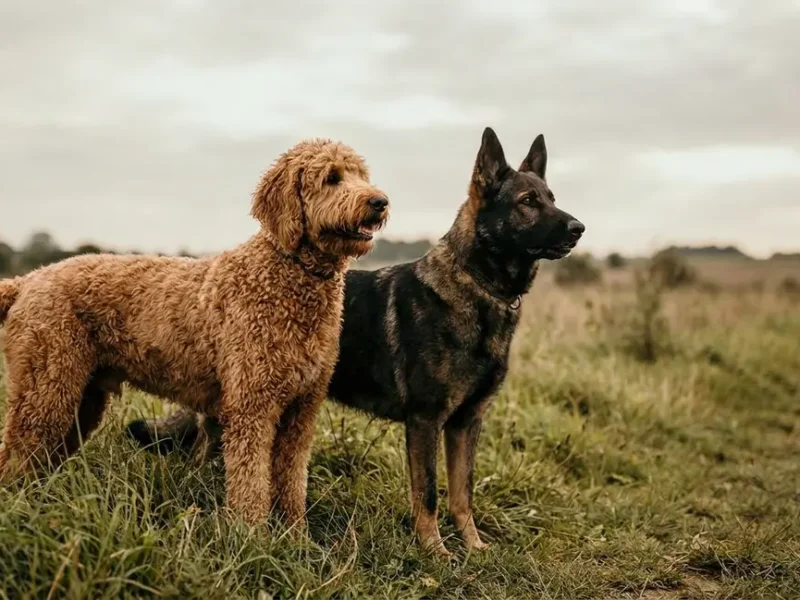
A Goldendoodle German Shepherd mix is a Shepadoodle-type cross, and no breed standard says what a given puppy will look or act like. One litter can hold a curly, easygoing pup and a straight-coated, shedding, driven one. German Shepherds, for instance, have a medium-length double coat that sheds a lot, especially in spring and fall (PetMD). A Goldendoodle’s coat can be very different.
Picture a family with kids who adore their Goldendoodle. They wonder if a Shepherd cross would give them the same calm, friendly nature with more presence and trainability. It’s a fair wish, but the label won’t guarantee it. Which parent a puppy follows matters far more than the name on the listing.
Here you’ll find the mix set against both parents on size, coat, energy, health, cost and buying. Read it as expected ranges, not promises. For deeper background on one parent, see the complete German Shepherd breed guide. First, a quick verdict, then what the cross actually is.
Quick Verdict: Which Dog Suits Which Home?
The core difference is predictability: the mix is less predictable than either parent, so you’re choosing a range of outcomes, not a known dog.
- Choose the mix if you have an active household, can handle either coat type, and will meet the puppy’s parents before committing.
- Choose a Goldendoodle if you want a friendly family dog with a more consistent, curly, lower-shedding tendency and moderate guarding instincts.
- Choose a German Shepherd if you want a proven working temperament and accept seasonal heavy shedding and a serious training commitment.
- First-time owners usually do better with the parent whose traits are better documented.
The sections on coat, temperament, health and buying back up each point.
What Are Golden Doodles Breed Mixes With a German Shepherd?
Yes, people breed them, and the cross is often called a Shepadoodle. Do they have German Shepherd doodles? They do, though the name covers a loose group of crosses, not a recognised breed.
A Goldendoodle is a Golden Retriever and Poodle mix, so crossing it with a German Shepherd puts three breeds in the pedigree: Golden Retriever, Poodle and German Shepherd. A Shepadoodle can also be a plain Poodle and German Shepherd mix, which is why listings confuse buyers. Always ask which parents a puppy actually has.
Each line tends to bring something different. Golden Retrievers are known for friendliness and eagerness to please. Poodles add intelligence and a curly coat that sheds less. German Shepherds add drive, loyalty, a protective streak and a double coat. A puppy can inherit any blend of these.
Because there is no breed standard, two litters sold under one name can differ in size, coat and temperament. Treat loose claims about what this mix is like with caution, including claims that list a single predictable coat or personality. If you want to compare how other Golden Retriever crosses play out, see this golden retriever cross comparison.
How Big Is It and What Coat Will It Have?
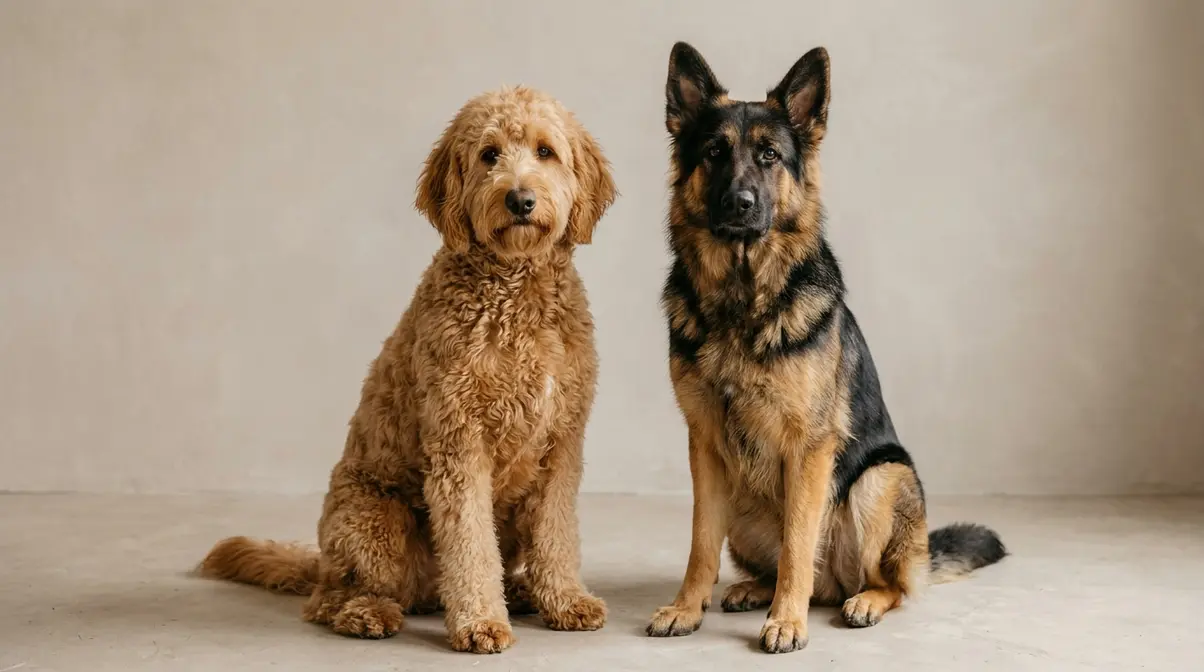
German Shepherds have a medium-length double coat that sheds a lot, especially when they lose their undercoat in spring and fall (PetMD). Coat and shedding vary between puppies, even within one litter.
What breeds of German Shepherds don’t shed as much? No recognised German Shepherd type is low-shedding. Some coats are longer or plusher, but all are double coats. A low-shed result in this cross usually comes from the Poodle side, which brings a curly coat.
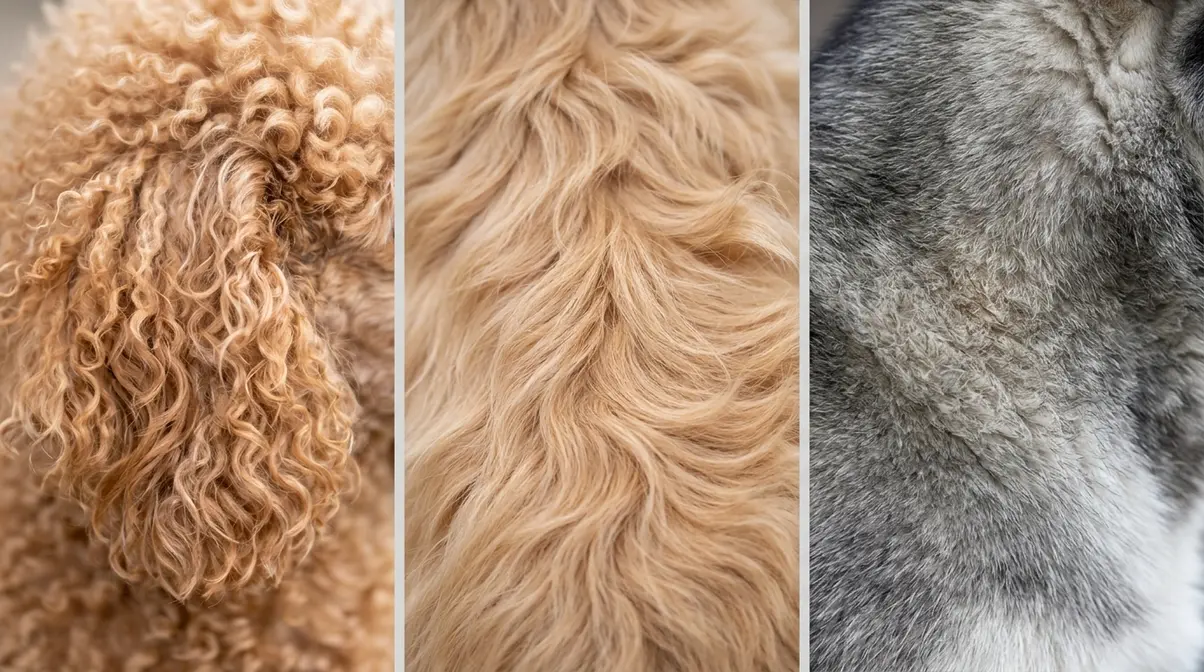
Compare the two coat types. A curly coat sheds little loose hair but tangles and needs regular grooming. A double coat sheds seasonally, with a heavy blow-out twice a year, and benefits from brushing during those weeks. A wavy or straight mix coat can land anywhere between them. The German Shepherd coat types explained guide shows how the parent coat varies.
All About Mixed Breed on YouTube describes the Shepadoodle’s medium-length coat as low-maintenance, saying infrequent brushing is usually enough to keep both parent breeds’ coats healthy and shiny. Treat that as one channel’s view, not a promise for your puppy.
Imagine a reader with mild allergies hoping for a low-shed pup. No breed is hypoallergenic, and allergens come from dander and saliva as well as hair. Spend time with the parents, and ideally the puppy, before you commit.
Can a German Shepherd be black? Yes, black is a possible German Shepherd colour, so a black mix puppy is possible too. Colour tells you little about coat type or shedding.
Is It Friendly, and How Much Exercise Does It Need?
German Shepherds and Standard Poodles need at least one and a half to two hours of exercise every day, according to PetMD (PetMD). Expect an active dog, not a couch companion.
Is a Goldendoodle friendly? Generally yes: the Golden Retriever and Poodle sides lean sociable and people-focused. That said, individual dogs differ, and early socialisation counts.
What is the calmest doodle mix? No label guarantees calm. Calmness depends on which parent the puppy follows, plus exercise, training and age. A Shepherd-leaning pup may be more watchful and intense, while a Golden-leaning one is often more relaxed. Neither is a promise.
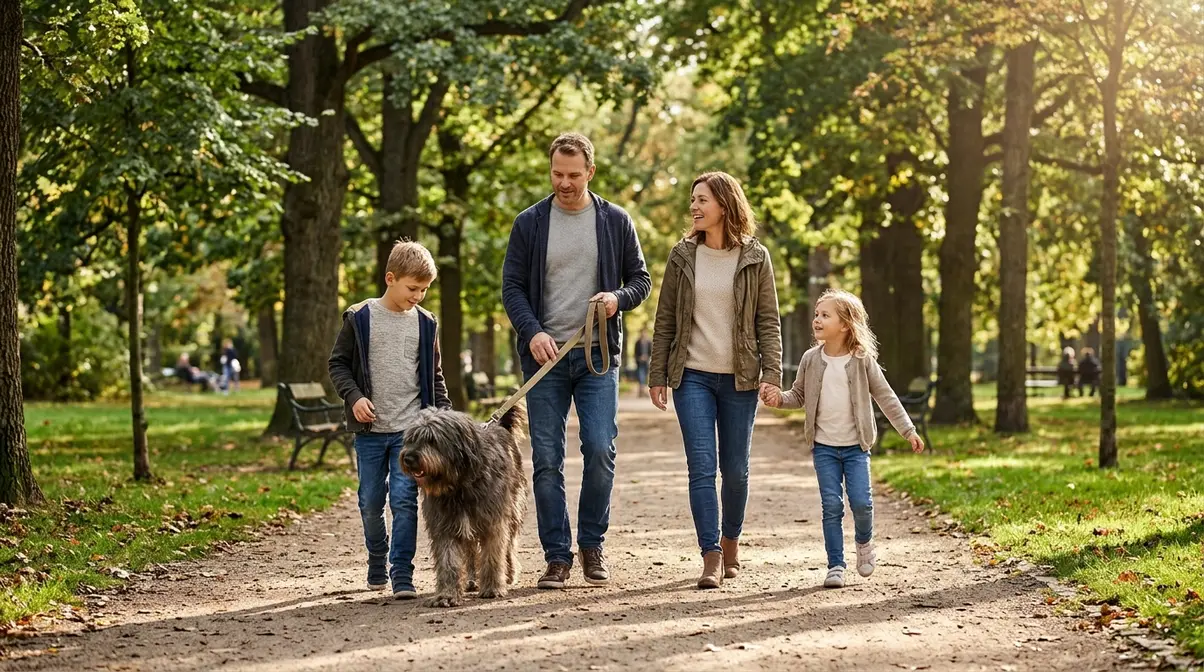
Consider the family with young kids who want a Shepherd as calm as their Golden. A tired dog is a calmer dog, so daily exercise is the practical lever.
- Household fit checklist:
- Someone can commit to long daily exercise, every day.
- Kids are old enough to be calm around a large, bouncy dog.
- You can supervise play and teach manners consistently.
How Much Exercise Do Puppies Need?
The Royal Kennel Club says puppies need less formal exercise than fully grown dogs, and that long walks while they’re young can overtire them (The Royal Kennel Club). That holds for a large-breed cross, which grows fast.
Why does it matter? A young puppy’s body and attention span are still developing, so short, frequent outings with play and rest suit it better than one long trek. Exercise needs grow as the dog matures.
An owner wondering if a long hike suits a young puppy should keep it to short sessions and let the puppy set the pace. Puppy checklist: short walks, free play, plenty of naps, and gentle introductions to new places. For adult routines, see German Shepherd exercise and daily care.
What a Friendly Puppy Looks Like
A healthy and psychologically sound puppy should be naïve and at least somewhat eager to interact with people and animals (Indoor Pet Initiative, Ohio State University). That’s the baseline to look for.
Meet the puppy and, if you can, the parents before choosing. A sound puppy approaches calmly, tolerates handling and recovers quickly from small surprises.
- A buyer visiting a litter can use this checklist:
- Does the puppy come to people, or hide?
- Are the parents relaxed and well mannered?
- Does the puppy recover quickly after a loud noise?
Training With the Whole Household
American Standard Dog Training on YouTube advises that you empower all the owners of the dog, even the kids, so that you have to listen to everyone in the household.
The reasoning is simple: a dog that only obeys one person tends to test everyone else. In a family where the parents train and the children simply play, the dog may ignore the kids. Share the same cues and rules across the house, with adults supervising children. A structured German Shepherd training plan can help.
What Health Problems and Lifespan Can You Expect?
PetMD gives life expectancies of 12 to 14 years for German Shepherds and 10 to 18 years for Poodles, and says the Shepadoodle’s lifespan falls within that range (PetMD). Expect a lifespan inside the parent breeds’ range, not a guaranteed number.
Larger breeds die more often of musculoskeletal and gastrointestinal causes (Journal of Veterinary Internal Medicine, 2011). For a Shepherd-sized cross, hip and joint trouble are real concerns. See elbow dysplasia symptoms and causes for one example. Another study found neoplasia, or cancer, gave the highest probability of death, especially in large and giant breeds (Journal of Veterinary Medical Science, 2015). For parent-specific detail, read how long German Shepherds live.
Put together, the three sources point one way. Lifespan sits within the parent range, larger bodies bring joint and digestive risks, and cancer weighs more in big dogs. None of this singles out a specific cause for Goldendoodles, so don’t trust anyone who names one for the cross.
Some vets are wary of doodles in general because crossbreeding doesn’t guarantee health, and puppies from untested parents can inherit problems from either side. Breeding quality matters more than the label.
- Ask the breeder:
- Which health tests were done on both parents, and can you see the results?
- Were hips and elbows evaluated?
- What health problems appear in the lines?
- What health guarantee comes with the puppy?
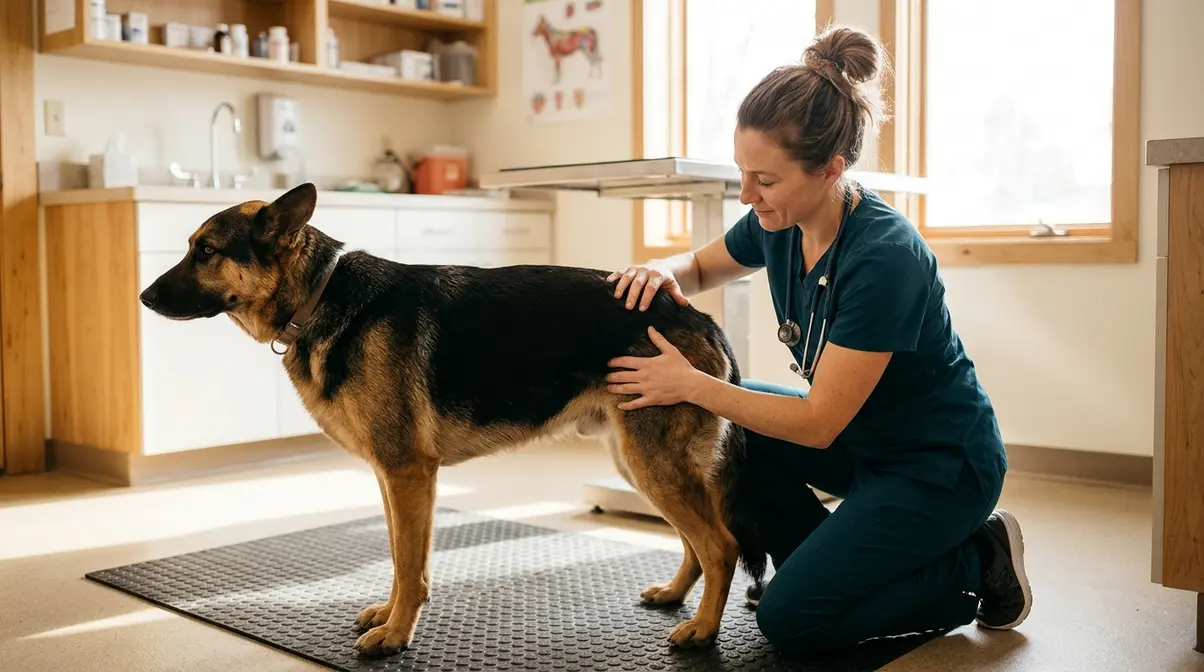
A buyer who asks what health tests the breeder did and gets vague answers has learned something important. To see how crosses inherit risk, read how each cross inherits its health risks. If a dog limps, struggles to rise or has a swollen belly, see a vet promptly.
Side-by-Side Comparison: Mix vs Goldendoodle vs German Shepherd
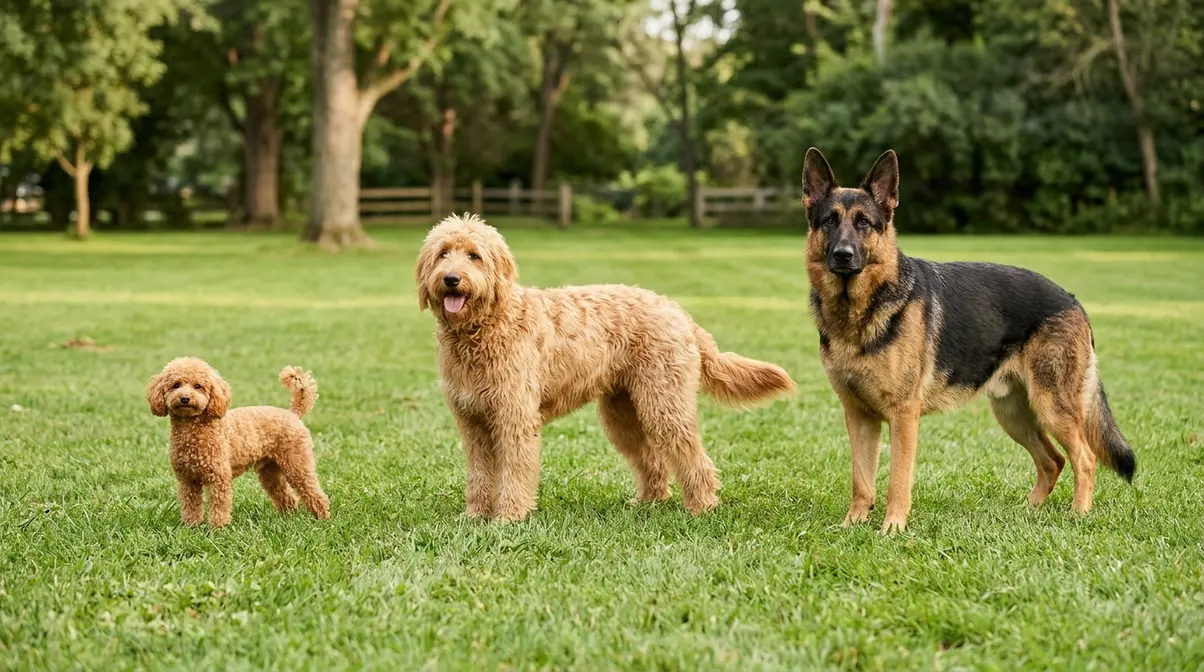
The mix usually falls between its parents, with wide variation from puppy to puppy. Use this table to compare the five criteria in general terms.
| Criterion | Shepadoodle-type mix | Goldendoodle | German Shepherd |
|---|---|---|---|
| Size | Large, varies by litter | Varies by Poodle size used | Large |
| Shedding | Varies: low to seasonal | Often lower, coat dependent | Heavy, seasonal |
| Exercise | High daily need | Moderate to high | High daily need |
| Trainability | Usually quick, depends on line | Eager to please | Highly trainable |
| Health | Large-breed joint risks, test parents | Test for inherited conditions | Hip and elbow concerns |
Winner by Use Case
Pick by household, not by label. Here is who each dog suits, and what to weigh against it.
- First-time owner: a Goldendoodle is often easier, since its traits are better known. A Shepherd cross demands firmer training.
- Family with kids: a Goldendoodle or a Golden-leaning mix, with supervision and early socialisation.
- Allergy-prone home: choose a curly-coated pup, and never assume any dog is hypoallergenic.
- Active, experienced owner: the mix or the German Shepherd suit someone who wants a working partner.
Why do people say not to get a Goldendoodle? The usual complaints are high energy, grooming demands and variable coats. What is the downside to a Goldendoodle? Curly coats mat without regular brushing, and the dog needs real exercise. Health risk depends on the breeder, so careful sourcing matters. Some owners find the “low-shedding” idea oversold, which is why meeting the parents helps.
How Do You Find a Puppy Responsibly and What Affects Price?
How much does a Goldendoodle German Shepherd mix puppy cost? It varies widely by breeder, and a low price can signal cut corners.
PDSA notes that dogs can be surprisingly expensive, with costs people overlook (PDSA). The purchase price is separate, and PDSA recommends getting a dog from a reputable rehoming centre (PDSA). Rescue is a real option, and mixes do turn up there.
- Breeder checklist:
- Ask to meet the mother, and the father if possible.
- Request health test results for both parents.
- Ask how puppies are raised and socialised.
- Ask for a written contract and health guarantee.
- Ask what happens if you can’t keep the dog.
- Puppy mill warning signs:
- Several litters of different breeds always available
- Seller refuses visits or won’t show the parents
- Pressure to pay a deposit right away
- Puppies handed over in a car park or shipped unseen
A buyer comparing two listings should look at how each seller behaves. One lets you visit, shows test results and asks you questions. The other offers a quick sale and a lower price. Choose the first. For more, read about finding a reputable breeder.
How We Researched
This comparison draws on veterinary and kennel-club sources for facts such as lifespan, exercise and health. Owner and trainer comments appear as attributed views, not evidence, so you can tell source findings from opinion.
Final Recommendation
Choose by scenario. An active family that wants a big, trainable dog can consider the mix, accepting that coat and temperament vary. If low shedding is the priority, a Goldendoodle with a curly coat is the safer bet, though no dog is hypoallergenic. A first-time owner will likely do best with the parent whose traits are clearer.
Whichever you pick, meet the parents and ask about health testing before you pay. Your next step is to shortlist two breeders and visit both.
 White German Shepherd Lab Mix: How the White Coat Happens and What to Expect
