
An enlarged heart is deceptive in nature , apparently, the dog appears to be fit and healthy when at rest, but the condition happens to be one of the reasons for heart failure in dogs if the animal is subjected to a great amount of physical stress. Especially young dogs cannot withstand continued exertion or overwork , in their body the adverse conditions related to an enlarged heart starts developing soon after. But the disease takes on its full form in the middle stages of the dog, which include breeds like German Shepherds, Pinschers, Dobermans, Great Danes, Saint Bernards, Labrador Retrievers, and Cocker Spaniels.
What you might notice, and what your vet hears
At home, the usual first signs are exercise intolerance and breathing changes. A dog that tires early on a walk it used to enjoy. Faster breathing at rest. A cough. Later, a swollen belly from fluid, or a collapse.
At the clinic, Merck describes what a vet listens for: “a soft systolic heart murmur, best heard at the left cardiac apex, is often present,” sometimes with a gallop sound. The femoral pulse may be weak, and an arrhythmia with pulse deficits may be noted. In giant breeds the rhythm problem is often atrial fibrillation (retrieved 2026-08-12).
The test that settles it. Merck is unambiguous: “echocardiography is the best test to definitively diagnose DCM,” showing a dilated left atrium and left ventricle with markedly decreased contractility (Merck Veterinary Manual, retrieved 2026-08-12). An X-ray shows an enlarged silhouette; an ultrasound shows whether the muscle is still working.
So if your dog has had a chest X-ray showing a big heart, the question to ask next is whether an echocardiogram is indicated.
The condition behind most enlarged hearts: DCM
“Enlarged heart” describes what a vet sees on an X-ray. The condition behind it in a large breed like this is usually dilated cardiomyopathy, shortened to DCM.
Merck defines DCM as “the progressive loss of myocyte number and/or function, along with a decrease in cardiac contractility” (Merck Veterinary Manual, retrieved 2026-08-12). In plain terms the heart muscle weakens, so the chambers stretch and the pump gets baggy instead of springy. A stretched heart looks bigger on film, but the problem is not the size. It is the loss of squeeze.
This breed is on the list. Merck records that DCM “most commonly affects large-breed dogs” and names “Doberman Pinschers, Boxers, Great Danes, German Shepherd Dogs, Irish Wolfhounds, Scottish Deerhounds, Newfoundlands, Saint Bernards, and Labrador Retrievers” as particularly at risk (retrieved 2026-08-12). It typically shows up in middle-aged to older dogs, and more often in males.
Why it seems to arrive without warning
This is the single most important thing to understand, and it explains why so many owners feel blindsided.
Merck: “DCM has a protracted subclinical phase in dogs, with clinical signs evident for a relatively short time” (retrieved 2026-08-12).
The heart has been quietly weakening for a long time, and the body compensates well enough that the dog looks fine. Then the compensation runs out, and the visible illness compresses into a short window. Nothing was missed. There was very little to see.
That is also the argument for annual check-ups in a middle-aged large-breed dog. A vet listening to the chest can pick up a murmur, a gallop sound or an irregular rhythm long before you notice anything at home.
What Happens When Heart Enlarges?
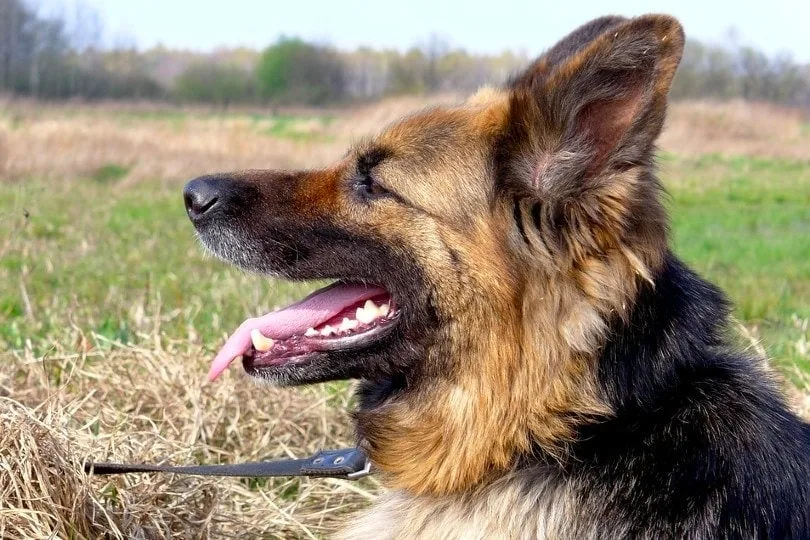
When a dog is exposed to extreme strain the heart muscles stretch to adjust to body changes and it remains in the stretched state. In the process of this stretching the elasticity gets lost. Even the sound of the heartbeat can even be heard by keeping an ear on the chest.
An enlarged heart never allows the animal to perform normal activities since it leads to the malfunctioning of rhythmic pumping and flow of blood. Even the normal flow of calcium takes a backseat. The inability of blood to move calcium leads to thinning of the heart walls. Gradually the heart becomes flabby as well as dilated in nature. This thinning has been accounted to the deficiency of taurine, parvovirus, and adriamycin. But why does the flow gets hampered? The reason is enlarged heart creates a blockage that retards the blood passage.
How an Enlarged Heart Gets Noticed?
One of the pertinent signs of an enlarged heart is excessive breathing. Other symptoms include a cough infection and an enlarged abdomen. It never starts showing signs and symptoms of illness at the onset but rather takes a few months to come to the forefront as a canine disease.
Treatment Should Be Immediate After Diagnosis
An enlarged heart needs the right kind of treatment once the disease gets diagnosed after a complete chest X-ray. Electrocardiography or electronic reading of the heart is another way for diagnosing enlarged heart conditions. By studying the pattern of heartbeats or arrhythmia the vet can analyze the size of the heart chambers. Echocardiography uses ultrasound technology to make a definitive diagnosis of the disease. If the disease is ignored it will lead to complete damage to the organ and bring death by heart failure. Within a year or two the dog might die, if not given medical care. Even the life expectancy depends on the breed.
There is no absolute cure for the disease. Quite a number of drugs are available, which when used in combination, can be effective for treating an enlarged heart. The drugs that help are:
- Digoxin – helps in contractions of the heart
- ACE Inhibitors – help in reducing blood pressure
- Diuretics – helps in removing water and also works on kidneys
At home too, you can take care of your pet with an enlarged heart. The dog diet should be low on salt to reduce liquid retention. Dietary supplements like Taurine (an amino acid that is produced by dogs in a natural way), Carnitine, and Coenzyme Q are recommended by vets. Taurine helps in the regulation of the heartbeat and helps in calcium absorption in times of reduced oxygen levels in the blood. It also protects the heart from the problem of an overload of calcium. Cartinine and Coenzyme Q help to bring fatty acids into the cells of the muscles, thereby converting them into useful energy that the dog’s body requires the most.
The taurine question, and why it is worth asking
Most DCM in large breeds is either genetic or idiopathic, meaning no cause is found. But Merck lists nutritional causes too, specifically taurine deficiency, and notes that “some dogs (usually small breeds or those on grain-free diets) can also have taurine-responsive DCM” (retrieved 2026-08-12).
Why this matters more than it sounds: the prognosis is different. Merck states that “dogs that are taurine responsive also have a fair to good prognosis once clinical signs of CHF abate” (retrieved 2026-08-12). For a disease whose general outlook is poor, that is a meaningful fork in the road.
So it is a fair question to put to your vet at diagnosis: should we measure taurine, given what my dog eats? Bring the food bag. This is not a reason to panic about your dog’s diet, and it is not a claim that a particular food causes heart disease. It is one testable possibility that carries a better outcome if it turns out to apply.
Treatment: what the drugs are actually doing
There is no cure for DCM. Treatment supports a weakened pump and manages the fluid that backs up behind it.
Merck describes the standard combination: furosemide for pulmonary oedema, with pimobendan and an ACE inhibitor such as enalapril or benazepril started as well (Merck Veterinary Manual, retrieved 2026-08-12). Antiarrhythmic treatment is frequently needed alongside, depending on the rhythm.
Roughly, and it helps to know which does what: the diuretic pulls fluid off the lungs, pimobendan helps the heart squeeze harder and opens up the vessels it is pumping into, and the ACE inhibitor reduces the load the heart is working against. That is why stopping one because the dog “seems better” is a bad idea. The dog seems better because of them.
Practical points owners find useful: learn to count your dog’s resting breathing rate at home, because a rising rate is often the earliest sign of fluid returning, and agree with your vet what number should prompt a call.
Prognosis, stated honestly
This is a serious diagnosis and we are not going to soften it.
Merck: the short-term outlook depends mainly on how severe the heart failure is at presentation, but “the longterm prognosis is poor and most die within 6 months of diagnosis” (retrieved 2026-08-12). VCA notes that some dogs respond well to treatment and “have been known to live between 6-24 months” (VCA Animal Hospitals, retrieved 2026-08-12).
Two things follow from that. First, the taurine question above is worth asking, because a taurine-responsive dog sits in a different category. Second, treatment is genuinely worth doing: the difference between an untreated dog and a well-managed one is measured in months of comfortable life.
Talk to your vet early about what a good day looks like for your dog, and what would tell you that the balance has shifted. Those conversations are easier to have while things are stable.
Related reading
Not every large-breed heart problem is DCM. See subaortic stenosis for the congenital narrowing that turns up in young dogs and is usually found as a murmur. If the concern is exercise intolerance and weakness rather than breathing, mitochondrial myopathy and degenerative myelopathy cause similar-looking problems for completely different reasons. Our care guide covers routine senior monitoring.
How to count a resting breathing rate
Of everything on this page, this is the skill most worth learning, and it takes a minute.
A rising resting breathing rate is often the earliest sign that fluid is building in the lungs again, and it usually shows up before coughing or obvious distress. It is the closest thing an owner has to an early warning system.
- Wait until your dog is asleep or fully relaxed. Panting does not count, and neither does a dog that has just come in from the garden.
- Watch the chest. One rise plus one fall is one breath.
- Count for 30 seconds and double it. That gives breaths per minute.
- Write it down. Do it a few times a week while your dog is stable, so you learn what normal looks like for this dog rather than for dogs in general.
- Agree a threshold with your vet. Ask directly: at what number should I call you? Having that figure written on the fridge turns a vague worry into a decision you can make at eleven at night.
Owners who track this often catch a decompensation a day or two earlier than they otherwise would, which is the difference between an appointment and an emergency.
Questions worth asking your vet
- Has an echocardiogram been done, or only X-rays? Merck names echocardiography as the definitive test. An enlarged silhouette on film is a finding, not a diagnosis.
- What is the rhythm doing? Arrhythmias change the treatment, and in some dogs they are the thing that causes collapse.
- Should we measure taurine? Bring the food bag. A taurine-responsive dog has a fair to good prognosis rather than a poor one.
- Which stage are we at? A dog picked up before heart failure is managed differently from one that arrives in failure.
- What is each drug doing? Knowing which one is the diuretic and which supports contraction makes it far less tempting to skip one.
- What resting breathing rate should trigger a call? Get a number.
- What does an emergency look like for this dog? Know it in advance, in daylight.
And one general note. Merck lists causes of DCM including chemical, viral, nutritional, genetic and idiopathic (Merck Veterinary Manual, retrieved 2026-08-12). Idiopathic means no cause was identified, and in a large breed that is the common answer. If your vet says that, they are not avoiding the question. They are being accurate.
 Hemophilia A in German Shepherds: Causes and Treatment