
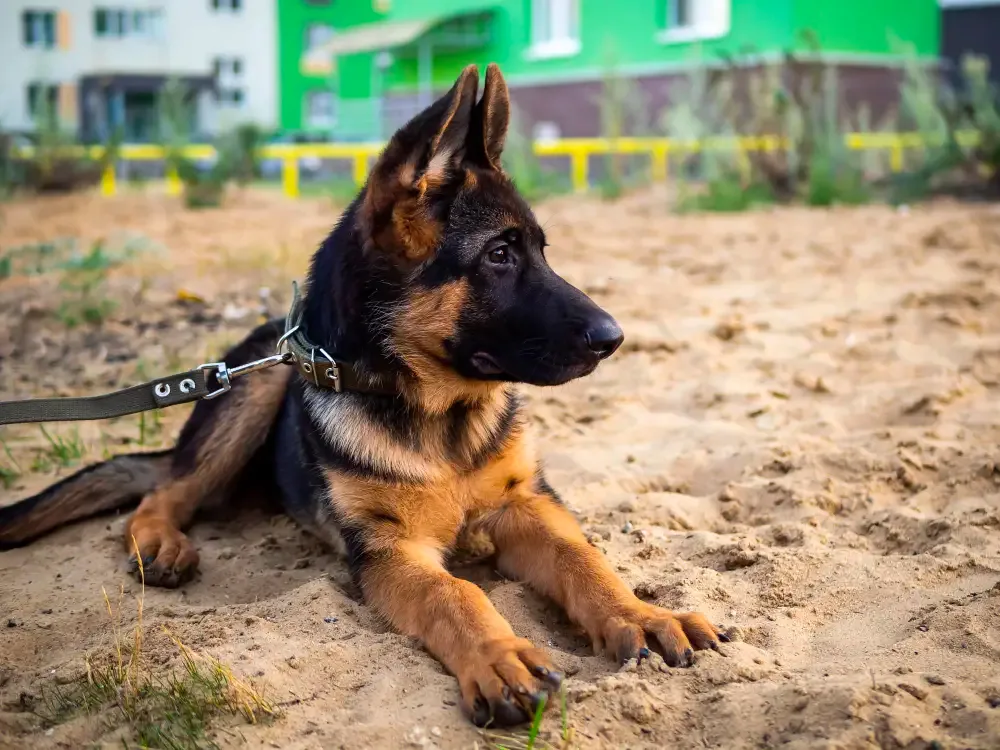
Quick question: has your German Shepherd puppy met a stranger, ridden in the car, or heard a vacuum cleaner up close yet? If the answer is “not really” and your puppy is already home with you, you’re not behind, but it’s time to start.
How to socialize a German Shepherd puppy comes down to one idea: give them calm, positive exposure to as much of ordinary life as you safely can while they’re still young enough for it to feel normal instead of scary. Below, you’ll find the real socialization window, what to do about vaccines, how to introduce your puppy to people and animals, and what a growl actually means. It’s not what a lot of older training advice says.
When Should You Start Socializing a German Shepherd Puppy?
Start as early as 7 to 8 weeks old, right around the time most puppies come home. Puppies are most open to new experiences during a sensitive period that begins around 3 weeks of age and tapers off somewhere between 12 and 16 weeks, and what happens during that window shapes how your dog reacts to the world for years afterward.
The American Kennel Club puts the practical window a bit wider, from about 5 to 16 weeks of age, and that’s a useful range to plan around rather than a hard deadline. German Shepherds mature into watchful, protective adults, which makes early exposure especially worthwhile. A puppy who meets calm strangers, gentle kids, and other well-behaved dogs during this window is far more likely to grow into a dog who’s confident and easy to live with, rather than one who barks or backs away from anything unfamiliar.
Is It Safe to Socialize a Puppy Before Vaccinations Are Done?
Yes, with sensible precautions. Waiting until your puppy’s full vaccine series is complete, often past 16 weeks, means missing most of the sensitive period described above, and veterinary behaviorists now consider that trade-off riskier than the alternative.
AVSAB has said it should be standard practice for puppies to start socializing before they’re fully vaccinated, since the odds of a young dog dying from a behavior problem later in life are higher than the odds of a well-managed puppy catching a serious illness. That doesn’t mean skipping vaccines. A typical core series, per the AKC’s vaccination guide, runs at roughly 6 to 8 weeks, 10 to 12 weeks, and 16 to 18 weeks, and the American Animal Hospital Association sets the standard-of-care schedule veterinarians follow.
Ask your vet how many doses your puppy needs before it’s safe to start, then socialize with those limits in mind: carry your puppy through pet stores instead of setting them on the floor, skip dog parks and areas with unknown vaccination status, and choose puppy classes that require proof of at least one round of shots and a health check at the door. A licensed veterinarian is always your best call on timing for your specific puppy.
How Do You Introduce a German Shepherd Puppy to New People and Animals?
Go slow, keep it positive, and let your puppy set the pace. Every new introduction should end with your puppy feeling good, not overwhelmed, since one bad experience during the sensitive period can stick for a long time.
- Family first. From day one, let your puppy meet every household member, adults, kids, and other pets, under close supervision. Reward calm, friendly behavior with a treat or praise.
- Friends and visitors next. Invite people over regularly and let your puppy approach them on their own terms. Ask guests to crouch down, offer a hand to sniff, and avoid looming over a small puppy.
- Other dogs, carefully. Stick to dogs you know are healthy, vaccinated, and good with puppies. A well-socialized adult dog can teach your puppy more about polite greetings than any human can.
- Kids of every age. Let your puppy meet toddlers, older kids, and teenagers so they learn that people come in all shapes, heights, and volumes. Supervise closely and step in before a child grabs at ears or tail.
Layer in basic manners as you go. A puppy who already knows a few basic obedience cues is easier to keep calm around new people, and working through a short, structured routine from PetVR’s training hub alongside socialization tends to produce a steadier adult dog than either one done alone.
How Do You Socialize a Puppy to Sounds, Places, and Everyday Life?
Expose your puppy to one new sound, place, or texture at a time, and pair each one with something they already enjoy. A puppy who’s calm around the vacuum, the doorbell, and a crowded sidewalk at four months old is a puppy who won’t be spooked by them as an adult.
Start indoors with everyday household noise: the vacuum, the dishwasher, dropped pots, the TV turned up. Then move outside for traffic, car horns, and the general commotion of a park or a farmers market. Short car rides help too, since a puppy who’s used to riding along is a puppy who handles vet visits and road trips with far less stress later.
If your puppy startles at a sound, don’t force them closer. Let them retreat a few steps, wait for them to relax, and reward them for checking the scary thing out on their own terms. There’s a real difference between a puppy who’s cautious and one who’s genuinely distressed. If a specific sound triggers whining well past the normal settling-in period, PetVR’s guide on why German Shepherds whine can help you figure out what’s actually going on.
What Should You Do When Your Puppy Growls?
Don’t punish it. A growl is communication, your puppy telling you or another dog that something feels like too much right now, and it’s information you want, not a behavior to shut down.
VCA Animal Hospitals puts it plainly: if a dog is punished for growling, snarling, or lip-lifting, those warning signals can get suppressed rather than resolved. The dog doesn’t stop feeling uncomfortable, it just stops telling you about it, which means the next warning you get might be a bite with no growl first.
So if your puppy growls at a stranger reaching too fast, or at another dog crowding their space, don’t scold or force the interaction. Calmly create distance, let your puppy settle, and figure out what triggered it so you can work on that specific thing gradually and at a distance the puppy can handle. If growling shows up often, or escalates quickly, take a closer look at your puppy’s broader behavior patterns. PetVR’s rundown of common German Shepherd behavior problems is a good next stop, and a certified trainer or veterinary behaviorist can help sooner rather than later.
How Do You Socialize an Older or Under-Socialized German Shepherd Puppy?
You can still make real progress, just expect it to take longer and more patience than it would have at 8 weeks old. The sensitive period gives you the easiest path, not the only one, and plenty of German Shepherds who missed early socialization grow into confident adults with consistent work.
The approach shifts from exposure to gradual counter-conditioning: introduce new people, animals, or environments from a distance where your puppy stays relaxed, then slowly close that gap over repeated short sessions, always ending on a good note. Rushing it, or flooding an anxious puppy with too much too fast, usually backfires and makes the fear worse. If you’re working with a 3-month-old German Shepherd who’s already showing some wariness, or an older puppy who missed the early window entirely, a certified trainer experienced with fearful or reactive dogs is worth the investment. They can read your puppy’s body language in real time and adjust pace in ways that are hard to judge on your own.
What Mistakes Should You Avoid When Socializing a Puppy?
The biggest one is flooding: throwing your puppy into a loud, crowded, chaotic situation and hoping they “get used to it.” That usually teaches fear, not confidence. Keep early sessions short, calm, and easy to walk away from if your puppy gets overwhelmed.
A few other common missteps worth avoiding: skipping vet-screened puppy classes out of worry over vaccine timing, when a well-run class actually manages that risk carefully. Only socializing at home and assuming trips out will happen “later.” Forcing a puppy to be petted, held, or approached by someone they’re clearly avoiding, which teaches them that pulling away doesn’t work. And treating one good week of socialization as finished business. Consistency across the full sensitive period matters more than any single outing.
Final Thoughts
Socializing a German Shepherd puppy isn’t a checklist you finish in a weekend, it’s a steady drip of good experiences during the months when they matter most. Start early, lean on your vet for a vaccine timeline you’re both comfortable with, and treat every growl as useful information instead of a problem to punish. Do that consistently, and you’ll end up with a dog who meets the world with curiosity instead of fear.
Disclaimer: PetVR shares general information based on our contributors’ firsthand experience with German Shepherds — it is not veterinary advice. Always consult a licensed veterinarian about your dog’s health, diet, or behavior. Read our full disclaimer.

 How To Choose a German Shepherd Puppy From a Litter