The increasing popularity of German Shepherd Dogs throughout the world has exposed the breed to different types of breeding programs, breeding experimentation, and styles, which consequently led to several bloodlines and types in different countries and for different reasons. Apart from this, there are a number of offshoots of the breed, all of which claim their respective breed standard. Crossing between the lines and types have produced different odd colors and style that resemble what we call German Shepherd Dogs. As a matter of fact, when it comes to true type GSD, there are no rare colorations and special styles with desirable features. Except for the really rare ones like the Brindle gene, which had been a pure gene, there’s no desirable color and types that can be concluded as special.
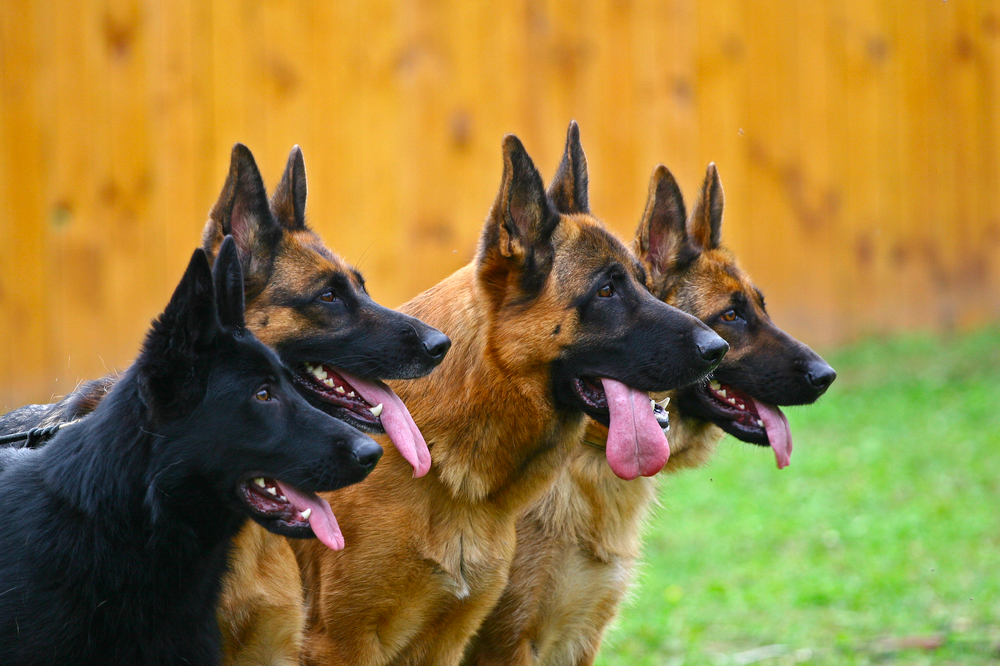
German Shepherd enthusiasts and responsible GSD learners know that breeders who are engaged in promoting any particular types or color of GSD are not breeding these animals keeping the GSD standard in the mind. For instance, Large, Big Boned, or Oversized German Shepherd Breeders who are throwing out ads to promote their types are learned, breeders. Like any other recognized dog breed in the world, German Shepherds have a specific breed standard, and breeding is to be done with the standard in the forefront of the mind.
If you are looking to buy a true type GSD, you should be very careful and should be quite aware of what a true type German Shepherd Dog actually is. All dogs similar in appearance to the German Shepherd Dog breed are not GSD. Breeders of all the offshoots claim to have their unique intelligence and working ability close or parallel to a true type GSD breed, but the fact is that no offshoot of the breed can better or equal to the true type German Shepherds in terms of working ability and anatomical soundness are concerned.
Different types of German Shepherd Dogs
1. Old Style German Shepherds
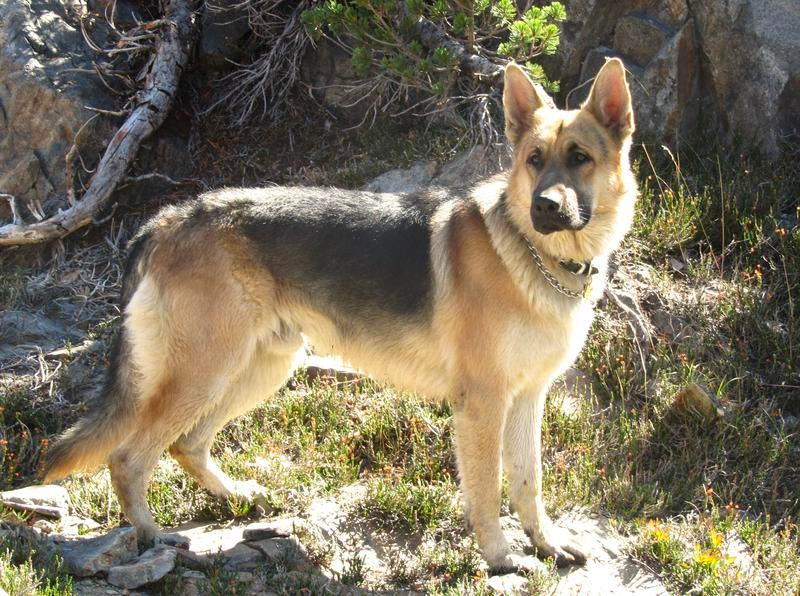
This picture exemplifies the old-style GSD that was entirely different in look from the German Shepherds of contemporary types and lines. The sleek structure not very angulated joints and sporty look were desired by the breed founder Captain Stephanitz who had framed in his mind a breed that would have extraordinary working ability, being supported with a lower stationed structure that would be perfect for long-term, consistent trotting. The plan was not to make a heavyweight massive structure that could challenge the breed’s working ability and speed. Such sleek and strong GSD specimens had been the main foundation of the breed. Later the breeder, with the help of planned and selective breeding developed the breed to a great extent. Check out the German Shepherd development process.
2. West German Show Line (High Line) German Shepherds
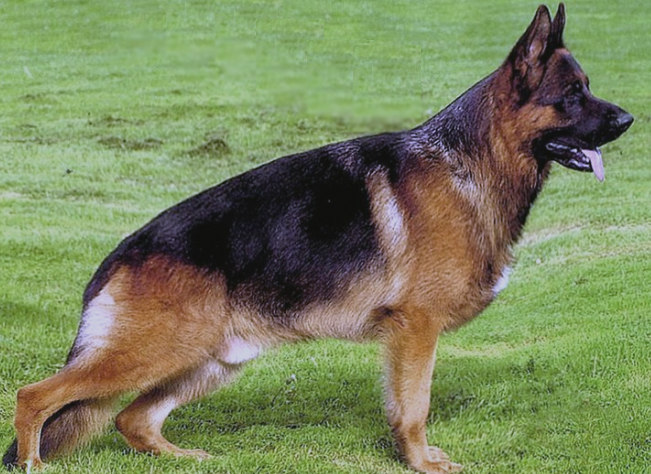
German Shepherd Dogs hailing from West German Show or High Lines are the most popular of prevailing GSD types and lines. Not only in Germany but also across the globe the West German Show Line GSDs are in high demand. These types of German Shepherds come closest to the breed standard. The reason for the high popularity of the West German Show or High Line German Shepherds is that this type exhibits a head-turner beauty + has proved to be very successful as a family pet, companion dog, herding dog, guard dog, guide dog, SAR dog, and service dog. The German Shepherds emerging from this type are exhibited as show dogs throughout the world under the German SV rule that requires working titles for showing and breeding dogs. Dogs from West German Show Line are predominantly black and rich tan. Our full guide to the West German show line sets out what the SV system requires and how to check a breeder’s claim. They usually show majestic bounciness trotting, with maximum ground coverage by delivering a high degree of hind leg propulsion so as to get an extensive reach. Common drawbacks of this type of German Shepherd are slightly roached backs.
3. Working Line German shepherds
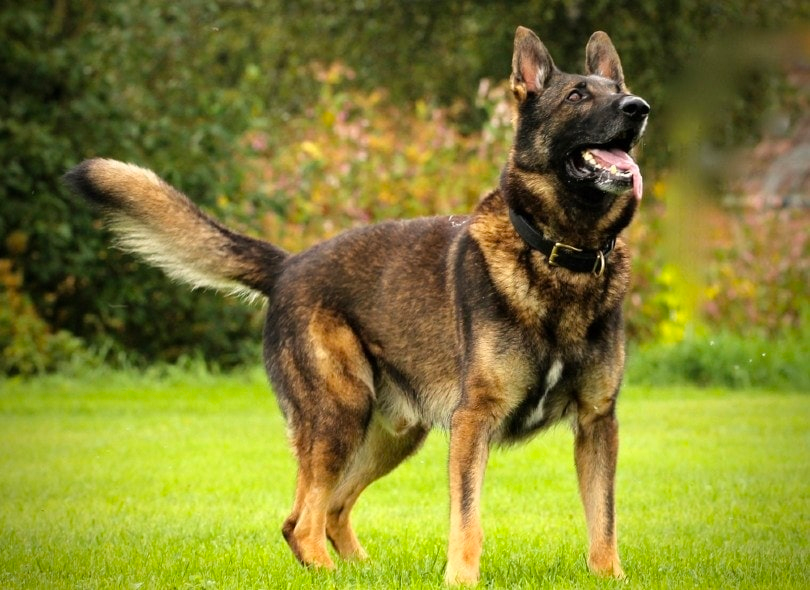
Working Line German Shepherds The German Shepherd Dog had been primarily engineered to work with humans. It is basically a working breed. The breeding experimentation has given birth to several other types and lines. Working lines GSD has the ability to excel in any kind of task under stressful situations. The working line German Shepherds do not head the turning beauty as their show line counterparts. For working line GSD , “Utility is the true criterion of beauty”. It’s his working ability where actually the beauty of this GSD type lies. For the full picture on temperament, drive, cost and health, see our working line German Shepherd guide.
4. DDR Line German Shepherds
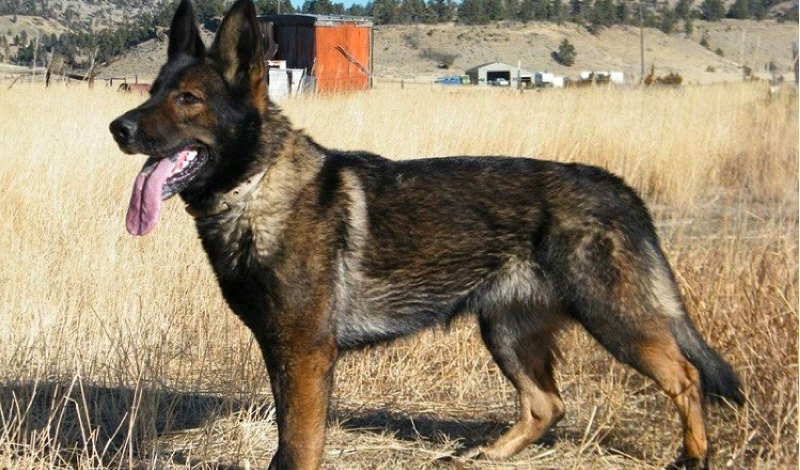
DDR Line German Shepherds is a distinctive GSD type that needs to be popularized far and wide. The DDR line GSD is the East German bloodline that has been developed in the German Democratic Republic (Deutsche Demokratishe Republik) – East Germany, from the dogs that stayed back there after World War II. The DDR Line German Shepherds have been named so after the DDR, which was a socialist state founded in the year 1949 in the Soviet region of occupied Germany and in the portion of East Berlin that had been occupied by the Allied forces. This type has a strong, lean, muscular body, good bone constitution, large massive head, comparatively dark pigmentation, and less angulated than the West German show Lines.
5. Czech German Shepherd Dogs
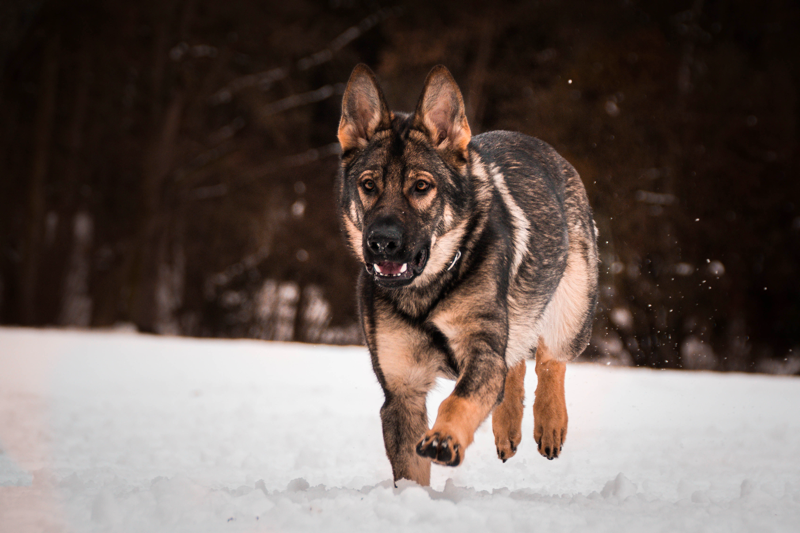
The Czech German Shepherd Dog or Czechoslovakian GSD is again another distinctive type of German Shepherd that was developed from the DDR lines and had been bred in communist Czechoslovakia as the state-working GSD. Prior to the revolution in Czechoslovakia and the fall of the communist government in the year 1989, Czech German Shepherds used to be bred as working dogs for the protection of their borders. The most interesting fact about this type of German Shepherd Dogs is that the Czech GSD line used to be bred only in one kennel founded in 1955 that was founded and owned by the Czechoslovakian Army’s Border Patrol. The dogs used for breeding were mainly picked from the DDR lines. The breeding program strictly encompassed the development of the working GSD that had strong nerves, magnificent working ability, heavy bones, and dark pigmentation.
6. British Line German Shepherds
In Britain GSD is called Alsation or Alsatian after the name of the place of its development – the border area of “ALSACE – LORRAINE”. Check out the naming history of Alsatian Dog. This is a different type in terms of structure – different from the most popular West German high-line GSD. This line of German Shepherds has been developed from the old German bloodlines imported to the British Isles after the war.
7. North American Line German Shepherds
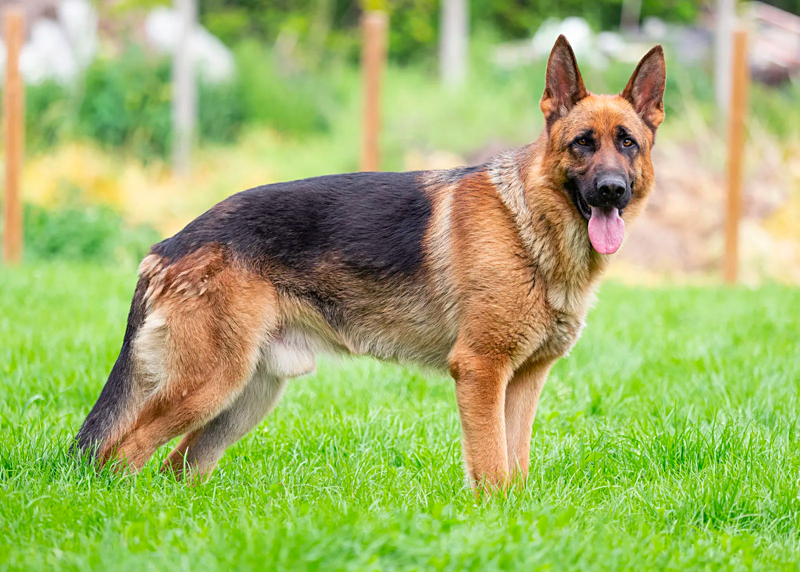
German Shepherd Dog from North American Show Lines is entirely different in type from other German Shepherd lines. This Line has gained huge popularity throughout North America since the 1970s. This GSD type has severe pastern and rear angulation accompanied by a longer body structure resulting from strategic inbreeding and line-breeding. Although very popular in North America, the North American German Shepherd line has not been able to flourish beyond its area, because of the fact that the extreme angulation – especially the rear part has compromised the breed’s working ability, jumping, and speed. Hip tests for this GSD type usually yield good results, although over-angulation is often not preferred by most specialty judges across the globe. This German Shepherd line usually displays ” flying trot”. Often, (not always) the North American GSD usually exhibits good temperament, with fewer behavioral problems.
8. Old American Show Line German Shepherds
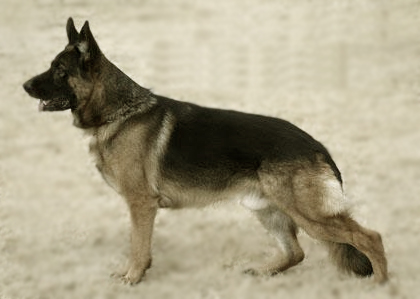
By the phrase “Old American Show line German Shepherds”, we mean to say the American show dogs that were bred before the 1970s. Old American show was typically slightly different from the contemporary American Show German Shepherds. The angulations were not as extreme as we find in the modern American GSD. This old type of American GSD has gone to the verge of extinction with the gradual advent of the contemporary angulated type.
Line affects working drive, and how long a Shepherd stays high-energy differs noticeably between working and show lines.
Disclaimer: PetVR shares general information based on our contributors’ firsthand experience with German Shepherds — it is not veterinary advice. Always consult a licensed veterinarian about your dog’s health, diet, or behavior. Read our full disclaimer.
First: “line” is not an official category
Before the list, one thing that clears up most of the confusion around this topic.
None of these lines is a registry classification. They are informal descriptions of breeding traditions, and no kennel club issues a certificate saying a dog is a working line or a show line.
Registration turns on parentage instead. A litter is eligible for AKC registration if it “is the result of a mating between an AKC-registered Sire (male) and an AKC-registered Dam (female) of the same” breed (AKC litter registration requirements, retrieved 2026-08-12). So papers tell you who a dog’s parents were. They tell you nothing about which tradition it was bred in.
That has a practical consequence worth holding onto: the only evidence for a line claim is the pedigree and the titles on it. If a breeder says a puppy is Czech working line, the supporting evidence is named dogs and named kennels, not a label.
Where the split came from
All of these lines trace back to one project. The breed was founded in 1899, weeks after Max von Stephanitz bought a dog named Horand von Grafrath at a German dog show; within a month he and Artur Meyer had founded the first German Shepherd Dog club, the Verein für deutsche Schäferhunde (American Kennel Club, breed history, retrieved 2026-08-12).
Von Stephanitz was explicit that this was a working breed and that looks should never come first. The lines below are essentially what happened over the following century as different countries, registries and purposes pulled that founding intention in different directions.
The clearest way to think about it is not eight separate types but two questions: was this dog bred primarily for work or primarily for the ring, and under which country’s system?
The lines at a glance
| Line | Bred mainly for | Under which system |
|---|---|---|
| West German show line | Conformation, with a working title still required to breed | German SV |
| West German working line | The job: police, IGP, herding, detection | German SV |
| DDR / East German | State-run breeding for border and military service | Former East Germany |
| Czech | Border patrol work, closely related to DDR lines | Former Czechoslovakia |
| American show line | The conformation ring | AKC |
| British line | Varies; often less extreme in angulation | The Kennel Club |
| Old style / old-fashioned | A description of type rather than a breeding programme | No single registry |
A caution on “old style”. It is used loosely, sometimes to describe a straighter-backed, heavier-boned dog, and sometimes as marketing. There is no registry, no standard and no test behind the phrase, so treat it as a description of appearance rather than a lineage claim.
What “bred to SV standards” actually means
You will meet this phrase constantly when reading about the German lines, and it is almost never explained. It refers to a specific set of requirements a dog must clear before it is approved for breeding.
According to the United Schutzhund Clubs of America, the SV’s partner organisation in the United States, a dog must be at least 2 years old, registered and healthy, have passed an endurance test and a temperament test (BH or BH-VT), been rated at least “good” at a breed show, earned a performance title of at least IGP 1 for an SV survey, and have certified hips and elbows (retrieved 2026-08-12).
The written standard those judges work from is FCI Standard N°166, which the USCA publishes in full (retrieved 2026-08-12).
Notice that six of those seven requirements produce a document. That is what makes the claim checkable rather than decorative, and it is the single most useful thing to know when a breeder uses the phrase.
Which line suits which home
Choosing between lines matters more than choosing between colours, and it is the decision most new owners get wrong.
- A pet home with a normal working week: a show line or a moderate British-line dog is usually the more realistic choice. Still an active dog, still needs a job of some kind, but less relentless.
- A sport or working home: the working lines exist for this, and a working-line dog in an under-stimulated household is the most common version of a German Shepherd going wrong.
- A first German Shepherd: be honest about your experience and your hours. The most common regret we see described is a first-time owner taking on a high-drive dog because the breeder emphasised its pedigree.
Whatever the line, health screening matters more than lineage. Ask for hip and elbow grades and the DNA test results, as set out in our guide to choosing a German Shepherd puppy.
For the two lines covered in depth on this site, see the working line guide and the West German show line guide, plus the DDR German Shepherd. If you are wondering about temperament rather than lineage, our article on German Shepherd temperament covers what to expect across the breed.
 3-Month-Old German Shepherd: A Busy, Active, Playful Ball of Energy