
Your pet dogs are the best companions whom you care about. The dogs can be plagued by a number of diseases, among which intervertebral disc disease is also common. If not treated properly or detected at an earlier stage, it can lead to paralysis in the legs. Chondrodystrophic breeds like Pekingese, Dachshunds, Bulldogs, Corgis, Beagles, Shih-Tzus, Cocker Spaniels, and Poodles and Bassett Hounds are prone to this condition. However, non-Chondrodystrophic breeds such as German Shepherd Dogs, and Labto have the risk of IVDD or Degenerative Disc Disease or disc rupture. Obese subjects of the predisposed Obese dogs of predisposed Chondrodystrophic breeds – especially GSD or labradors are more likely to be affected by disc ruptures.
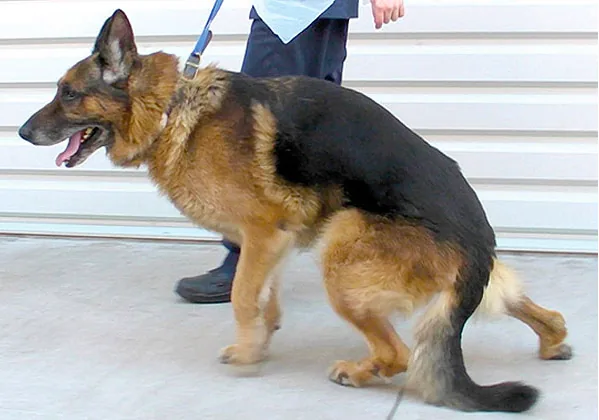
Pet owners would love to see their dogs in the best health and the red alerts or the symptoms must be known. It can be a fatal blow, so pet owners need to check out the following symptoms that are cataloged:
- The dog will not walk steadily but drag its front legs or the hind legs
- Their toes tend to roll over when they try to walk
- The unwillingness to move the neck or engage in head movements when suffering from neck pain and stiffness
- A continuous back pain acting as a source of botheration
- You can observe your pet in hunched postures
- Your pet can get aggressive at mere touches
- Problem in urination
- Stilted gait
- Reluctance to rise up and walk
- Tendency to collapse
- Abnormal reflexes
Where the disc is decides what you see
The spinal cord carries signals downstream, so a problem in the neck and a problem in the lower back look different.
Neck (cervical). Merck: “the predominant clinical sign of cervical disk herniation is neck pain” (retrieved 2026-08-12). Owners notice a dog that holds its head low and stiff, yelps when turning, or resists having the collar handled.
Mid and lower back (thoracolumbar). Back pain, with neurological signs “ranging from pelvic limb ataxia to paraplegia and incontinence” (retrieved 2026-08-12).
How it is confirmed. This is the part worth knowing before you agree to anything. Merck states that “definitive diagnosis of disk extrusion is based on imaging studies”, and specifically that “radiographs are not sensitive or specific enough for definitive diagnosis, which requires myelography, MRI, or CT” (Merck Veterinary Manual, retrieved 2026-08-12).
A plain X-ray can support a suspicion. It cannot confirm this. If a decision about surgery is on the table, advanced imaging is what that decision should rest on.
First, an honest word about breed
If you searched for IVDD in German Shepherds you probably have a dog with back pain or wobbly hind legs, and you want the right answer rather than a comfortable one. So here it is.
The German Shepherd is not one of the breeds classically associated with disc disease. Merck names the chondrodystrophoid breeds, “Dachshund, French Bulldog, Beagle, Shih Tzu, Lhasa Apso, and Pekingese”, as the ones most affected (Merck Veterinary Manual, retrieved 2026-08-12). Those are the short-legged breeds whose discs degenerate in the first months of life.
Large breeds get a different version. Merck: “large-breed dogs can suffer fibroid disk degeneration as they age. This type of degeneration predisposes to a slowly progressive protrusion of the disk” (retrieved 2026-08-12).
So a German Shepherd with disc disease usually has the slow, bulging kind rather than the sudden, explosive kind. Signs “typically develop at >5 years old and consist of slowly progressive ataxia and paresis”, meaning wobbliness and weakness that creep in (retrieved 2026-08-12).
There is also a different condition your breed genuinely is named for, and it is easily mistaken for this one. It has its own section below, and it is worth reading before you settle on an answer.
Facts of IVDD in German Shepherds
Dog owners might notice that their beloved pets tend to get too stressed out or feel pain after a rigorous routine involving physical exercises. The instances where the dog can suffer from a ruptured disk are:
- Jumping off from high-raised places
- Sudden jumping out from the car or bed
- While playing different games like Frisbee involving the leaping movement
- The dogs can suffer from accidents where they end up injuring their disk
- They can be subjected to certain traumas which can lead them to succumb to this disease
What Causes of IVDD in German Shepherds?
The intervertebral disk is made of two different tissues. The outer portion is fibrocartilage and it aids in providing support to the disk space. Studies and researches reveal that most intervertebral disc ruptures are observed in chondrodystrophic breeds. It is found in dogs like Dachshunds, Lhasa apsos, and the like. The large breed dogs are not totally out of context when it comes to this type of disc degeneration. When the dogs are inflicted with intervertebral disc rupture in the thoracolumbar region, they suffer from pain. The changes in the behavior of the dogs begin in a predictable way. When your pet is suffering from the disease, it is a refusal to walk or engage in other physical activities, which is observed, commonly. Even if the front limbs appear normal, the hind feet will seem to stagger and often cross steps. The degree of coordination between the legs that is usually observed when a dog walks will be difficult to perceive. When this disease reaches an advanced stage, it can lead to a complete loss of walking ability. The pet owners might also feel that their canine friend is not conscious of the fact when they are urinating.
Intervertebral Disc Producing Neck Pain
This disease can affect your dog in his neck. It can make him feel excruciating pain, without loss of nerve function in the limbs. The dogs prefer to indulge in limited actions and activities and they often walk with a stiff gait. They become reluctant to stretch their neck and often tend to cry out during sudden movements. When the disc ruptures affect your dog to a great extent, it can lead to lameness and paralysis.
IVDD Treatment
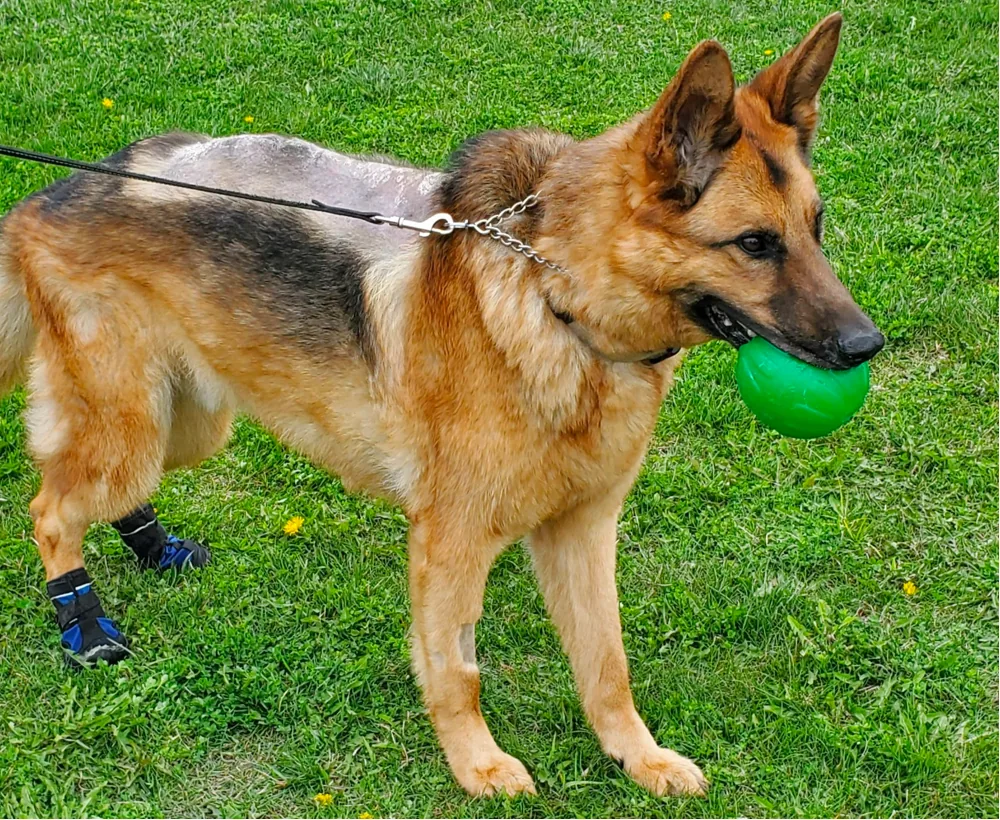
If your dog is suffering from the case of a disk rupture, it is definitely a case of a surgical emergency. As a pet owner, you should not dilly-dally the decision of taking your beloved dog to the best vet surgeon. After taking a look at the medical condition of your dog, an experienced vet can come up with the best solution that can make your pet combat this disease and recover after a span of time.
The condition German Shepherds actually are named for
If your dog has hind-end trouble and a sore lower back, this belongs on the list, and in this breed it may be more likely than disc disease.
Degenerative lumbosacral stenosis (DLSS) is a narrowing at the very base of the spine, where the lumbar spine meets the sacrum. Merck: “it is most common in large breeds of dogs, especially German Shepherd Dogs, and is rare in cats” (Merck Veterinary Manual, retrieved 2026-08-12).
The picture Merck describes: “clinical signs typically begin at 3 to 7 years of age and may include difficulty using the pelvic limbs, pelvic limb lameness, tail weakness, and incontinence. Pain on palpation or extension of the lumbosacral joint is the most consistent finding” (retrieved 2026-08-12).
Two details there are worth flagging. Tail weakness is unusual and specific, so mention it if you have noticed a limp or lazy tail. And the lumbosacral pain test is something your vet can do in the consulting room in seconds.
And the outlook is meaningfully better. Merck reports epidural steroid injections as “effective in ~80% of dogs with pain and minimal neurologic deficits”, and that “approximately 70% to 95% of dogs improve with surgery” where pain does not respond to medical treatment or neurological deficits are present (retrieved 2026-08-12). Mild cases may settle with 4 to 6 weeks of rest.
Compare that with disc protrusion in a large dog that has already stopped walking, where Merck’s recovery table gives 25% to 50% (retrieved 2026-08-12). Same wobbly back end, very different prospects. This is exactly why getting the diagnosis right matters more than getting it fast.
Treatment: rest, and when surgery is the answer
For disc disease, Merck sets out the conservative route clearly: “dogs with pain and minimal to moderate neurologic deficits often recover with 2 to 3 weeks of cage rest” (retrieved 2026-08-12). Cage rest means genuinely confined, not “we kept him fairly quiet”. Half-doing it is the most common reason conservative management fails.
Merck also notes that steroids may be used but lack evidence for improving neurological outcome, which is worth knowing if you are told they will fix the weakness rather than the pain.
Surgery becomes the conversation when the deficits are more than mild, when pain does not respond, or when a dog is losing function. Recovery rates in Merck’s table vary enormously by patient type, and the two factors that drive them are how much function has already been lost and how long it has been lost for (retrieved 2026-08-12).
That is the practical reason not to wait out a dog that is getting worse. Time is one of the variables.
What else looks like this
| What you see | Points toward |
|---|---|
| Painful back or neck, yelping, hunched posture, reluctance to move | Disc disease |
| Sore lower back on extension, tail weakness, hind-limb lameness, aged 3 to 7 | Degenerative lumbosacral stenosis |
| Hind legs weak and wobbly with no pain at all, knuckling, slow steady worsening in an older dog | Degenerative myelopathy |
| Difficulty rising, bunny-hopping, stiffness after rest | Hip dysplasia |
| Unsteady on all four limbs, neck pain | Wobbler syndrome |
The single most useful thing you can tell your vet is whether your dog is in pain. Disc disease and lumbosacral stenosis hurt. Degenerative myelopathy does not. That one answer narrows the field faster than anything else.
Our care guide covers senior mobility monitoring.
What to do in the first 24 hours
If your dog has just gone painful or wobbly, this is the order that matters.
- Stop the movement. No stairs, no jumping on or off furniture, no car boots, no garden zoomies. Carry a big dog if you can do it safely, supporting chest and hindquarters together rather than lifting under the belly.
- Do not give human painkillers. Not ibuprofen, not aspirin, not paracetamol. They are not safe substitutes and some are dangerous.
- Test for pain gently, and only once. Watch whether your dog objects to being touched along the back, and note where. Do not repeatedly poke a sore spine.
- Check that your dog can urinate. A dog that cannot pass urine is an emergency, not a next-morning appointment.
- Note whether the legs still work and whether that is changing. Walking but wobbly at breakfast and dragging by teatime is a very different message from a picture that has been stable for a week.
- Phone the vet the same day. Deterioration over hours is the thing that makes this urgent.
Go straight to an emergency vet if your dog cannot stand at all, cannot urinate, is in severe pain that nothing settles, or is losing function while you watch. Merck’s recovery figures are driven largely by how much function is lost and how long it has been lost, so hours matter in the severe end of this (Merck Veterinary Manual, retrieved 2026-08-12).
Questions worth asking your vet
- Are we sure this is a disc? Merck states plain radiographs are not sensitive or specific enough for a definitive diagnosis. Ask what the diagnosis actually rests on.
- Have we checked the lumbosacral joint? Pain on extension there is the most consistent finding in degenerative lumbosacral stenosis, which is the condition this breed is specifically named for.
- Is my dog in pain, or just weak? The answer separates disc disease and lumbosacral stenosis from degenerative myelopathy.
- Does my dog still have deep pain sensation? It is one of the strongest predictors of recovery in the severe cases.
- Are we managing conservatively, and what exactly does that mean? Merck describes 2 to 3 weeks of cage rest. Get the detail, because approximate rest does not work.
- At what point would you refer for MRI or CT? Agree the trigger now rather than deciding in a crisis.
- What should make me call you sooner? Write the answer down.
None of this replaces an examination. It gets you to the right examination faster, which in spinal disease is most of the battle.
 Mesothelioma Cancer in German Shepherds: Symptoms and Treatment