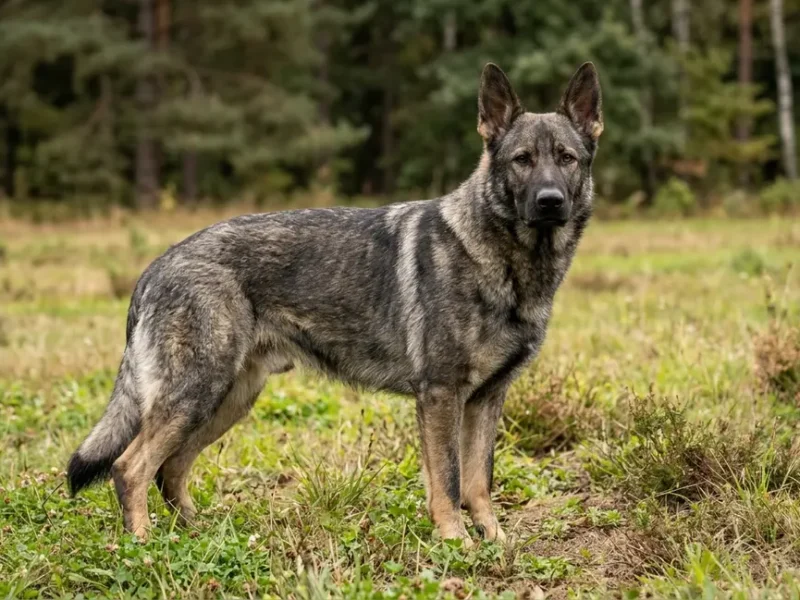
Nearly every German Shepherd alive today traces its lineage back to a single dog registered on a single afternoon in 1899. That’s not a breeder’s claim, it’s a documented fact of the breed’s founding.
“Nearly every German Shepherd today is a descendant of Horand because of Von Stephanitz’s successful breeding program.”
If you’ve ever wondered why two German Shepherds with the same breed name can feel like completely different animals, the answer starts in 1899. Most people recognize a German Shepherd instantly. Fewer know that the breed’s intelligence, drive, and physical type were deliberately engineered by one man, in one country, over a remarkably short period. The story of German Shepherd history explains everything about why this dog behaves, works, and looks the way it does.
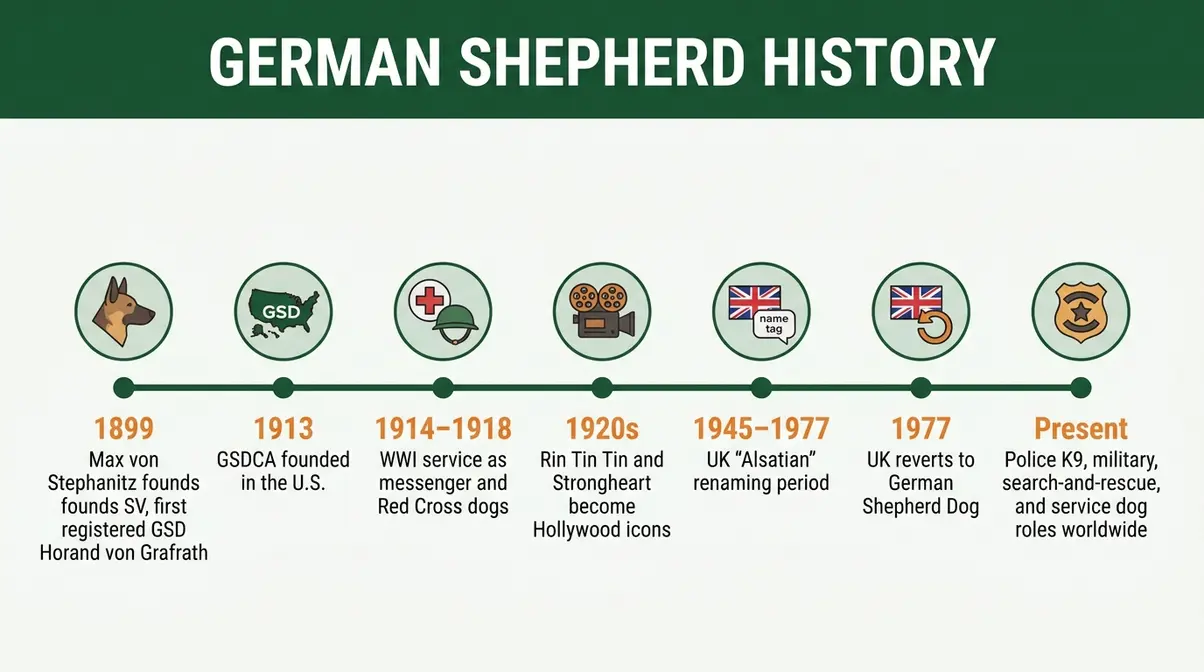
In this guide, you’ll trace the full German Shepherd history across five eras: the regional herding dogs of 19th-century Germany, the 1899 founding moment, two world wars, Hollywood fame, and the post-WWII breeding split that still shapes every dog sold today.
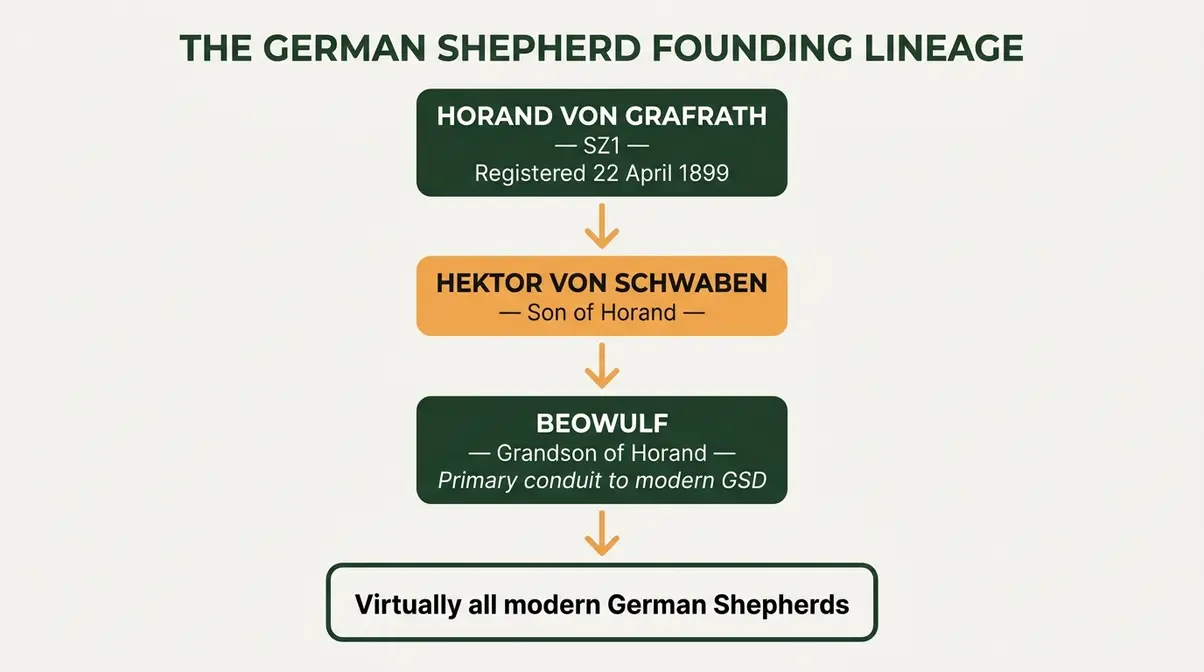
The German Shepherd breed was founded on 22 April 1899 by Captain Max von Stephanitz, who registered Horand von Grafrath (SZ1) as the first dog, making Horand the ancestor of virtually every German Shepherd alive today.
- Founded in 1899: Max von Stephanitz established the Verein für Deutsche Schäferhunde (SV) and set the “utility and intelligence” standard that still governs the breed.
- One founding dog: Horand von Grafrath (SZ1) is the root of the modern pedigree, nearly every GSD traces back to him through his son Hektor von Schwaben and grandson Beowulf.
- Renamed during WWI: Anti-German sentiment led the UK to call the breed the “Alsatian Wolf Dog” from 1917; the AKC used “Shepherd Dog” until restoring the original name in 1930.
- Post-WWII split: After 1945, breeding diverged into working lines (DDR, Czech, West German working) and show lines, a division that still affects temperament and health today.
- Not a wolf hybrid: The breed’s wolf-like appearance comes from herding landrace ancestry and Horand’s wolf-grey coat, not direct wolf descent.
Table of Contents
- What Is the German Shepherd’s Origin?
- Era 1: Pre-1899 Herding Landraces
- Era 2: Von Stephanitz and the 1899 Founding
- Era 3: WWI and the Name Change
- Era 4: Hollywood Fame and Global Recognition
- Era 5: Post-WWII Split into Working and Show Lines
- Did German Shepherds Really Descend from Wolves?
- Frequently Asked Questions
What Is the German Shepherd’s Origin?
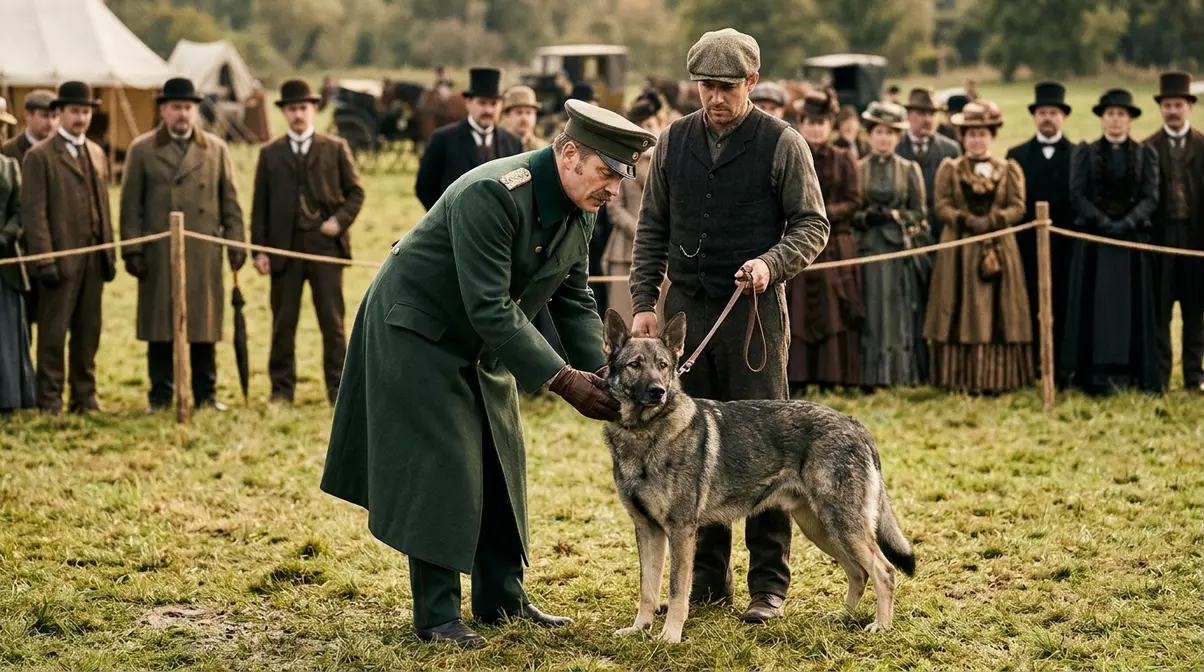
On 22 April 1899, Captain Max von Stephanitz purchased a wolf-grey herding dog at a dog show, renamed him Horand von Grafrath, and registered him as SZ1, entry one in the stud book of the Verein für Deutsche Schäferhunde (SV), the breed club he founded that same day. That single act is the documented origin of the German Shepherd breed (German Shepherd Dog Club of America, gsdca.org).
Horand’s descendants became the foundation of a worldwide pedigree, and the GSD origin can be traced to that one afternoon. Von Stephanitz didn’t set out to create a pretty show dog. He wanted a standardized national working breed, one that could herd, guard, track, and serve. Germany in the late 1800s had no such animal. What it had was a scattered collection of regional herding dogs that varied so widely in appearance and temperament that a shepherd in Bavaria couldn’t reliably predict what he’d get from a dog bred in Saxony.
Von Stephanitz spent years studying these regional types before he found Horand. His guiding principle, “utility and intelligence” over appearance, became the breed’s founding philosophy and remains its core standard today.
The German Shepherd breed was founded on 22 April 1899, when Captain Max von Stephanitz registered Horand von Grafrath as the first dog of the new Verein für Deutsche Schäferhunde (German Shepherd Dog Club of America, gsdca.org).
For a broader look at the breed, see our complete German Shepherd breed guide.
To understand how that founding moment happened, you need to go back further, to the regional herding dogs that von Stephanitz spent years studying before he ever bought Horand.
Era 1, What Came Before the German Shepherd?
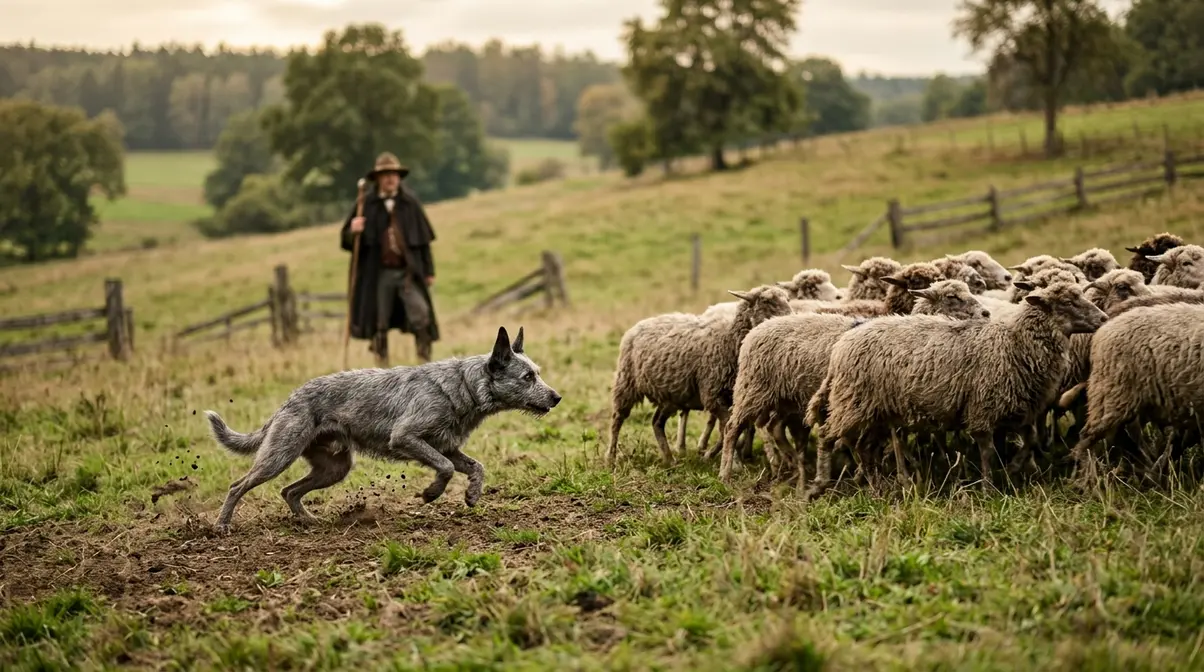
In the 1880s, Germany had no German Shepherd. What it had was a collection of regional working dogs that shepherds valued for stamina and intelligence, not for any shared appearance. The german shepherds history that most people know begins in 1899, but the raw material for the breed existed for generations before that.
Regional Herding Dogs Before Standardization
A landrace is a locally adapted working dog, not a registered breed, but a type shaped over generations by the demands of a specific region. Germany had several of these by the mid-1800s, and two mattered most to what would become the German Shepherd.
The Thuringian herding dogs of central Germany were smaller and wiry, with wolf-grey coats and high agility. Shepherds used them for close herding, moving sheep through tight spaces and responding quickly to direction. The Württemberg herding dogs of the southwest were larger, heavier, and calmer in temperament. They drove livestock over longer distances and worked more independently.
What the shepherds who used these dogs valued was consistent: intelligence, stamina, courage, and the ability to work without constant instruction. Appearance was irrelevant. A dog that couldn’t work had no value, regardless of how it looked.
The problem was predictability. A buyer in Bavaria had no guarantee that a “shepherd dog” from Saxony would behave or look anything like one from home. There was no standard, no stud book, and no way to reliably reproduce the traits that made a great working dog. This frustrated German breeders who wanted a national working breed, and it set the stage for the first formal attempt at standardization.
Horand von Grafrath’s own pedigree combined both regional types: his sire traced to Thuringian stock, his dam to Württemberg lines. He was, in that sense, the living synthesis of the problem von Stephanitz was trying to solve (German Shepherd Dog Club of America, gsdca.org).
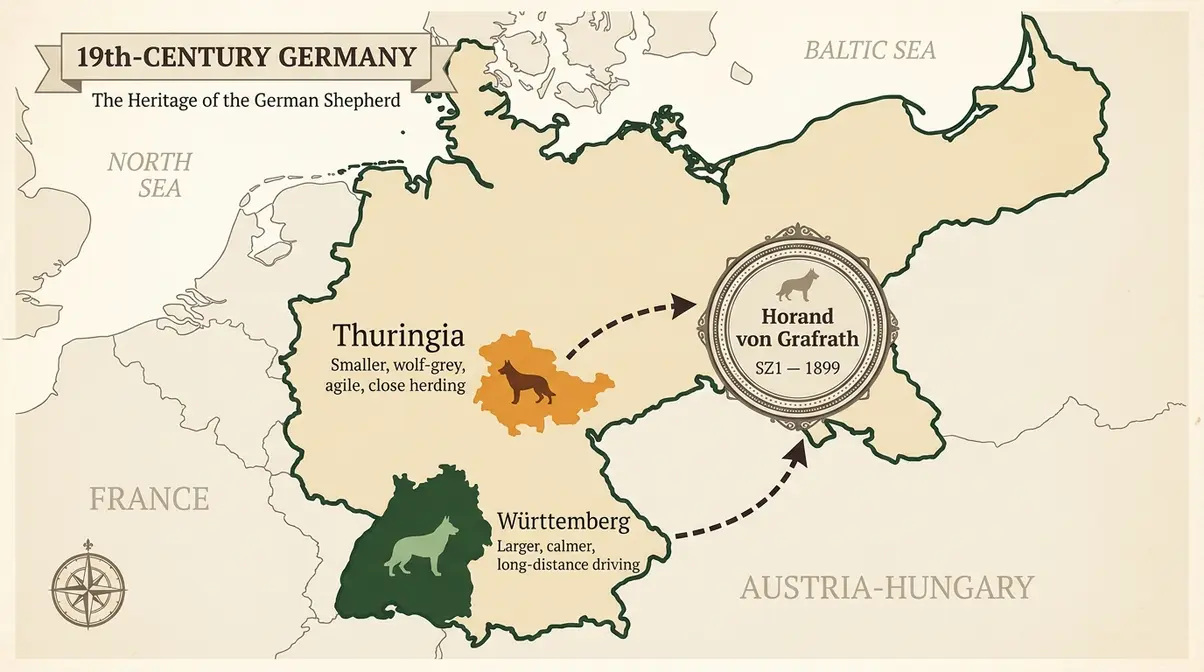
Before 1899, Germany had no standardized shepherd breed, only regional working dogs that varied so widely in appearance that a Thuringian herding dog and a Württemberg herding dog were barely recognizable as the same type (German Shepherd Dog Club of America, gsdca.org).
The Phylax Society tried to solve that problem, and failed.
The Phylax Society’s Failed Attempt (1891-1894)
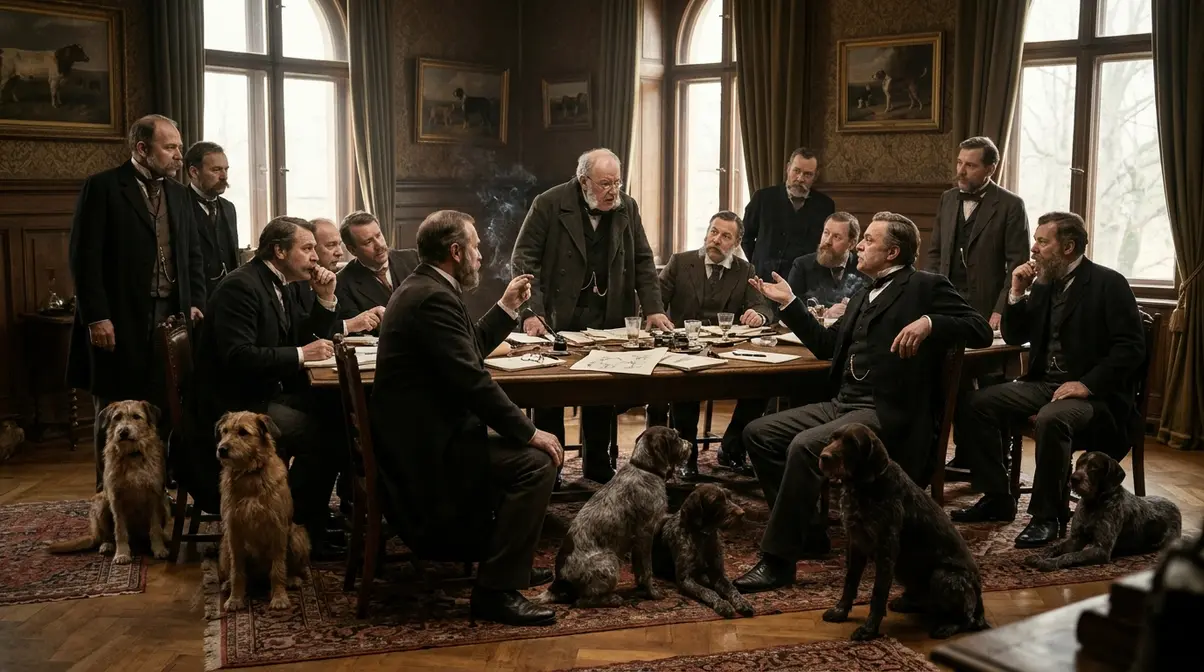
The Phylax Society was founded in 1891 with a clear goal: standardize the German shepherd dog. It dissolved just three years later, in 1894, without producing a breed standard. The reason was a fundamental disagreement that would echo through every subsequent debate about the German Shepherd.
Some members wanted to breed for appearance, a uniform look that would make the dogs recognizable and consistent in the show ring. Others insisted on working ability as the only criterion that mattered. Neither side would compromise. The society collapsed under the weight of its own internal conflict.
The lesson von Stephanitz drew from the Phylax Society’s failure was direct. He later wrote, paraphrased through breed-club sources, that a German Shepherd which could not work had no place in the breed. Any successful breed club would have to make working ability the non-negotiable criterion. Appearance could vary within limits; the ability to work could not. Note that exact Phylax Society membership numbers are not widely documented in primary sources, no specific figure should be cited (GSD Elite, gsrelite.co.uk).
Von Stephanitz had watched the Phylax Society fail. When he found the right dog eight years later, he was ready.
Era 2, How Max von Stephanitz Founded the German Shepherd in 1899
On 22 April 1899, von Stephanitz attended a dog show and saw a wolf-grey herding dog that embodied everything the Phylax Society had failed to produce. He bought the dog immediately. Within hours, he had renamed him, registered him, and founded a breed club. The history of the German Shepherd as a formal breed begins on that date.
Horand von Grafrath, The Dog That Started It All
The dog’s original name was Hektor Linksrhein (some sources spell it “Linkshein”, each spelling should be attributed to its specific source rather than treated as definitive). Von Stephanitz saw him at the show, recognized him as the ideal working dog, purchased him, and renamed him Horand von Grafrath. He registered Horand as SZ1, entry number one in the Zuchtbuch, the SV’s stud book. SZ1 is not just a registration number; it is the documented starting point of the entire modern German Shepherd pedigree.
Horand’s physical description, as recorded in breed-club sources, was striking: wolf-grey coat, medium size, erect ears, strong hindquarters, and a build that combined power with agility. Von Stephanitz described him as embodying everything a working shepherd dog should be, intelligence, loyalty, obedience, and physical capability. He was, in von Stephanitz’s view, the german shepherd original breed in living form.
Von Stephanitz used Horand extensively in a deliberate breeding program. Horand’s son Hektor von Schwaben and grandson Beowulf became the primary conduits through which Horand’s traits passed to the modern breed. Nearly every German Shepherd alive today traces back through this line.
The genetic consequence of that founding bottleneck is significant. A pedigree study of genetic variant loss published in PubMed Central found that for most dog breeds, intensive founder-dog inbreeding reduces unique genetic variants by more than 90% over six generations (Calboli et al., 2008, PubMed Central). The German Shepherd’s founding was a deliberate narrowing, powerful for fixing type, but consequential for long-term genetic diversity.
Horand’s working ability was the foundation. But von Stephanitz needed a principle, a standard that would hold the breed together across generations.
The “Utility and Intelligence” Breeding Standard
Von Stephanitz’s core principle was unambiguous: a German Shepherd that could not work had no place in the breed. The SV’s breed standard, as documented by the American Kennel Club, prioritized intelligence, obedience, strength, and working ability over coat color, ear shape, or size. This was a direct rejection of the Phylax Society’s appearance-first approach.
In practice, this meant the SV required dogs to pass Schutzhund working trials, a structured test of tracking, obedience, and protection work, before they were eligible for breeding. A beautiful dog that failed the trial was not bred. A less conventionally attractive dog that excelled at the trial was. The breed standard’s core was function, not form.
The lasting consequence of this approach is visible in the German Shepherd’s modern roles. Police work, military service, search-and-rescue, guide services, and detection work, the breed excels across all of them because the founding standard demanded versatility above everything else. Von Stephanitz’s guiding phrase, paraphrased through breed-club sources, captures it precisely: “Utility is the true criterion of beauty.”
This philosophy explains what the breed standard describes about German Shepherd temperament, and why the dog’s character is inseparable from its working heritage.
The german shepherd history of breed runs directly through this standard. Every era that follows, WWI, Hollywood, the post-WWII split, is a story of what happens when that standard is either upheld or compromised.
There’s one more thing to settle before moving on: the date.
Sources Conflict Box, 1889 or 1899?
⚠️ Sources Conflict: 1889 vs. 1899
You’ll encounter both years in German Shepherd histories, and they refer to two different events, not the same event with a disputed date.
1889: Some secondary breed-history sources state that von Stephanitz began his systematic study and standardization work on German herding dogs around 1889. The German Shepherd Dog Club of America uses 1899 as the breed’s formal founding year; any reference to 1889 in secondary sources likely describes von Stephanitz’s earlier research period rather than a formal founding event. If you encounter a source citing 1889 as the founding date, check whether it is describing the study period or the formal SV establishment.
1899: Both the GSDCA and the AKC use 1899 as the breed’s formal founding year, the date on which the Verein für Deutsche Schäferhunde (SV) was established and Horand von Grafrath was registered as SZ1.
Resolution: 1899 is the documented founding year per primary breed-club sources. The 1889 date appears in secondary sources and refers to von Stephanitz’s earlier standardization work, not the formal establishment of the breed. Treat any source that uses 1889 as the “founding date” without this distinction as imprecise.
Von Stephanitz spent the next two decades refining the breed, and then World War I gave the German Shepherd a new purpose, and a new name.
Era 3, How World War I Transformed the German Shepherd
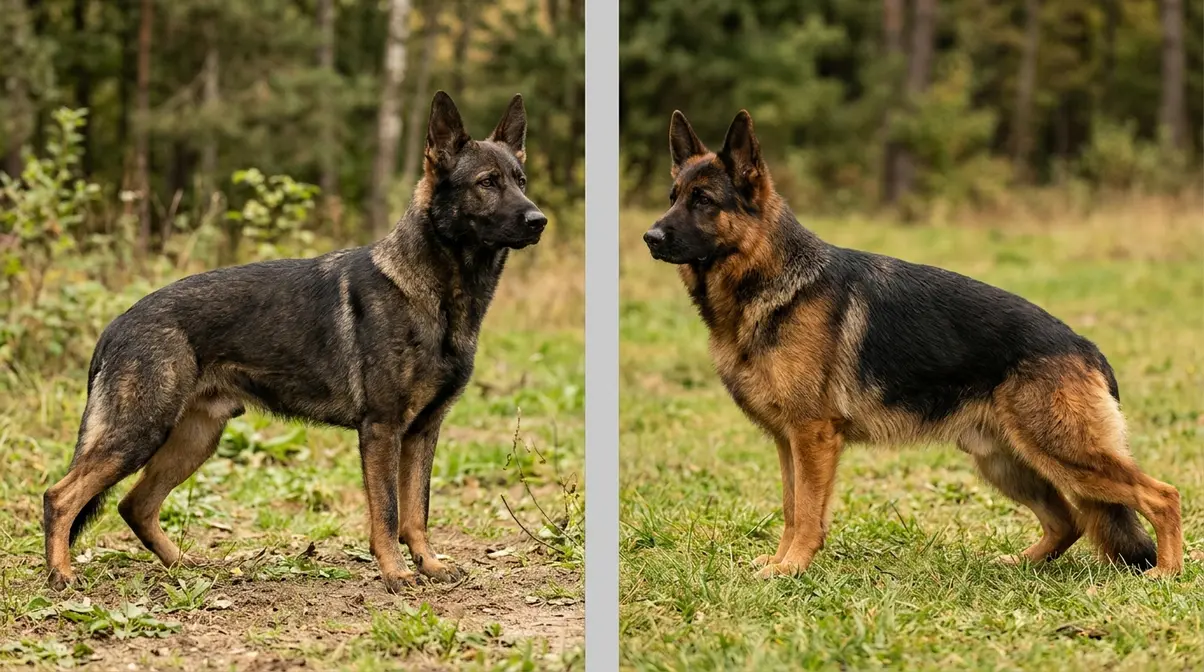
By 1914, the German Shepherd had been a recognized breed for 15 years. Then the war started, and everything about the breed’s public identity changed.
German Shepherds in World War I
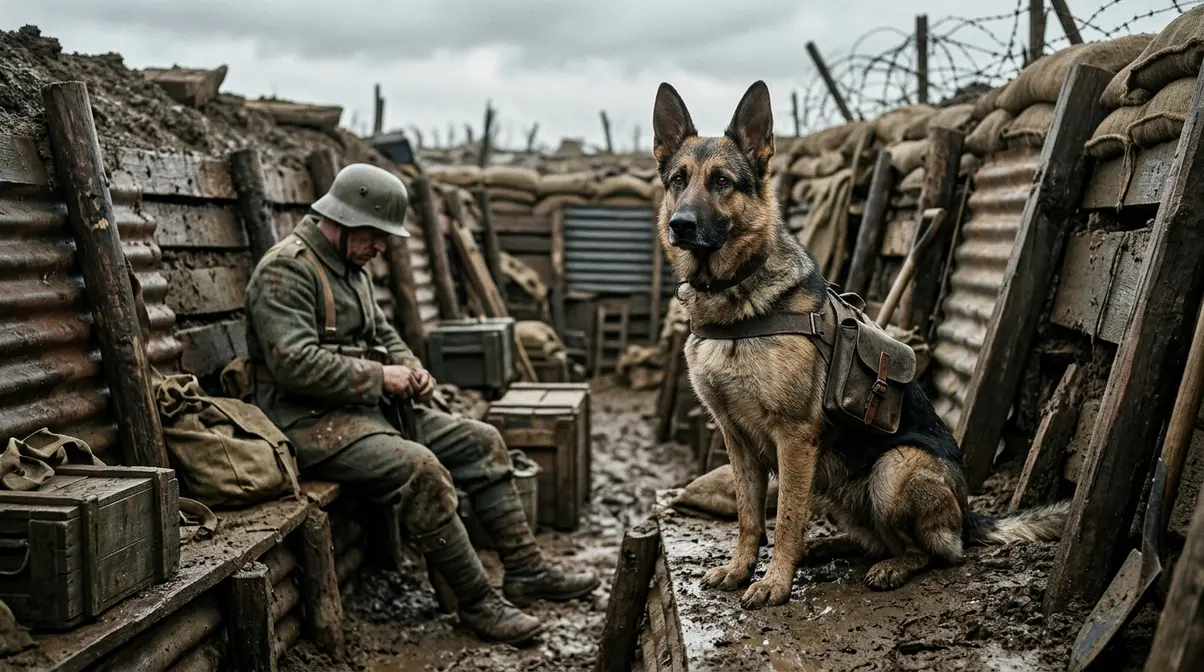
The German army deployed German Shepherds extensively across multiple roles during WWI. They served as messenger dogs, carrying orders between trenches under fire. They worked as guard dogs at military installations and as search-and-rescue dogs, locating wounded soldiers in the field. Some served as ambulance dogs, trained to find injured men and alert medics. The SV supplied thousands of dogs to the German military effort.
Allied soldiers, American and British in particular, encountered German Shepherds for the first time during the war. Many were struck by the dogs’ intelligence, trainability, and composure under pressure. Some soldiers brought dogs home with them. This wartime exposure was the breed’s first large-scale introduction to a global audience.
The irony was immediate. The war that gave the breed its widest stage also gave it an identity problem. A dog named “German Shepherd” was politically inconvenient in Allied countries where anti-German sentiment ran high, the same era that saw sauerkraut briefly renamed “liberty cabbage” in the United States.
The American Kennel Club had first registered the German Shepherd in 1908, before the war, under the name “German Shepherd Dog.” By the war’s end, American interest in the breed had grown significantly, driven partly by soldiers’ wartime encounters (AKC, akc.org).
The breed’s reputation survived the war. Its name did not, at least not everywhere.
The Alsatian Renaming and Anti-German Sentiment
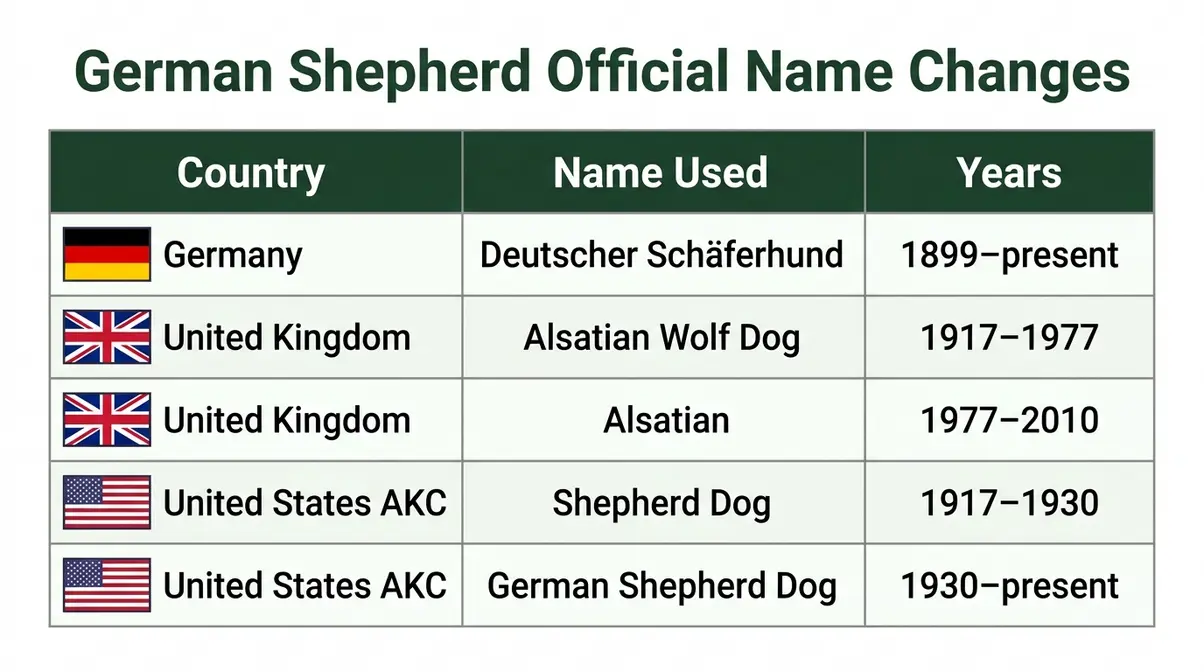
In 1917, the UK Kennel Club renamed the breed “Alsatian Wolf Dog.” Alsace is a French-German border region, the name preserved a geographic reference while removing the German association entirely. The “Wolf Dog” suffix was eventually dropped, leaving simply “Alsatian.” That name persisted in the UK until 1977, when the Kennel Club allowed “German Shepherd Dog” as an alternative. The breed’s original name wasn’t fully restored in the UK until 2010.
In the United States, the AKC renamed the breed “Shepherd Dog” in 1917. The original name “German Shepherd Dog” was restored in 1930, a 13-year gap that left American breeders and buyers dealing with fragmented identity and inconsistent registration across countries.
The AKC renamed the German Shepherd the “Shepherd Dog” in 1917 due to anti-German sentiment, then restored the original name in 1930, a 13-year gap that left American breeders and buyers confused about the breed’s identity (German Shepherd Dog Club of America, gsdca.org).
The german shepherds origin, firmly German, firmly documented, made the renaming a practical problem as well as a political one. International breeding and registration became more complicated as the same dog carried different official names in different countries (Rover, rover.com).
The name-change table below shows the full timeline:
| Country | Name Used | Years |
|---|---|---|
| Germany | Deutscher Schäferhund | 1899-present |
| United Kingdom | Alsatian Wolf Dog | 1917-1977* |
| United Kingdom | Alsatian | 1977-2010* |
| United Kingdom | German Shepherd Dog | 2010-present* |
| United States (AKC) | Shepherd Dog | 1917-1930 |
| United States (AKC) | German Shepherd Dog | 1930-present |
\UK dates per breed-club records; verify against UK Kennel Club records before publishing.*
The war ended, the name controversy simmered, and then two dogs walked onto a Hollywood film set and changed everything.
Era 4, Hollywood, Rin Tin Tin, and the American Boom
In 1918, an American soldier named Lee Duncan was moving through a bombed-out kennel in France when he found a litter of German Shepherd puppies. He kept one and brought him home to California. That dog became Rin Tin Tin, and the German Shepherd history of the 1920s would be shaped largely by what happened next.
Strongheart and Rin Tin Tin
Before Rin Tin Tin, there was Strongheart. The German Shepherd film star debuted in The Silent Call in 1921, establishing that the breed could hold a camera’s attention and carry a film. Strongheart preceded Rin Tin Tin and proved the commercial concept.
Rin Tin Tin built on it. He debuted in The Man from Hell’s River in 1922 and went on to appear in multiple Warner Bros. films throughout the decade. His box-office success drove a surge in American demand for the breed that breed histories consistently describe as transformative for the German Shepherd’s popularity in the United States (Rover, rover.com). Rin Tin Tin became a genuine cultural phenomenon: fan mail, merchandise, and a level of public recognition that no dog breed had previously achieved in America.
The breed’s working qualities, intelligence, trainability, loyalty, translated directly to the screen. Audiences saw exactly what von Stephanitz had built: a dog that could follow complex instructions, stay composed under pressure, and perform reliably. The German Shepherd history facts of this era are inseparable from the films.
The American Boom
By the late 1920s, the German Shepherd was the most popular dog in America. You can trace that popularity directly to the screen: AKC registrations surged as buyers sought the breed they’d seen perform. The breed’s reputation as intelligent, loyal, and trainable was now a cultural fact, not just a breeder’s claim.
This popularity had a downstream effect that would matter later. Higher demand meant more breeding, more breeders, and eventually more variation in what “German Shepherd” actually meant in practice. The working standard von Stephanitz had built was about to face its most significant test, not from a war, but from peacetime divergence.
The breed’s popularity peaked, and then World War II reshaped it again, this time permanently.
Era 5, How World War II Split the German Shepherd Into Working and Show Lines
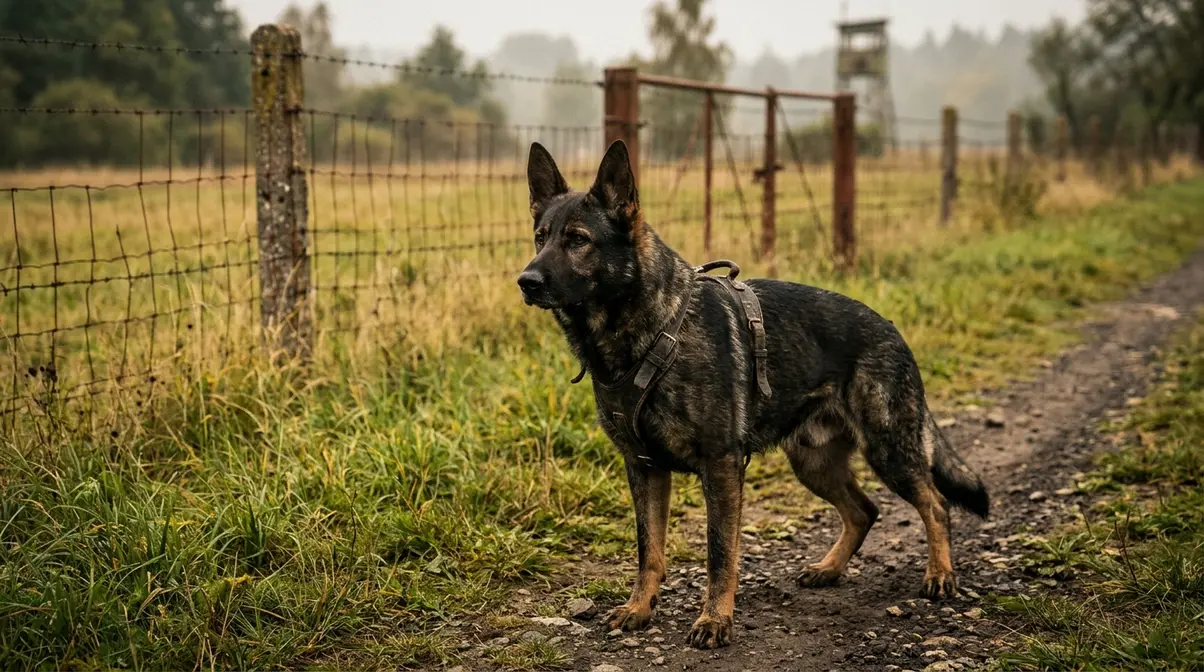
When Germany was divided in 1945, the German Shepherd was divided with it. The political boundary between East and West Germany created two separate breeding environments, each with different priorities, and the divergence they produced is still visible in the dogs sold today. If you’re choosing a German Shepherd now, understanding this split is one of the most useful things you can know.
East German (DDR) and Czech Working Lines
The DDR line, DDR standing for Deutsche Demokratische Republik, or East Germany, emerged from a state-controlled breeding program focused on border patrol and military service. East German authorities selected dogs for working ability, structural soundness, and health, not appearance. The program produced animals with straighter backs, denser bone structure, and higher working drive than the show lines developing simultaneously in the West. The german shepherd breeding history of the DDR line is, in many ways, the most direct continuation of von Stephanitz’s founding vision.
In 1955, Czechoslovakia established its own border-patrol kennel, the Pohranicni Straze, using East German working stock. The kennel bred exclusively for working ability under strict state oversight. After the Cold War ended, the Czech line became available to private breeders and is now recognized as a distinct working-line variant.
Both lines trace back to the original 1899 SV standard: working ability first, everything else second. A DDR-line German Shepherd and a West German show-line German Shepherd may share a breed name, but they differ significantly in drive, structure, and temperament, a direct consequence of more than 40 years of divergent breeding under very different pressures (German Shepherd Dog Club of America, gsdca.org).
For a full account of the East German (DDR) line’s Cold War origins, including kennel records and structural characteristics, see our dedicated DDR guide. You can also explore the Czech working line’s Cold War origins in our Czech German Shepherd article.
While working lines stayed close to the original standard, show lines moved in a different direction, with consequences that are still debated today.
West German Show Lines and the Health Trade-offs
West German show lines, and later American show lines, prioritized conformation: the sloped back, exaggerated hindquarter angulation, and flowing gait that performs well in the show ring. These traits were selected over working ability, reversing the priority that von Stephanitz had made non-negotiable.
The history of german shepherd breed development in show lines diverged from the working standard in a way that drew sustained criticism from veterinarians and working-dog breeders. The structural changes associated with extreme show-type conformation, particularly the exaggerated sloped back, are associated with higher rates of spinal issues and altered gait mechanics in affected dogs. Hip dysplasia affects all lines, but the structural modifications in show lines have received specific scrutiny.
The genetic research is direct: a genome-wide study of hereditary diseases in German Shepherds published in PubMed Central found that over 50 hereditary diseases have been documented in the German Shepherd Dog, a consequence of the genetic bottleneck created by intensive line-breeding in both working and show populations (Meurs et al., 2012, PubMed Central). The gsd origin in a single founding dog, Horand, means the entire breed carries a narrower genetic base than most people realize.
Over 50 hereditary diseases have been documented in the German Shepherd Dog, many linked to the genetic bottleneck created by intensive line-breeding in both working and show populations (U.S. National Library of Medicine, PMC3509149).
The comparison table below captures the key differences between the two paths:
| Characteristic | Working Lines (DDR, Czech, WG Working) | Show Lines (West German, American) |
|---|---|---|
| Primary focus | Working ability, drive, health | Conformation, appearance, gait |
| Body structure | Straighter back, athletic build | More sloped back, angulated hindquarters |
| Temperament | High drive, intense, task-focused | Calmer, more sociable |
| Typical roles | Police, military, search-and-rescue | Companion, conformation showing |
| Health concerns | Hip dysplasia (all lines) | Higher rates of spinal issues in extreme show types |
The post-WWII split is the last major chapter in the breed’s formal history. But one question has followed the German Shepherd from the beginning.
Did German Shepherds Really Descend from Wolves?
Is the German Shepherd part wolf? The short answer is no. The longer answer explains why the question is so persistent, and why it matters to get it right.
The breed’s wolf-grey coat, erect ears, and angular face prompt genuine confusion. Searches for “german shepherd wolf mix” are common precisely because the resemblance is real. But resemblance is not ancestry. When you look at a German Shepherd’s wolf-grey coat, you’re seeing Horand’s coloring, not wolf ancestry.
Here’s what the evidence actually shows:
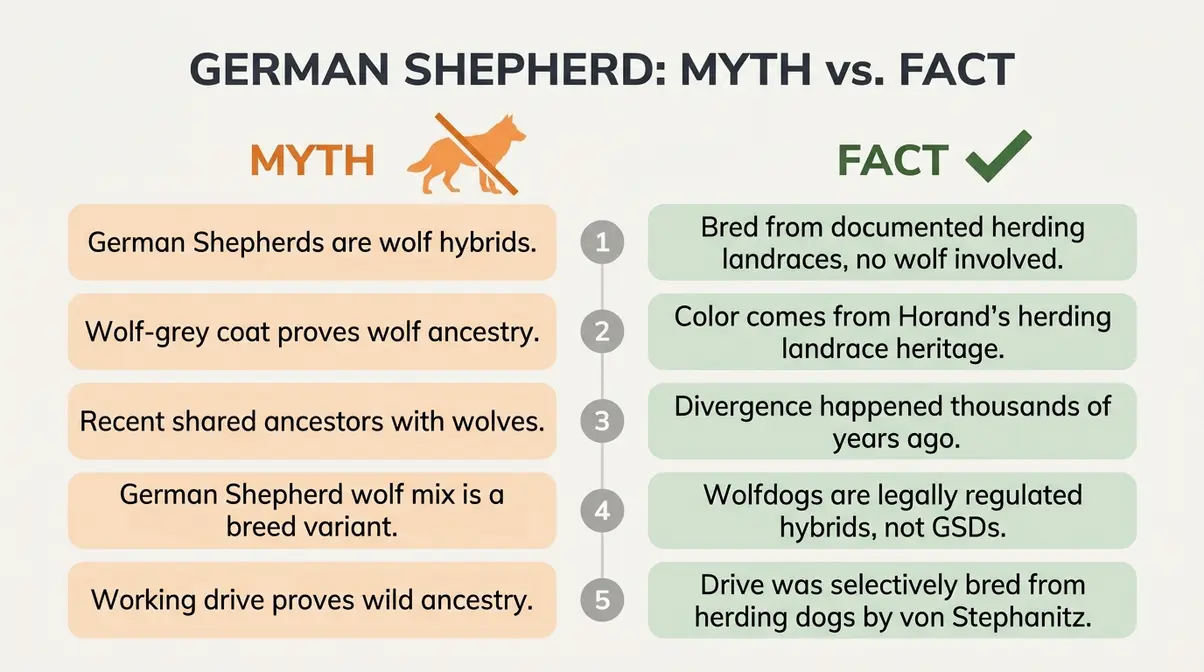
- Myth: German Shepherds are wolf hybrids.
- Fact: The breed was developed from herding landraces, the Thuringian and Württemberg dogs described earlier, in a documented breeding program between 1891 and 1899. No wolf was involved. The founding records are specific and traceable.
- Myth: The wolf-grey coat proves wolf ancestry.
- Fact: The wolf-grey color comes directly from Horand von Grafrath’s herding landrace heritage. Many herding breeds across Europe share this coloring, it’s a working-dog trait, not a wolf trait. The German Shepherd’s wolf-like appearance traces directly to Horand von Grafrath’s wolf-grey coat, a herding landrace trait, not wolf ancestry (German Shepherd Dog Club of America, gsdca.org).
- Myth: German Shepherds and wolves share recent common ancestors.
- Fact: All domestic dogs (Canis lupus familiaris) share a common ancestor with wolves (Canis lupus), but that divergence happened thousands of years ago, long before any modern breed existed. The German Shepherd’s wolf-like traits are a convergence of appearance, not a sign of recent shared ancestry.
- Myth: A “German Shepherd wolf mix” is a real breed variant.
- Fact: A wolfdog, a true wolf-dog hybrid, is a real and legally regulated animal in many jurisdictions, but it is not a German Shepherd. Most searches for “german shepherd wolf mix” are looking for the breed’s wolf-like appearance, not actual wolf genetics. The two are not the same thing.
- Myth: The breed’s working drive proves wild ancestry.
- Fact: The drive, intensity, and independence that characterize working-line German Shepherds were deliberately selected by von Stephanitz from herding dogs. These traits were already present in the landraces; they didn’t require wolf input.
For readers curious about what different parent breeds actually contribute, our guide on what German Shepherd crosses inherit from each parent covers the genetics of crossing in plain terms.
The wolf question is the most common misconception about the breed’s history. The FAQ below addresses the other questions readers ask most often.
Frequently Asked Questions About German Shepherd History
Are German Shepherds a Good Breed?
German Shepherds are widely considered one of the most capable and versatile breeds ever developed. Captain Max von Stephanitz built the breed around a philosophy of “utility and intelligence”, a dog that couldn’t work had no place in the breed. That founding standard produced an animal of exceptional trainability, loyalty, and physical capability. Today, German Shepherds serve in police work, search-and-rescue, guide services, and family homes across the world. For temperament, health, and suitability details, see our German Shepherd breed overview.
Who Created the German Shepherd Breed?
Captain Max von Stephanitz, a former German cavalry officer, created the German Shepherd as a standardized national working breed. In 1899, he bought a wolf-grey herding dog named Hektor Linksrhein, renamed him Horand von Grafrath, and registered him as the first German Shepherd, SZ1. He also founded the Verein für Deutsche Schäferhunde (SV), the breed club that still governs the breed today. His founding principle, utility and intelligence over appearance, remains the breed standard’s core.
Why Was the German Shepherd Renamed the Alsatian After World War I?
Anti-German sentiment during and after World War I led the UK Kennel Club to rename the breed “Alsatian Wolf Dog” in 1917. Alsace is a French-German border region, the name removed the German association while keeping a geographic reference. The AKC used “Shepherd Dog” in the US from 1917 until restoring the original name in 1930; the UK didn’t fully restore “German Shepherd Dog” until 2010. The renaming fragmented the breed’s identity across countries for decades.
What Are Some Examples of Shepherd Breeds?
The German Shepherd grew out of regional German herding dogs, Thuringian and Württemberg landraces, that were the original shepherd breeds of 19th-century Germany. Other shepherd breeds include the Belgian Malinois, the Dutch Shepherd, the Bouvier des Flandres, and the Australian Shepherd, each developed from local herding stock in a similar way. The German Shepherd is the standardized result of combining the best working traits of those regional German types. For a comparison of shepherd breeds, see our German Shepherd breed overview.
What Are Some Common German Dog Names?
The breed’s own history provides some of the most recognizable German dog names. Horand, from Horand von Grafrath, the first registered German Shepherd, and Hektor, his original name, are both historically grounded German names with direct breed significance. The breed club itself, the Verein für Deutsche Schäferhunde, uses “Schäferhunde” (shepherd dogs), and many breeders still use German-origin names in their kennel lines. These names come from the breed’s founding records, not from a general naming list.
What the German Shepherd’s History Tells You About the Dog You’re Considering
The German Shepherd’s history spans five eras, from regional herding landraces to a single founding dog in 1899, through two world wars, Hollywood fame, and a post-WWII split that still shapes the breed today. Nearly every German Shepherd alive descends from Horand von Grafrath (SZ1), registered by the Verein für Deutsche Schäferhunde on 22 April 1899 (GSDCA, gsdca.org). If you’re choosing a German Shepherd, understanding which line, working or show, traces back to von Stephanitz’s original standard will help you match the right dog to your life.
Von Stephanitz’s founding principle, that a dog unable to work had no place in the breed, explains why the German Shepherd excels across so many roles today. The “utility and intelligence” standard isn’t just a historical footnote; it’s the blueprint for the dog’s behavior, drive, and health. The post-WWII divergence between working and show lines is, in that light, a story about what happens when that blueprint is followed closely versus when it’s set aside in favor of appearance.
Start by reading our German Shepherd temperament guide to understand what the breed standard actually describes about the dog’s character. Then explore the history and origins of black German Shepherds if coat color is part of your decision, or dig into the DDR German Shepherd and Czech German Shepherd pages if a working-line dog is what you’re after. The breed’s history gives you a framework, use it.
 Maltese German Shepherd Mix: Full Breed Guide
