
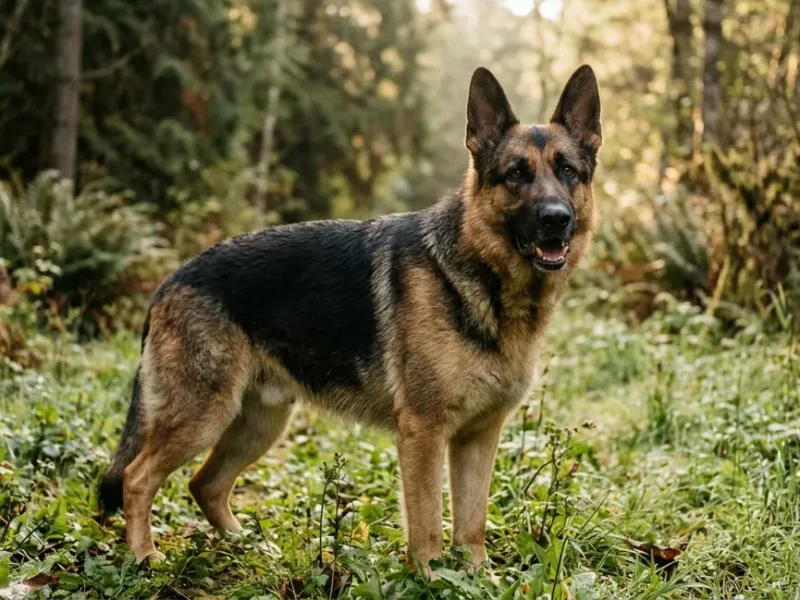
German Shepherds have approximately 225 million scent receptors, roughly 45 times more than a human’s 5 million, and that single fact explains why this breed dominates narcotics detection, search-and-rescue, and military work worldwide. This guide pulls together verified german shepherd facts from the AKC, PetMD, Cornell, UC Davis, and peer-reviewed research, so you’re not piecing together answers from social posts. By the end, you’ll know the breed’s real history, what the size and strength numbers actually mean, and whether a German Shepherd fits your life. Twelve themed sections cover everything from coat colors to first-time ownership.
Table of Contents
- What Is a German Shepherd?
- Interesting German Shepherd Facts
- German Shepherd History and Origin
- How Big and Strong Is a German Shepherd?
- How Smart Is a German Shepherd?
- German Shepherd Working Roles
- German Shepherd Coat Colors Explained
- Are German Shepherds Good Guard Dogs?
- How Long Do German Shepherds Live?
- German Shepherd Care: Grooming, Diet, and Exercise
- Are German Shepherds Good for First-Time Owners?
- Frequently Asked Questions
Key Takeaways: German Shepherd Facts
German Shepherds were bred in Germany in 1899 and rank as the third-smartest dog breed in working and obedience intelligence (AKC).
- Senses: ~225 million scent receptors, roughly 45× more than a human’s ~5 million (AKC)
- Size: Males 24-26 in tall, 65-90 lbs; females 22-24 in, 50-70 lbs (AKC breed standard)
- Speed: Can sprint up to 30 mph, faster than the average human at 8-10 mph
- Lifespan: Typically 9-13 years (PetMD); AKC cites 12-14 years; median 10.3 years per veterinary records (VetCompass, Royal Veterinary College, 2017)
- The Dual-Purpose Dog: German Shepherds are uniquely built for elite working roles AND deep family companionship, a combination few breeds achieve
What Is a German Shepherd?
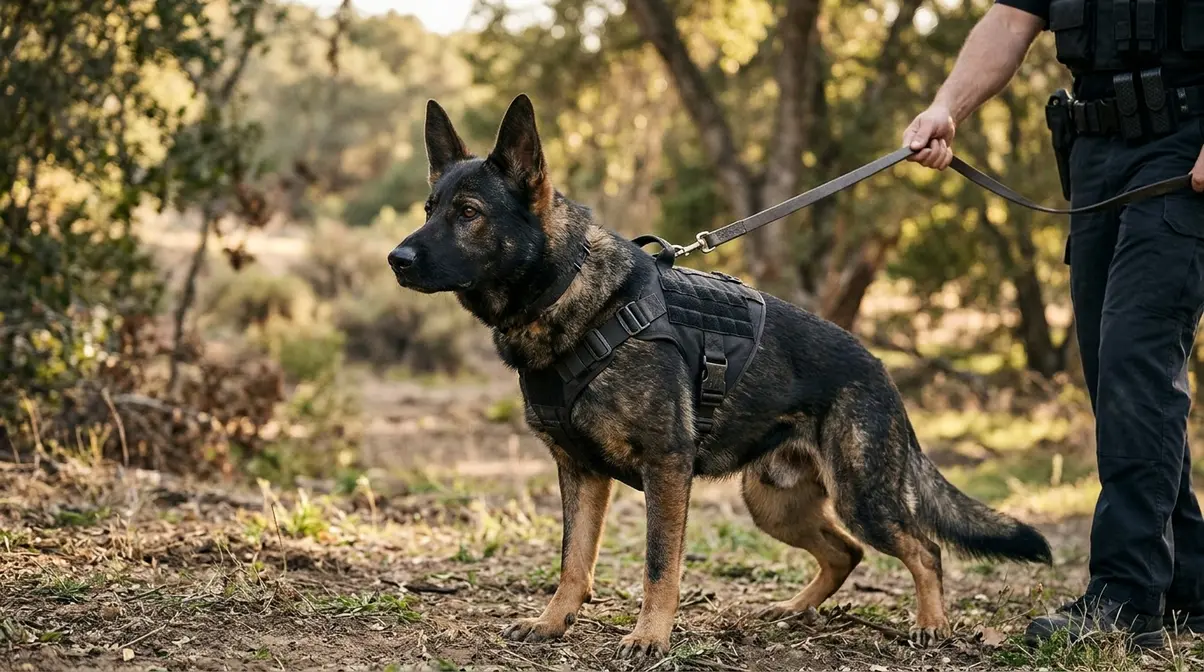
The German Shepherd Dog (GSD) is a medium-to-large herding breed developed in Germany in 1899, classified by the AKC in the Herding Group. Males stand 24-26 inches tall and weigh 65-90 pounds; females are 22-24 inches and 50-70 pounds (AKC breed standard).
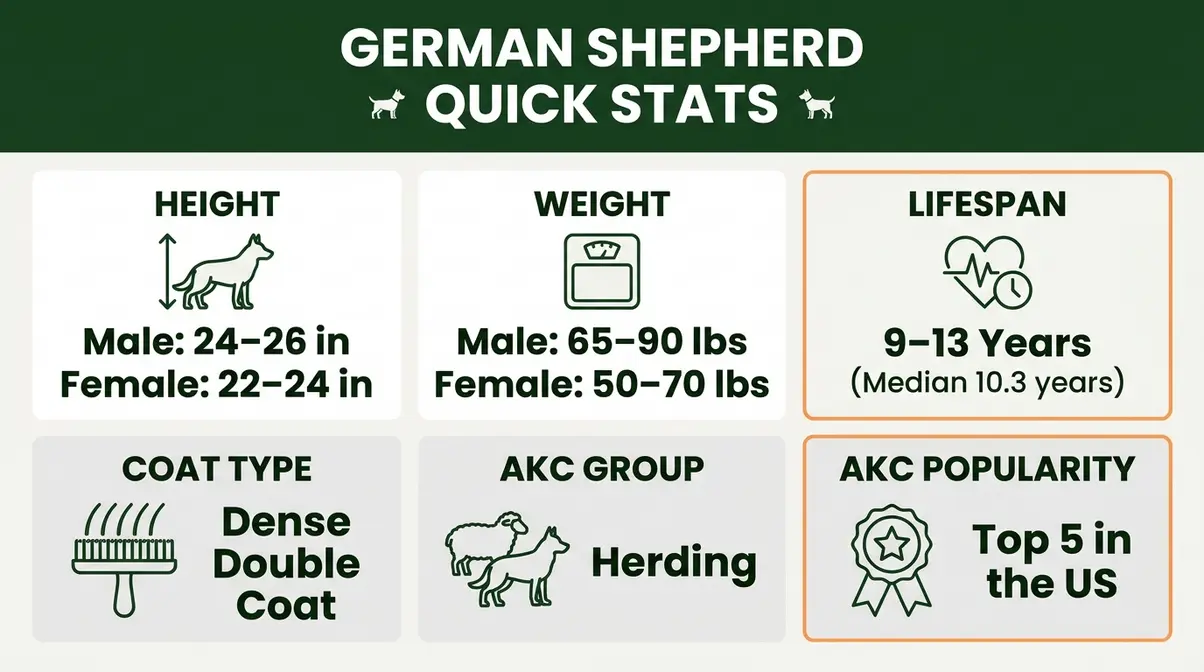
Quick Stats Snapshot
German shepherd breed facts are easiest to absorb in one place. The table below pulls directly from the AKC breed standard; individual dogs vary, so consult a veterinarian for health or growth questions about a specific dog.
| Attribute | Male | Female |
|---|---|---|
| Height | 24-26 inches | 22-24 inches |
| Weight | 65-90 lbs | 50-70 lbs |
| Lifespan | Typically 9-13 years (PetMD); AKC cites 12-14 years; median 10.3 years (VetCompass, 2017) | Slightly longer on average than males |
| Coat Type | Dense double coat, straight harsh outer coat | Same |
| AKC Group | Herding | Herding |
| AKC Popularity Rank | Consistently top 5 in the US |
Sources: AKC breed standard; PetMD German Shepherd breed profile.
A note on the lifespan figures: PetMD reports 9-13 years; the AKC cites 12-14 years; a peer-reviewed VetCompass study (Royal Veterinary College, 2017) found a median of 10.3 years across veterinary records in the UK. The discrepancy reflects different study populations and methodologies. For questions about an individual dog’s expected lifespan, consult a licensed veterinarian.
What Makes Them Unique
The Dual-Purpose Dog: this is the concept that separates the German Shepherd from nearly every other breed. Most dogs excel at one role, a Greyhound runs, a Bloodhound tracks, a Border Collie herds. German Shepherds consistently rank in the top tier for both elite working-dog performance (police, military, search-and-rescue, guide dog) AND family companion suitability. The AKC classifies them in the Herding Group, yet they’re deployed in roles that span law enforcement, disability assistance, and therapy work.
“Confident and highly trainable, German Shepherds are as versatile as working dogs get, loyal to family, wary of everyone else.”
That wariness and that loyalty aren’t opposites. They’re the same trait expressed in two directions, and it’s what makes this breed genuinely unusual. The AKC lists the German Shepherd as one of the most popular breeds in the US year after year, evidence that the dual-purpose appeal resonates far beyond working-dog handlers.
What Are the Most Interesting German Shepherd Facts?
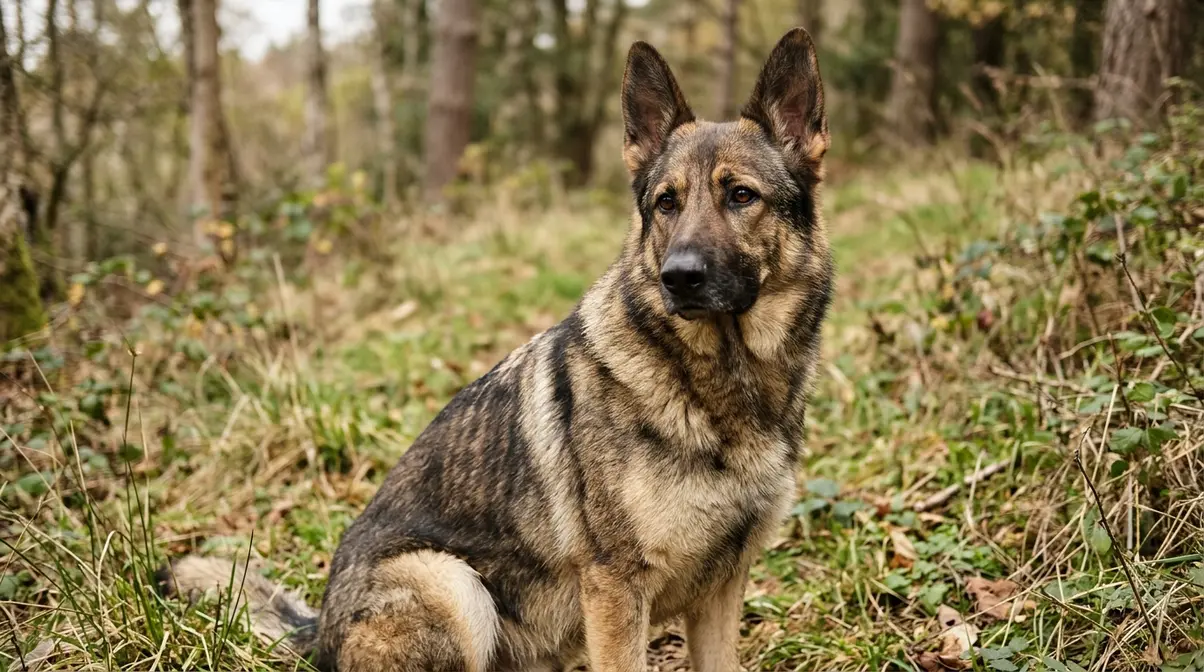
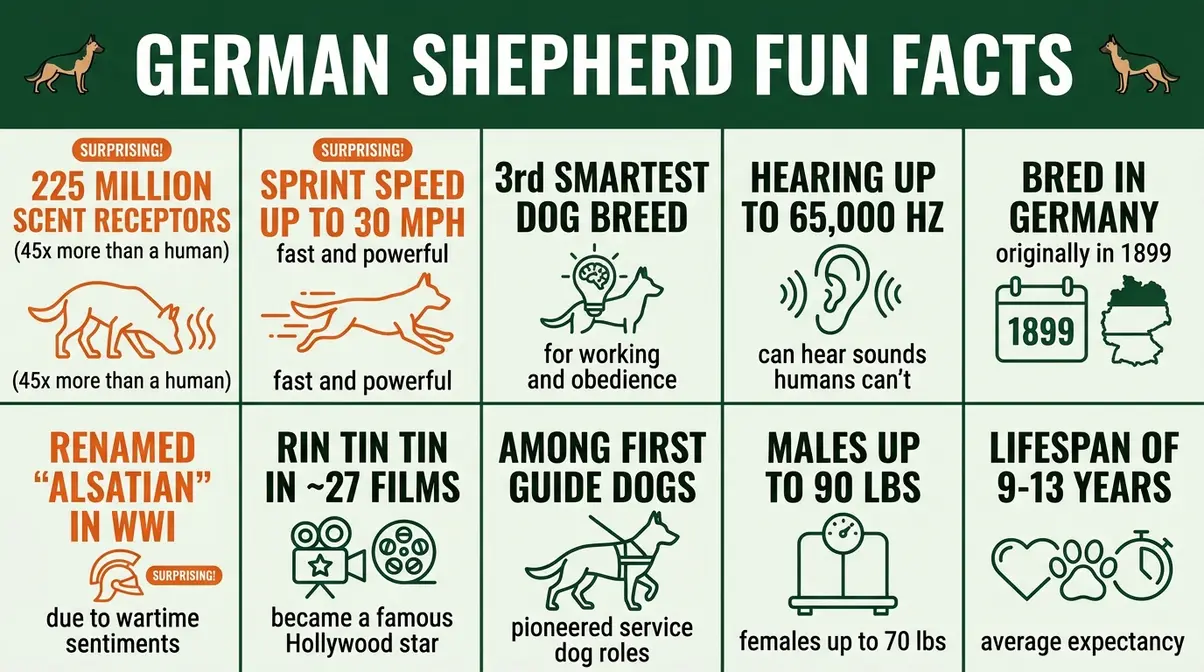
Here are five core facts about German Shepherds: they were bred in Germany in 1899 by Captain Max von Stephanitz; males weigh up to 90 pounds and stand 26 inches tall; they rank third in canine working and obedience intelligence; their noses contain approximately 225 million scent receptors; and they can sprint up to 30 mph. The fuller picture below adds the history surprises, the record-breakers, and the claims you should treat with caution.
Senses and Speed
German Shepherd interesting facts often start with the nose. The breed carries approximately 225 million scent receptors compared to a human’s ~5 million, a ratio of roughly 45 to 1, according to AKC fun facts. That sensory advantage is why German Shepherds are the preferred breed for narcotics detection and search-and-rescue: they can detect odors at concentrations that are orders of magnitude below what humans can perceive.
Sprint speed adds a second physical edge. German Shepherds can reach approximately 30 mph, compared to the average human’s 8-10 mph, which is why they’re used in police pursuit work alongside their scenting capability. One mph of dog outpaces three of human, and that gap matters in apprehension scenarios.
Hearing range extends the picture further. German Shepherds can detect sounds up to approximately 65,000 Hz; humans max out around 20,000 Hz. That wider frequency range makes them effective sentinels, they register threats before you do.
Naming and History Surprises
Fun facts about German Shepherds don’t get stranger than what happened to the breed’s name during World War I. Anti-German sentiment in the UK led the Kennel Club to rename the breed “Alsatian Wolf Dog”, later shortened to “Alsatian”, to distance it from its German origins. In the US, the AKC briefly used the name “Shepherd Dog” for similar reasons, according to AKC fun facts.
The US restored the name “German Shepherd” in 1931. The UK didn’t follow until 1977, a 46-year gap that left buyers in both countries navigating different names for the same breed. Some older UK kennel records still carry the Alsatian designation.
The rename is the clearest example of how politics shaped breed history, and it’s the “things nobody tells you” fact that consistently surprises readers who assumed breed names were stable.
Record-Breakers and Firsts
The Pumpkin.care German Shepherd facts page documents two of the breed’s most significant cultural firsts: Strongheart and Rin Tin Tin, the German Shepherd film stars who drove a surge in US breed registrations during the 1920s.
Rin Tin Tin was rescued from a WWI battlefield in France by an American soldier and went on to appear in approximately 27 films, becoming one of Hollywood’s earliest animal stars. Strongheart preceded him on screen. Their fame introduced the breed to millions of American households that had never seen a working shepherd dog.
German Shepherds were also among the first breeds trained as guide dogs for the blind, with early programs established in Switzerland in the 1920s. Today, Labrador Retrievers and Golden Retrievers are more common in guide-dog roles, but the German Shepherd’s place in that history is documented.
One claim worth addressing directly: no reviewed source documents a German Shepherd living to 20 years. Typical maximum lifespan, per veterinary records, is in the mid-teens. The 20-year figure circulates online but is unverified, the FAQ section below addresses it fully.
Key finding: German Shepherds rank third in working and obedience intelligence among all dog breeds, behind Border Collies and Poodles, according to the American Kennel Club. A peer-reviewed breed comparison study (PMC9800387, 2022) included 82 German Shepherds and found measurable differences in problem-solving and inhibitory control compared to other breeds. Source: PubMed Central, 2022.
German Shepherd History and Origin
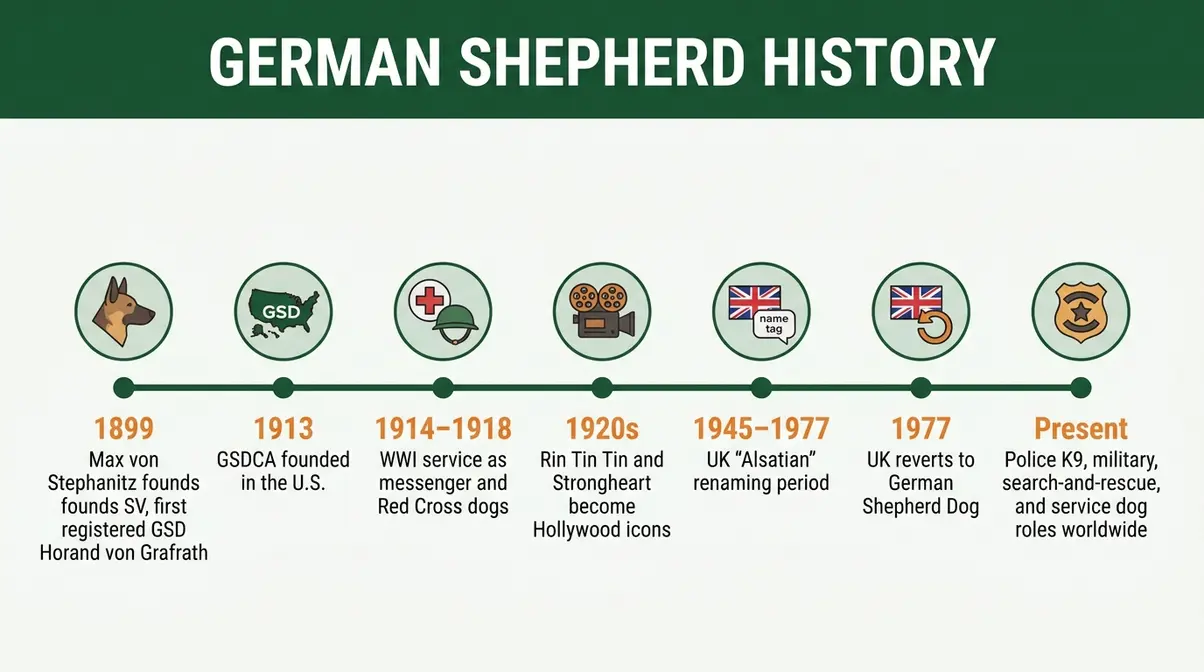
The German Shepherd was developed in Germany in 1899 by Captain Max von Stephanitz as a utility and herding dog. The first registered dog of the breed was Horand von Grafrath; von Stephanitz founded the Verein für Deutsche Schäferhunde (the German Shepherd Dog Club of Germany) the same year. The breed’s history runs through two world wars, a Hollywood golden era, and a naming controversy that lasted decades.
The 1899 Origin
German Shepherd history facts begin at a dog show in 1899. Captain Max von Stephanitz attended the show, purchased a dog he renamed Horand von Grafrath, and immediately founded the Verein für Deutsche Schäferhunde (SV), the German Shepherd Dog Club of Germany, that same year. Horand was the first officially registered dog of the breed. According to Hill’s Pet German Shepherd history and Wikipedia, von Stephanitz’s guiding principle was “utility and intelligence.”
The breed’s original purpose was herding and general farm utility, not police or military work. That transition came later, driven by the breed’s trainability and scenting ability rather than any original design intent. Von Stephanitz reportedly pushed the breed into military and police roles himself as industrialization reduced the need for herding dogs, but the founding vision was a dog that could work and live alongside families.
That founding vision is exactly what the Dual-Purpose Dog concept captures: from day one, the German Shepherd was bred to perform and to belong.
The Alsatian Rename
During World War I, anti-German sentiment prompted the UK Kennel Club to rename the breed “Alsatian Wolf Dog”, a reference to the Alsace-Lorraine region on the French-German border. The name was later shortened to “Alsatian.” In the US, the AKC briefly adopted the name “Shepherd Dog” for similar reasons, as documented by AKC fun facts.
The US restored the name “German Shepherd” in 1931. The UK didn’t follow until 1977, a 46-year gap that left buyers in both countries navigating different names for the same breed. Some older UK kennel registrations still list dogs under the Alsatian designation, which is why you’ll occasionally see the older name in British breed histories.
Rin Tin Tin and Screen Fame
Two German Shepherds changed the breed’s trajectory in America: Strongheart and Rin Tin Tin. Strongheart appeared first on screen; Rin Tin Tin followed and became the bigger star. Rescued from a WWI battlefield in France, Rin Tin Tin reportedly appeared in approximately 27 films during the 1920s, according to Pumpkin.care breed facts.
Their screen presence drove a spike in AKC registrations. American families who’d never encountered a working shepherd dog saw these animals perform on screen and wanted one. The cultural legacy persists: the German Shepherd remains one of the most recognized breeds in the world, and its association with loyalty and capability traces directly to those 1920s films.
How Big and Strong Is a German Shepherd?
Male German Shepherds stand 24-26 inches tall and weigh 65-90 pounds; females are 22-24 inches and 50-70 pounds, according to the AKC breed standard. That puts the average male at roughly the size of a medium-large working dog, substantial enough for patrol work, compact enough for a family home. Females are proportionally lighter and tend to be slightly more agile.
Size and Weight by Sex
Female and male German Shepherd facts differ meaningfully in the size department. Here are the AKC figures:
| Sex | Height | Weight |
|---|---|---|
| Male | 24-26 inches | 65-90 lbs |
| Female | 22-24 inches | 50-70 lbs |
Sources: AKC breed standard; cross-checked against PetMD German Shepherd breed profile.
Females tend to live slightly longer than males on average, a pattern observed across large dog breeds generally. The VetCompass study (Royal Veterinary College, 2017) found a median longevity of 10.3 years across UK veterinary records, individual variation is significant, and sex is one factor among many. For month-by-month height and weight data, see typical German Shepherd height and weight by age.
Note: Growth rates vary by individual. Consult a veterinarian for health or growth questions about a specific dog.
Bite Force and Sprint Speed
How strong are German Shepherds? The answer depends on which number you’re looking at. Bite force is commonly cited in the range of 238-291 pounds per square inch (psi) across breed-profile sources, including PetMD. Some online videos cite figures as high as 750 psi, but that figure doesn’t appear in peer-reviewed literature or major breed-authority sources; treat it as an unverified video claim rather than an established fact.
Sprint speed of approximately 30 mph is widely cited for the breed. For context, the average human runs 8-10 mph, a German Shepherd covers three times the ground in the same time. That speed gap is why they’re effective in police pursuit scenarios, and it combines with the bite-force figure to explain their role in suspect apprehension work.
Both stats, bite force for control, speed for pursuit, map directly to police K9 and military working-dog roles. This is the physical foundation of the Dual-Purpose Dog: strong and fast enough for operational work, calm and bonded enough for a family home.
German Shepherd vs Wolf
All domestic dogs (Canis lupus familiaris) share a common ancestor with the gray wolf (Canis lupus), German Shepherds are no more “wolf-like” genetically than a Chihuahua or a Poodle. The wolf ancestry is universal across domestic dog breeds, not a German Shepherd-specific trait.
Size tells the real story of the wolf comparison. Gray wolves typically weigh 80-150 pounds and stand 26-32 inches at the shoulder. A male German Shepherd at 65-90 pounds and 24-26 inches is meaningfully smaller. Wolves are also faster and built for sustained pursuit hunting, a survival-optimized animal in ways that a domesticated breed simply isn’t.
In a direct confrontation, a wolf would hold a significant size and instinct advantage. But that framing misses the point: German Shepherds aren’t bred to fight wolves. They’re bred to work with humans, a fundamentally different optimization. The traits that make a German Shepherd formidable alongside a wolf are the same ones that make them exceptional at learning.
How Smart Is a German Shepherd?
The Border Collie ranks first in working and obedience intelligence; the Poodle ranks second; the German Shepherd ranks third, that’s the consensus from breed intelligence research, including rankings based on the methodology developed by psychologist Stanley Coren. “Working and obedience intelligence” measures how quickly a dog learns new commands and how reliably it obeys them, not abstract reasoning or emotional intelligence. By that measure, German Shepherds are among the most capable dogs alive.
German Shepherds rank third in working and obedience intelligence among all dog breeds, learning new commands in approximately five repetitions and obeying first-time commands at a high rate, according to breed intelligence research and Pumpkin.care’s breed profile.
Intelligence Ranking
German Shepherd intelligence facts start with the ranking itself. According to Pumpkin.care’s German Shepherd profile, which draws on Coren-style ranking methodology, the top three breeds in working and obedience intelligence are:
| Breed | Rank | Commands to Learn | First-Command Obedience |
|---|---|---|---|
| Border Collie | 1st | ~5 repetitions or fewer | 95%+ |
| Poodle | 2nd | ~5 repetitions or fewer | 95%+ |
| German Shepherd | 3rd | ~5 repetitions | High rate |
The ranking matters because it explains why German Shepherds learn how German Shepherd intelligence ranks against other breeds so consistently across different handlers and environments. A dog that learns in five repetitions can be trained for complex tasks, narcotics detection, guide-dog work, obedience competition, in a fraction of the time required for less responsive breeds.
A comparative study of German Shepherd problem-solving ability published in 2022 and involving 82 German Shepherds found measurable differences in social cognition and inhibitory control compared to other breeds, the peer-reviewed counterpart to the ranking data.
How Fast They Learn
One breeder source, pedigreegermanshepherds.com, states that German Shepherds learn simple tasks after approximately five repetitions and respond to first-time commands at a high rate. It’s worth being clear: that figure comes from a breeder site, not a peer-reviewed study. Treat it as an informed practitioner claim rather than established scientific fact.
The peer-reviewed evidence tells a compatible but more nuanced story. The peer-reviewed breed cognition study (PMC9800387, 2022) measured problem-solving and inhibitory control in 82 German Shepherds and found measurable breed differences, meaning the cognitive advantages are real, even if the exact percentages from breeder sources aren’t independently verified.
Practically, this means German Shepherds respond well to positive reinforcement and consistent commands. They don’t just follow instructions, they read context, anticipate patterns, and adjust. That responsiveness is what makes training efficient, and it’s what makes both the working role and the family role possible at the same time.
Temperament and Loyalty
German Shepherd temperament, as described by the AKC breed standard, includes five core traits: confident, courageous, smart, loyal, and obedient. The AKC also notes that the breed is “aloof with strangers”, and that distinction matters. Aloof is not aggressive. A well-socialized German Shepherd is watchful and reserved around unfamiliar people; it’s not reactive or unpredictable.
That aloofness is the loyalty mechanism in action. The same wariness that makes them effective guard dogs is what makes them deeply bonded to their household. It’s the Dual-Purpose Dog operating as designed, protective of those inside the circle, cautious about everyone outside it.
Early socialization is essential to channel this trait appropriately. A German Shepherd that hasn’t been exposed to varied people, environments, and situations during puppyhood can develop anxiety or indiscriminate reactivity rather than measured alertness. For a day-to-day picture of what this looks like in practice, see what German Shepherd temperament looks like.
German Shepherd Working Roles: Police, K9, and Service Dogs
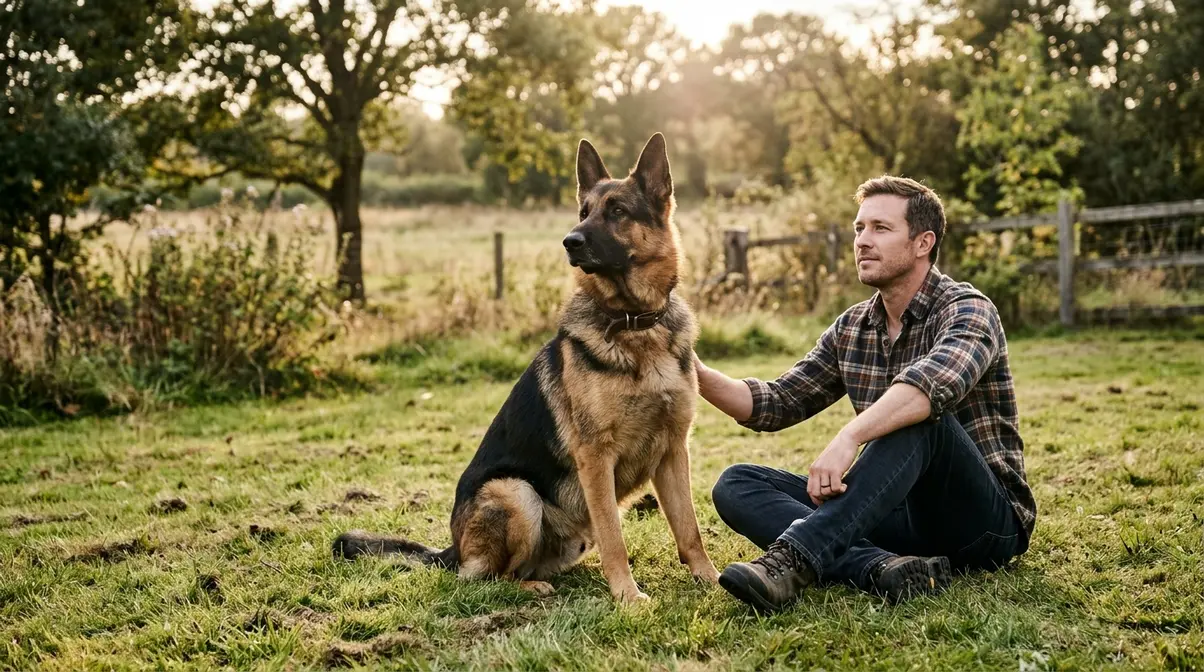
German Shepherds serve in five primary working roles: police/K9 detection and apprehension, military operations, search-and-rescue, guide-dog work for the blind, and therapy dog service. They dominate these roles because of a specific trait combination, high scenting ability, trainability, physical endurance, and a temperament that bonds with a handler while remaining focused under pressure. No single trait explains it; the combination does.
Police and Military Work
Facts about German Shepherd police dogs center on three traits: scent detection, speed, and trainability. Police K9 roles include:
- Narcotics and explosives detection, driven by ~225 million scent receptors
- Suspect apprehension, enabled by 30 mph sprint speed and 238-291 psi bite force
- Search-and-rescue, sustained by physical endurance and scent-tracking capability
- Patrol and crowd control, supported by physical presence and handler-bonding
German Shepherds have served in military roles since World War I. The Department of War feature on military working dogs documents their use in military working dog programs across multiple conflicts.
One fact K9 German Shepherd facts coverage often skips: the breed wasn’t originally created for police or military work. It was a herding dog. The transition to law enforcement happened because trainability and scenting ability made German Shepherds the most practical option when military and police organizations began formalizing working-dog programs in the early 20th century. The breed adapted, it didn’t start there.
Service and Guide Dog Roles
German Shepherd service dog facts include a historical first: the breed was among those used in the earliest guide-dog training programs established in Switzerland in the 1920s. Today, Labrador Retrievers and Golden Retrievers are more common in guide-dog roles, their temperaments tend to be more uniformly patient, but German Shepherds remain in active use.
In search-and-rescue contexts, the ~225 million scent receptors that make German Shepherds effective narcotics detectors also make them capable of tracking missing persons across disaster sites, through rubble, and over extended terrain. According to UC Davis on German Shepherd health, German Shepherds are renowned for intelligence and obedience, and are often the preferred breed for police and military work.
Therapy dog roles are possible for German Shepherds with the right temperament and thorough socialization, but their natural aloofness with strangers means this role requires more careful preparation than it would for a Labrador or Golden Retriever. For a broader look at how temperament shapes daily behavior, see German Shepherd temperament day to day.
German Shepherd Coat Colors Explained
A black German Shepherd is a purebred German Shepherd with a recessive solid-black coat, not a separate breed, not a mix. The AKC breed standard accepts black as a recognized color. That single clarification resolves the most common misconception in this topic, and it’s a good starting point for understanding how German Shepherd coat genetics actually work.
Black and White Coats
The black German Shepherd carries a recessive gene that produces a solid-black coat across the entire body. The AKC recognizes black as a standard color, it’s not a fault, not a disqualification, not evidence of mixed breeding. For a deeper look at the genetics and what to expect from a black GSD, see the facts behind the black German Shepherd coat.
The white German Shepherd is a different story under AKC rules. White is caused by a masking gene that suppresses the expression of other coat colors. The AKC considers white a disqualifying fault in conformation shows, meaning a white GSD can’t compete in the show ring under AKC rules, but the dog is still a purebred German Shepherd. Some registries, including the United Kennel Club, recognize the White Shepherd as a separate breed.
Both black and all-black German Shepherds are rarer than the classic black-and-tan because the genes that produce them are recessive. Two black-and-tan parents can produce a black puppy if both carry the recessive allele, which is why the color appears unexpectedly in litters from seemingly standard-colored parents.
Sable, Blue, and Panda Coats
The sable German Shepherd carries the most distinctive coat pattern in the breed. Sable refers to banded hairs, each individual hair has multiple colors along its length, producing the classic wolf-like appearance. Sable is the most common coat pattern in working-line German Shepherds and is fully accepted by the AKC. For how sable differs from silver and blue-gray, see how sable, silver, and blue gray coats differ.
The blue German Shepherd gets its color from a dilute gene, a genetic modifier that dilutes black pigment to a blue-gray shade across the coat. The AKC considers blue a serious fault in conformation, but blue dogs are still purebred GSDs. The dilute gene affects pigmentation only; it doesn’t alter temperament or working ability.
Most people who see a panda German Shepherd assume it’s a mix. It’s not. The panda pattern is caused by a rare piebald mutation, a spontaneous genetic change that produces white patches on a standard black-and-tan dog. The mutation is relatively recent in the breed’s history and is rare enough that most breeders have never produced one. Panda German Shepherds are purebred, but the piebald gene is not part of the original breed standard.
Coat Length Variants
Short-haired German Shepherds, the “stock coat”, are the breed standard. The outer coat is dense, straight, and harsh; the undercoat is thick. This is the coat type seen in most show and working lines.
Long-haired German Shepherds have a softer, longer outer coat that lacks the harsh texture of the stock coat. The AKC considers the long coat a fault in conformation, but it’s a recognized coat type within the breed. One common misconception: long-haired dogs shed just as much as short-haired dogs, the longer guard hairs are simply more visible on furniture and clothing.
“Miniature German Shepherds” are not an AKC-recognized variety. Dogs marketed under that name are typically a mix or a smaller-than-standard individual. If you’re curious about what traits come from specific crosses, see traits from each German Shepherd cross.
Are German Shepherds Good Guard Dogs?
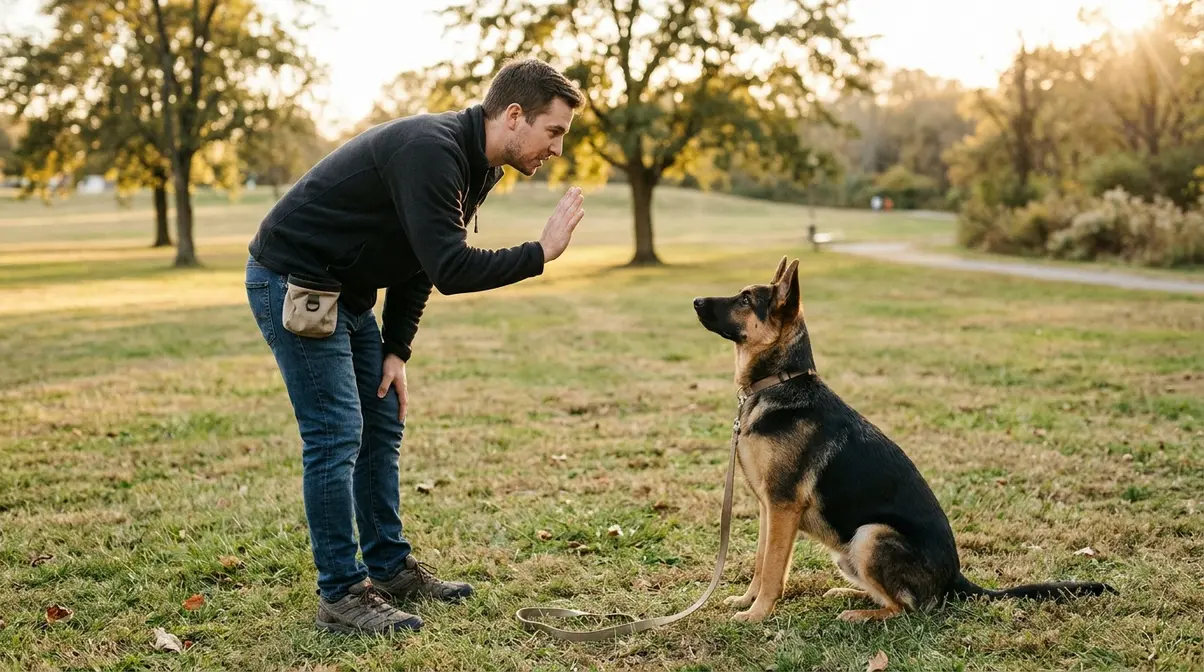
Yes, German Shepherds are effective guard dogs, and they’re consistently among the most recommended guard dog breeds for families. Three traits drive that assessment: natural loyalty to their household, physical presence that deters intruders, and trainability that allows the protective instinct to be directed precisely. The key qualifier is training, an untrained German Shepherd is not a reliable guard dog, regardless of instinct.
Natural Protective Instinct
A protective German Shepherd isn’t a trained attack dog. The protective instinct traces back to the breed’s herding heritage: German Shepherds were bred to guard flocks from predators, and that instinct transferred naturally to guarding family members. The mechanism is loyalty, not aggression.
In practice, that instinct shows up as alertness to strangers, positioning between family members and unfamiliar people, and vocal warnings when something feels wrong. Are German Shepherds protective? Yes, but the protection is loyalty-driven. According to the AKC breed standard, the German Shepherd’s temperament is described as confident, courageous, and loyal, with a natural wariness of strangers that makes them effective sentinels without being indiscriminately aggressive. A well-socialized German Shepherd reads a situation and responds proportionally; it doesn’t treat every stranger as a threat.
What the instinct is not: a substitute for training. Without consistent obedience work and socialization, the same protective drive can become anxiety, indiscriminate reactivity, or territorial behavior that’s difficult to manage. The Dual-Purpose Dog concept applies directly here, the same trait that makes them excellent family companions (deep loyalty) is what makes them effective protectors. Channel it correctly, and both roles reinforce each other.
German Shepherd as Family Guard Dog
German Shepherds as family guard dogs work because they bond with the entire household, children included. Their size and physical presence alone deters many would-be intruders, and their vocal alerting gives families advance warning of approaching strangers.
Compared to other guard dog breeds, German Shepherds occupy a useful middle ground. The Belgian Malinois is faster and more intense, better suited for professional security handlers than family homes. The Rottweiler is heavier and more territorial, effective, but requiring experienced handling. German Shepherds balance protection with family-friendliness more consistently than either alternative, which is why they’re frequently recommended for households with children.
Professional obedience training before relying on a German Shepherd for protection isn’t optional, it’s the difference between a reliable guardian and an unpredictable one. German shepherd guard dog breeds comparisons consistently put the GSD at the top for family contexts precisely because that trainability makes the protective instinct manageable.
How Long Do German Shepherds Live?
German Shepherds typically live 9-13 years, according to PetMD; the AKC cites 12-14 years. A peer-reviewed VetCompass study (Royal Veterinary College, 2017) found a median longevity of 10.3 years across UK veterinary records. No reviewed source documents a German Shepherd living to 20 years, that figure circulates online but is unverified. For questions about an individual dog’s health or expected lifespan, consult a licensed veterinarian.
Typical Lifespan Range
The lifespan picture for German Shepherds involves a range of attributed figures, not a single number:
- PetMD: 9-13 years
- AKC: 12-14 years
- VetCompass (Royal Veterinary College, 2017): median 10.3 years (IQR 8.0-12.1; range 0.2-17.0 across veterinary records)
The discrepancy reflects different study populations and methodologies. The VetCompass figure comes from actual veterinary records across primary care practices in the UK, a large, real-world sample. The AKC figure reflects breed-standard expectations under optimal care. Both are useful; neither is wrong. For a deeper analysis based on veterinary records, see typical German Shepherd lifespan from veterinary records.
Females tend to live slightly longer than males on average, consistent with patterns observed in large dog breeds generally. The VetCompass study noted a range extending to 17 years in exceptional cases, the oldest verified German Shepherds reach their mid-teens. A 20-year lifespan for any German Shepherd is not documented in any reviewed veterinary or breed-authority source.
For questions about an individual dog’s health or expected lifespan, consult a licensed veterinarian.
Common Health Issues
German Shepherd health facts include a sobering reality: the breed carries significant hereditary disease burden. A genome-wide study published in PubMed (genome-wide study of hereditary diseases in German Shepherds) documents over 50 hereditary diseases in the breed, one of the highest counts among purebred dogs.
Hip dysplasia, a malformation of the hip joint that causes pain and reduced mobility, is the most commonly discussed orthopedic condition in the breed. It’s common across large dog breeds generally, and German Shepherds are among the most frequently affected.
Degenerative myelopathy (DM) is a progressive spinal cord disease causing muscle weakness and loss of coordination, typically appearing in dogs over seven years old. According to the Cornell veterinary guide to degenerative myelopathy, Cornell’s Riney Canine Health Center describes DM as causing progressive muscle weakness and loss of coordination. The UC Davis German Shepherd genetic health panel offers genetic testing for DM and other hereditary conditions, allowing risk identification before symptoms appear.
Hemangiosarcoma, a cancer of the blood vessel walls, appears at elevated rates in German Shepherds compared to many other breeds. If you notice unexplained lethargy, pale gums, or abdominal swelling in an older GSD, consult a veterinarian promptly.
This information is educational, not veterinary advice. Consult a licensed veterinarian for questions about your dog’s health.
German Shepherd Care: Grooming, Diet, and Exercise
German Shepherd care facts center on three commitments: regular grooming for a heavy-shedding double coat, substantial daily exercise, and a diet calibrated to the breed’s size and energy level. Underestimate any of the three and you’ll see the consequences, matted coat, destructive behavior, or weight-related health problems.
Grooming
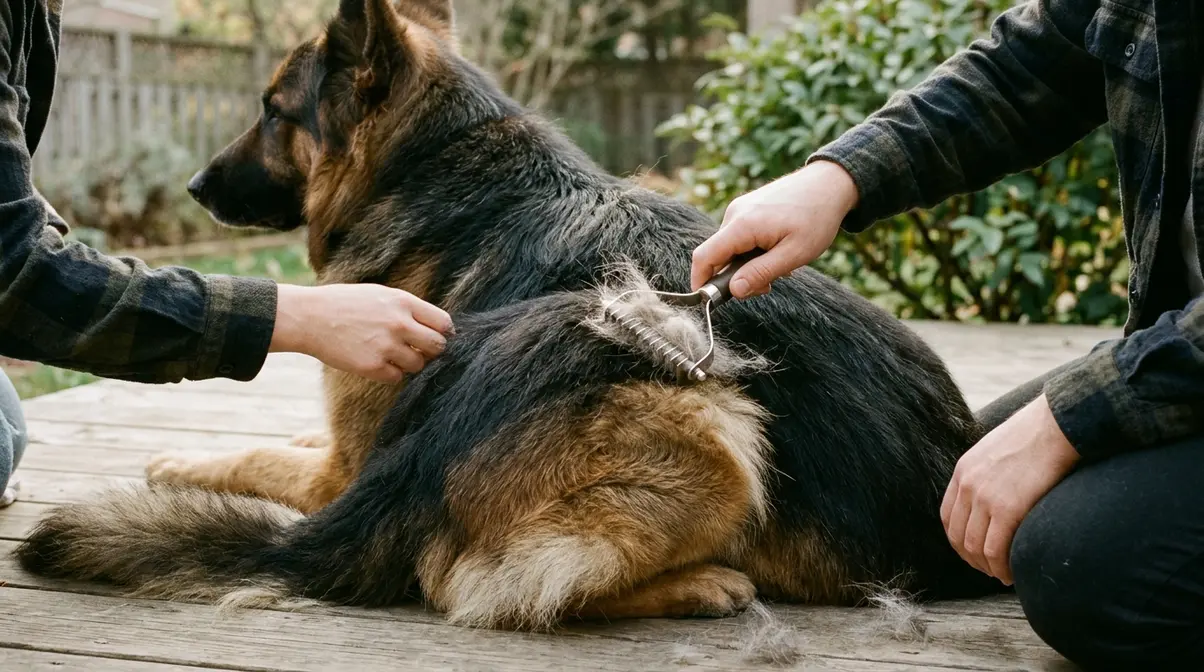
German Shepherd care facts start with the coat, and the coat demands respect. The breed carries a dense double coat that sheds year-round and “blows” (a heavy seasonal shed) twice a year, typically in spring and fall. That’s why German Shepherds have earned the nickname “German Shedders”, a label that sets realistic expectations better than any breed profile.
Brushing minimum: 2-3 times per week during normal periods; daily during the seasonal blowout. A slicker brush and an undercoat rake are the practical tools. Bathing frequency is every 4-6 weeks, or as needed after outdoor activity. Over-bathing strips the coat’s natural oils and can lead to dry skin and coat dullness.
Exercise and Diet
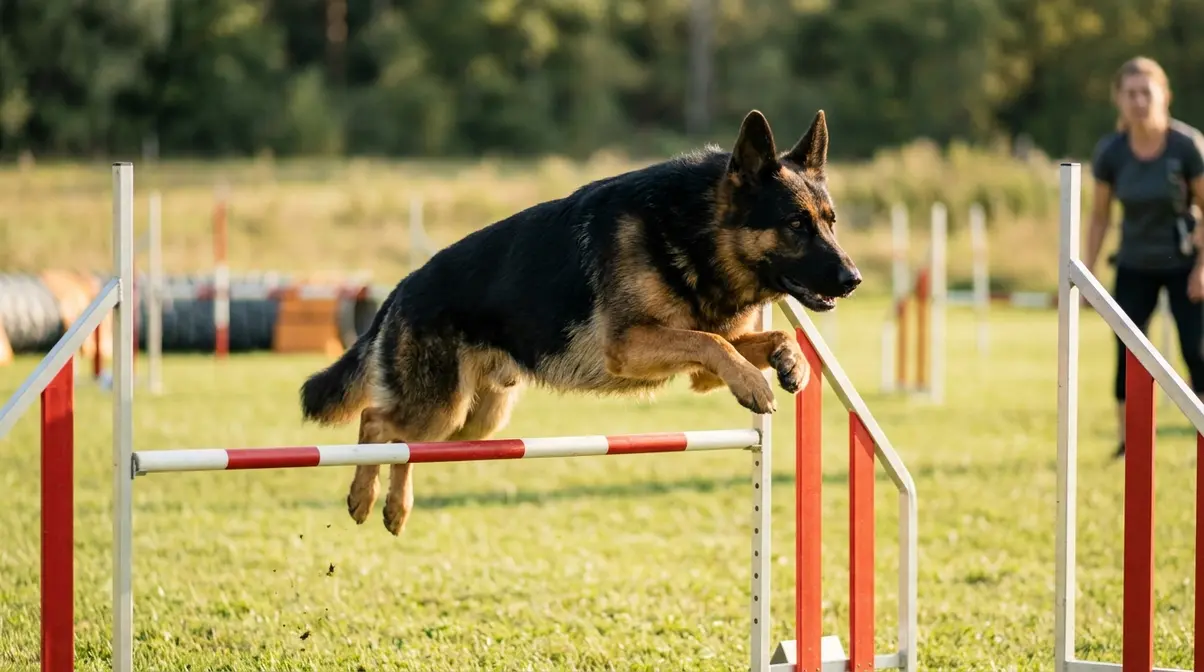
German Shepherd exercise facts are straightforward: adults need at least 2 hours of physical activity per day, according to breed guidance from PetMD’s German Shepherd breed profile. That 2-hour minimum includes walks, active play, and mental stimulation, training sessions count toward the total because cognitive engagement tires a German Shepherd nearly as effectively as physical exercise.
Insufficient exercise is a leading cause of destructive behavior in the breed. A German Shepherd that doesn’t get enough activity will find its own outlets, typically chewing, digging, or persistent barking.
Diet requirements vary by weight and activity level. Caloric needs for a working German Shepherd differ substantially from a sedentary household dog. PetMD and Hill’s Pet both offer breed-specific feeding guides as starting points, but the most accurate recommendation comes from a licensed veterinarian or board-certified veterinary nutritionist who can account for your specific dog’s age, weight, and health status.
Foods to avoid, grapes, raisins, onions, garlic, chocolate, and xylitol, are toxic to dogs generally and German Shepherds are no exception. Keep these out of reach entirely.
For specific feeding amounts, consult a licensed veterinarian or a board-certified veterinary nutritionist.
Are German Shepherds Good for First-Time Owners?
German Shepherds can work for first-time owners, but they’re not the easiest breed to start with. The honest answer is conditional: if you can commit to daily training, 2+ hours of exercise, and consistent socialization, a German Shepherd can be a deeply rewarding first dog. If those commitments feel uncertain, a Labrador Retriever or Golden Retriever is a more forgiving starting point.
What New Owners Should Know
For a first-time German Shepherd owner, the challenges are specific and worth naming clearly. High exercise needs, at least 2 hours per day, aren’t negotiable for a healthy, well-behaved dog. Heavy shedding is year-round, not seasonal. The breed has a strong will that responds to consistent training but resists inconsistency or passivity from an owner.
The adolescent phase, roughly 6-18 months, is the hardest period. At that stage, a German Shepherd is physically strong, close to adult size, but not yet fully trained. Impulse control is still developing, and the dog’s energy level peaks. First-time owners who aren’t prepared for that phase often describe it as the moment they felt overwhelmed.
The rewards are equally specific: deep loyalty, fast learning, natural protection, and a dog that bonds strongly with every member of the household. The same traits that make German Shepherds exceptional working dogs, high energy, strong will, intelligence, are the traits that challenge first-time owners. That’s the Dual-Purpose Dog reality: the working-dog capability doesn’t switch off when the dog comes home.
A Labrador Retriever or Golden Retriever is often recommended as a more forgiving first dog because their temperaments are more uniformly easygoing during the adolescent phase. That’s not a knock on German Shepherds, it’s just an honest comparison. According to AKC breed guidance, German Shepherds are highly intelligent and energetic dogs that thrive with experienced, committed owners who can meet their exercise and training needs consistently.
Is a German Shepherd Right for You?
- A German Shepherd may be right for you if:
- You can commit to 2+ hours of daily exercise and active play
- You’re willing to invest in professional obedience training, especially during the adolescent phase
- You want a loyal, protective dog that bonds strongly with your whole family
- You can handle year-round heavy shedding without resentment
- You work from home or have a schedule that allows consistent presence and engagement
- A German Shepherd may not be right for you if:
- You work long hours and can’t provide adequate daily exercise
- You want a low-maintenance dog that’s content with minimal stimulation
- You live in a small apartment with no outdoor space and no plan for daily exercise
- You’re not prepared for the financial and time commitment of professional training
Whatever your situation, the next step is honest self-assessment, and then a conversation with a reputable breeder or rescue organization who can match you with a dog whose energy level and temperament fit your actual life.
Frequently Asked Questions
Can a German Shepherd live 20 years?
No verified source documents a German Shepherd living to 20 years. The typical lifespan for the breed is 9 to 13 years, consistent with other large dog breeds; some sources cite up to 14 years in exceptional cases. A peer-reviewed VetCompass study found a range extending to 17 years across UK veterinary records, making the mid-teens the realistic upper boundary. The 20-year figure circulates online but is unverified across all reviewed breed-authority and veterinary sources. For questions about an individual dog’s longevity, consult a licensed veterinarian.
What is the #1 smartest dog?
The Border Collie is widely ranked as the #1 smartest dog breed in working and obedience intelligence. German Shepherds rank third, behind Border Collies and Poodles, based on how quickly they learn new commands and how reliably they obey them. German Shepherds typically learn a new command in approximately five repetitions, a figure attributed to breeder sources and consistent with the breed’s documented trainability in working contexts. The ranking measures obedience intelligence, not abstract reasoning or emotional intelligence.
What is the history of the German Shepherd?
The German Shepherd was developed in Germany in 1899 by Captain Max von Stephanitz as a utility and herding dog. The first registered dog of the breed was Horand von Grafrath; von Stephanitz founded the Verein für Deutsche Schäferhunde (the German Shepherd Dog Club of Germany) the same year. After World War I, the UK renamed the breed “Alsatian” due to anti-German sentiment; 1920s film stars Rin Tin Tin and Strongheart then boosted its popularity in the US. The name “German Shepherd” was restored in the US in 1931 and in the UK in 1977.
What are 5 facts about German Shepherds?
Five key German Shepherd facts: bred in Germany in 1899; males stand 24-26 inches tall and weigh 65-90 pounds; they rank as the third-smartest dog breed; their noses hold approximately 225 million scent receptors; and they can sprint up to 30 miles per hour. The breed’s double coat sheds year-round and requires brushing at least 2-3 times per week. German Shepherds typically live 9-13 years, with a median of 10.3 years per veterinary records. They serve in police, military, search-and-rescue, and guide-dog roles worldwide.
What is the IQ of a German Shepherd dog?
No numeric IQ score exists for German Shepherds, dogs don’t take IQ tests. What researchers do measure is working and obedience intelligence: how quickly a dog learns commands and how reliably it obeys them. By that measure, German Shepherds rank third among all breeds, learning simple commands in approximately five repetitions. A 2022 peer-reviewed study (PMC9800387) found measurable differences in problem-solving and inhibitory control between German Shepherds and other breeds, confirming that the cognitive advantages behind the ranking are real.
Are German Shepherds good guard dogs?
Yes, German Shepherds are among the most commonly recommended guard dog breeds for families. Their natural loyalty, physical presence, and trainability make them effective deterrents, and their bond with family members means they respond protectively to perceived threats without being indiscriminately aggressive. Unlike some guard breeds, German Shepherds balance protection with family-friendliness, making them suitable for households with children. Proper training and socialization are essential, an untrained German Shepherd’s protective instinct can become anxiety or reactivity rather than reliable guardianship.
Are German Shepherds protective?
Yes, German Shepherds are naturally protective of their family members. This protective instinct traces back to their herding heritage, where they were bred to guard flocks from predators; that instinct transferred naturally to protecting households. The protection is loyalty-driven rather than aggression-driven, a well-socialized German Shepherd is alert to genuine threats without reacting to every stranger. Early socialization and consistent training are essential to channel this instinct appropriately, turning natural wariness into reliable, proportionate protection.
How strong are German Shepherds?
German Shepherds are physically powerful dogs, males weigh up to 90 pounds and can sprint up to 30 miles per hour. Their bite force is commonly cited in the range of 238 to 291 pounds per square inch (psi) across breed-profile sources; some videos report higher figures, but those aren’t supported by peer-reviewed literature. Their strength combined with trainability is why they’re deployed in police apprehension and military roles. For context, a gray wolf’s bite force and overall size both exceed a German Shepherd’s, wolves typically weigh 80-150 pounds.
Conclusion
For anyone researching German Shepherd facts, this breed delivers a rare combination: a median lifespan of 10.3 years (Royal Veterinary College VetCompass, 2017), approximately 225 million scent receptors, and a third-place ranking in canine intelligence, all in a dog that also ranks consistently among the most popular family pets in the United States. Whether you’re drawn to their working-dog history, their coat color variety, or their reputation as loyal family protectors, the data points in one direction: this is a breed that earns its reputation.
The Dual-Purpose Dog isn’t a marketing phrase, it’s the organizing fact of the German Shepherd’s existence. The same intelligence that makes them effective police K9s makes them fast learners at home. The same loyalty that makes them protective family dogs makes them reliable working partners. Those two roles don’t compete; they reinforce each other, which is why no other breed quite replicates what a well-trained German Shepherd brings to both contexts.
If you’re considering adding a German Shepherd to your home, start with a temperament assessment and a conversation with a reputable breeder or rescue organization. Give yourself 30 days to research the breed’s care requirements, exercise commitment, training investment, grooming reality, before committing. Our guides on German Shepherd temperament and lifespan from veterinary records are good next steps.

 10 Week Old German Shepherd: Complete Care Guide