
Adopting an adorable puppy is like gifting yourself and your family with a bundle of happiness. However, all the smiles and cuddles may give place to expressions of discomfort on seeing the puppy peeing or defecating on places like your bed, mat, or kitchen. House-training or potty-training your puppy is considered to be one of the most important lessons which would save a lot of embarrassment, annoyance, and hardship for both the puppy and the owner.
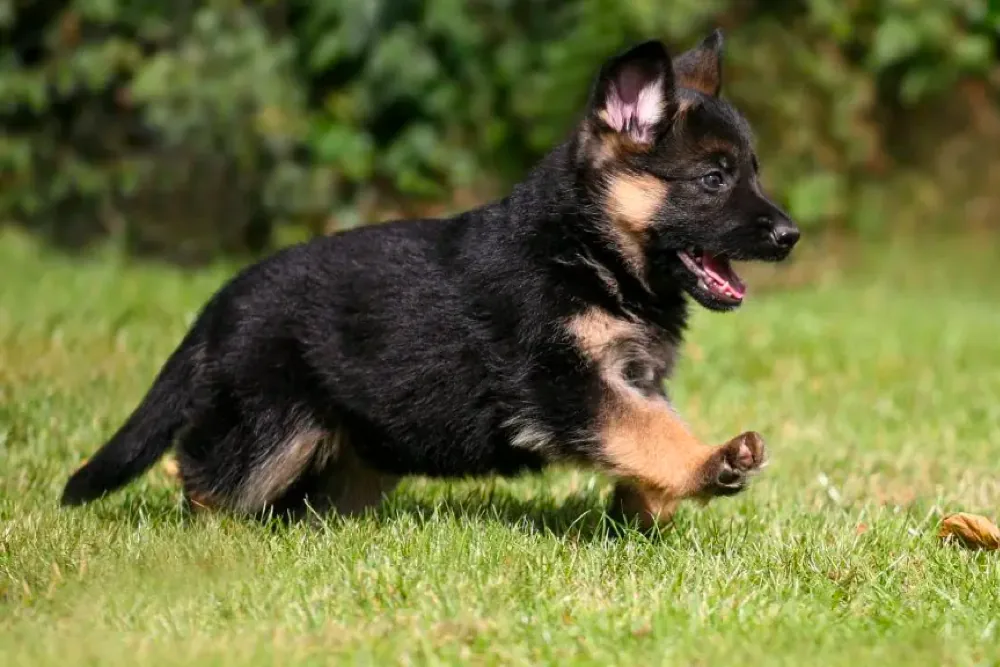
A puppy that is properly potty-trained gives a lot of relief to his owner but the initial steps and lessons have to be incurred by the owner himself. A dog is a creature of habit and hence it is a must to imbibe the lessons naturally, consistently, and tenaciously from early puppyhood. Before starting the house-training process, the owner is advised to keep certain factors in his mind. It is better if the potty training starts from the very second month of the puppy’s life, but do not expect the puppy to understand and do as you command at that age. Read on the following steps and processes which would let you train your puppy on eliminating and defecating:
- The first step towards potty-training your little puppy is to pay attention and watch out for indications and signals given out by the puppy like sniffing, squatting, and whining. It is important to be nearby your puppy almost all the time and it is important to keep checking its movement, gestures, and sounds made before it eliminates or defecates. In case you understand the urge to poop or pee, gently lift it in your arms and take it outside for elimination.
- Make sure to be patient and persistent while it is doing it’s defecating and be nearby the puppy. Don’t forget to treat them with a reward as soon as he defecates and eliminates outside. Remember that a puppy has a relatively small bladder and hence don’t expect it to hold its potty or pee when it feels the pressure. It is important to take the puppy outside every two hours to build up the sense in him that any kind of elimination should be done outside the house and the crate.
- Another important thing to remember is that the puppy generally needs to pee or potty after he takes his food, so be ready to take him outside within 10 minutes after he finishes his meal. Even in case he does not poo or potty readily as you take it outside, be patient and deny moving inside the house till he eliminates outside. In doing so, treat him with a reward and pet him to make him feel that his eliminating or defecating outside is appreciated. From the very beginning, mark a particular territory outside your house where he can go poop or potty, and be consistent in taking him to that specific place every time he needs to defecate or urinate.
- The next most important thing to maintain is consistency in using particular commanding terms while taking him outside for potty training like ‘go potty’, ‘go poop’, ‘poop outside’, or any other relevant two-letter words, which has to be repeated every time you intend to take your puppy outside for pee or potty-train. Moreover, it is important to keep your home free from any stains or smell of potty or pee and also to make use of a potty training pad which has a particular scent in it to make the puppy poop in it. Treat him every time he poops or pees outside to motivate him to continue the habit for good.
Besides these simple rules, also take care of what your puppy eats and drinks, make sure he does not over-eat or over-drink, and also that he consumes healthy stuff and not any trash lying in the household. Remember that punishing the puppy on eliminating and defecating inside the house will not do you or the puppy any good apart from making him more confused and depressed. Being attentive, consistent, patient, and compassionate is very important to teach your puppy about proper potty and pee habits.
House training runs alongside the rest of puppy work, covered in training a German Shepherd puppy.
Disclaimer: PetVR shares general information based on our contributors’ firsthand experience with German Shepherds — it is not veterinary advice. Always consult a licensed veterinarian about your dog’s health, diet, or behavior. Read our full disclaimer.
How dogs actually learn, and why the method matters
Before any specific exercise, it is worth knowing what the veterinary behaviour profession actually recommends, because the dog training industry is unregulated and advice varies wildly.
The American Veterinary Society of Animal Behavior is unambiguous: “based on current scientific evidence, AVSAB recommends that only reward-based training methods are used for all dog training, including the treatment of behavior problems” (AVSAB Humane Dog Training Position Statement, retrieved 2026-08-12).
This is not a soft preference. AVSAB states it “does not support the use of aversives in any context, regardless of the tools used or the trainer’s level of experience”, and that the position “is grounded in current scientific evidence, which consistently shows that aversive methods carry significant risks to animal welfare and the human-animal bond” (retrieved 2026-08-12).
And reward-based training is not merely kinder, it works better. AVSAB cites Hiby and colleagues (2004), who found “obedience levels of dogs highest for dogs trained exclusively with reward-based methods and lowest for dogs trained exclusively with aversive-based methods”. Mixed approaches, “often referred to as balanced in the dog training industry”, landed in between (AVSAB Position Statement on Humane Dog Training, 2021, retrieved 2026-08-12).
One misunderstanding worth heading off. AVSAB notes that “use of reward-based methods does not mean dogs are allowed to do anything they want” (retrieved 2026-08-12). Rules still exist. What changes is how you teach them.
The routine that does most of the work
House training is a management problem before it is a training problem. Get the schedule right and the learning happens almost by itself.
Take the puppy out at every one of these moments: immediately on waking, within a few minutes of every meal, after any play session, after any excitement such as visitors arriving, and last thing at night.
Between those, use the clock. A rough guide many owners find useful is that a young puppy can hold on for roughly its age in months plus one, in hours, during the day. That is a planning aid, not a rule, and it says nothing about overnight.
Go outside with the puppy every time. Not because it cannot manage alone, but because you cannot reward what you did not see, and a puppy sent out alone often spends the time waiting at the door and then relieves itself indoors.
Reward on the spot, outdoors, within two seconds. A treat given back in the kitchen rewards coming into the kitchen.
Pick a toilet spot and use it consistently. The smell does half the work for you.
Accidents: what to do and what never to do
Never punish an accident. Not shouting, not the nose, not any of it. Beyond the welfare argument, it does not work: a punished puppy learns not to go in front of you, which is how owners end up with a dog that sneaks behind the sofa and a house trainer who is now working blind.
AVSAB’s position that aversives carry significant welfare risks applies here as much as anywhere else. Accidents are a management failure, not disobedience.
Clean with an enzymatic cleaner. Ordinary household products, especially anything ammonia-based, leave a scent signature that invites a repeat performance.
Interrupt gently if you catch them in the act, with a cheerful noise rather than a telling-off, then carry or lead them straight outside and reward finishing there.
Keep a short log for a few days if progress stalls. Times and locations usually reveal a pattern, and the pattern usually points at a gap in the schedule rather than a stubborn puppy.
When house training is a health question
Most delays are normal. Some are not, and it is worth knowing which is which.
Talk to your vet if your puppy is drinking noticeably more than usual, straining or crying when urinating, producing very frequent small amounts, passing blood, or if a puppy that was reliably clean suddenly regresses. Urinary infections are common in young dogs and no amount of training fixes one.
Persistent diarrhoea is a separate matter and belongs with your vet rather than your training plan. Our article on digestive tract disorders in German Shepherds covers what to bring to that appointment.
What is different about training this breed
German Shepherds are not harder to train than other dogs. In some ways they are easier, and that creates its own problems.
They learn fast, including the things you did not mean to teach. A dog that works out that barking makes you come outside has learned exactly as efficiently as one learning to sit. Be deliberate about what gets rewarded, including by accident.
They need the thinking as much as the walking. The AKC describes purpose-bred dogs as needing mental work, warning that without the brain exercise they need “they’ll create their own projects to keep their minds busy” (AKC breed profile, retrieved 2026-08-12). Five minutes of training is often worth more than another twenty minutes of walking.
They are big, and size changes the stakes. A behaviour that is charming in a 10 kg puppy is not charming in a 35 kg adult. Jumping up, mouthing and pulling are all much easier to prevent than to fix later.
They form strong attachments, which makes your attention a genuinely powerful reward and makes harsh handling land harder than it would with a less sensitive dog.
Session rules that make everything else work
- Short and often beats long and occasional. Three or four sessions of five minutes across a day will outperform one twenty-minute session, especially with a puppy.
- Finish while your dog still wants more. Ending on success is what makes a dog eager to start next time.
- Train before meals, not after. A hungry dog works for food. A full dog does not.
- Start somewhere boring. Your kitchen, no other dogs, no visitors. Add difficulty only once the behaviour is reliable.
- Change one thing at a time. Distance, duration, distraction. Raise one and drop the others.
- If it falls apart, make it easier. A dog that stops responding is usually telling you the step was too big, not that it is being stubborn.
- Keep your voice ordinary. Repeating a cue louder teaches the dog that the first six times do not count.
If you hire help, here is the filter
A German Shepherd is a large, powerful, clever dog, and getting good help early is money well spent. The difficulty is that anyone can call themselves a dog trainer.
AVSAB gives an unusually concrete screening rule: “if a trainer is observed using aversive training methods or if a trainer discusses out-dated ideas such as dominance, leader of the pack, or alpha theories, then clients should be advised against hiring them” (AVSAB Position Statement on Humane Dog Training, 2021, retrieved 2026-08-12).
That is a clean test you can apply in a five-minute phone call. Ask a prospective trainer how they would handle a dog that ignores a cue. If the answer involves showing the dog who is boss, keep looking.
Questions worth asking before you book:
- What happens when my dog gets it right? A reward-based trainer answers this immediately and specifically.
- What happens when my dog gets it wrong? The answer should involve making it easier, not making it unpleasant.
- What equipment do you use? Be cautious of anyone who leads with a tool rather than a plan.
- Can I watch a class before enrolling? A confident trainer says yes.
- What qualifications do you hold, and are you insured?
 Top 10 Best German Shepherd Breeders in Minnesota (MN)