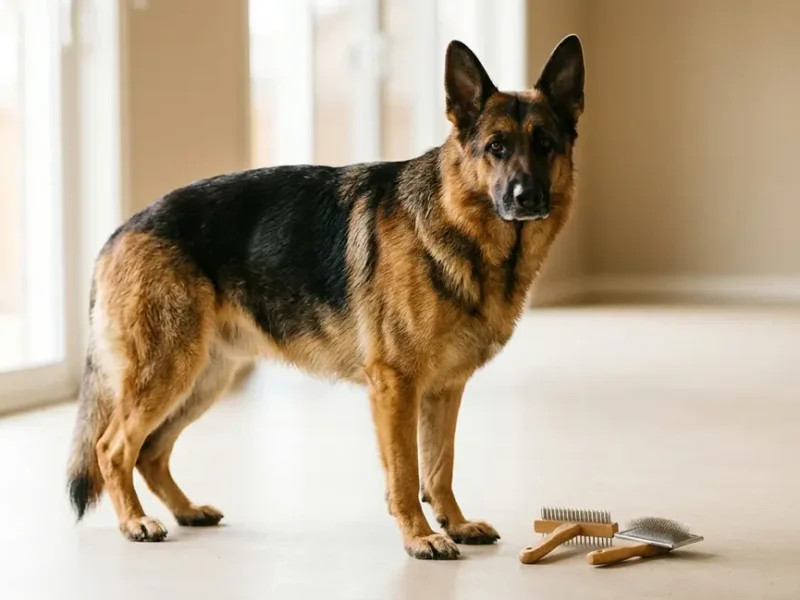
To groom a German Shepherd, work through six steps in sequence: dry-rake the coat, bathe with a double-coat shampoo, blow or towel dry thoroughly, then finish with nails, ears, and teeth. A full session takes 45 to 90 minutes and should happen every 6 to 8 weeks, with daily brushing during spring and fall coat blows. You’ll need an undercoat rake, slicker brush, and metal greyhound comb as your core tools.
Fur on every surface. A vacuum that fills in one pass. A dog scratching at a damp undercoat that just won’t stop releasing.
“His undercoat is shedding soo bad right now.”
That’s the reality of owning a German Shepherd, and reaching for the scissors or booking a groomer without knowing what to ask for makes things worse, not better. Shaving a GSD disrupts the very coat system designed to keep your dog comfortable. And a groomer who doesn’t know your dog’s coat phase may skip the deshedding bath that would have solved the problem.
By the end of this guide, you’ll have a grooming schedule, a tool list, and a step-by-step routine you can run at home. We’ll cover the schedule, the double coat, the right tools, a full at-home routine for grooming a german shepherd, and when a professional groomer is worth it.
Key Takeaways: German Shepherd Grooming
Brush a German Shepherd 2-3 times a week (daily during spring and fall coat blows), bathe every 6-8 weeks, and trim nails every 3-4 weeks. The double coat should never be shaved, brush out dead undercoat instead.
- Brushing: 2-3×/week; daily during coat blows; the three-phase grooming approach (maintenance / coat-blow / recovery) keeps this manageable
- Bathing: Every 6-8 weeks; more often only with a thorough rinse, frequent bathing strips natural skin oils
- Nails: Every 3-4 weeks; ears checked weekly
- Tools: Undercoat rake first, slicker brush to finish, metal comb to check
- Never shave: The double coat regulates temperature; shaving disrupts guard-hair regrowth and removes natural insulation
What You’ll Need Before You Start
Estimated time: 45-90 minutes for a full grooming session.
Gather everything before you bring your dog in. Stopping mid-session to find the comb is the fastest way to lose a nervous dog’s cooperation.
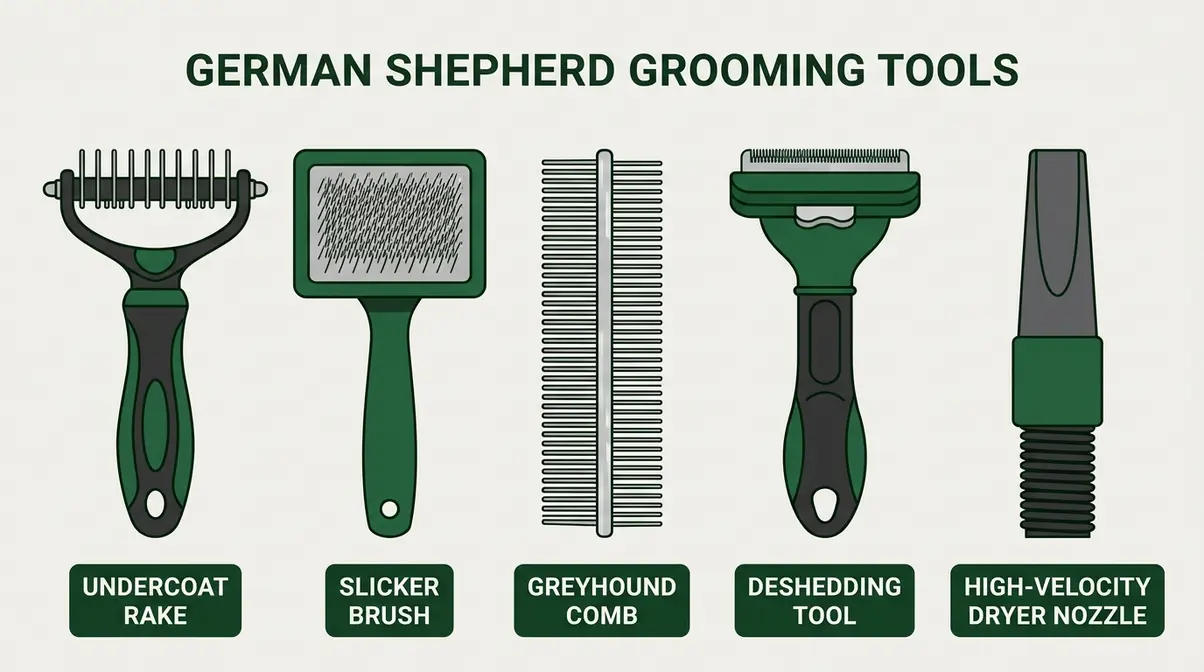
- Undercoat rake, wide-toothed pins that reach the soft inner layer without scratching the skin; unlike the slicker, it works below the guard coat
- Slicker brush, fine angled wire pins for smoothing the outer guard coat and catching surface tangles after raking
- Metal greyhound comb, the final check; if it slides through cleanly, the session is done
- Pin brush, wider, rounded pins gentler on feathering; long-coat German Shepherds only
- Deshedding tool (Furminator-style), optional; use sparingly (no more than once a month) to avoid damaging guard hairs
- High-velocity dryer, optional but recommended for coat blows; dramatically cuts drying time
- Dog shampoo formulated for double coats
- Towels
- Nail clippers or grinder
- Ear-cleaning solution and cotton balls
- Dog toothbrush and dog toothpaste
A note on deshedding tools: the Furminator and similar blades are effective at pulling loose undercoat, but overuse cuts and thins the outer guard hairs. According to Pawradise Pet’s grooming guide, keeping deshedding tool use to coat-blow seasons only protects the guard hairs from damage. Reserve this tool for coat-blow seasons, not weekly maintenance.
Step 1: Set a German Shepherd Grooming Schedule
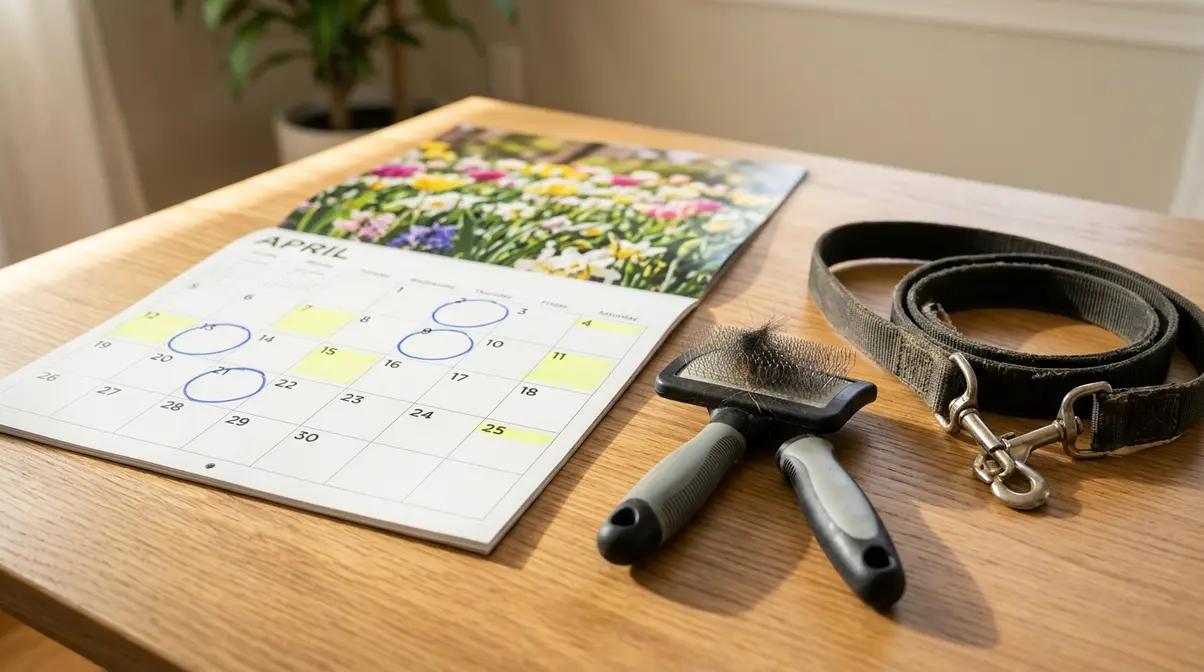
German Shepherds need brushing 2-3 times a week and a bath every 6-8 weeks, but during the spring and fall coat blows, daily brushing is essential to prevent matting and hot spots. Nail trims fall every 3-4 weeks. Over-bathing strips the natural skin oils that protect the double coat, so resist the urge to bathe more often unless the dog is visibly dirty. The schedule shifts significantly during coat-blow seasons, which is why a phase-based approach works better than a fixed weekly plan.
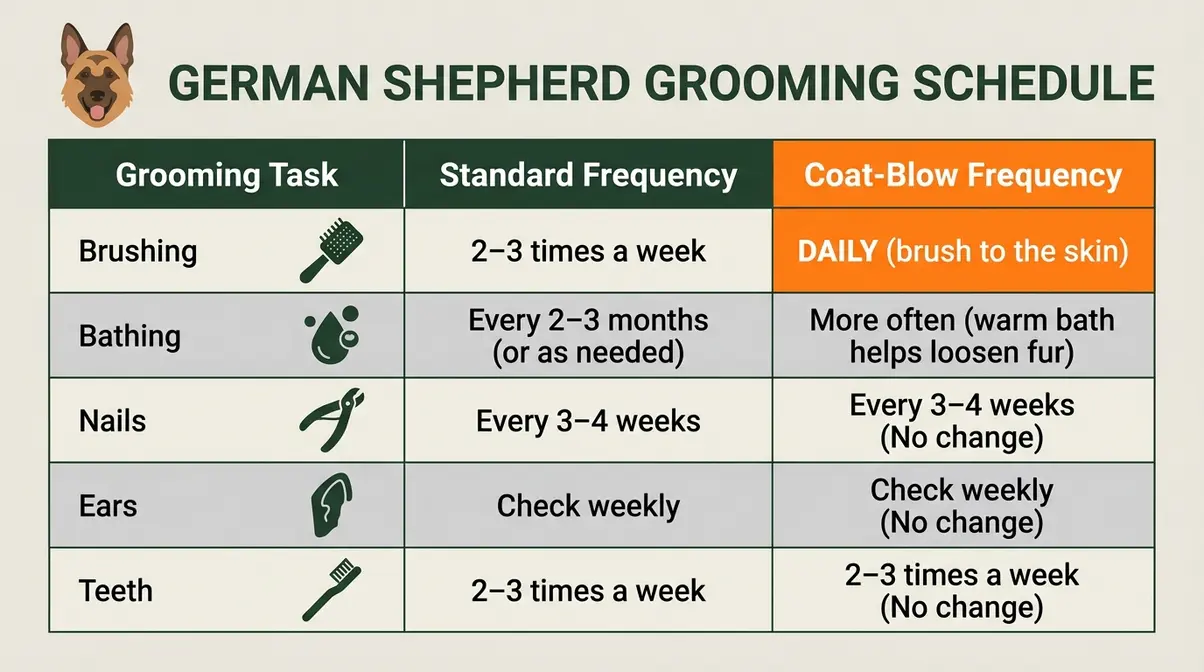
Baseline Schedule: Brushing, Bathing and Nails
How much grooming does a German Shepherd need? More than most owners expect, and the answer changes twice a year. The table below covers the full maintenance schedule and the coat-blow adjustment column.
| Task | Standard Frequency | Coat-Blow Frequency | Notes |
|---|---|---|---|
| Brushing | 2-3×/week | Daily | Undercoat rake first, slicker to finish |
| Bathing | Every 6-8 weeks | Every 6-8 weeks | Rinse thoroughly; strip oils if more frequent |
| Nails | Every 3-4 weeks | Every 3-4 weeks | Click test: nails touch floor = too long |
| Ears | Weekly check | Weekly | Wipe with ear-cleaning solution; no cotton swabs deep in canal |
| Teeth | 2-3×/week | 2-3×/week | Dog toothpaste only |
Brushing frequency guidance varies slightly across sources. The American Kennel Club advises brushing every other day, while Pawradise Pet and several breed clubs land on 2-3 times a week as a practical baseline. The reconciled answer: brush at least 2-3 times a week during maintenance, and daily during coat blows. On bathing frequency, both sources agree on every 6-8 weeks, some breed clubs phrase it as “no more than once every couple of months,” which maps to the same range. Active or service dogs can be bathed more frequently, but only with a thorough rinse to avoid stripping skin oils.
For a deeper look at bathing intervals and what changes them, see how often to bathe a German Shepherd.
How Coat Blows Change the Routine
Coat blows happen twice a year, spring and fall, and last roughly two to four weeks. During this window, the entire undercoat releases at once. Daily brushing isn’t optional; skipping it allows loose undercoat to mat against the skin and trap moisture, which causes hot spots.
The signals are hard to miss: large clumps of soft, fluffy undercoat releasing from the coat, visible tufts lifting when you run your hand against the grain, and the classic “second dog in the vacuum” experience that owners on r/doggrooming describe regularly. These are normal signs, not illness.
Mark your calendar for March-April and September-October as your heavy-brushing windows. When the clumps start, switch from the standard column to the coat-blow column in the schedule table. A deshedding bath, shampoo, thorough rinse, high-velocity blow-out, at the start of a coat blow dramatically reduces the loose undercoat before it has a chance to mat. For the deshedding routine for seasonal coat blows, the sequence matters as much as the tools.
This is also where the three-phase grooming approach comes in, a framework that ties the whole schedule together. The three phases are: maintenance (standard weeks, 2-3 brushings per week), coat-blow (spring and fall, 2-4 weeks of daily brushing and a deshedding bath), and recovery (post-blow, running a metal comb through the entire coat to check for remaining mats before returning to maintenance). The schedule table covers the maintenance phase; Steps 2 and 4 cover the coat-blow and recovery phases in detail.
Checkpoint: You now have a written schedule. Pin it somewhere visible, the coat-blow seasons are the weeks you’ll need it most.
Before you start any of these tasks, it helps to understand why the German Shepherd’s coat behaves the way it does, and why the coat-blow phase is so different from a normal week.
Step 2: Understand the Double Coat and Spot Shedding Problems
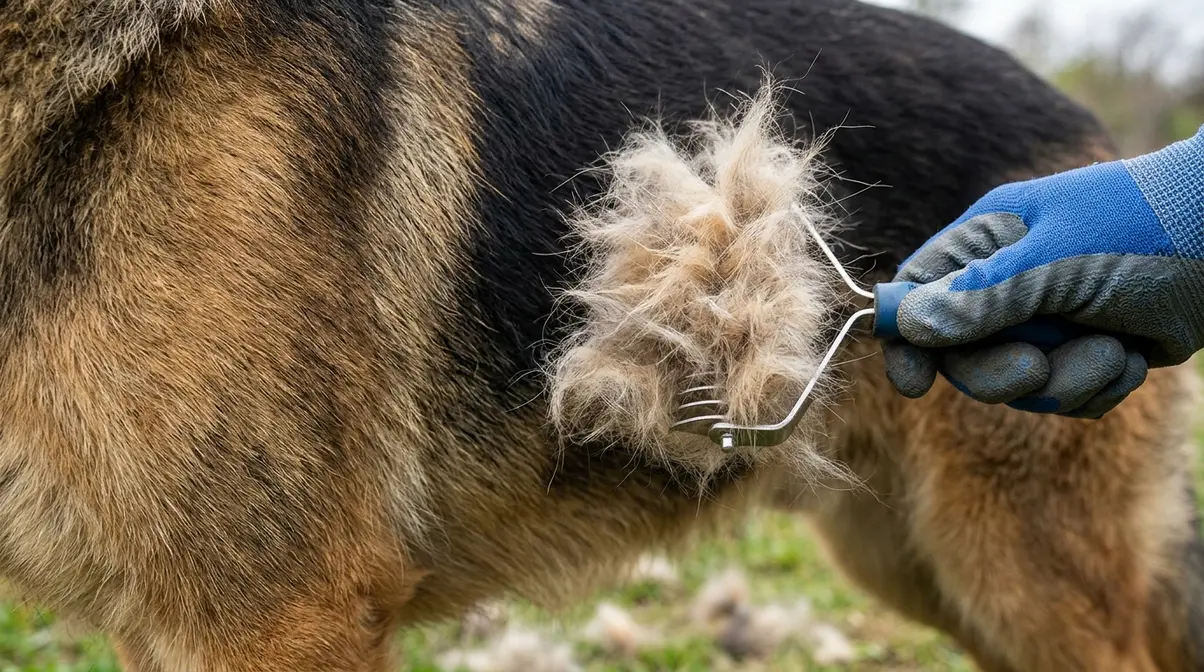
A German Shepherd’s double coat consists of two distinct layers: a harsh outer guard coat that repels water, dirt, and UV rays, and a soft, dense undercoat that traps air for insulation. During coat blows, the undercoat sheds in clumps rather than gradually, which is why the shedding looks so dramatic. That loose undercoat, if not brushed out, mats against the skin and traps moisture, the primary cause of hot spots in the breed.
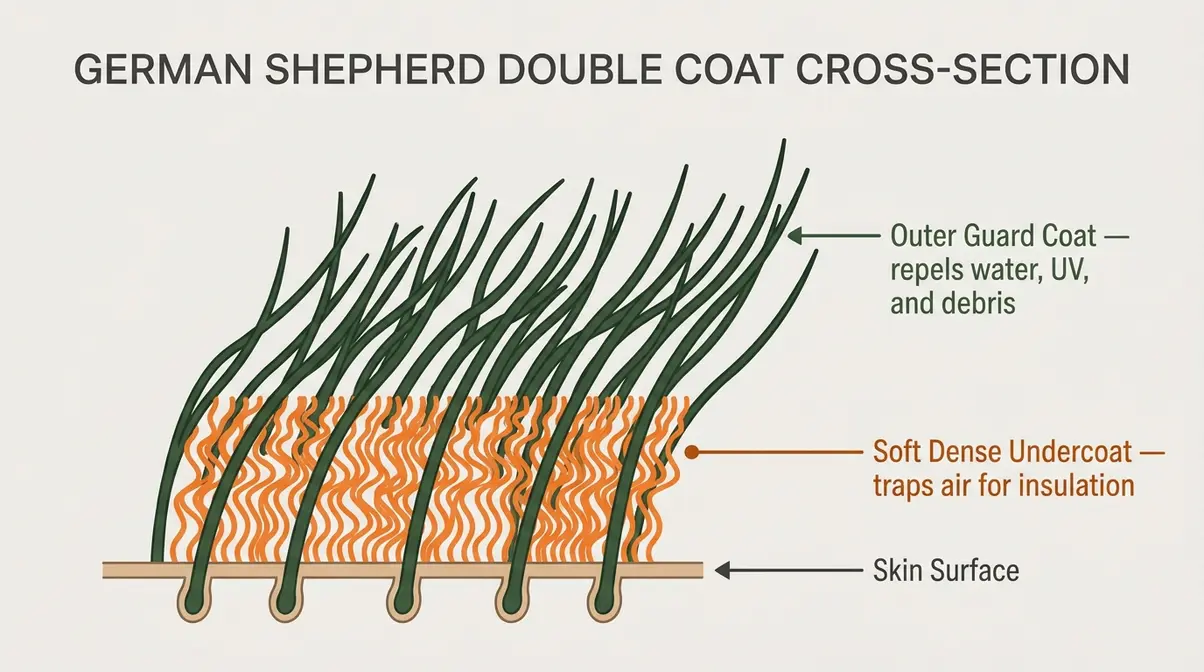
How the Double Coat Works
The outer guard hairs are stiff and water-resistant, protecting the skin from rain, sun, and debris. Beneath them, the undercoat is soft and thick, trapping air to regulate temperature in both heat and cold. Both layers work together; removing either one disrupts the system.
A German Shepherd’s double coat, a harsh outer guard layer over a soft, dense undercoat, regulates body temperature in both heat and cold; shaving it disrupts guard-hair regrowth and removes the dog’s natural insulation. The American Kennel Club is clear on this: brush out dead undercoat instead of shaving, and the coat continues doing its job. Pawradise Pet notes that shaving also exposes the skin to sunburn and disrupts thermal regulation in both directions, the dog gets hotter in summer, not cooler.
When the undercoat is shedding, shaving looks like an obvious fix. It isn’t. The undercoat often regrows faster than the guard coat, leaving a patchy, uneven result that no longer insulates or repels water correctly, a condition sometimes called post-clipping alopecia in double-coated breeds. The correct response to heavy shedding is brushing out the dead undercoat, not cutting it.
During a coat blow, the undercoat comes out in clumps, and if you don’t brush it out, it mats against the skin.
Should You Cut a German Shepherd’s Hair?
Shaving a German Shepherd is one of the most common mistakes owners make when shedding gets out of hand. The double coat is not just fur, it is a thermal regulation system. The outer guard hairs repel heat, UV rays, and water; the soft undercoat traps air for insulation, keeping the dog cool in summer and warm in winter. Removing the guard hairs disrupts how the undercoat and guard coat grow back, often leaving a patchy coat that no longer insulates correctly. Brush out dead undercoat instead, that is what removes the heat-trapping loose fur without damaging the coat’s function.
Recognizing a Coat Blow
The signs are specific: large clumps of soft undercoat releasing from the coat, visible tufts lifting when you run your hand against the grain, and a noticeable increase in fur on every surface, what owners on r/doggrooming call the “second dog in the vacuum” experience. That’s owner consensus, not a clinical measure, but it’s accurate. Coat blows last two to four weeks.
During this window, daily brushing is the single most effective way to prevent matting and hot spots. A deshedding bath at the start of a coat blow, shampoo, thorough rinse, full high-velocity blow-out, loosens and removes the bulk of the undercoat before it has a chance to mat. After the coat blow ends, move into the recovery phase: run a metal comb through the entire coat to check for any remaining mats before returning to the maintenance schedule.
If you’ve fallen behind during a coat blow, you may be dealing with mats. Here’s how to assess their severity and decide whether to handle them yourself or call a groomer.
Dealing with Mats: Severity and Next Steps
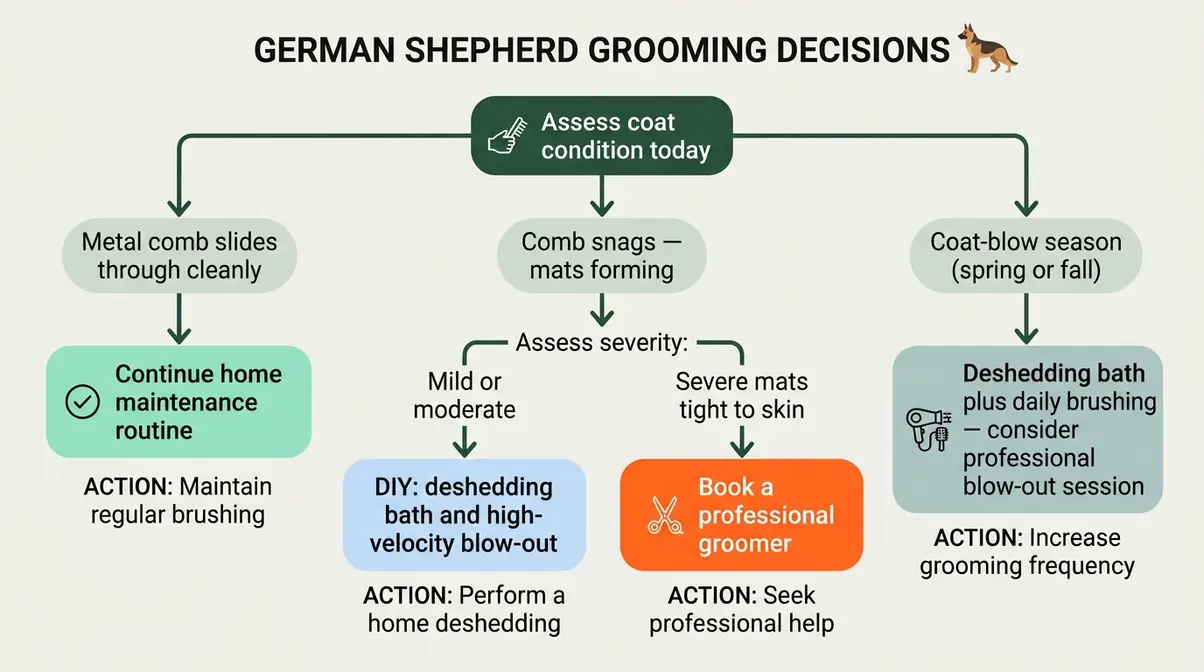
Run a metal comb through the coat from skin to tip. If it snags, you have a mat forming. The table below tells you what to do next.
| Severity | Signs | Approach |
|---|---|---|
| Mild | Surface tangles; comb slides through with light resistance | DIY: slicker brush + detangling spray or coconut oil |
| Moderate | Dense clumps; comb catches and pulls | DIY with patience, or start with a deshedding bath + full high-velocity blow-out |
| Severe | Mats tight to skin; dog reacts to touch | Groomer or vet, do not force a comb through |
For mild mats, a detangling spray, coconut oil, or a dematting comb used with patience can loosen the tangle section by section before brushing through. Work from the outside of the mat inward, never pulling from the root.
Severe mats are a welfare concern. Tight mats pull continuously on the skin, restrict normal movement, and trap moisture that leads to skin infections. Animal welfare organisations, including the ASPCA, consider chronic, severe matting a welfare issue because of the skin damage and discomfort it causes. Regular brushing at the frequencies in the schedule table above prevents mats from reaching that stage.
When a groomer encounters matted hair, the approach depends on severity: dematting comb and detangling spray for mild cases, a deshedding bath to loosen moderate mats, and shaving for severe mats tight to the skin, pulling a tight mat through with a comb causes pain and skin damage.
Vet note: If you notice bald patches, flaky or red skin, open sores, or your dog is licking or biting at a damp patch of skin, see your vet, these are signs of a skin condition, not a grooming problem.
Checkpoint: Run a metal comb through the coat from skin to tip. If it snags, use the severity table above to decide your next step.
Now that you know what you’re dealing with, let’s make sure you have the right tools before you start.
Step 3: Gather the Right Tools Before You Start
The best grooming brush for a German Shepherd is an undercoat rake, it’s the starting point for any double-coated dog. The tool sequence that follows is rake, then slicker, then metal comb. What works in the maintenance phase shifts slightly during a coat blow, when the deshedding tool and high-velocity dryer earn their place.
See the labeled tool guide in the Prerequisites section above for a visual reference.
Core Tools: Rake, Slicker and Comb
The undercoat rake is the gold-standard first tool for a German Shepherd, it reaches the soft inner layer without damaging the outer guard hairs, unlike deshedding blades used too frequently. According to Pawradise Pet, the undercoat rake belongs before the bath and before any other brush. The “dry rake” technique, raking through the ruff (the thick fur around the neck) and the pants (the hindquarter fur) before the bath, loosens the bulk of the undercoat and makes the bath significantly more effective. It’s the term real GSD owners use on grooming forums, and it signals the difference between a surface brush and a thorough pre-bath prep.
The slicker brush comes second. Its fine, angled wire pins smooth the outer guard coat and catch any surface tangles the rake missed. Work in the direction of hair growth. Don’t use the slicker as a substitute for the rake, it doesn’t reach the undercoat, so using it first just pushes loose fur around rather than removing it.
The metal greyhound comb is the final check. Run it through the coat from skin to tip after brushing. A comb that slides through cleanly means the session is done. If it snags, there’s a mat forming, work through it before you move on. This comb is also the tool you reach for during the recovery phase, after a coat blow ends, to confirm the coat is clear before returning to the maintenance schedule.
Those three tools handle most grooming sessions. For coat blows and heavy shedding, two additional tools make a significant difference.
Deshedding Tools and High-Velocity Dryer
The Furminator and similar deshedding blades remove loose undercoat efficiently, but overuse damages the outer guard hairs. Use a deshedding tool no more than once a month during normal maintenance, and only during coat blows when the undercoat is already releasing. Never use it on a dry, tangled coat; always rake first. Any deshedding blade with a similar design carries the same overuse risk, regardless of brand.
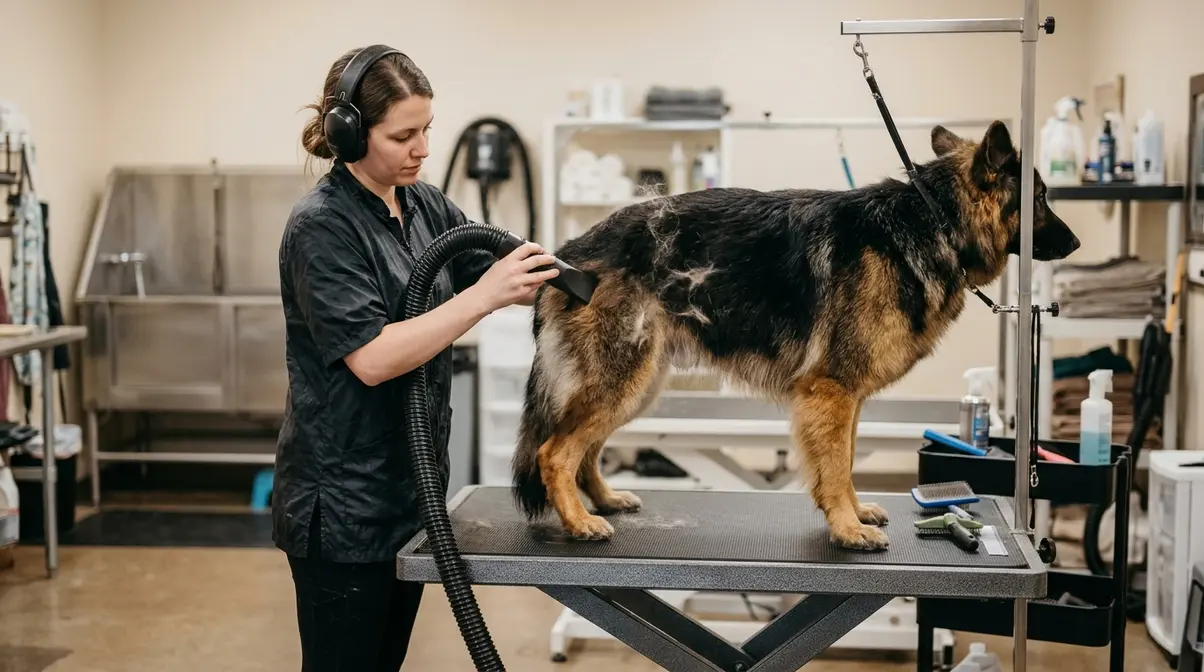
A high-velocity dryer blows loose undercoat out of the coat after a bath, cutting drying time dramatically and reducing the amount of brushing needed afterward. Professional groomers use it for a “full high-velocity blow-out” during coat-blow sessions, it’s the step that makes a groomer’s deshedding session so much more effective than home brushing alone. Not required for home grooming, but it makes coat-blow sessions significantly faster.
For long-haired German Shepherds, add a pin brush to the toolkit. Its wider-spaced, rounded pins are gentler on the feathering around the ears, chest, and hindquarters than the slicker brush. Use it in place of the slicker for those long-coat areas only.
Checkpoint: Lay out your tools before you bring your dog in. A mid-session search for the comb is the fastest way to lose a nervous dog’s cooperation.
With your tools laid out, you’re ready to run through the full grooming routine. Here’s the sequence, step by step.
Step 4: Follow the Full At-Home Grooming Routine
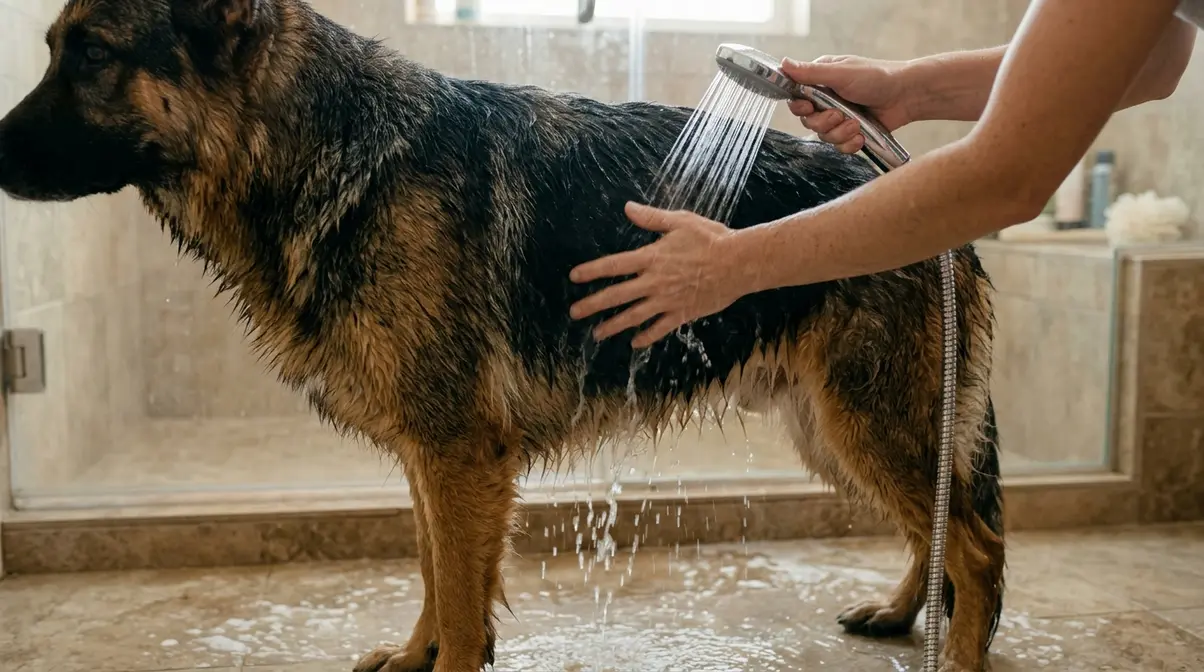
A full session of grooming a german shepherd covers six tasks in sequence: pre-bath dry rake, bath, dry, slicker finish, nails, ears, and teeth. The whole process takes 45 to 90 minutes at home. During the coat-blow phase, add the deshedding bath and high-velocity blow-out; during the maintenance phase, skip the deshedding bath and run the dry-rake and slicker sequence only. According to the American Kennel Club, this full routine, brush, bathe, dry thoroughly, trim nails, clean ears, brush teeth, is the complete grooming sequence for the breed.
A complete German Shepherd grooming session, pre-bath rake, bath, high-velocity dry, slicker finish, nails, ears and teeth, takes 45 to 90 minutes at home and should be done every 6-8 weeks.
Pre-Bath Brushing and Line-Brushing
Grooming a german shepherd at home starts before the water runs. Raking before the bath matters because water tightens mats, any tangle you leave in the coat will be harder to remove after the bath than before it.
- Dry rake the ruff and pants. Run the undercoat rake through the thick fur around the neck and the hindquarter fur. This loosens the bulk of the undercoat before water sets it.
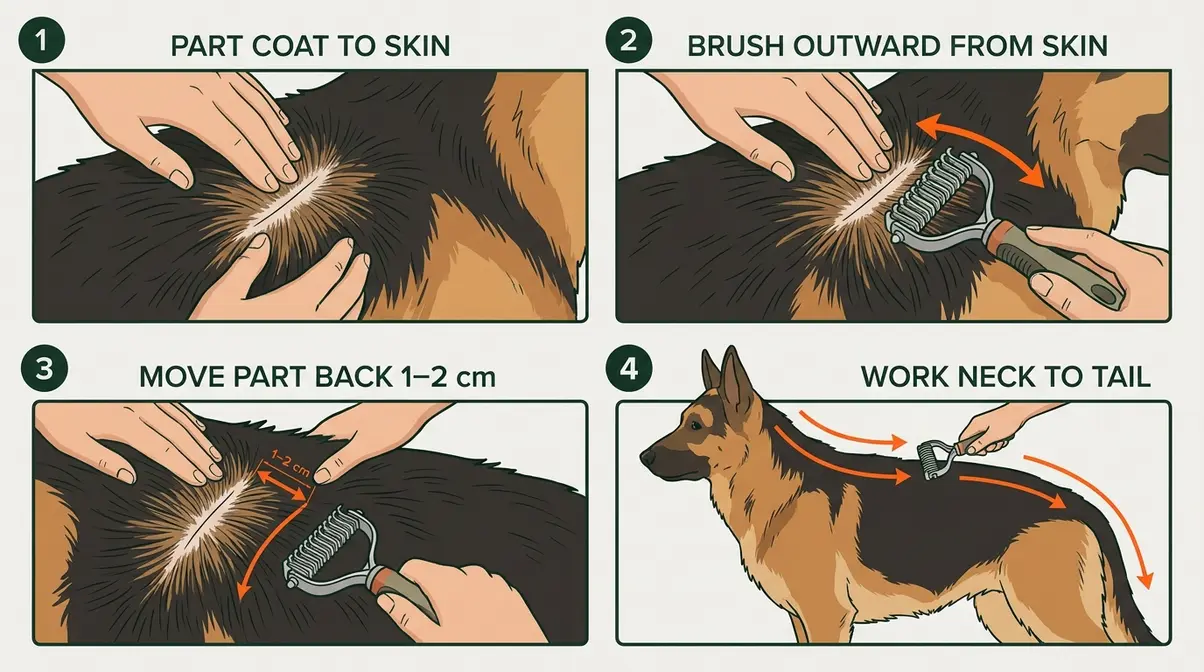
- Use the line-brushing technique. Part the coat to the skin with your fingers or a comb. Brush outward from the skin in short strokes, then move the part back 1-2 cm and repeat. Work from the neck toward the tail, then down each leg. This is the method that separates a thorough brush-out from a surface pass.
- Follow with the slicker brush over the entire coat to smooth the guard hairs and catch surface tangles.
- Run the metal comb through the coat. If it snags, work through the tangle now, water tightens mats, so this is the last easy chance to remove them.
For dogs that resist brushing: keep sessions short (5-10 minutes), use high-value treats throughout, and stop before the dog disengages. Build up to a full session over several weeks. Never force a nervous dog through a full session in one go, it creates lasting resistance that makes every future session harder.
Once the coat is brushed out, the bath is straightforward, but the rinse and dry are where most owners cut corners.
The Bath: Shampoo, Rinse and Dry
Grooming a german shepherd dog through the bath phase takes patience, particularly with the rinse. The double coat is dense and takes longer to saturate and rinse than a single-coat breed.
- Wet the coat thoroughly. Work water through to the skin, don’t just wet the surface.
- Apply a dog shampoo formulated for double coats. Work it through the undercoat with your fingers, not just over the surface.
- Rinse until the water runs completely clear. Shampoo left in the undercoat causes skin irritation and hot spots. Rinse longer than you think you need to.
- Squeeze excess water from the coat. If using a high-velocity dryer, blow out the coat section by section, working against the direction of hair growth to lift and separate the undercoat. If air-drying, towel-dry thoroughly and keep the dog in a warm room until fully dry.
- Drying check: press a clean towel into the coat. If it comes out damp, keep drying. A damp undercoat is the primary cause of hot spots in German Shepherds.
Pawradise Pet recommends bathing every 6-8 weeks, noting that frequent baths strip the natural skin oils that protect the double coat. If the dog is dirty between baths, a thorough rinse with no shampoo is fine. More frequent shampooing is where skin irritation starts.
With the coat clean and dry, finish the session with nails, ears and teeth, the tasks most owners skip, and the ones that cause the most problems when neglected.
Nails, Ears and Teeth
Nails:
- Click test: if you hear nails clicking on hard floors, they’re overdue.
- Trim a small amount at a time with a guillotine or scissor-style clipper, or use a grinder for a smoother finish. Avoid the quick, the pink blood vessel visible in light-coloured nails; in dark nails, trim 1-2 mm at a time.
- If you nick the quick, apply styptic powder to stop the bleeding.
- Frequency: every 3-4 weeks.
For a visual walkthrough of the nail-trim technique, see the step illustration above.
Ears: Wipe the visible part of the ear canal with an ear-cleaning solution on a cotton ball. Don’t push cotton swabs deep into the ear canal, this risks injury and pushes debris further in. Check weekly; clean when dirty or when you notice odour.
Teeth: Brush 2-3 times a week with a dog toothbrush and dog toothpaste. Never use human toothpaste, xylitol is toxic to dogs. Dental chews can supplement brushing but don’t replace it.
For a competition-ready finish, show groomers also trim the paw-pad fur, the sanitary area, and the belly, the three areas safe to trim at home without disrupting the double coat.
Checkpoint: Run the metal comb through the entire coat after drying. If it slides through cleanly, the session is done. If it snags, work through the tangle before moving on to nails.
That’s the full routine. The next question most owners face is whether to do all of this at home or hand some of it off to a professional.
Step 5: Decide When to Groom at Home or See a Pro
Routine German Shepherd grooming, brushing, bathing, nails, and ears, can be done at home with the right tools. A professional groomer adds real value during coat blows and for severe mats, when the tools and expertise justify the cost.
When Home Grooming Works Fine
Home grooming covers the full maintenance phase comfortably: brushing 2-3 times a week, bathing every 6-8 weeks, nails every 3-4 weeks, weekly ear checks, and teeth 2-3 times a week. With an undercoat rake, slicker brush, metal comb, and a good dog shampoo, most owners can manage the entire routine without professional help.
Three areas are safe to trim at home without disrupting the double coat: paw-pad fur (prevents slipping and matting between the toes), the sanitary area, and the belly. Don’t trim the body coat, the ruff, or the ears.
Routine German Shepherd grooming can be done at home; a professional groomer adds the most value during heavy coat blows, when a deshedding bath and high-velocity blow-out remove far more undercoat than home brushing alone.
There are situations, though, where a professional groomer or a vet is the better call.
Should German Shepherds Go to Groomers?
Routine upkeep, brushing, bathing, nails, and ears, is well within reach for most owners at home. A professional groomer earns their fee during coat blows and for severe mats, when a deshedding bath and full high-velocity blow-out remove far more undercoat than home brushing alone. Knowing what a groomer’s session actually includes helps you decide whether the cost is worth it for your dog’s current coat condition.
When a Professional Groomer Makes Sense
Five situations benefit from a professional, according to the American Kennel Club:
- Severe mats tight to the skin, a groomer can shave them out safely without pulling through the skin.
- Coat-blow season, a deshedding bath and full high-velocity blow-out remove far more undercoat than home brushing alone.
- An anxious or reactive dog, a dog that’s too difficult to handle safely at home needs a professional environment.
- Nail trims, if you’re uncomfortable with the quick, a groomer or vet tech handles it in minutes.
- Skin issues, bald patches, redness, or sores are a vet visit, not a grooming appointment.
A groomer’s coat-blow session follows a specific sequence: dry rake through the ruff and pants → deshedding bath → full high-velocity blow-out → slicker finish → comb check. Knowing the process helps you evaluate whether the cost is worth it for your dog’s coat condition. For guidance on when to see a certified groomer or vet, the decision points are clearer than most owners expect.
Checkpoint: If your dog’s coat passes the metal comb test after a session, you’re managing it well at home. If you’re finding mats faster than you can remove them, it’s time to book a groomer.
The routine above applies to a standard-coat German Shepherd. If your dog has a long coat, is still a puppy, or is a mix, here’s how to adapt it.
Step 6: Adjust for Puppies, Long Coats and Mixes
The base routine from Step 4 applies to all variants, what changes is the tools, the frequency, and the handling approach. The three variants worth covering separately are long coats, puppies, and husky mixes.
Grooming German Shepherd Puppies
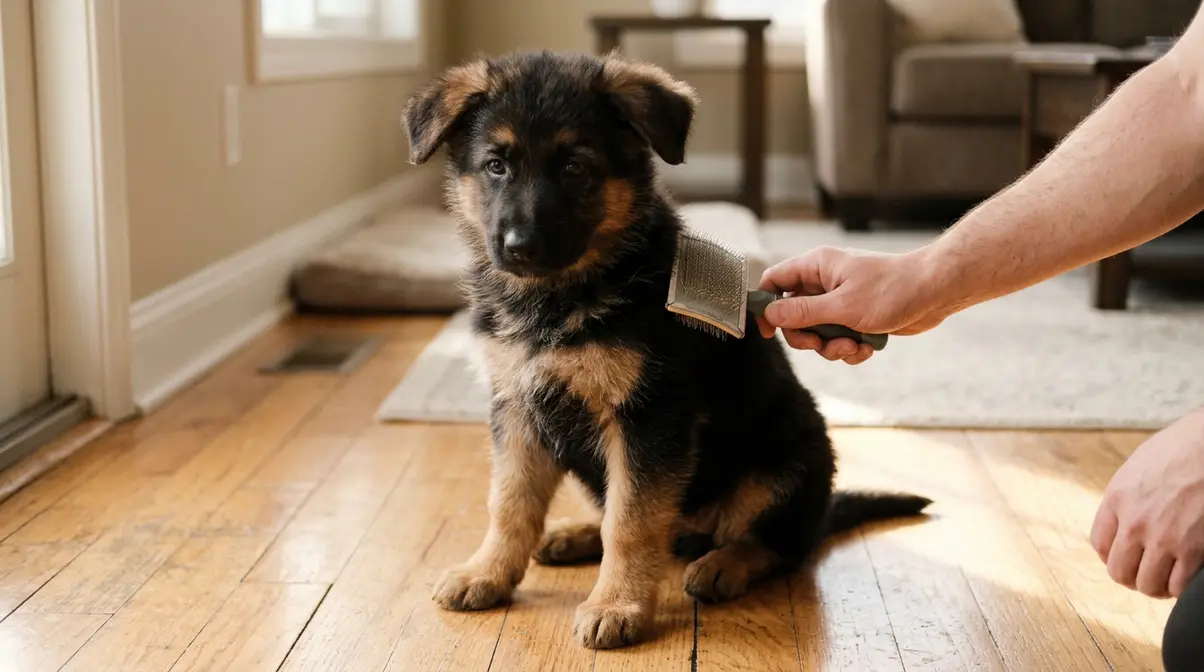
Grooming a german shepherd puppy starts earlier than most owners expect, and the payoff comes years later. Puppies have a soft, single-layer puppy coat that begins transitioning to the adult double coat between 4-6 months and completes the transition by 12-18 months. During this transition, the coat can look patchy and feel uneven, this is normal, not a sign of a health problem. The UC Davis School of Veterinary Medicine provides guidance on normal coat and skin development in dogs; owners noticing unusual coat changes beyond the expected transition should consult their veterinarian.
The hardest grooming age is adolescence, roughly 6 to 18 months. The dog is large enough to resist handling but hasn’t yet learned to accept it consistently. Keep sessions short (5-10 minutes), use high-value treats, and end on a positive note every time. A dog that tolerates grooming at 12 months will be easy to handle at 5 years.
Start grooming habits early. Even a 10-minute weekly brush from 8 weeks old builds the tolerance that makes adult grooming manageable. The investment in those early sessions pays off every time you pick up the rake.
For long-haired German Shepherds and husky mixes, the base routine stays the same, but the tools and frequency shift.
Long Coats and Husky Mixes
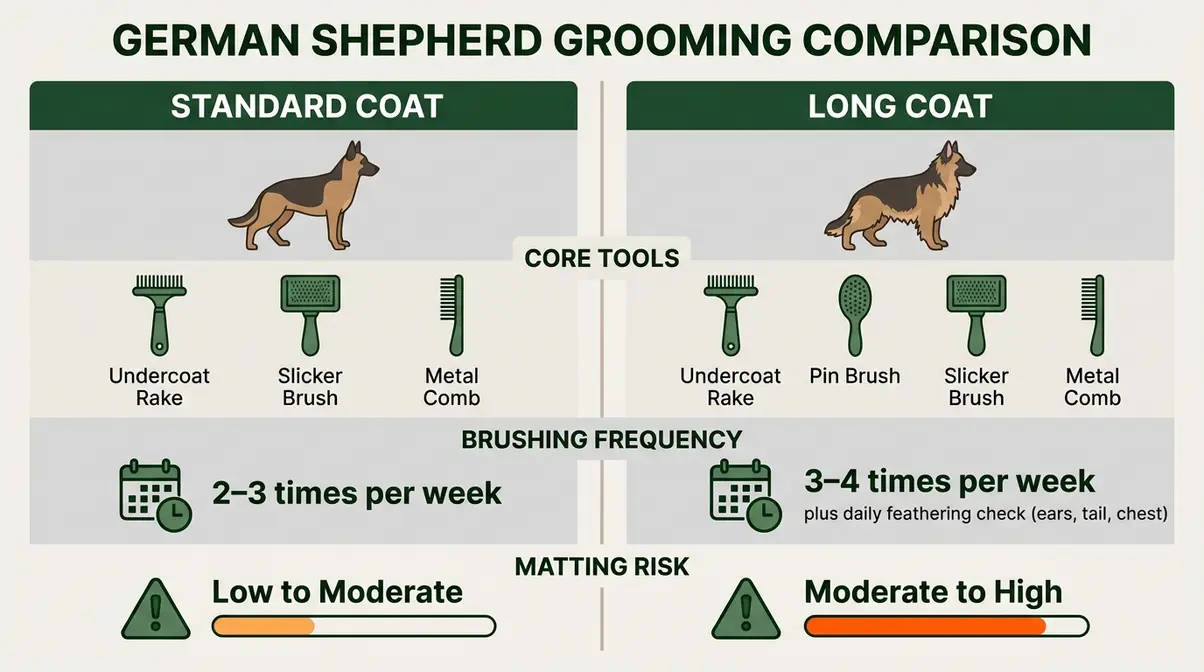
Long-haired German Shepherds have softer guard hairs and feathering around the ears, chest, and hindquarters that tangle more easily than a standard coat. According to long coat differences and tangle risk, the feathering needs a pin brush rather than a slicker, the rounded pins are gentler on long, soft fur. Check for tangles daily during coat blows, and run the metal comb through the feathering after every brushing session. Matting risk is meaningfully higher than with a standard coat.
| Feature | Standard Coat | Long Coat |
|---|---|---|
| Core tools | Rake + slicker + comb | Rake + pin brush + slicker + comb |
| Brushing frequency | 2-3×/week | 3-4×/week + daily feathering check |
| Matting risk | Low to moderate | Moderate to high |
Long-haired German Shepherds have softer guard hairs and feathering around the ears, chest and hindquarters that tangle more easily than a standard coat, they need a pin brush in addition to the undercoat rake and daily checks during coat blows.
A German Shepherd Husky mix (Gerberian Shepsky) typically has a double coat and sheds heavily. The grooming routine is similar to a standard GSD. The exact coat texture depends on which parent breed the puppy takes after: a dog with more Husky influence may have a denser, woollier undercoat that needs more frequent raking. For a full breakdown of grooming needs that vary by mix, the coat outcome varies enough that it’s worth reading before you settle on a tool list.
Checkpoint: If your dog is under 18 months, keep grooming sessions short and positive, you’re building a habit, not completing a task. A dog that tolerates grooming at 12 months will be easy to handle at 5 years.
Even with the right tools and routine, there are a handful of mistakes that undo a good grooming session. Here’s what to avoid.
Common Grooming Mistakes to Avoid
Most grooming problems trace back to a small set of repeatable errors. Here are the ones that cause the most damage:
Shaving the double coat. Owners assume shaving reduces shedding, it doesn’t. It removes the guard hairs that regulate temperature and often results in a patchy coat that no longer insulates or repels water correctly. Brush out dead undercoat instead.
Over-bathing. Bathing more than every 6-8 weeks strips the natural skin oils that protect the double coat. If the dog smells or is dirty, a thorough rinse with no shampoo is the right move.
Leaving shampoo in the coat. Shampoo residue in the undercoat causes skin irritation and hot spots. Rinse until the water runs completely clear, longer than you think you need to.
Leaving the undercoat damp. A damp undercoat after bathing is the primary cause of hot spots in German Shepherds. Press a towel into the coat; if it comes out damp, keep drying. The American Kennel Club flags this as one of the most common post-bath mistakes.
Overusing deshedding tools. The Furminator and similar blades are useful during coat blows but damage guard hairs with frequent use. Once a month during maintenance is the limit.
Pushing cotton swabs deep into the ear canal. This risks injury and pushes debris further in. Wipe only the visible part of the ear with a cotton ball and ear-cleaning solution.
Skipping daily brushing during coat blows. Missing even a few days during a coat blow allows loose undercoat to mat against the skin. Daily brushing is non-negotiable during the 2-4 week coat-blow window.
Using human toothpaste. Xylitol, common in human toothpaste, is toxic to dogs. Use dog toothpaste only.
See your vet if you notice bald patches, flaky or red skin, open sores, or your dog is licking or biting at a damp patch of skin. These are signs of a skin condition, not a grooming problem.
If you have more questions about the routine, the tools, or the coat, the answers below cover the most common ones.
Frequently Asked Questions
How often should a German Shepherd be groomed?
Brush a German Shepherd 2-3 times a week, and daily during the spring and fall coat blows. Bathe every 6-8 weeks, or when the dog is visibly dirty, more frequent bathing strips the natural skin oils that protect the double coat. Trim nails every 3-4 weeks and check ears weekly. Active or service dogs can be bathed more often, but only with a thorough rinse. During coat blows, daily brushing is the single most important task.
Should you cut a German Shepherd’s hair?
Avoid shaving a German Shepherd’s coat, the double coat is not just fur, it’s a thermal regulation system. The outer guard hairs repel heat, UV rays, and water; the soft undercoat traps air for insulation, keeping the dog cool in summer and warm in winter. Shaving removes the guard hairs and disrupts how the undercoat and guard coat grow back. The undercoat often regrows faster, leaving a patchy coat that no longer insulates correctly. Brush out dead undercoat instead, that’s what removes the heat-trapping loose fur.
Should German Shepherds go to groomers?
Routine German Shepherd grooming can be done at home with an undercoat rake, slicker brush, metal comb, and dog shampoo. A professional groomer adds the most value during heavy coat blows, when a deshedding bath and full high-velocity blow-out remove far more undercoat than home brushing alone. A groomer’s coat-blow session typically includes a dry rake, a deshedding bath, and a high-velocity blow-out. Choose based on your dog’s coat condition and your comfort with the home routine. For severe mats or skin issues, see a certified groomer or vet rather than forcing a comb through.
What are 8 things I should never do to my German Shepherd?
Within grooming, avoid these eight mistakes: shaving the coat, bathing too often, leaving shampoo in the double coat, leaving the undercoat damp (which causes hot spots), overusing deshedding tools on guard hairs, pushing cotton swabs deep into the ear canal, skipping daily brushing during coat blows, and using human toothpaste (xylitol is toxic to dogs). Each of these either damages the coat, irritates the skin, or creates a long-term grooming problem. The most common mistake is shaving, owners assume it reduces shedding, but it disrupts the coat’s thermal function. The second most common is leaving the undercoat damp after a bath, which traps moisture against the skin. A thorough dry, towel plus high-velocity dryer or a warm room, prevents both hot spots and odour.
Keeping Your German Shepherd’s Coat Healthy Year-Round
For German Shepherd owners, grooming a german shepherd consistently delivers real results, less fur on furniture, fewer hot spots, and a dog that tolerates handling throughout its life. Brushing 2-3 times a week and bathing every 6-8 weeks is the commonly recommended baseline for the breed, with the AKC advising every other day brushing and breed clubs landing on 2-3 times a week as a practical minimum. The best approach combines a written schedule, the right tool sequence (rake, then slicker, then comb), and an honest read of your dog’s coat condition before each session.
The three-phase grooming approach, maintenance, coat-blow, and recovery, is what keeps this manageable. Thinking in phases rather than a fixed weekly schedule prevents the two most common problems: mats forming during coat blows when daily brushing slips, and skin irritation from over-bathing during the recovery phase. It also connects back to the original problem: the undercoat that sheds “soo bad right now” isn’t a crisis, it’s the coat-blow phase, and it has a clear protocol.
Start with the schedule table in Step 1. Pin it somewhere visible, mark your calendar for March-April and September-October as your heavy-brushing windows, and run your first full session this weekend. If you hit a mat you can’t work through, the groomer decision framework in Step 5 tells you exactly when to call in a professional.
 European German Shepherd: Complete Breed Guide