⚠️ Medical Disclaimer: This article is for informational purposes only and does not replace a veterinary examination or professional diagnosis. If your German Shepherd shows any change in eye appearance, contact your veterinarian promptly.
You’ve been putting drops in your German Shepherd’s eyes for months. The redness fades a little, then comes back. The cloudiness doesn’t move. If this sounds familiar, you’re probably dealing with something other than a simple infection, and standard antibiotic drops will never fix it.
German Shepherd eye disease is often rooted in the breed’s genetics. German Shepherds are predisposed to specific immune-mediated conditions that look like infections but require completely different treatment. Reaching for another round of antibiotic drops won’t help, and waiting too long can cost your dog their vision.
In this guide, you’ll learn how to recognize the most common German Shepherd eye diseases, understand what causes them, and know exactly when to call a specialist. We’ll cover pannus, plasmoma, atypical pannus, cataracts, progressive retinal atrophy, entropion, and distichiasis, plus what to do when the drops aren’t working.
German Shepherd eye disease most often means pannus (chronic superficial keratitis), an immune-mediated corneal condition the breed is genetically predisposed to. It requires lifelong treatment, not a short course of drops.
- Pannus is the most common: A pink or grayish film on the cornea is the hallmark sign, not an infection
- It’s manageable, not curable: Lifelong topical medication (cyclosporine, tacrolimus, or steroids) controls progression
- UV light and altitude make it worse: Limit peak-sun exposure and consider UV-blocking dog eyewear
- Drops not working? See a specialist: A veterinary ophthalmologist can adjust the medication protocol
- Other conditions to know: Cataracts, PRA, entropion, and distichiasis also affect the breed
Table of Contents
- What Eye Diseases Do German Shepherds Get?
- What Is Pannus in German Shepherds?
- Plasmoma and Atypical Pannus: What’s the Difference?
- Why Aren’t Your Dog’s Eye Drops Working?
- Are German Shepherds Prone to Autoimmune Diseases?
- When Should You See a Veterinary Ophthalmologist?
- Frequently Asked Questions
- What to Do If You Suspect a German Shepherd Eye Disease
What Eye Diseases Do German Shepherds Get?
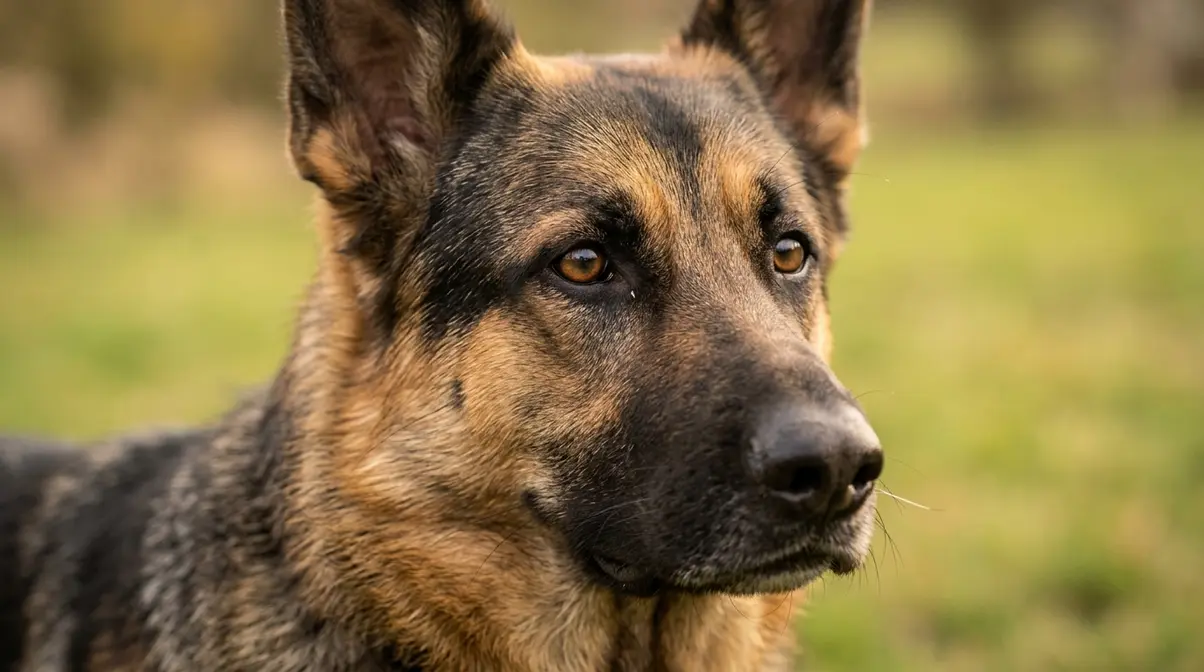
German Shepherds are prone to several hereditary eye diseases, with pannus (chronic superficial keratitis) being the most common. Other conditions include cataracts, progressive retinal atrophy, entropion, and distichiasis. Each has distinct visual signs that owners can learn to recognize, though a veterinarian must confirm any diagnosis. According to VCA Hospitals, pannus is a breed-defining condition that sets German Shepherds apart from most other dogs when it comes to eye health.
Here’s something that surprises many owners: German Shepherds are one of the few breeds where a corneal condition is more common than a lens condition. Most people associate a “cloudy eye” with cataracts. In German Shepherds, that cloudiness is far more likely to be pannus, a film forming on the front surface of the eye, not inside it. The distinction matters because the two conditions require completely different treatments.
Knowing which condition you’re dealing with starts with understanding what each one looks like. The sections below break down the five most common eye diseases in German Shepherd dogs by affected tissue, visual appearance, and urgency.
Pannus: The Breed’s Most Common Eye Disease
Chronic superficial keratitis, also called pannus, or sometimes German Shepherd keratitis, is an immune-mediated condition in which blood vessels and dark pigment gradually invade the cornea (the clear front surface of the eye). The Cornell University Canine Genetics Lab documents that German Shepherds are genetically predisposed to this condition, making it the most frequently reported hereditary eye disease in the breed.
The first visual sign is a faint pinkish or grayish-white haze forming near the outer edge of the cornea. It doesn’t look like an infection, there’s usually no thick discharge, no obvious squinting in early cases. Owners often describe it as the eye looking “hazy” or “dull” near the corner. That subtlety is part of what makes early pannus easy to miss or misread as a scratch.
Think of a 6-year-old German Shepherd whose owner notices one eye looks slightly different near the outer edge, a little less clear than the other. That’s the classic early presentation. For a deeper look at this condition, see our keratitis and pannus guide for German Shepherds.
Pannus gets most of the attention, but it’s not the only eye condition German Shepherds face, cataracts and a retinal disease called progressive retinal atrophy also run in the breed.
Cataracts and Progressive Retinal Atrophy
Hereditary cataracts cause clouding of the lens, the structure that sits behind the pupil, inside the eye. The eye looks milky or bluish-white in the center of the pupil, not at the outer edge. This is a key distinction from pannus. When cataracts are hereditary rather than age-related, they can affect dogs that are only a few years old.
Progressive retinal atrophy (PRA) is a genetic retinal degeneration that starts differently from both pannus and cataracts. In early stages, there’s no visible surface change at all, the eye looks normal. What owners notice instead is behavioral: the dog hesitates at the top of stairs in dim light, bumps into furniture after dark, or seems reluctant to enter a darkened room. Night blindness is the first sign, and it can progress to complete vision loss.
The anatomical distinction helps clarify the difference between all three conditions: pannus affects the cornea (the front surface), cataracts affect the lens (inside the eye), and PRA affects the retina (at the back of the eye). A veterinarian can tell them apart with an ophthalmoscope during a standard exam.
Note that nuclear sclerosis, a normal age-related lens change, can look like cataracts but doesn’t affect vision the same way. See our guide to nuclear sclerosis in German Shepherds for the difference.
Two more conditions, entropion and distichiasis, affect the eyelids and lashes rather than the eye surface itself, but they can cause just as much irritation.
Entropion and Distichiasis
Entropion is a condition where the eyelid rolls inward, causing the lashes to rub directly against the cornea. The signs are hard to miss: constant squinting, tearing, and pawing at the eye. Left untreated, the ongoing friction can cause corneal ulcers. Entropion is more common in younger German Shepherds, a puppy or young adult that squints persistently and has watery eyes is a candidate for this diagnosis.
Distichiasis is less obvious. Extra eyelashes grow from abnormal follicles along the eyelid margin and rub against the cornea. The owner sees tearing and squinting but no visible eyelid rolling, which is why distichiasis is often discovered during a routine vet exam rather than by the owner. Both conditions are correctable: entropion typically requires surgery, while distichiasis is treated with electrolysis or cryotherapy. Only a veterinarian can confirm either diagnosis and recommend the appropriate approach, as noted by VCA Hospitals.
Knowing what to look for is the first step, but knowing when a symptom is urgent enough to call the vet is just as important.
Symptom Checklist: When to Call Your Vet
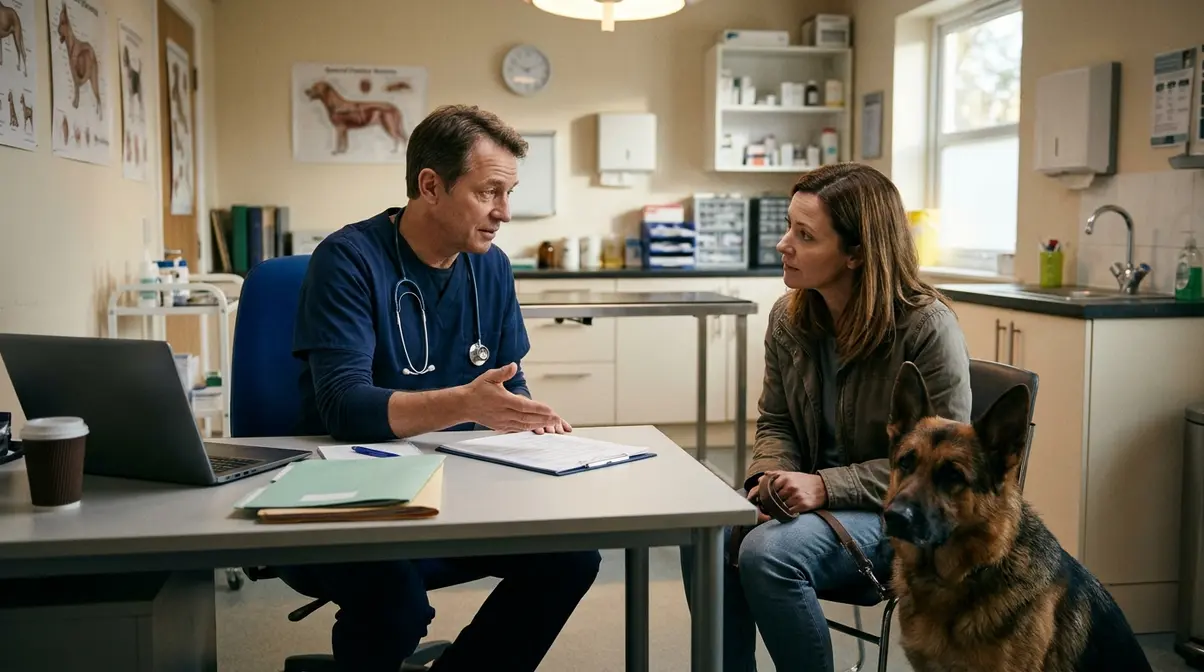
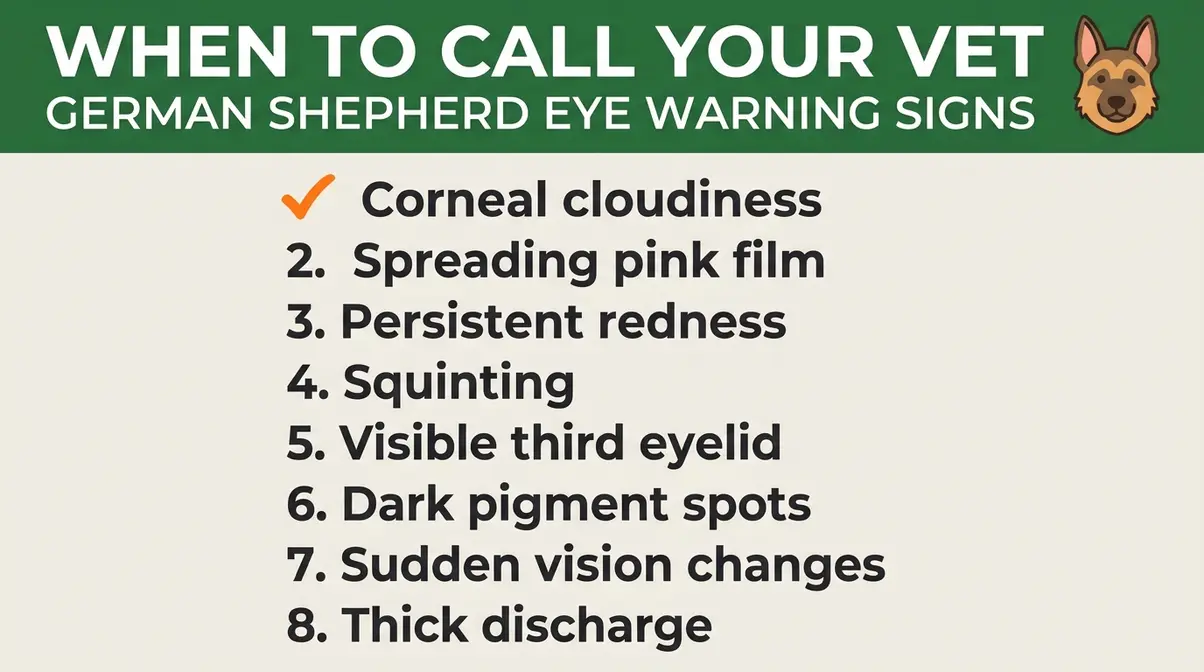
Run through this list the next time you notice something off about your dog’s eyes. Any of the following warrants a same-week vet appointment, not a wait-and-see approach:
- Cloudiness or haze on the surface of the cornea (front of the eye)
- A pink, grayish, or brownish film spreading from the outer edge of the eye inward
- Redness that doesn’t clear within 24 hours
- Squinting or pawing at the eye
- The third eyelid (the pinkish membrane in the inner corner) becoming visible and staying visible
- Any dark or black pigment spots appearing on the cornea
- Sudden vision changes, bumping into furniture, hesitating at stairs, reluctance in dim light
- Yellow, green, or thick discharge from the eye
Any of these symptoms in a German Shepherd, especially cloudiness or a spreading film, warrants a same-week vet appointment, not a wait-and-see approach.
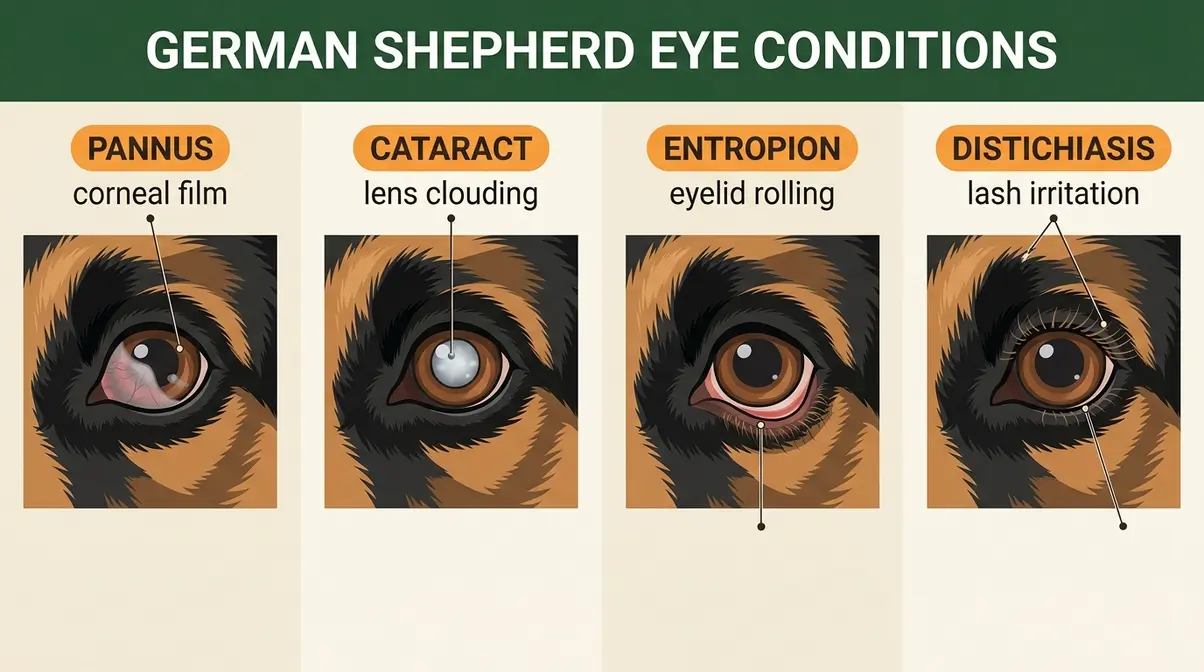
The gallery above shows what each German Shepherd eye problem looks like in practice, use these pictures to compare against what you’re seeing in your dog’s eye.
The condition comparison table below summarizes the key differences across the five most common eye diseases in German Shepherd dogs:
| Condition | Affected Tissue | Visual Sign (Owner-Observable) | Urgency |
|---|---|---|---|
| Pannus (chronic superficial keratitis) | Cornea (front surface) | Pinkish or grayish film spreading from outer edge inward | Same-week vet visit |
| Plasmoma | Third eyelid (nictitating membrane) | Thickened, pale, or depigmented inner-corner membrane | Same-week vet visit |
| Hereditary cataracts | Lens (inside the eye) | Milky or bluish-white clouding in the pupil center | Vet appointment (less urgent unless rapid) |
| Progressive retinal atrophy (PRA) | Retina (back of the eye) | No visible surface change; behavioral signs (night blindness) | Vet appointment |
| Entropion | Eyelid | Constant squinting, tearing, eyelid visibly rolling inward | Prompt vet visit |
| Distichiasis | Eyelash follicles | Tearing and squinting; no visible eyelid rolling | Vet appointment |
If your dog’s eye shows a spreading film or cloudiness, especially if it started at the outer edge of the cornea, the most likely diagnosis is pannus. Here’s what that means.
What Is Pannus in German Shepherds?
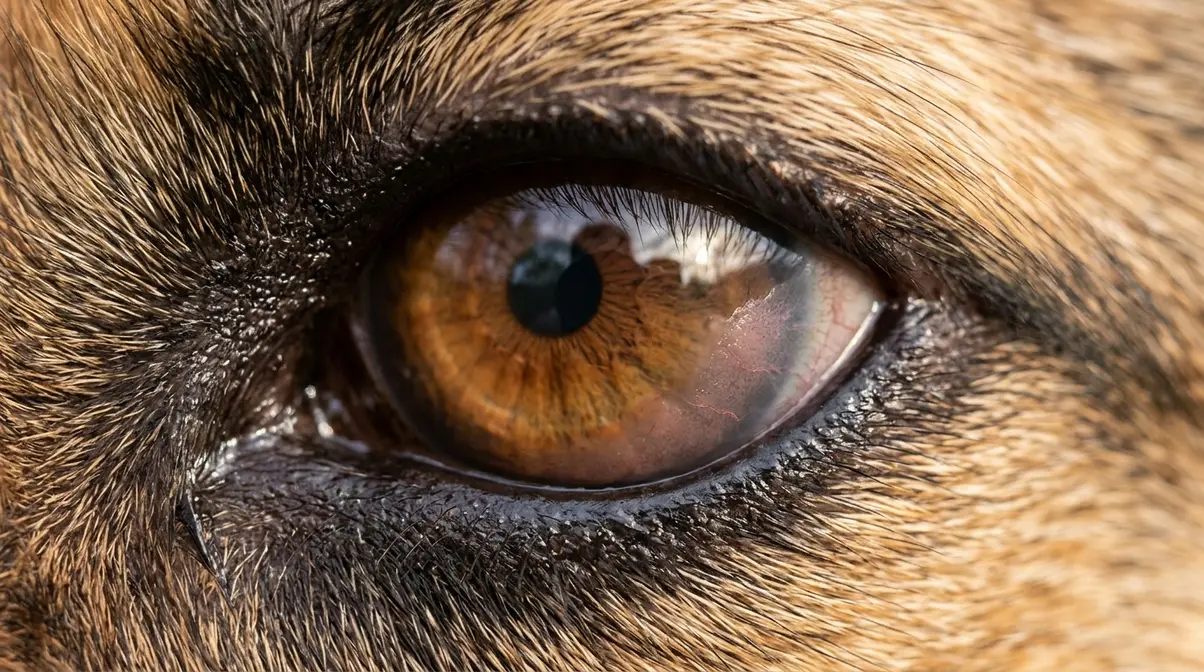
Pannus, also called chronic superficial keratitis, is an immune-mediated eye disease in which the dog’s own immune system causes blood vessels and dark pigment to grow across the cornea. It’s the most common hereditary eye disease in German Shepherds and requires lifelong management, not a short course of treatment. The condition doesn’t resolve on its own, and the earlier it’s caught, the more vision your dog keeps.
A key framing point: pannus is often described as “incurable” in a way that frightens owners. The veterinary literature is more precise, and more useful. Pannus is manageable with consistent, lifelong treatment. Many dogs with pannus live full lives with good vision, provided treatment starts early and continues without interruption.
What Pannus Looks Like: Symptoms and Stages
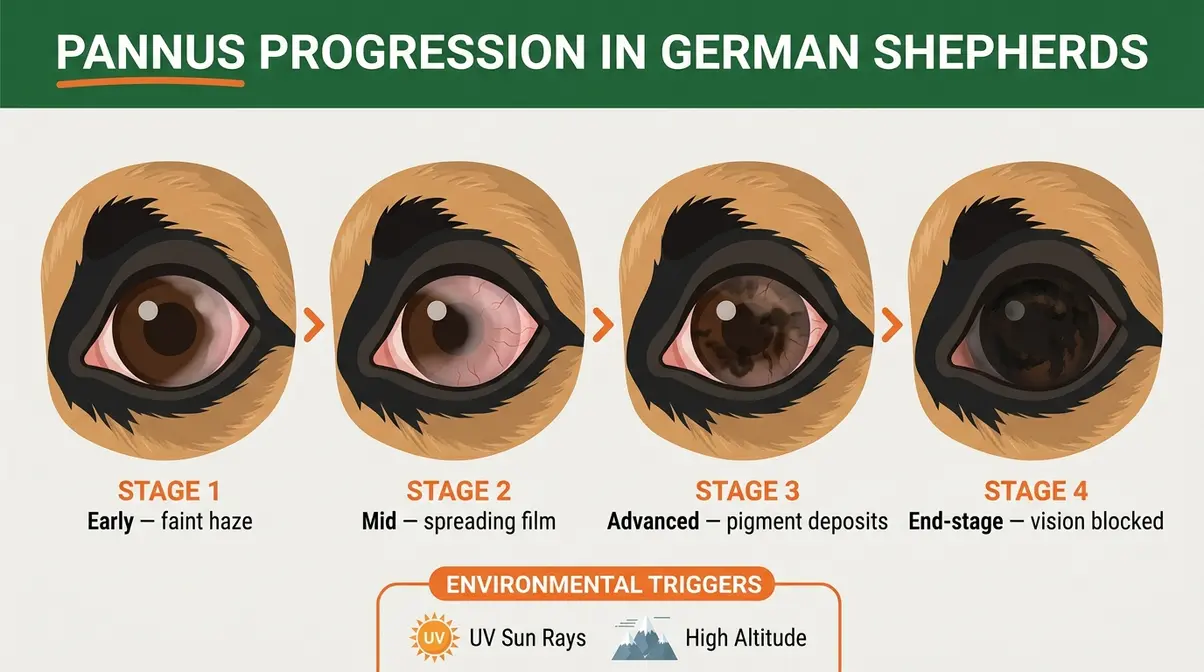
Pannus, also called chronic superficial keratitis, typically begins quietly. In the early stage, you’ll notice a faint pinkish or grayish-white haze near the outer (temporal) edge of the cornea, the clear front surface of the eye. The eye may look slightly red or irritated, but there’s usually no discharge, and the dog may not show obvious discomfort. This subtlety is what makes early pannus easy to overlook. An owner who notices one eye looks “hazier than the other” near the outer corner is likely seeing early pannus, and this is the time to act, before pigment deposits form.
In the mid stage, the film begins spreading inward across the cornea. Fine red lines, blood vessels, become visible on the cornea surface. Dark pigment (melanin) starts to deposit in patches. The dog may squint in bright light. At this point, the change is noticeable to most owners, though it’s still sometimes mistaken for an infection.
Advanced untreated pannus produces dense dark pigmentation covering much of the cornea. Vision becomes significantly impaired. In severe untreated cases, the cornea can appear almost black, and light can no longer reach the retina effectively. Some dogs also develop involvement of the nictitating membrane (the third eyelid), which becomes thickened and depigmented, a variant called plasmoma, covered in the next section. According to Animal Eye Center, this clinical progression follows a predictable pattern, which is why early intervention is consistently emphasized in the veterinary literature.
The stage table below maps what you’re likely to see at each point:
| Stage | Visual Sign | Dog’s Behavior | Urgency |
|---|---|---|---|
| Early | Faint pinkish-gray haze at outer corneal edge | May be normal; mild light sensitivity | Same-week vet visit |
| Mid | Spreading film; visible blood vessels; dark pigment patches | Squinting in bright light | Prompt vet visit; discuss treatment |
| Advanced | Dense dark pigmentation; cornea may appear black | Vision impaired; may bump into objects | Specialist referral warranted |
Understanding what pannus looks like is one thing, understanding why German Shepherds get it is another, and it matters for how you manage the condition long-term.
Causes: Genetics, UV Light, and Altitude
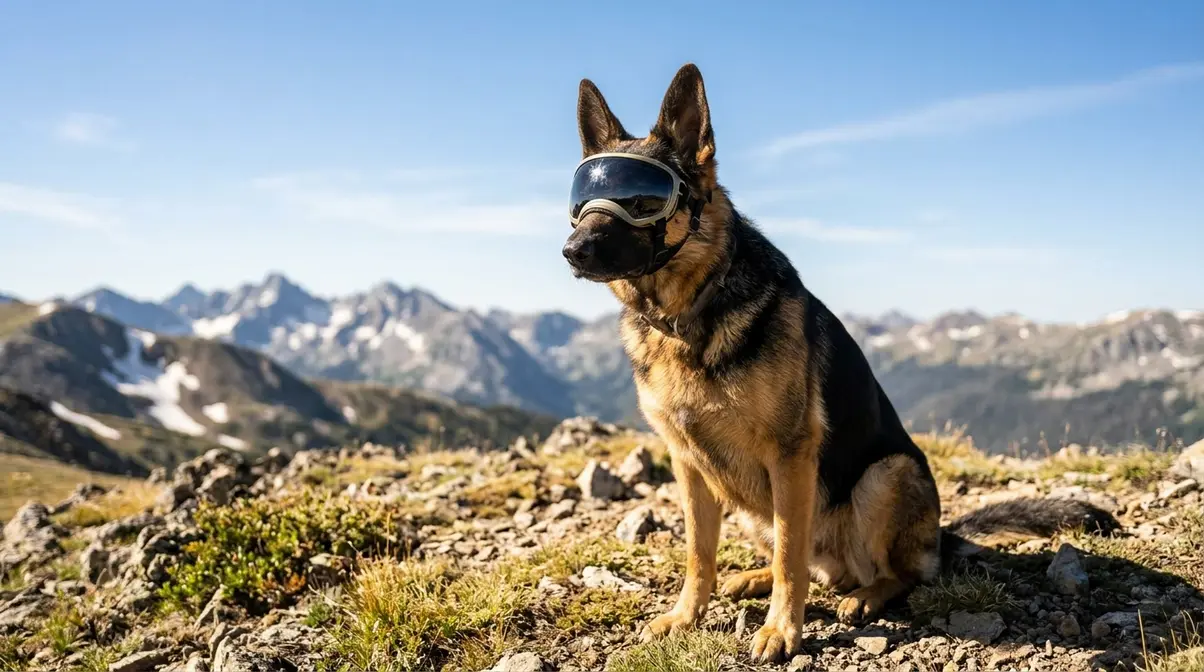
Pannus typically appears between 4 and 8 years of age in German Shepherds, though dogs at high altitude or with heavy UV exposure may develop it earlier and more severely (Cornell University Canine Genetics Lab). Three factors drive this, and understanding all three helps you manage the condition more effectively.
Genetics is the foundation. The Cornell University Canine Genetics Lab has documented that German Shepherds carry a hereditary predisposition linked to immune dysregulation. Dogs with a family history of pannus are at higher risk. This genetic factor is why the condition is so strongly associated with the breed and why it’s called German Shepherd keratitis in some veterinary texts.
UV light is a known trigger and aggravator. According to VIN Veterinary Partner, dogs living in sunny climates or spending long hours outdoors develop more severe disease. UV radiation stimulates the immune response in the cornea, accelerating blood vessel ingrowth and pigment deposition. Limiting outdoor activity during peak UV hours and using UV-blocking eyewear are practical management steps that complement medication.
Altitude compounds the UV effect. Dogs living above approximately 5,000 feet (1,500 meters) experience more intense UV radiation and develop pannus more frequently and more aggressively. This is why the condition was historically called “Schäferhund keratitis” in German-speaking alpine regions. A German Shepherd living in Denver (5,280 feet) with a family history of pannus faces significantly higher risk than a sea-level dog with no family history, both genetics and environment stack the odds.
The three-factor model below shows how each cause connects to management:
| Factor | Mechanism | Management Implication |
|---|---|---|
| Genetics | Hereditary immune dysregulation targeting the cornea | Lifelong treatment; monitor closely if family history is positive |
| UV light | Stimulates immune response; accelerates corneal damage | Limit peak-sun exposure (10 AM-4 PM); consider UV-blocking goggles |
| Altitude | Intensifies UV radiation at elevation | Discuss altitude with your vet; may require more aggressive protocol |
The immune mechanism ties it all together. The dog’s own immune system mistakenly attacks the corneal tissue, triggering blood vessel ingrowth and pigment deposition. This is why pannus is called immune-mediated, and why the treatment is immunosuppressants, not antibiotics. Antibiotics target bacteria. Pannus has no bacteria involved.
When pannus is caught early and treated consistently, most dogs maintain good vision. Left untreated, the progression is predictable, and irreversible.
How Pannus Progresses Without Treatment
Without treatment, pannus follows a consistent, damaging path. The pink film continues spreading inward from the outer corneal edge. Blood vessels multiply. Dark pigment deposits thicken over months to years, gradually blocking more of the visual field. According to Clinician’s Brief, end-stage untreated pannus results in permanent corneal pigmentation that blocks light from reaching the retina, causing blindness that cannot be reversed even if treatment starts late.
The timeline varies. Some dogs progress slowly over years; others, particularly younger dogs under 4 years and those at high altitude, progress faster and more aggressively. The unpredictability is part of why waiting to see if the condition “clears up” is a risk owners shouldn’t take.
The core message from veterinary sources is consistent: treatment doesn’t cure pannus, but it halts or significantly slows progression. A dog diagnosed at age 5 with early pannus who starts treatment immediately has a far better long-term prognosis than one whose owners waited two years for a diagnosis. Early treatment is the most effective tool available.
Pannus isn’t the only form this disease takes. Some German Shepherds develop a variant called plasmoma, or an atypical presentation that doesn’t match the classic description, and both are worth knowing about.
Plasmoma and Atypical Pannus: What’s the Difference?
Pannus has two main variants that German Shepherd owners should know: plasmoma, which affects the third eyelid rather than the cornea, and atypical pannus, a milder form that may progress more slowly. Both require veterinary evaluation, a non-classic presentation doesn’t mean the condition is less serious. The Animal Eye Center notes that these variants share the same immune-mediated mechanism as classic pannus and respond to similar treatment approaches.
Owners whose dog’s presentation doesn’t match what they’ve read about classic pannus sometimes dismiss the concern. This section is specifically for them: a non-textbook presentation is still worth a vet visit.
Plasmoma: Third Eyelid Involvement
Plasmoma, a variant of pannus, affects the nictitating membrane (third eyelid) rather than the cornea and may appear as thickening or depigmentation of the inner corner of the eye (Animal Eye Center). The nictitating membrane is the pinkish membrane visible in the inner corner of the eye, most owners recognize it as the “third eyelid” when it becomes prominent.
In plasmoma, this membrane appears thickened, depigmented (losing its normal coloration), or has a rough, irregular surface. It may look pale pink or whitish instead of its usual color. An owner who notices the inner corner of their dog’s eye looks “swollen” or “pale” may be seeing plasmoma, worth mentioning specifically to the vet, not just describing as general eye redness.
Plasmoma often occurs alongside classic pannus but can appear alone. It’s driven by the same immune-mediated process, and treatment is similar, topical immunosuppressants prescribed and adjusted by a veterinarian. Because the third eyelid is easy to misread (many owners don’t examine it closely), a veterinary ophthalmologist should confirm the diagnosis. According to the Animal Eye Center, catching plasmoma early prevents scarring of the nictitating membrane that can interfere with tear distribution and long-term eye health.
Atypical pannus is a different challenge, it may look milder, but that doesn’t mean it’s less likely to progress.
Atypical Pannus: Milder but Still Progressive
Atypical pannus may present with less obvious corneal haze, slower progression, or involvement of different corneal regions than the classic temporal-edge pattern. Some dogs have a milder immune response that produces a subtler presentation, owners may not notice anything until the condition is more advanced than they’d expect.
A German Shepherd whose eye looks “slightly dull” rather than visibly hazy may have atypical pannus. According to Eye Specialists for Animals, clinical variability in pannus presentations is well recognized, and a non-classic appearance should not be used to rule out the diagnosis without a proper exam. The key message: “atypical” doesn’t mean “harmless.” Any subtle, persistent change in your dog’s eye surface warrants a vet check rather than a wait-and-see approach.
Whether your dog has classic pannus, plasmoma, or an atypical presentation, the treatment approach is similar, and the most common frustration owners face is drops that don’t seem to be working.
Why Aren’t Your Dog’s Eye Drops Working?
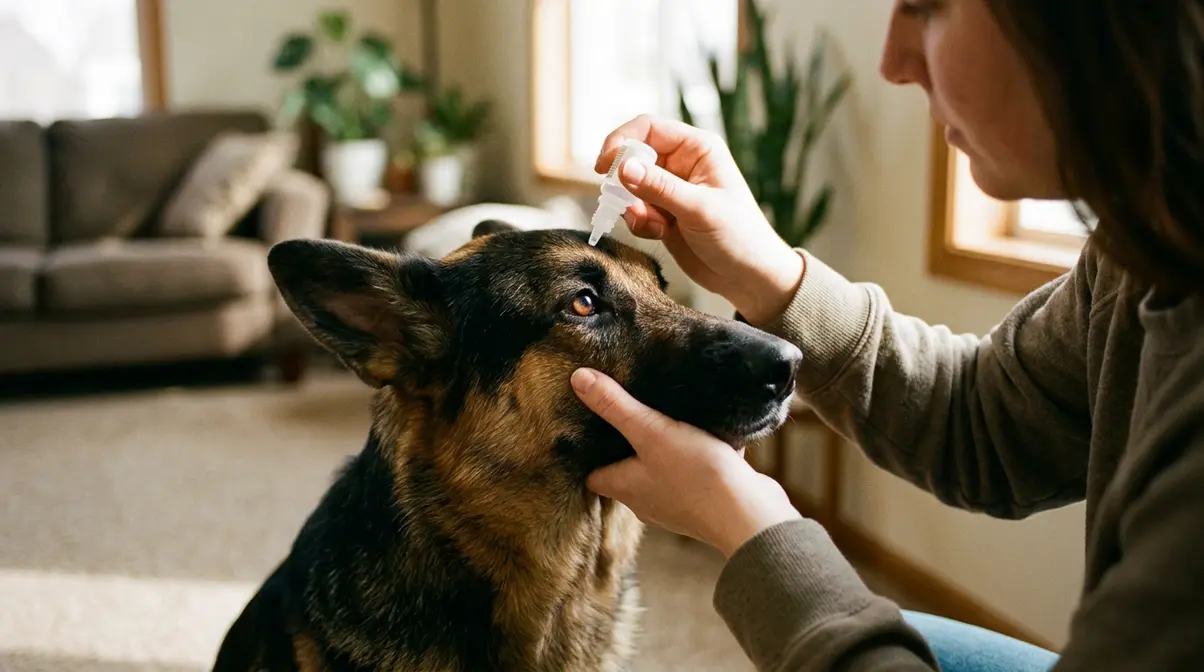
If you’ve tried four different eye drops over eight months and your German Shepherd’s eyes aren’t clearing, the most likely explanation is that the drops aren’t targeting the right mechanism. Pannus is immune-mediated, it requires immunosuppressants, not antibiotics or standard anti-inflammatory drops. Pannus is an immune-mediated condition, antibiotic eye drops will not treat it. Effective management requires topical immunosuppressants such as cyclosporine or tacrolimus, adjusted by a veterinarian based on the dog’s response (VIN Veterinary Partner).
Many owners have lived exactly this experience:
“Anyone have experience on this eye disease. We believe it’s pannus. Been doing 4 different drops over course of last 8 months and nothing of clearing …”, German Shepherd owner, community forum
This is one of the most common stories in German Shepherd communities. The owner isn’t doing anything wrong, they’re following their vet’s instructions. The issue is often that pannus wasn’t confirmed as the diagnosis before treatment started, or that the medications prescribed were the wrong class entirely.
⚠️ Only your veterinarian can prescribe and adjust these medications. This article describes them for informational purposes only, do not attempt to source or use these medications without veterinary guidance.
Standard Topical Treatments for Pannus
Three medication categories form the core of pannus management. Each works by suppressing the immune attack on the cornea rather than fighting an infection.
Corticosteroid eye drops, such as dexamethasone or prednisolone, reduce inflammation and slow blood vessel ingrowth into the cornea. They’re often the first-line treatment because they’re effective, well-understood, and relatively accessible. Long-term use may require monitoring for side effects, which is another reason consistent vet oversight matters.
Cyclosporine is an immunosuppressant that suppresses the immune response directly. Optimmune, cyclosporine 0.2% ophthalmic ointment, is an FDA-approved veterinary product specifically for pannus management, as documented in the FDA Animal Drugs database. It’s often more effective long-term than steroids alone, particularly for dogs whose condition doesn’t fully respond to corticosteroids.
Tacrolimus is another topical immunosuppressant, used when cyclosporine is insufficient or not tolerated. It’s not FDA-approved for this specific use but is used off-label under veterinary supervision, according to Mountain Star Veterinary Specialists. If your vet prescribed antibiotic drops and they haven’t worked after 4-6 weeks, ask specifically whether pannus has been ruled out, and whether a referral to a veterinary ophthalmologist is appropriate.
The medication comparison below summarizes the key differences:
| Medication | Mechanism | Notes |
|---|---|---|
| Corticosteroids (dexamethasone, prednisolone) | Reduces inflammation; slows blood vessel ingrowth | Common first-line; long-term monitoring needed |
| Cyclosporine (Optimmune) | Suppresses immune attack on cornea | FDA-approved for pannus; often more effective long-term |
| Tacrolimus | Suppresses immune response | Off-label use; prescribed when cyclosporine is insufficient |
Medication is only part of the management plan, UV protection is the other half, and it’s one owners can act on immediately.
UV Protection and Lifestyle Adjustments
These four steps work alongside medication to reduce the environmental triggers that worsen pannus:
- Limit outdoor activity during peak UV hours. Roughly 10 AM to 4 PM, especially in summer and at high altitude, is when UV radiation is most intense. Shorter midday walks and more activity in the early morning or evening reduce cumulative UV exposure.
- Consider UV-blocking canine eyewear. Dog goggles designed to block UV can reduce corneal UV exposure during outdoor activity. These support but don’t replace medication, think of them as sunscreen for your dog’s eyes.
- Discuss altitude with your vet. If you live above approximately 5,000 feet, this is a clinically relevant detail. Altitude significantly increases UV intensity, and dogs at elevation may need a more aggressive treatment protocol than sea-level dogs with the same diagnosis.
- Keep up with recheck exams. Typically every 3-6 months, rechecks allow your vet to adjust medication as the disease progresses or stabilizes. Skipping rechecks is one of the most common reasons pannus gets ahead of treatment.
According to VCA Hospitals, UV protection is a recognized component of pannus management, not an optional add-on. A German Shepherd owner in a high-altitude, sunny climate who limits midday walks and uses UV-blocking goggles is doing everything right on the environmental side. But this doesn’t replace the medication.
If you’ve done all of this and your dog’s condition is still progressing, it’s time to ask your vet a specific set of questions.
Questions to Ask Your Vet When Drops Aren’t Helping
These questions help your vet give you the most targeted treatment plan. Print this list and bring it to your next appointment, a good vet will welcome the specificity. This step-by-step list is built from guidance in VIN Veterinary Partner on treatment escalation and specialist referral for pannus management.
- “Has pannus been confirmed as the diagnosis, or is this a working assumption?”
- “Are the drops I’m currently using immunosuppressants, or antibiotics/anti-inflammatory agents?”
- “Should we consider adding tacrolimus if cyclosporine isn’t producing improvement?”
- “Is a referral to a veterinary ophthalmologist appropriate at this stage?”
- “How often should we recheck, and what specific changes are we monitoring for?”
- “Is UV exposure or altitude a meaningful factor for my dog’s specific case?”
- “What does treatment failure look like, how will we know if we need to change the protocol?”
- “Are there any systemic factors (other immune-mediated conditions) that could be affecting the response to treatment?”
Pannus is the most visible example of German Shepherds’ broader susceptibility to autoimmune conditions, and understanding that connection helps owners advocate more effectively for their dogs.
Are German Shepherds Prone to Autoimmune Diseases?
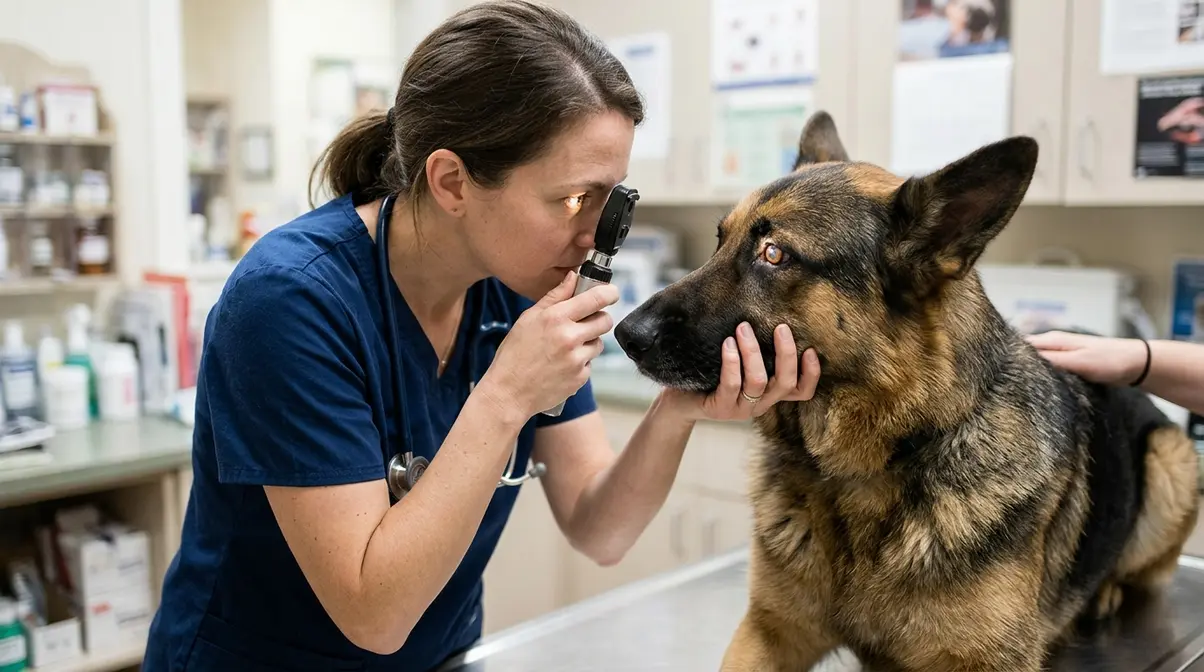
Yes, German Shepherds are one of the dog breeds most frequently affected by autoimmune diseases. Pannus is the most common immune-mediated condition in the breed, but the same underlying immune dysregulation also contributes to degenerative myelopathy, exocrine pancreatic insufficiency, and perianal fistulas. Veterinary sources, including the Cornell University Canine Genetics Lab, consistently note German Shepherds among the breeds most frequently represented in immune-mediated disease research.
German Shepherds are among the dog breeds most frequently affected by immune-mediated conditions, with pannus, degenerative myelopathy, and exocrine pancreatic insufficiency all linked to the breed’s immune profile. Understanding this broader picture helps you recognize patterns, ask better questions at vet visits, and connect conditions that might otherwise seem unrelated.
Pannus as an Autoimmune Condition
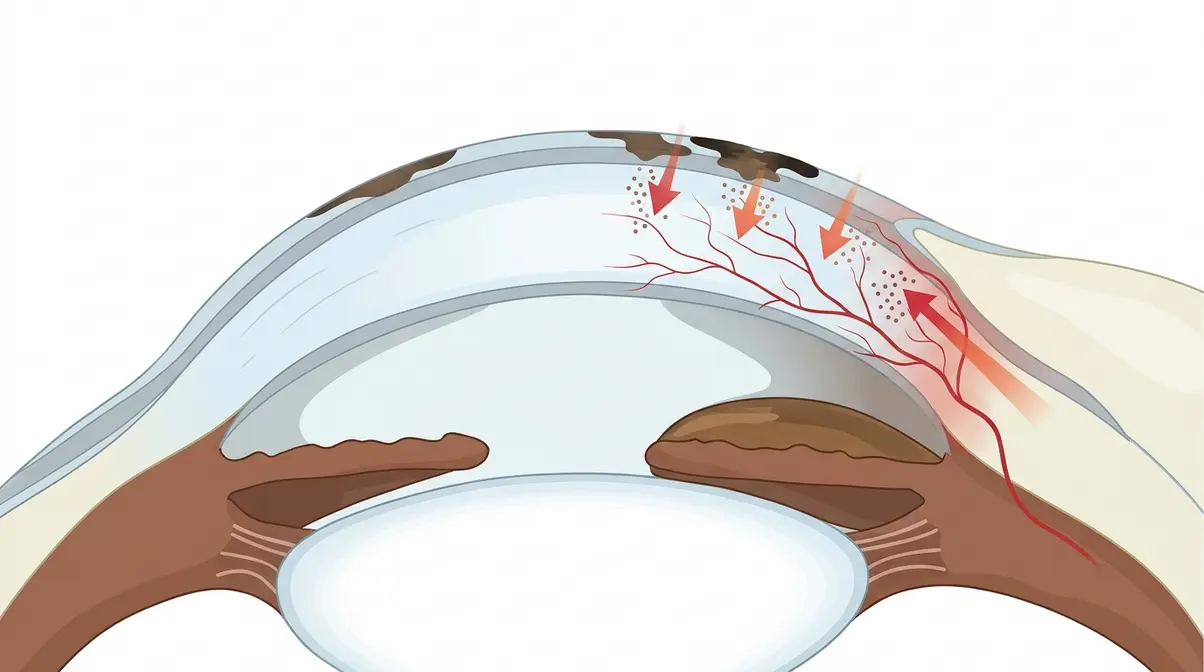
Pannus is autoimmune because your dog’s own immune system, not a virus, bacteria, or injury, causes the corneal damage. The immune system mistakenly targets the cornea as foreign tissue, triggering the blood vessel ingrowth and pigment deposition that define the disease. This is why antibiotics don’t work: there’s no infectious agent to eliminate. The Cornell University Canine Genetics Lab documents this immune-mediated mechanism as the genetic foundation of pannus in German Shepherds.
The autoimmune nature also explains why pannus is lifelong. Your dog’s immune system doesn’t forget the cornea. Immunosuppressants, cyclosporine, tacrolimus, corticosteroids, keep the immune attack suppressed, but they don’t eliminate the underlying predisposition. Stop the medication, and the attack resumes. This is why consistent, long-term treatment is the standard of care, not a short course of drops.
Pannus is the most visible autoimmune condition in the breed, but German Shepherds face other immune-related health challenges too.
Other Autoimmune and Systemic Diseases in German Shepherds
German Shepherds are prone to several immune-related conditions beyond pannus. According to VCA Hospitals, the breed’s tendency toward immune dysregulation affects multiple body systems, not just the eyes:
- Degenerative myelopathy, a progressive neurological condition with an immune-mediated component that affects the spinal cord. It typically begins with hind-limb weakness and unsteady gait, progressing over months to years. German Shepherds are one of the most commonly affected breeds.
- Exocrine pancreatic insufficiency (EPI), the pancreas fails to produce enough digestive enzymes, impairing nutrient absorption. In German Shepherds, this condition has both a hereditary and immune-mediated component. Signs include chronic diarrhea, weight loss despite a good appetite, and a dull coat.
- Perianal fistulas, painful, tunnel-like lesions around the anus with a strong immune-mediated component. More common in German Shepherds than any other breed, and often difficult to manage without immunosuppressive therapy.
Note on Cushing’s disease: Cushing’s disease (hyperadrenocorticism) is a hormonal condition, not an autoimmune disease, but it’s covered in the FAQ section for owners who have heard the term in relation to German Shepherds.
If your German Shepherd has pannus and also shows signs of digestive problems or hind-limb weakness, mention both to your vet. The breed’s immune profile means these conditions can and do co-occur. For an overview of common German Shepherd health conditions, including conditions beyond the immune system, our dedicated guide covers the full picture.
Understanding the breed’s health profile is useful, but at some point, the most important step is knowing when your regular vet’s expertise ends and a specialist’s begins.
When Should You See a Veterinary Ophthalmologist?
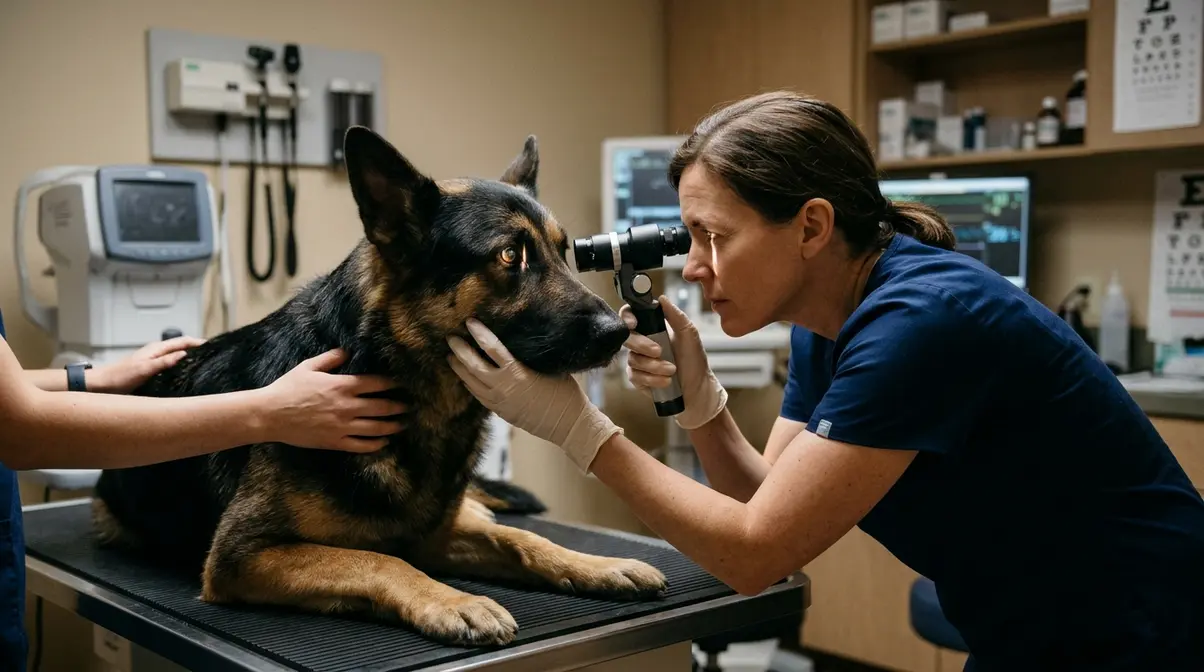
A veterinary ophthalmologist should be involved when pannus progresses despite appropriate treatment, when the diagnosis is uncertain, or when your dog’s vision is at risk. Some situations go beyond what a general practitioner can manage alone.
Signs You Need a Specialist, Not Just Your Regular Vet
Here are five specific criteria that indicate a referral to a veterinary ophthalmologist (a board-certified specialist certified by the American College of Veterinary Ophthalmologists) is the right next step. According to Clinician’s Brief, a veterinary ophthalmologist should be consulted when pannus progresses despite 6-8 weeks of appropriate topical immunosuppressant therapy, or when the diagnosis is uncertain:
- Pannus progresses despite 6-8 weeks of appropriate topical immunosuppressant therapy, not just any drops, but specifically cyclosporine or tacrolimus at the prescribed frequency. If the right medication isn’t working, a specialist can assess why.
- The diagnosis is uncertain, your vet isn’t sure whether the condition is pannus, a corneal ulcer, dry eye, or another condition. A specialist has diagnostic tools (including slit-lamp biomicroscopy) that general practices typically don’t.
- Your dog’s vision appears to be declining, bumping into objects, reluctance to navigate dim areas, or any behavioral sign suggesting reduced visual function.
- You live at high altitude and the condition is aggressive or early-onset (under 4 years of age). High-altitude cases often require more complex medication protocols than a general vet is accustomed to managing.
- Your vet recommends a referral, always worth acting on promptly. A general practitioner who suggests a specialist referral is giving you good advice, not passing the problem along.
Equally important is knowing what not to do while you’re managing the condition at home.
Common Mistakes When Managing Eye Conditions at Home
Mistake 1, Using over-the-counter human eye drops. Products like Visine aren’t formulated for dogs and don’t address the immune mechanism driving pannus. The redness-reducing agent in OTC drops constricts blood vessels temporarily, which can actually mask the visual signs of progression without treating the cause. Use only vet-prescribed drops.
Mistake 2, Stopping medication when the eye looks better. Pannus is lifelong. An owner who sees improvement after three months and stops the drops is likely to see the condition flare within weeks, sometimes worse than before. Discuss any change in medication frequency with your vet before making it, and don’t taper without guidance.
Mistake 3, Waiting more than 2-3 weeks before calling the vet when a new symptom appears. Early-stage pannus is far easier to manage than mid- or late-stage disease. Use the symptom checklist in the first section of this guide as your trigger for a vet call, not as a reason to wait and see.
It’s worth noting that the assumption behind “four different drops and nothing is working” isn’t always the wrong medication. Veterinary sources suggest the more common issue is inconsistent application or stopping treatment too early, not necessarily the wrong drug choice. That’s useful to know before you assume the medication is at fault.
With the common pitfalls in mind, here are the questions German Shepherd owners ask most often about eye disease.
Frequently Asked Questions
What is the most common eye disease in German Shepherds?
Chronic superficial keratitis, also called pannus, is the most common and significant hereditary eye disease in German Shepherds. It’s an immune-mediated condition in which blood vessels and dark pigment gradually invade the cornea. Genetics, ultraviolet light exposure, and high altitude all contribute to its development and severity. It typically appears between 4 and 8 years of age, though younger dogs can develop a more aggressive form. Any cloudiness or spreading film on the cornea warrants a prompt veterinary exam.
What are the symptoms of pannus in German Shepherds?
Pannus typically appears as a pinkish, grayish-white, or brownish film spreading across the cornea, usually starting at the outer edge. You may also notice redness, fine blood vessels visible on the eye surface, dark pigment deposits, and a thickened third eyelid. Left untreated, it can progress to significant vision loss or blindness. Squinting in bright light is a common early behavioral sign. Any cloudiness, redness, or spreading film in your dog’s eyes warrants a veterinary eye exam.
Can pannus in German Shepherds be cured?
Pannus cannot be cured, but it can be managed effectively with lifelong treatment. Management typically relies on prescription topical medications, corticosteroids, cyclosporine (such as Optimmune), or tacrolimus, applied daily or twice daily as directed by your veterinarian. UV protection and regular recheck exams are also part of the management plan. Only a veterinarian can choose and adjust the right medications for your dog. If current drops aren’t helping, ask about a referral to a veterinary ophthalmologist.
How can I protect my German Shepherd’s eyes from UV damage?
UV light worsens pannus, so reducing your dog’s UV exposure is an important part of management. Limit outdoor activity during peak sun hours, roughly 10 AM to 4 PM, especially in summer and at high altitude. UV-blocking canine eyewear can help during unavoidable outdoor time. If you live above 5,000 feet, mention this to your vet, as altitude significantly increases UV intensity and may require a more aggressive treatment protocol. These steps support, but don’t replace, veterinary medication.
What other eye conditions affect German Shepherds besides pannus?
Besides pannus, German Shepherds can develop plasmoma (a pannus variant affecting the third eyelid), hereditary cataracts (clouding of the lens), progressive retinal atrophy (a genetic retinal degeneration starting with night blindness), entropion (eyelid rolling inward and irritating the cornea), and distichiasis (abnormal eyelash growth rubbing the cornea). Each condition has distinct visual signs and requires a different treatment approach. A veterinarian can tell these conditions apart with a thorough eye exam and, in some cases, referral to a veterinary ophthalmologist.
Does Cushing’s disease affect German Shepherds’ eyes?
Cushing’s disease (hyperadrenocorticism) is a hormonal condition caused by excess cortisol, and German Shepherds can develop it, though it’s not primarily an eye disease. It can indirectly affect the eyes: elevated cortisol may increase susceptibility to corneal ulcers and other secondary complications. The primary signs are increased thirst, urination, and appetite, along with a pot-bellied appearance and hair loss. If you suspect Cushing’s disease, your veterinarian can confirm it with blood and urine tests.
What to Do If You Suspect a German Shepherd Eye Disease
Eye diseases in German Shepherd dogs most often trace back to pannus, an immune-mediated corneal condition that requires lifelong topical treatment, not a short course of antibiotic drops. Genetics, UV light, and altitude all contribute to its development and progression. The earlier treatment starts, the more vision is preserved. The consistent finding across veterinary sources is clear: if your dog’s eye shows any cloudiness, spreading film, or redness that doesn’t resolve within 24 hours, call your vet this week.
If you’ve already tried multiple drops without improvement, use the questions-to-ask checklist in the treatment section above to guide your next vet conversation. The most common reason drops don’t work is that they’re targeting the wrong mechanism, and a veterinary ophthalmologist can confirm whether a medication change is needed. The escalation path from first drops to specialist referral is straightforward once you know what to ask.
Book a vet appointment this week if your dog shows any of the symptoms in the checklist above. If you’ve already had a diagnosis and want to understand the condition in more depth, our keratitis and pannus guide for German Shepherds covers the clinical detail your vet may not have had time to explain.

 German Shepherd Separation Anxiety: Signs & Training