⚠️ Veterinary Disclaimer: This guide is for informational purposes only and does not constitute veterinary advice. Always consult a licensed veterinarian before making significant changes to your German Shepherd’s diet, especially if your dog has an existing health condition.
Table of Contents
- What Should a German Shepherd Eat? Core Nutritional Needs
- German Shepherd Feeding Chart by Age and Weight
- German Shepherd Puppy Diet: Month-by-Month Guide
- Choosing the Best Food for Your German Shepherd
- The German Shepherd Raw Diet: Pros, Cons, and Vet Guidance
- Specialized GSD Diets: Weight, Pregnancy, and Allergies
- Foods That Are Toxic to German Shepherds
- Feeding a German Shepherd in India
- Common German Shepherd Feeding Mistakes to Avoid
- Frequently Asked Questions
You’ve probably second-guessed your German Shepherd’s food bowl more than once. Getting the german shepherd diet right matters more than most guides acknowledge, that anxious pause before measuring out the next cup, wondering if you’re feeding too much, too little, or the wrong thing entirely, is one of the most common feelings GSD owners describe. The stakes feel high because they are: GSDs are a large, active, health-prone breed where the wrong diet can accelerate hip dysplasia or trigger life-threatening gastric dilatation-volvulus (GDV). Most guides online either oversimplify these risks or avoid the hard questions completely.
This guide is built on peer-reviewed research and structured around the GSD Nutrition Pyramid, a framework that organizes every feeding decision, from protein foundation through life-stage calibration, so you always have a clear answer. By the end, you’ll know exactly what to feed your German Shepherd at every life stage, how much, and why, so you can stop second-guessing and start feeding with confidence. The guide covers core nutritional needs, feeding charts, puppy guidance, commercial food criteria, the raw diet debate, specialized diets, toxic foods, and the most common feeding mistakes to avoid.
Key Takeaways: German Shepherd Diet
A balanced German Shepherd diet centers on high-quality animal protein (22-26% for active dogs), joint-supporting nutrients, and life-stage-appropriate portions, the foundation of the GSD Nutrition Pyramid.
- Protein first: Real meat (beef, lamb, fish) should be the #1 ingredient; active GSDs need 22-26% protein to maintain muscle mass and energy (AKC breed guidance).
- Portion by weight: Adult GSDs typically need 3-5 cups of kibble (1,150-1,800 calories) daily, split into two meals to reduce bloat risk.
- Raw diet caution: The AVMA and AAHA both discourage raw feeding due to documented pathogen risks, consult your vet before starting.
- Never feed: Grapes, onions, garlic, xylitol, or chocolate, all are toxic to German Shepherds.
- Life stage matters: Puppy, adult, and senior GSDs have distinct caloric and nutrient needs; using the wrong formula can cause long-term harm.
What Should a German Shepherd Eat? Core Nutritional Needs
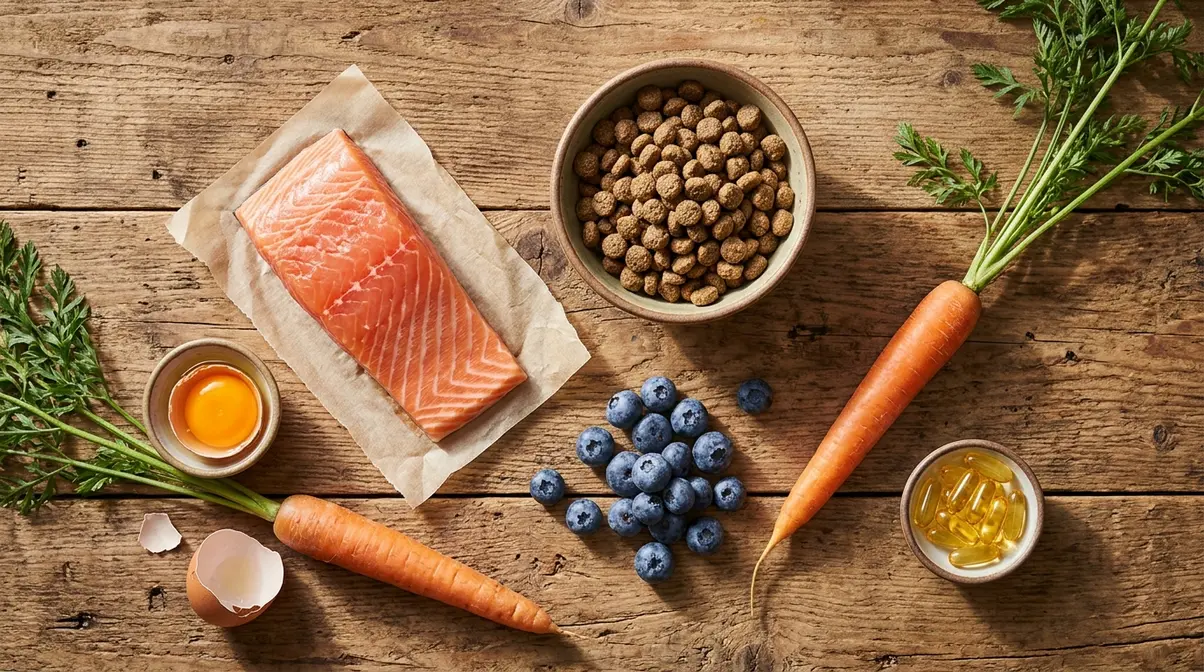
German Shepherds are large, active dogs requiring a diet centered on high-quality animal protein (18-26% depending on activity level), joint-protective nutrients such as glucosamine and Omega-3 fatty acids, and life-stage-appropriate caloric intake. The GSD Nutrition Pyramid organizes these needs into four tiers: Protein Foundation, Joint & Digestive Support, Life-Stage Calibration, and Diet Type Selection. This framework structures every feeding decision in this guide. For a broader look at keeping your GSD healthy beyond diet, see a complete guide to German Shepherd care.
German Shepherds are large, active dogs with specific nutritional requirements that differ from the average family pet. A balanced diet for a German Shepherd centers on high-quality animal protein as the primary macronutrient, supported by joint-protective nutrients and life-stage-appropriate caloric intake. Understanding what goes into that bowl, and why, is the first step toward feeding with real confidence.
The GSD Nutrition Pyramid organizes every feeding decision into four tiers:
- Tier 1: Protein Foundation, the base of every meal; real animal protein drives muscle maintenance, immune function, and energy in a working breed.
- Tier 2: Joint & Digestive Support, fatty acids, glucosamine, chondroitin, and probiotics that address the breed’s specific vulnerabilities.
- Tier 3: Life-Stage Calibration, adjusting calories, macronutrient ratios, and feeding frequency as your dog moves from puppy to adult to senior.
- Tier 4: Diet Type Selection, choosing between commercial kibble, raw, homemade, or a hybrid approach within the constraints of the first three tiers.
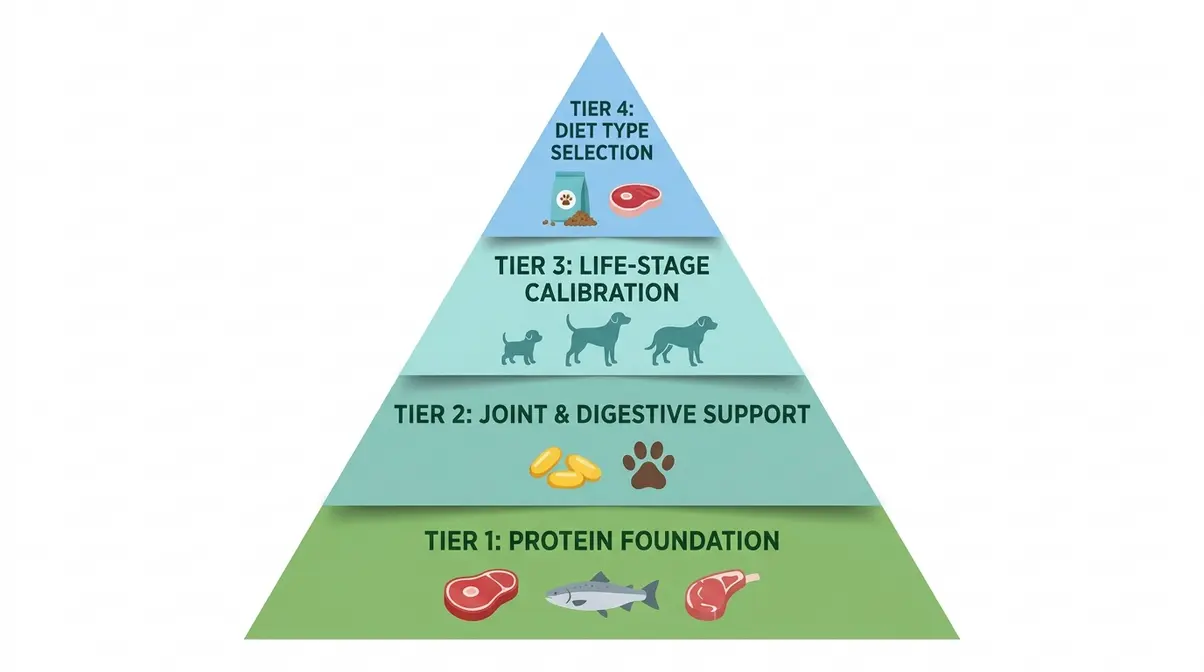
Every section of this guide maps to one of these tiers. Start at the base, and the rest follows naturally.
What Nutrients Does a German Shepherd Need?
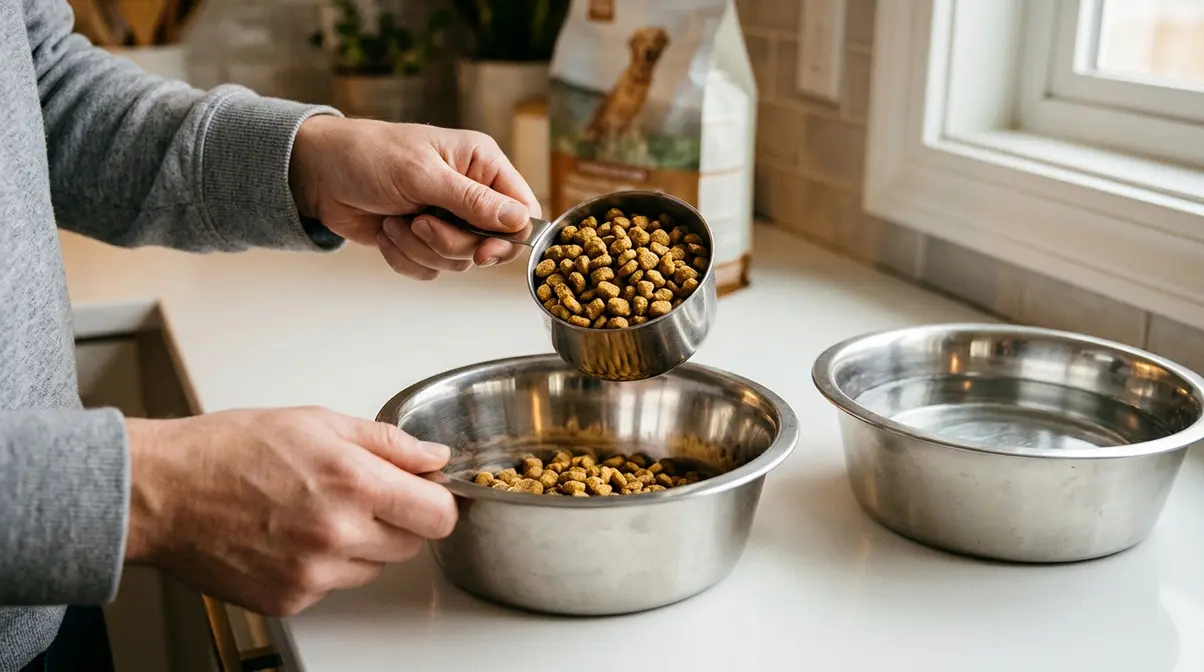
German Shepherds require a minimum of 18% protein as adults per AAFCO (Association of American Feed Control Officials) standards, but active working dogs may need 22-26% to maintain muscle mass and energy levels, four to eight percentage points above the minimum, based on AKC breed guidance cross-referenced with veterinary sports nutrition research. The ideal protein sources for a balanced diet for German Shepherds are named animal proteins: beef, lamb, salmon, and turkey. These deliver the complete amino acid profiles a working breed needs to sustain muscle tissue and support immune function.
Fat content matters too. Adults benefit from 8-15% fat on a dry-matter basis, with an emphasis on Omega-3 fatty acids from fish oil or flaxseed and Omega-6 from chicken fat or sunflower oil. Omega-3 deficiency doesn’t just dull the coat; research associates it with increased systemic inflammation, which accelerates joint damage in a breed already predisposed to hip and elbow dysplasia. This connection, Omega-3 deficiency directly worsening a GSD’s most common orthopedic vulnerability, is one that generic dog nutrition guides consistently overlook.
For micronutrients, the most GSD-specific priorities are:
| Nutrient | Primary Function | GSD-Specific Benefit |
|---|---|---|
| Calcium & Phosphorus | Bone density and structural integrity | Ratio of ~1.2:1 supports skeletal development without causing developmental orthopedic disease (AKC, 2023) |
| Glucosamine & Chondroitin | Cartilage formation and joint lubrication | Helps slow cartilage breakdown in a breed predisposed to hip dysplasia |
| Omega-3 Fatty Acids | Anti-inflammatory response, coat condition | Reduces joint inflammation; improves skin barrier function |
| Probiotics/Prebiotics | Digestive microbiome support | Addresses the GSD’s notoriously sensitive digestive system |
A 30kg adult GSD on a moderately active lifestyle needs approximately 1,400 calories per day, roughly 3.8 cups of a 370-calorie/cup kibble, split into two meals.
Knowing what nutrients your GSD needs is only half the equation, the other half is knowing how to find them on a dog food label.
How to Read a Dog Food Label for Your GSD
The AAFCO nutritional adequacy statement is the single most important line on any dog food bag. Look for the phrase “complete and balanced for “, this means the food meets minimum nutritional requirements for that stage. A label that says “for supplemental feeding only” is not appropriate as your dog’s primary diet, regardless of how high-quality the ingredients appear.
Ingredient order tells you what the food is primarily made of, since ingredients are listed by weight before processing. The first five ingredients make up the bulk of every meal. A high-quality food leads with a named animal protein: “deboned beef,” “salmon,” or “chicken.” A lower-quality food leads with “corn” or “chicken by-product meal.” Note that “chicken meal”, a concentrated, dehydrated form of chicken, is not inherently bad; it contains more protein per gram than fresh chicken because the moisture has been removed. The concern is unnamed sources like “meat meal” or “poultry by-products” with no species identified.
Five red-flag ingredients to watch for on any label:
- Corn syrup or added sugars, unnecessary calories with no nutritional value
- BHA, BHT, or ethoxyquin, artificial preservatives with contested long-term safety profiles
- Unnamed “meat by-products” or “animal digest” listed as a primary protein source
- Corn, wheat, or soy as the first three ingredients (excessive grain filler dominating the formula)
- Artificial colors such as Red 40 or Yellow 5, no nutritional purpose whatsoever
For owners who want to verify AAFCO standards directly, the AAFCO website publishes its nutrient profiles publicly.
Once you understand what’s in your dog’s food, the next step is understanding how diet connects to the health conditions GSDs are most prone to.
How Diet Affects Common GSD Health Issues
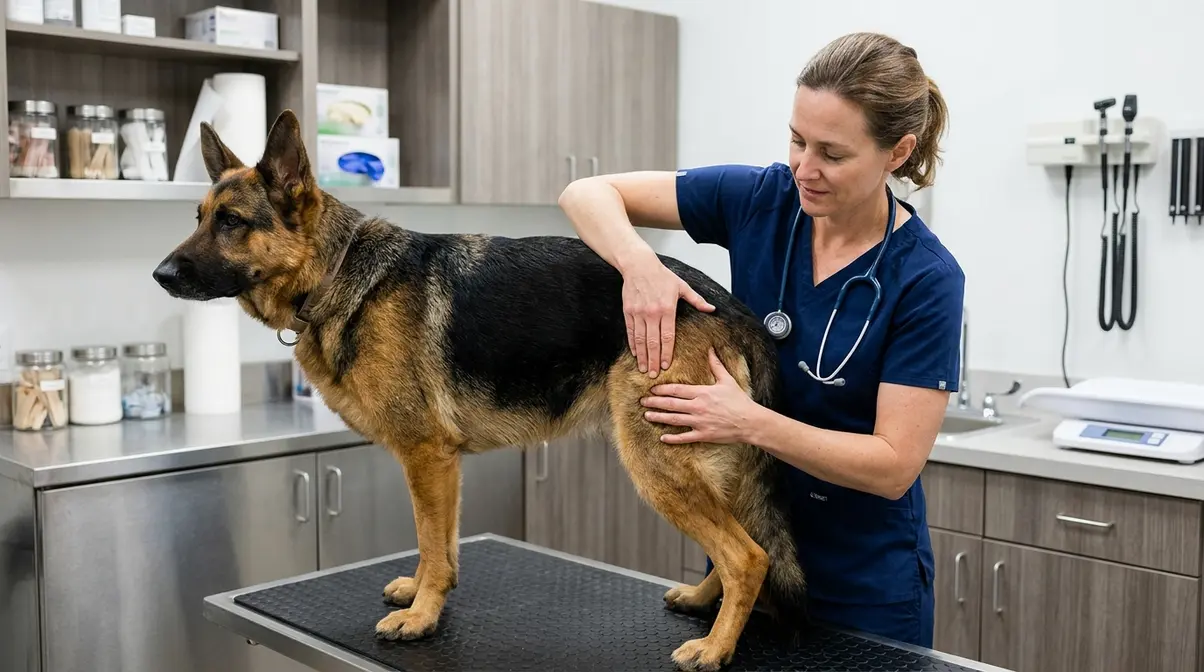
Diet and GSD health are more tightly connected than most guides acknowledge. Three conditions in particular have direct dietary relationships that every GSD owner should understand. Understanding these german shepherd diet facts, the GDV risk from single large meals, the EPI prevalence in the breed, and the role of Omega-3s in joint inflammation, gives owners a concrete framework for making safer feeding decisions.
Hip and elbow dysplasia are the breed’s most common orthopedic conditions. Glucosamine and chondroitin are associated with reduced cartilage breakdown, and Omega-3 fatty acids help dampen the chronic joint inflammation that accelerates structural damage. Critically, overfeeding puppies, causing too-rapid growth, is one of the most established risk factors for developmental orthopedic disease. The AKC notes that German Shepherds are prone to bloat (GDV), a life-threatening stomach condition influenced by feeding practices (AKC German Shepherd breed information, n.d.).
Bloat (GDV, Gastric Dilatation-Volvulus) is an acute, life-threatening emergency in which the stomach fills with gas and twists on itself. A GSD that eats one large meal per day and exercises within 30 minutes is at significantly higher risk of GDV, a condition with a reported mortality rate of up to 30% even with emergency surgery. Splitting daily rations into two meals and waiting at least one to two hours before vigorous exercise are the two most widely recommended preventive measures. For a deeper look at the risk of bloat in deep-chested breeds, additional guidance is available on the site.
Exocrine Pancreatic Insufficiency (EPI), a condition in which the pancreas fails to produce sufficient digestive enzymes, is more prevalent in German Shepherds than in most other breeds. Dogs with EPI cannot properly digest standard food, leading to dramatic weight loss despite normal or increased appetite. Highly digestible diets combined with enzyme supplementation are the standard management approach, always under veterinary supervision.
With the nutritional foundation clear, here is exactly how much to feed your German Shepherd, broken down by age, weight, and activity level.
German Shepherd Feeding Chart by Age and Weight
An adult German Shepherd typically needs 1,150-1,800 calories per day, equivalent to 3-5 cups of high-quality dry kibble, split across two meals to reduce the risk of bloat. The exact amount in any feeding chart for a German Shepherd depends on your dog’s weight, age, and activity level, and caloric needs can vary by up to 40% between a sedentary house dog and a working or sport dog of the same size (PetWorks German Shepherd feeding guide, n.d.). That gap is why a single generic portion recommendation causes both overfeeding and underfeeding in this breed.
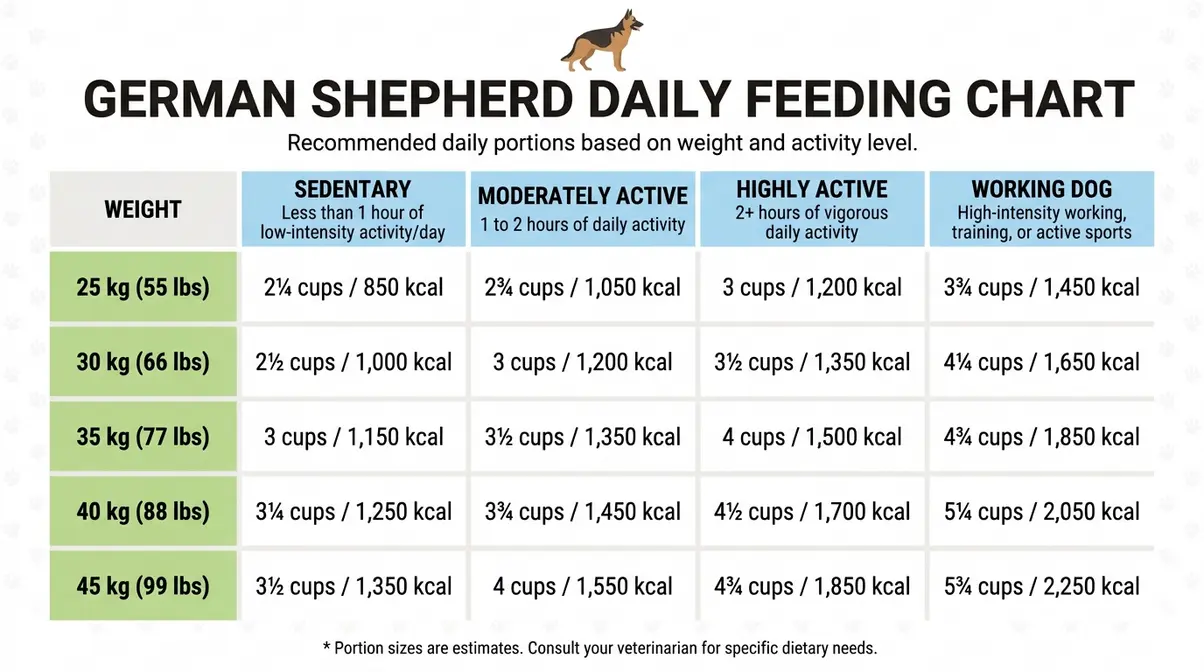
Adult German Shepherd Feeding Chart
The German Shepherd diet chart below provides daily food estimates for adult dogs. All cup measurements assume approximately 370 calories per cup, a common density for premium dry kibble. Always check your specific brand’s feeding guide, since caloric density varies significantly between formulas. According to PetMD’s German Shepherd breed guide, most adult German Shepherds need approximately 55-65 calories per kilogram of body weight per day.
| Weight | Sedentary (cups/day) | Moderately Active (cups/day) | Highly Active (cups/day) | Working Dog (cups/day) |
|---|---|---|---|---|
| 25 kg | 2.5 cups (~930 cal) | 3.1 cups (~1,150 cal) | 3.8 cups (~1,400 cal) | 4.5 cups (~1,650 cal) |
| 30 kg | 3.0 cups (~1,100 cal) | 3.8 cups (~1,400 cal) | 4.6 cups (~1,700 cal) | 5.4 cups (~2,000 cal) |
| 35 kg | 3.2 cups (~1,200 cal) | 4.1 cups (~1,500 cal) | 4.9 cups (~1,800 cal) | 5.7 cups (~2,100 cal) |
| 40 kg | 3.6 cups (~1,330 cal) | 4.5 cups (~1,650 cal) | 5.4 cups (~2,000 cal) | 6.3 cups (~2,330 cal) |
| 45 kg | 3.9 cups (~1,450 cal) | 4.9 cups (~1,800 cal) | 5.9 cups (~2,180 cal) | 6.9 cups (~2,550 cal) |
A 35kg working GSD, such as a police or sport dog, may need 2,100+ calories per day, nearly 40% more than a sedentary dog of the same weight. Always split the daily total across two meals. Feeding one large meal to a deep-chested breed like a German Shepherd is a documented risk factor for GDV and should be avoided.
These are estimates. Always verify with your specific food brand’s feeding guide and adjust based on your dog’s body condition score.
Senior German Shepherds need a different calculation, their metabolism slows and their caloric needs drop by approximately 20%.
Senior German Shepherd Feeding Chart (7+ Years)
Senior GSDs typically need around 20% fewer calories than their adult maintenance level, reflecting reduced activity and a slower metabolic rate. A 30kg senior GSD that needed 1,400 calories as a moderately active adult may only need 1,100-1,150 calories at age 8+, depending on activity level and health status.
Beyond calories, senior nutrition requires three specific adjustments:
- Higher joint support: glucosamine and chondroitin become even more important as cartilage naturally degrades with age.
- More digestible protein sources: fish and egg-based proteins are easier on aging digestive systems than some red meats.
- Phosphorus monitoring: if kidney function is declining, a veterinarian may recommend reducing dietary phosphorus, do not make this change without vet guidance.
| Age Range | Caloric Adjustment vs. Adult Maintenance |
|---|---|
| 7-9 years | Reduce by ~10-15% |
| 9-11 years | Reduce by ~15-20% |
| 11+ years | Reduce by ~20-25%; reassess with vet |
Consider three smaller meals per day for seniors showing digestive sensitivity. Obesity in older dogs accelerates joint degeneration dramatically, so the BCS check described below becomes more important, not less, as your dog ages. Consult your veterinarian before switching to a senior formula, particularly if your dog has kidney or liver concerns.
Adjusting portions isn’t just about age, it’s about reading your dog’s body condition in real time.
How to Adjust Your GSD’s Portions Using Body Condition Score
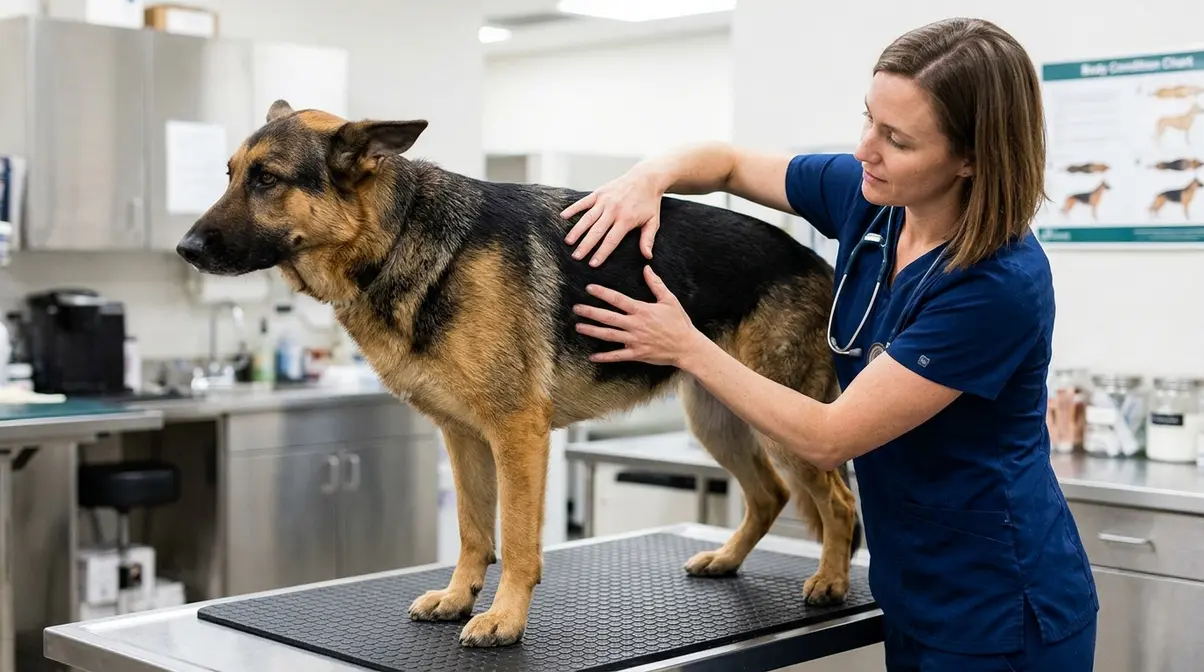
The Body Condition Score (BCS) is a 1-9 scale used by veterinarians to assess whether a dog is underweight, ideal, or overweight. For a German Shepherd, the target is 4-5 out of 9. At this score, ribs are easily felt with light finger pressure but not visibly prominent, and the dog has a clear waist tuck when viewed from above and a slight abdominal tuck from the side.
The rib-check test, step by step:
- Place both hands on your dog’s ribcage with light pressure, thumbs along the spine.
- If you can feel individual ribs easily without pressing hard, body condition is likely ideal.
- If ribs are hard to feel even with firm pressure, your dog is likely overweight, reduce daily intake by 10%.
- If ribs are clearly visible without touching, your dog may be underweight, increase by 10% and rule out underlying causes.
- Recheck every two weeks and adjust again if needed.
Viewed from above, a healthy GSD should show a visible waist narrowing behind the ribcage. If your 30kg GSD’s ribs are hard to feel and their waist has disappeared, reduce daily intake by 10% (approximately 0.3-0.4 cups) and recheck in two weeks. Consult your veterinarian if your GSD is significantly over or underweight before making major dietary changes.
5 Sample Daily Meal Plans (German Shepherd Diet Plan):
- Sedentary house dog, 30kg: 1,100 cal / ~3.0 cups / 2 meals (morning and evening)
- Moderately active, 30kg: 1,400 cal / ~3.8 cups / 2 meals
- Highly active, 35kg: 1,800 cal / ~4.9 cups / 2 meals
- Working/sport dog, 35kg: 2,100 cal / ~5.7 cups / 2 meals; may add a small midday snack
- Weight-loss, 35kg overweight: 1,200 cal / ~3.2 cups / 2 meals + veterinary supervision; recheck BCS every 2 weeks
All cup estimates assume ~370 cal/cup kibble. Brand caloric density varies, always cross-reference with the specific product’s feeding guidelines.
Puppy feeding is a different calculation entirely, and getting it wrong during the growth phase can cause lasting skeletal damage.
German Shepherd Puppy Diet: Month-by-Month Guide
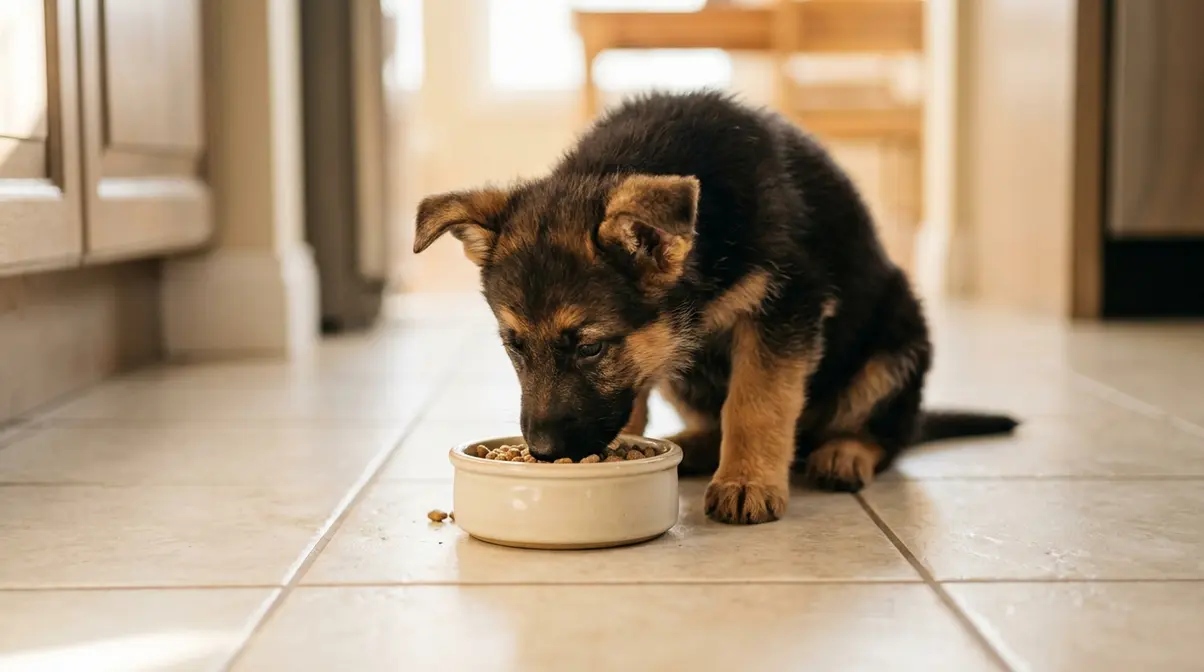
The diet for German Shepherd puppies is the most consequential feeding decision you’ll make for your dog. Large-breed puppies like GSDs have specific calcium-to-phosphorus requirements that, if unmet or exceeded, can cause developmental orthopedic disease. The AKC advises a calcium-to-phosphorus ratio of approximately 1.2:1 for large-breed puppies to support proper skeletal development, and warns against calcium supplementation on top of complete-and-balanced food, one of the most dangerous mistakes GSD puppy owners make (feeding a puppy based on breed size, AKC, 2023). For context on where your puppy should be physically at each stage, tracking their growth with a weight and height chart is a useful companion to this feeding guide.
Tier 3 of the GSD Nutrition Pyramid, Life-Stage Calibration, is nowhere more critical than in the first 18 months. The Puppy Feeding Fundamentals guidance from the AKC provides a solid foundation for understanding feeding schedules and nutritional requirements for large breeds during this period (AKC, 2023).
For additional detail on the feeding requirements for a 4-month-old puppy, specific guidance is available on the site.
Feeding a GSD Puppy: Birth to 3 Months
Birth to 4 weeks: GSD neonates rely exclusively on mother’s milk or a puppy milk replacer (such as KMR). No solid food should be introduced during this window. Neonates need feeding every two to four hours.
4 to 8 weeks: Weaning begins. Introduce a gruel made from large-breed puppy kibble soaked in warm water at a 3:1 water-to-kibble ratio. Offer four meals per day and reduce the water ratio gradually over two weeks as the puppy accepts thicker consistency.
8 to 12 weeks: Fully transition to moistened or dry large-breed puppy kibble at four meals per day. At 8 weeks, a GSD puppy typically weighs 6-9kg and needs approximately 1-1.5 cups of large-breed puppy kibble per day, divided into four meals.
| Age | Food Type | Daily Amount | Frequency |
|---|---|---|---|
| Birth-4 weeks | Mother’s milk or KMR replacer | On demand | Every 2-4 hours |
| 4-8 weeks | Moistened gruel (kibble + water 3:1) | ~0.5-1 cup | 4 meals/day |
| 8-12 weeks | Large-breed puppy kibble (moistened or dry) | ~1-1.5 cups | 4 meals/day |
Critical note: Large-breed puppy formula is mandatory at this stage, not regular puppy food and not adult food. Regular puppy formulas often contain higher calcium levels than large breeds can safely process, and adult food lacks the protein and DHA density puppies need.
By 3 months, your puppy is eating solid food, and the next 3 months are a critical growth window.
Feeding a GSD Puppy: 3 to 6 Months
The 3-6 month window is characterized by rapid bone and muscle development. This is when the calcium-to-phosphorus balance is most critical, and when calcium supplementation causes the most harm.
3 to 4 months: Reduce to three meals per day. Daily intake increases to approximately 1.5-2.5 cups total. Typical weight range is 14-20kg. Continue large-breed puppy formula exclusively.
4 to 6 months: Maintain three meals per day at 2-3 cups per day. A 4-month-old GSD puppy typically weighs 16-20kg and needs approximately 2-2.5 cups of large-breed puppy kibble per day, split into three meals.
⚠️ Do NOT supplement calcium during this phase. A puppy already eating a complete-and-balanced large-breed puppy food receives adequate calcium. Adding a calcium supplement on top of this creates excess calcium, which causes skeletal deformities, not stronger bones. This is one of the most dangerous and most common mistakes GSD puppy owners make.
Monitor growth using the GSD growth chart to verify your puppy is developing on track. A puppy gaining weight too rapidly is at higher risk of developmental orthopedic disease.
| Age | Weight Range | Daily Amount | Meals/Day |
|---|---|---|---|
| 3-4 months | 14-20 kg | 1.5-2.5 cups | 3 |
| 4-6 months | 16-25 kg | 2-3 cups | 3 |
The 6-12 month window is when many owners make the mistake of switching to adult food too early.
Feeding a GSD Puppy: 6 to 12 Months
The adolescent phase brings the dog close to adult size, which fools many owners into reaching for adult food. Resist that instinct. Skeletal development in large breeds like German Shepherds continues until 18 months, and adult food has lower calcium levels and different macronutrient ratios than a growing dog requires.
6 to 9 months: Reduce to two meals per day. Daily intake is approximately 2.5-3.5 cups. Weight range is typically 22-30kg. Stay on large-breed puppy formula.
9 to 12 months: Two meals per day; 3-4 cups per day. The german shepherd diet for a puppy in this 6-12 month window still requires large-breed puppy formula, not adult food, because skeletal development continues until 18 months. A 10-month-old GSD weighing 28kg may look fully grown. They are not.
| Age | Weight Range | Daily Amount | Meals/Day |
|---|---|---|---|
| 6-9 months | 22-30 kg | 2.5-3.5 cups | 2 |
| 9-12 months | 28-36 kg | 3-4 cups | 2 |
When your GSD reaches 12-18 months, it’s time to transition to adult food, here’s how to do it without upsetting their sensitive stomach.
Puppy Nutritional Requirements: What Makes Large-Breed Puppy Food Different
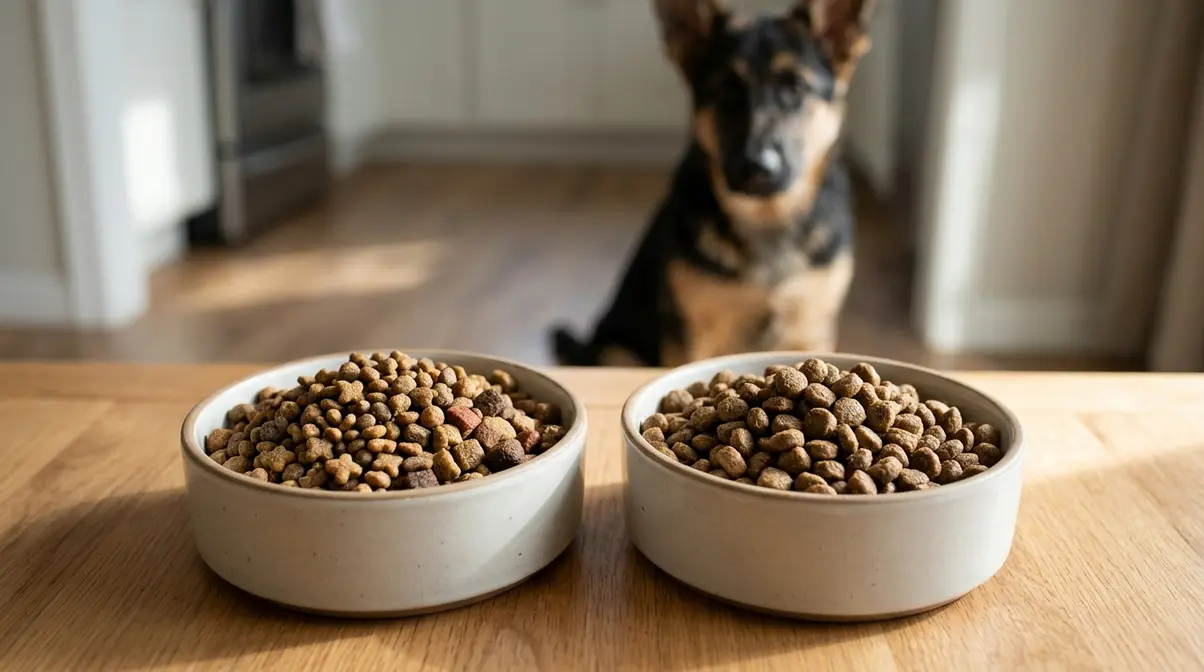
Large-breed puppy food is a distinct category, not simply “puppy food” with a bigger bag. The critical difference lies in controlled calcium levels. A quality large-breed puppy formula contains calcium at 0.7-1.2% on a dry-matter basis. Standard puppy formulas often exceed this range, delivering excess calcium that disrupts the bone remodeling process in large breeds and leads to developmental orthopedic disease. The best diet for a German Shepherd puppy always specifies “large breed” on the label.
Beyond calcium, look for:
- DHA (docosahexaenoic acid): An Omega-3 fatty acid critical for brain and eye development during the first year. Look for fish oil or salmon oil in the first ten ingredients as the DHA source.
- Protein levels: 22-28% protein supports rapid muscle development in puppies, slightly higher than adult requirements.
- AAFCO statement: Must read “complete and balanced for growth” or “all life stages”, not “maintenance.”
Check the label: a quality large-breed puppy food will list the calcium content at 0.7-1.2% (dry matter basis) and include DHA from fish oil in the first 10 ingredients. The AKC advises a calcium-to-phosphorus ratio of ~1.2:1 for large-breed puppies to support proper skeletal development (AKC, 2023).
⚠️ Do not add calcium supplements to a puppy already eating a complete-and-balanced large-breed puppy food. This is one of the most dangerous mistakes GSD owners make, it causes skeletal deformities, not stronger bones.
Once your GSD is an adult, the next decision is which type of food to feed, and the commercial market offers more options than ever.
Transitioning from Puppy to Adult Food
Timing: switch at 12-18 months for German Shepherds. Large breeds mature more slowly than small breeds, do not rush this transition.
7-day transition schedule:
- Days 1-2: 75% puppy food / 25% adult food
- Days 3-4: 50% puppy food / 50% adult food
- Days 5-6: 25% puppy food / 75% adult food
- Day 7 and beyond: 100% adult food
Signs of digestive upset during the transition, loose stool, vomiting, or excessive gas, are common in GSDs due to the breed’s sensitive digestion. If these appear, slow the transition by repeating the previous ratio for an additional two days before progressing. For a thorough overview of common digestive tract disorders in the breed, additional guidance is available on the site.
With your GSD’s feeding schedule established, the next question is: which commercial food is actually worth buying?
Choosing the Best Food for Your German Shepherd
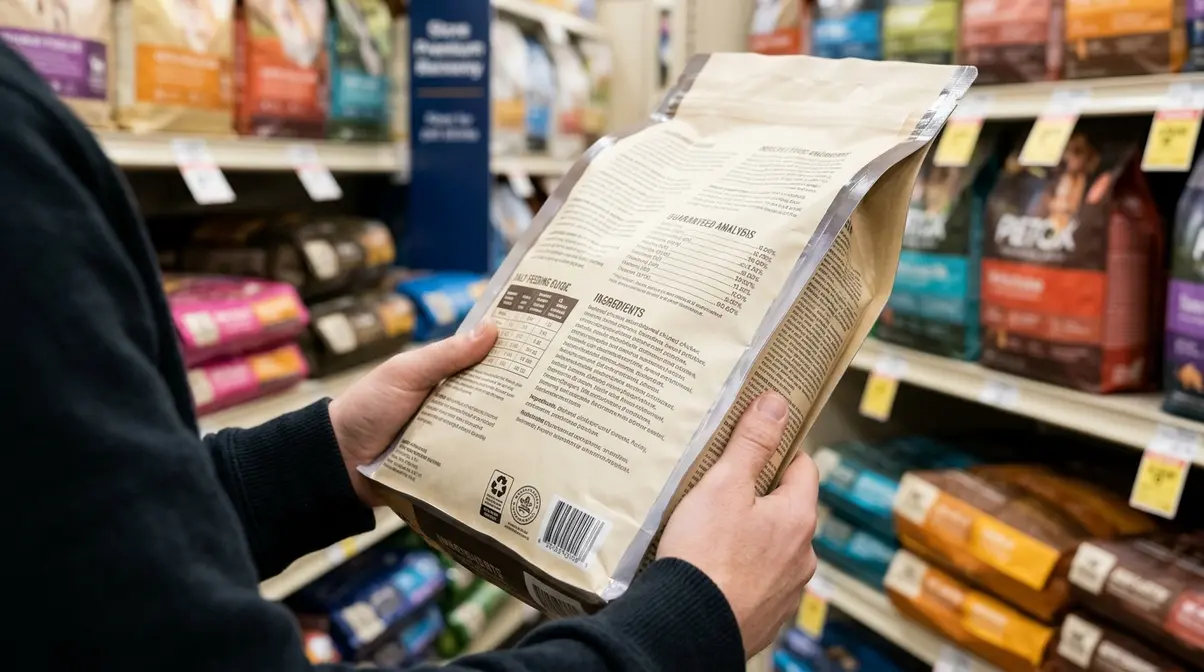
The best diet for a German Shepherd dog starts with a named animal protein as the first ingredient and meets AAFCO nutritional adequacy standards for the dog’s life stage. With thousands of German Shepherd dog food options available, a clear set of criteria matters more than any single brand recommendation. Tier 4 of the GSD Nutrition Pyramid, Diet Type Selection, begins here: once you know the criteria, you can evaluate any brand on any shelf.
What to Look For in German Shepherd Dog Food
The 5-Point GSD Food Quality Checklist gives you a tool to evaluate any food in a pet store or online, not just the brands listed in this guide:
- Named animal protein as the #1 ingredient: “Deboned beef,” “salmon,” or “lamb”, not “meat meal,” “poultry by-product,” or any unnamed protein source.
- AAFCO “complete and balanced” statement for the correct life stage: puppy formulas for dogs under 18 months, adult maintenance for dogs 18 months to 7 years, and senior formulas for dogs 7+.
- Omega-3 and Omega-6 fatty acids listed in ingredients: fish oil, salmon oil, or flaxseed for Omega-3; chicken fat or sunflower oil for Omega-6.
- Joint support ingredients: glucosamine and chondroitin listed in the ingredient panel or guaranteed analysis, particularly relevant for the best diet for German Shepherd dogs given the breed’s hip and elbow dysplasia predisposition.
- Digestive support: prebiotics, probiotics, or beet pulp as a fiber source, directly relevant for the GSD’s sensitive stomach.
For protein percentage, look for 22%+ for adults and 25%+ for puppies on the guaranteed analysis panel. Caloric density also matters: a higher-calorie food means smaller measured portions, so always cross-reference the kcal/cup figure with your feeding chart calculations.
Royal Canin German Shepherd Adult formula is breed-specific and includes glucosamine and chondroitin, two joint-support nutrients particularly relevant for a breed predisposed to hip dysplasia. This makes it a useful benchmark when applying the checklist to other brands.
Knowing what to look for is only half the picture, knowing what to avoid is equally important.
Ingredients to Avoid in German Shepherd Food
The worst dog food for German Shepherds shares a predictable set of red-flag ingredients. Here are the top five to check before buying:
- Corn syrup or added sugar: unnecessary calories with no nutritional value; associated with obesity in large breeds.
- BHA, BHT, or ethoxyquin: artificial preservatives with contested long-term safety profiles; look for natural alternatives like mixed tocopherols (Vitamin E) instead.
- Unnamed “meat by-products” or “animal digest” as a primary protein source: no species identification means no accountability for protein quality.
- Excessive grain fillers as the first three ingredients: corn, wheat, or soy dominating the formula at the expense of animal protein.
- Artificial colors (Red 40, Yellow 5): no nutritional purpose; serve only to make the food visually appealing to owners, not dogs.
Chicken sensitivity is worth noting specifically. German Shepherds are among the breeds most commonly affected by chicken protein allergies, which typically present as chronic skin itching, recurring ear infections, loose stool, or paw licking. If your dog shows these signs, consider a chicken-free formula based on lamb, fish, or venison.
Grain-free caution: grain-free diets have been associated with dilated cardiomyopathy (DCM) in dogs in an ongoing FDA investigation. The link has not been definitively proven, but veterinary consensus currently recommends consulting your vet before choosing grain-free, particularly for large breeds like German Shepherds.
With quality criteria established, here is a brief overview of the most commonly recommended brands for German Shepherds.
Recommended Commercial Brands: A Brief Overview
This table is not exhaustive. Apply the 5-point checklist to any brand you’re considering. Brand availability varies internationally, the India section of this guide addresses regional alternatives.
| Brand | Best For | Key Feature | Life Stages Available |
|---|---|---|---|
| Royal Canin German Shepherd | GSD-specific formula | Includes glucosamine/chondroitin; designed for GSD digestive sensitivity | Adult, Puppy |
| Hill’s Science Diet | Veterinary-recommended nutrition | Well-studied nutritional profiles; widely available through vets | Large Breed Adult, Puppy |
| Purina Pro Plan | High-protein performance | High protein content; extensively studied; widely recommended by breeders | Large Breed Adult, Puppy, Senior |
| Hill’s Prescription Diet | Dogs with specific health conditions (EPI, kidney disease, obesity) | Requires vet prescription; formulated for clinical management | Multiple therapeutic formulas |
Hill’s Prescription Diet options for GSDs with conditions like EPI, kidney disease, or significant weight management needs require a veterinary prescription, they are not available over the counter and should only be used under professional guidance.
Commercial kibble is the most popular choice, but a significant number of GSD owners are exploring raw feeding. Here’s what the scientific evidence actually shows.
The German Shepherd Raw Diet: Pros, Cons, and Vet Guidance
When discussions about feeding arise in German Shepherd owner communities, raw feeding generates more debate than any other topic. The German Shepherd raw diet has passionate advocates and equally passionate critics, and the scientific evidence sits firmly on one side of the safety debate, even if the anecdotal reports from individual owners are more nuanced. Within the GSD Nutrition Pyramid, raw feeding sits in Tier 4 (Diet Type Selection), one option among several, not inherently superior or inferior to commercial food, but carrying a distinct risk profile that every owner deserves to understand fully.
What Is the BARF Diet for German Shepherds?
BARF stands for Biologically Appropriate Raw Food (also interpreted as Bones and Raw Food). The concept was developed by Australian veterinarian Dr. Ian Billinghurst in the 1990s, based on the premise that dogs thrive on a diet resembling what their wild ancestors consumed before domestication and commercial pet food.
A typical BARF diet for a German Shepherd includes:
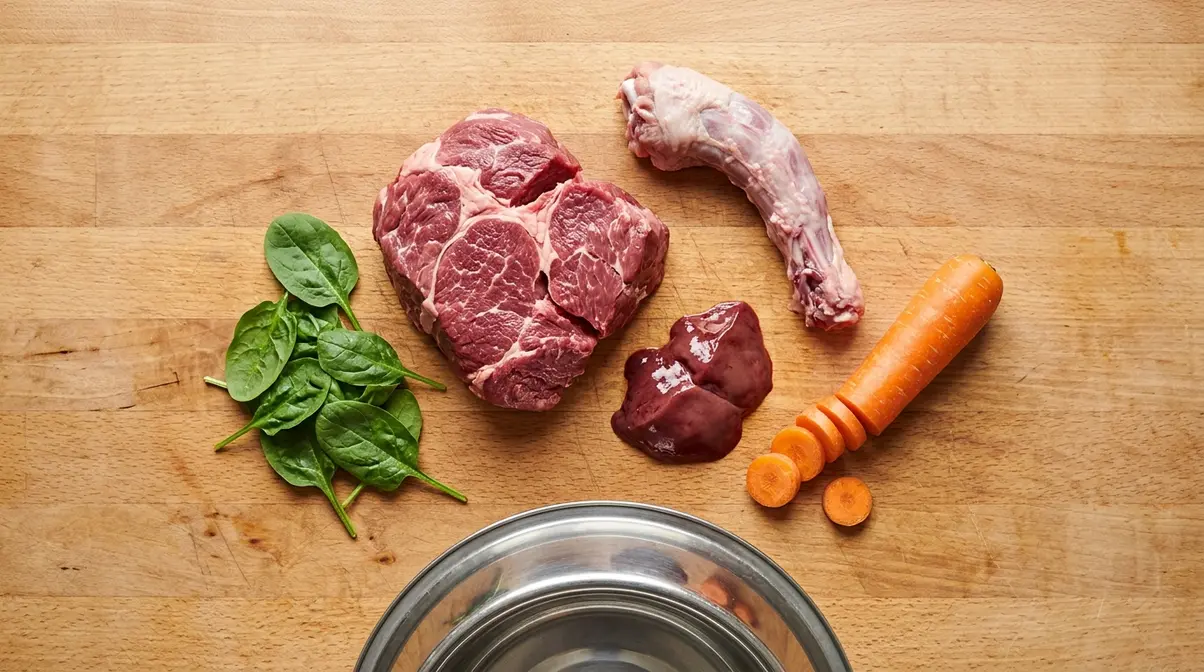
- Raw muscle meat (60-80%): beef, lamb, turkey, venison, chicken
- Raw meaty bones (10-15%): chicken necks, turkey necks, lamb ribs
- Organ meat (10%): beef liver and kidney; liver capped at 5% of total diet, with the remaining 5% from other secreting organs such as kidney or spleen
- Raw vegetables and fruit (5-10%): leafy greens, carrots, pumpkin, blueberries
- Extras: raw eggs, plain yogurt, or kefir for probiotic benefit
The 80/10/10 rule is a common raw feeding ratio used as a starting framework: 80% muscle meat, 10% bone, 10% organ (5% liver and 5% other secreting organ). A sample raw meal for a 30kg adult GSD might look like: 600g raw beef muscle meat + 100g raw chicken necks + 50g beef liver + 50g raw spinach and carrot.
Advocates of raw feeding for GSDs point to several potential benefits, but the evidence for these claims varies significantly in quality.
Potential Benefits of Raw Feeding for German Shepherds
German Shepherd owner communities, including r/germanshepherds on Reddit, most frequently cite improved coat condition as the reason for switching to raw food. This may be related to higher Omega-3 content from raw fish and organ meats, though the observation remains largely anecdotal. Individual results vary significantly, and no controlled study has isolated raw feeding as the specific cause of coat improvement in GSDs.
Some GSDs with chronic digestive issues, loose stool, excessive gas, or irregular bowel movements, show improvement on raw diets, possibly due to the elimination of grain fillers or common protein allergens like chicken. This is highly individual and does not predict outcomes for any specific dog.
Raw meaty bones provide mechanical abrasive action on teeth, which some veterinary dentists acknowledge as beneficial for dental hygiene. However, this benefit comes with a meaningful trade-off: bone fracture risk and intestinal obstruction are documented hazards, discussed in detail in the next section.
The potential benefits, however, must be weighed against documented risks that have led every major veterinary organization to officially discourage raw feeding.
Risks of Raw Feeding and Why Vets Don’t Recommend It
Veterinarians do not recommend raw dog food because the AVMA, AAHA, and NIH all cite documented risks that outweigh the anecdotal benefits for most household dogs, including bacterial contamination (Salmonella, Listeria, E. coli), nutritional imbalances in homemade raw diets, bone fracture and intestinal perforation hazards, and public health risks to immunocompromised household members.
According to a scientific review on raw diets published in 2019, raw pet food frequently exceeds hygiene safety levels for Enterobacteriaceae, and these bacteria often carry antibiotic resistance, a risk to both pets and their human households (NIH/NCBI, 2019). Specific pathogens found in commercial and homemade raw pet food include Salmonella, Listeria, E. coli, and Campylobacter, all of which can cause serious illness in both dogs and people.
The AVMA policy on raw diets explicitly discourages feeding cats and dogs any animal-source protein that has not been subjected to a pathogen-elimination process, citing risks to both pets and humans. A dimension that virtually every competitor guide ignores: the AVMA specifically highlights the public health dimension, immunocompromised household members, children, and elderly individuals face meaningful risk from environmental contamination when raw meat is handled and fed in the home.
Homemade raw diets are frequently deficient in key nutrients. Research consistently finds that a significant proportion of homemade dog diets have at least one nutritional deficiency, commonly calcium, phosphorus, zinc, and vitamins D and E, unless carefully formulated by a board-certified veterinary nutritionist (DACVN). A nutritionally incomplete raw diet causes the same long-term harm as any other deficient diet, regardless of how fresh the ingredients are.
Raw vs. Kibble: Side-by-Side Comparison
| Factor | Raw Diet | Commercial Kibble |
|---|---|---|
| Pathogen risk | High (Salmonella, Listeria, E. coli documented) | Low (heat-processed) |
| Nutritional completeness | Variable; requires professional formulation | High if AAFCO-certified |
| Cost | Higher (fresh meat sourcing) | Lower to moderate |
| Convenience | Low (daily preparation, strict food safety) | High |
| Vet support | Actively discouraged by AVMA, AAHA | Widely recommended |
| Dental health | Some benefit from raw bones (with fracture risk) | Dental formulas available |
| Coat health (anecdotal) | Many owners report improvement | Adequate with Omega-3 supplementation |
If you choose to pursue raw feeding despite these risks, here is how to do it as safely as possible, with veterinary supervision.
How to Start a German Shepherd Raw Diet Safely
The AAHA’s stance on raw protein diets states that, based on overwhelming scientific evidence, it does not advocate for or endorse feeding pets any raw or dehydrated nonsterilized foods. If you choose to proceed, do so with full knowledge of these risks and follow these steps:
Step 1, Consult a veterinary nutritionist first. Ask for a nutritionally complete raw diet plan formulated specifically for your dog’s weight, age, and health status. A board-certified veterinary nutritionist (DACVN) can create a balanced plan. Generic online raw feeding recipes are not adequate substitutes.
Step 2, Start with a single novel protein source. For dogs with known or suspected allergies, venison, duck, or kangaroo are good starting points, proteins the dog has likely never encountered. Transition over two weeks using the same 75/50/25 ratio as the kibble transition method.
Step 3, Apply strict food safety protocols. Handle raw meat with the same precautions as human food: separate cutting boards, immediate refrigeration, and discarding any uneaten portions after 30 minutes. Freeze meat for three or more days before use to reduce (though not eliminate) pathogen load.
Step 4, Monitor for four weeks. Track stool consistency, energy levels, coat condition, and body weight. Schedule a veterinary recheck at four weeks and again at twelve weeks to verify nutritional adequacy through bloodwork.
- Sample 7-day introductory raw meal plan (30kg adult GSD):
- Days 1-2: 600g raw beef muscle meat + 50g beef liver
- Days 3-4: 600g raw beef + 50g beef liver + 100g raw carrot
- Days 5-7: 600g raw beef + 50g beef liver + 100g raw carrot + 50g plain yogurt (probiotic)
On the topic of using raw feeding to manage food allergies, this community observation is worth noting:
“The only method that actually works is an elimination diet: 8-12 weeks on a novel protein your dog has never eaten (venison, duck, kangaroo)…”
This reflects the experience of many GSD owners managing food allergies, and it aligns with the clinical elimination diet protocol described in the Specialized Diets section below. The key word is “elimination”: the novel protein approach works because it removes all previous allergen exposure, not because raw food is inherently superior to kibble.
Beyond the raw vs. kibble debate, some German Shepherds have specific health conditions that require a tailored dietary approach.
Specialized GSD Diets: Weight, Pregnancy, and Allergies
Not every German Shepherd fits the standard adult feeding template. A healthy German Shepherd diet for a dog managing obesity, recovering from pregnancy, or dealing with food allergies requires targeted adjustments, and in most cases, veterinary guidance before making changes. These scenarios represent Tier 3 of the GSD Nutrition Pyramid: Life-Stage Calibration for non-standard circumstances.
German Shepherd Weight Management: Loss and Gain
For weight loss: According to nutritional management of weight guidance from UC Davis School of Veterinary Medicine, high-calorie foods combined with a less active lifestyle are primary contributing factors to pet obesity, a condition that accelerates joint degeneration in German Shepherds. The practical approach for managing an overweight German Shepherd:
- Reduce daily calories by 10-20% below current maintenance
- Switch to a lower-calorie, high-fiber formula labeled “weight management” or “light”
- Increase exercise gradually, do not dramatically increase activity in an obese dog with joint concerns
- Recheck BCS every two weeks and adjust portions accordingly
A 35kg GSD that should weigh 30kg needs approximately 1,200 calories per day (versus 1,400 at maintenance), roughly a 14% reduction, ideally under veterinary supervision. For practical strategies on managing an overweight German Shepherd, the site covers this topic in detail.
For weight gain: Before increasing food intake, rule out underlying causes. EPI, intestinal parasites, and dental pain can all cause weight loss despite adequate food. If health is confirmed, increase caloric density gradually: add a tablespoon of fish oil or a small amount of plain cooked lean meat to meals, or switch to a “performance” or “active” formula with higher caloric density. Rapid weight gain places significant stress on joints in a large breed, veterinary supervision is recommended for significant underweight cases.
Pregnancy and nursing are two other life stages that require a significant dietary adjustment.
Pregnant and Nursing German Shepherd Diet
A pregnant German Shepherd’s caloric needs increase substantially as the litter develops. The practical approach:
During pregnancy: In the last three weeks before whelping, switch to a high-quality puppy food (higher caloric density and protein) and increase daily intake by 25-50% gradually. A 30kg pregnant GSD in her final three weeks may need 2,000-2,500 calories per day, nearly double her normal maintenance intake, depending on litter size.
During nursing: Caloric needs can increase by two to four times normal maintenance at peak lactation. Free-feeding (ad libitum) is often recommended during peak nursing to ensure the dam can maintain her own body condition while feeding a large litter.
⚠️ Do not add calcium supplements during pregnancy. The same risk that applies to puppies applies here: excess calcium during pregnancy can cause eclampsia (milk fever) in the nursing dam. Ensure adequate folic acid and DHA through the puppy food formula. Consult your veterinarian for guidance specific to your dog’s litter size and health status.
Food allergies are another common reason GSD owners need to deviate from a standard diet.
German Shepherd Food Allergies and Novel Protein Diets
The most common food allergens in German Shepherds are chicken, beef, wheat, corn, soy, and dairy. Symptoms of food allergy typically include chronic itching, recurring ear infections, loose stool, and paw licking, signs that often persist despite treatment with antihistamines or steroids because the dietary trigger remains in place.
The gold standard for diagnosing food allergies is a strict elimination diet: 8-12 weeks on a single novel protein the dog has never eaten. Venison, duck, kangaroo, and rabbit are the most commonly used novel proteins in GSD allergy management. During the trial, no treats, no table scraps, and no flavored medications, a single exposure to the suspected allergen can invalidate the entire trial.
“The only method that actually works is an elimination diet: 8-12 weeks on a novel protein your dog has never eaten (venison, duck, kangaroo)…”
This reflects what GSD owners across communities consistently report when discussing what a German Shepherd can eat when allergies are involved. After the trial, reintroduce suspected allergens one at a time, two weeks apart, to identify the specific trigger. Hydrolyzed protein diets, in which proteins are broken into fragments too small to trigger an immune response, are an alternative that requires a veterinary prescription. For related reading on common digestive tract disorders in the breed, additional context is available on the site.
Homemade diets are another option some GSD owners explore, but they carry significant nutritional risks that are rarely discussed.
Homemade Diets for German Shepherds: What You Need to Know
A homemade diet for a German Shepherd requires precise balancing of approximately 30+ nutrients, a task that requires professional formulation, not guesswork. The appeal of homemade diets is understandable: complete ingredient control, the ability to avoid specific allergens, and the personal satisfaction of knowing exactly what your dog eats. These are valid motivations.
The risk is equally real. Research consistently finds that a significant proportion of homemade dog diets have at least one nutritional deficiency, most commonly calcium, zinc, and vitamins D and E. A homemade diet for a 30kg adult GSD requires careful balancing of macronutrients and micronutrients that generic online recipes simply cannot guarantee.
- How to do it safely:
- Consult a board-certified veterinary nutritionist (look for the DACVN credential) for a formulated recipe specific to your dog’s weight, age, and health status
- Do not use generic online recipes, most are nutritionally incomplete
- Recheck bloodwork every six months to catch deficiencies before they cause clinical problems
Regardless of which diet you choose, there are certain foods that are never safe for German Shepherds, and some of them may surprise you.
Foods That Are Toxic to German Shepherds
Knowing what not to feed a German Shepherd is as important as knowing what to feed them. Several common household foods are toxic to dogs, some severely so, and the mechanism of harm is often counterintuitive. Here is a complete reference list with the toxic compound, mechanism, and severity for each.
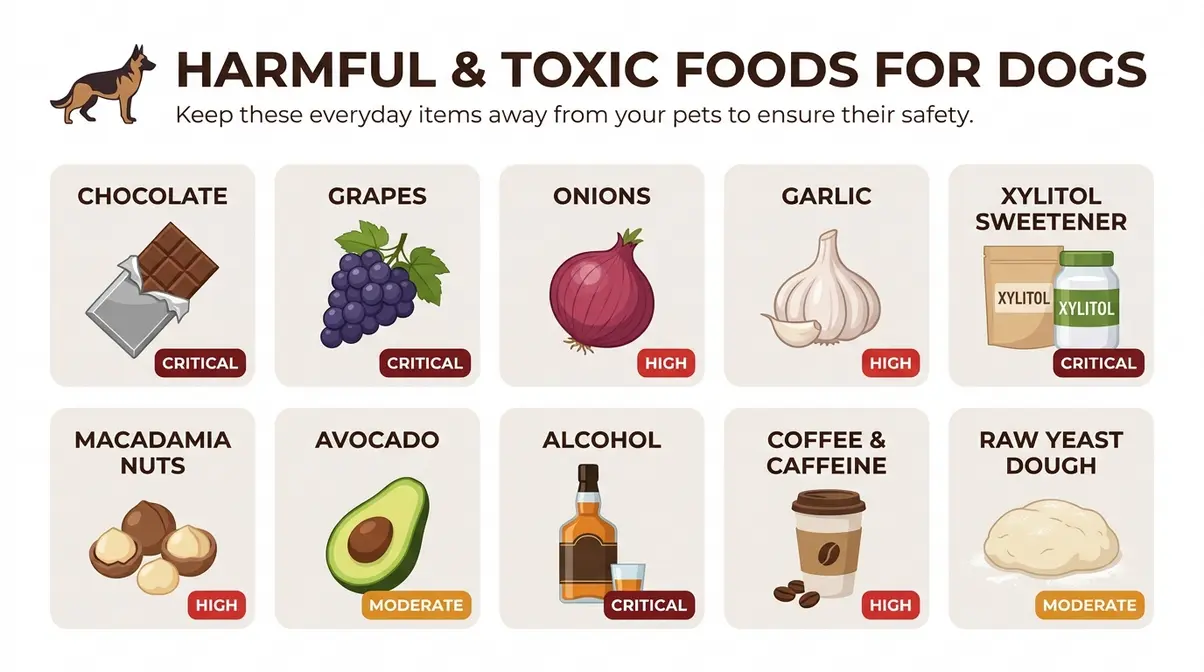
Common Foods That Are Toxic to German Shepherds
| Food | Toxic Compound | Mechanism | Severity |
|---|---|---|---|
| Chocolate | Theobromine | Cardiac arrhythmia, seizures; dogs metabolize theobromine much more slowly than humans | HIGH |
| Grapes & Raisins | Unknown compound | Acute kidney failure; even small amounts are dangerous | HIGH, even trace amounts |
| Onions & Garlic | Allicin (organosulfoxides) | Destroys red blood cells, causing hemolytic anemia; cumulative with repeated exposure | HIGH |
| Xylitol | Artificial sweetener | Causes rapid hypoglycemia; high doses cause liver failure | CRITICAL |
| Macadamia Nuts | Unknown compound | Weakness, hyperthermia, vomiting, tremors | MODERATE |
| Avocado | Persin | Vomiting, diarrhea; primarily toxic to birds and rabbits, moderate risk in dogs | MODERATE |
| Alcohol | Ethanol | CNS depression, respiratory failure; dogs are far more sensitive than humans | HIGH |
| Caffeine | Methylxanthines | Cardiac arrhythmia, restlessness, seizures | HIGH |
| Raw Yeast Dough | Ethanol + gas expansion | Alcohol toxicity plus GDV risk from gas production in the stomach | HIGH |
| Cooked Bones | Physical hazard | Splintering causes intestinal perforations and lacerations | HIGH |
Xylitol warning: This artificial sweetener is increasingly found in “natural” peanut butter brands and sugar-free baked goods. Always check the ingredient list before giving peanut butter as a treat, some popular brands contain xylitol. A xylitol-free peanut butter is safe in small amounts; a xylitol-containing brand is a veterinary emergency.
Emergency contact: If you suspect your GSD has eaten any of the above, call the ASPCA Animal Poison Control Center immediately: (888) 426-4435 (available 24/7; a consultation fee may apply). Do not wait for symptoms to appear, xylitol and grape ingestion require immediate intervention even before clinical signs develop.
If you suspect your GSD has eaten any of these foods, knowing the signs of poisoning can save their life.
Signs of Food Poisoning in German Shepherds
Common signs of food toxicity in dogs include:
- Vomiting or diarrhea
- Excessive drooling
- Lethargy or sudden collapse
- Muscle tremors or seizures
- Pale or white gums
- Difficulty breathing
- Loss of coordination
Seek emergency veterinary care immediately if your dog shows seizures, collapse, pale gums, difficulty breathing, or if you suspect xylitol or grape ingestion, even without symptoms. These toxins can cause irreversible damage quickly, and waiting for clinical signs to develop wastes critical treatment time.
What to do: call the ASPCA Poison Control Center at (888) 426-4435 or go directly to your nearest emergency veterinary clinic. Do not induce vomiting without professional guidance, with certain toxins, inducing vomiting causes additional harm.
On the positive side, there are several human foods that are safe, and even beneficial, for German Shepherds in moderation.
Safe Human Foods for German Shepherds
What can German Shepherds eat from the human food pantry? Quite a few things, provided they stay within the 10% treat rule (no more than 10% of daily calories from treats and extras).
- Safe fruits and vegetables:
- Blueberries (antioxidants, fiber, excellent training treats)
- Watermelon (seedless and rindless)
- Carrots (low-calorie, great for dental health)
- Green beans (low-calorie, filling)
- Sweet potato (cooked, plain, high in fiber and vitamins)
- Pumpkin (plain canned, not pie filling, excellent for digestive regularity)
- Cucumber
- Apple (no seeds or core, seeds contain trace cyanide compounds)
- Safe proteins:
- Plain cooked chicken (if no chicken allergy)
- Plain cooked salmon or sardines (excellent Omega-3 source)
- Plain cooked eggs
- Plain cooked lean beef
Carrots and blueberries make excellent low-calorie training treats for GSDs, both provide antioxidants and fiber without meaningfully impacting daily caloric intake.
For German Shepherd owners in India, the standard Western diet recommendations need some practical adaptation.
Feeding a German Shepherd in India
The German Shepherd diet in an India context differs from Western guides primarily in ingredient availability and brand access. The nutritional requirements are identical, but the practical solutions look different when you’re sourcing food in Mumbai, Delhi, or Chennai. A GSD in India has the same protein, fat, and micronutrient needs as a GSD anywhere else; the question is which locally available foods and products meet those needs. According to AAFCO nutritional standards, the protein minimum of 18% for adult dogs and 22% for puppies applies regardless of the protein source, whether that source is mutton, fish, or commercial kibble.
Locally Available Foods for GSDs in India
Protein sources widely available in India:
- Mutton/goat meat: widely available across India; a good protein source with a favorable amino acid profile; generally well-tolerated by GSDs without chicken allergies
- Chicken: widely available and affordable; note the chicken allergy risk, if your GSD shows skin or digestive issues, switch to mutton or fish
- Fish: rohu, catla, and sardines are excellent Omega-3 sources and widely available; sardines in particular offer high DHA content relevant for coat and joint health
- Eggs: affordable, high-quality complete protein; plain cooked eggs are safe daily
- Locally available vegetables:
- Sweet potato, pumpkin, carrots, green beans, and spinach are all widely available across India and safe for GSDs
Commercial brands available in India:
| Brand | Availability | Notes |
|---|---|---|
| Royal Canin India | Major cities and online | Breed-specific GSD formula available |
| Pedigree India | Nationwide, including smaller towns | Budget-friendly; widely accessible |
| Drools | Nationwide (Indian brand) | Good value; made in India; growing range |
| Purina Pro Plan | Major cities and online | Premium option; higher protein content |
A cost-effective homemade meal for a 30kg GSD in India: 500g cooked mutton + 100g cooked sweet potato + 50g cooked spinach + 1 egg, supplemented with a vet-recommended calcium and vitamin D supplement.
⚠️ Important note on calcium supplementation: Calcium supplementation is appropriate here only because this is a homemade diet that is not AAFCO-certified and therefore does not contain adequate calcium by default. Never add calcium supplements to any commercial complete-and-balanced food, doing so causes the skeletal problems described in the puppy and pregnancy sections above. A veterinary nutritionist must formulate the supplement protocol for any homemade diet.
A common question from Indian GSD owners is whether a vegetarian diet is viable for the breed.
Can a German Shepherd Eat a Vegetarian Diet in India?
Dogs are omnivores, unlike cats, which are obligate carnivores, meaning a vegetarian diet is technically possible for a GSD. However, “technically possible” does not mean “straightforward.” Plant proteins are less bioavailable than animal proteins, and two amino acids particularly important for canine health, taurine and L-carnitine, are found primarily in meat and require supplementation in a plant-based diet.
The practical challenges of a German Shepherd vegetarian diet include:
- Achieving the 22%+ protein requirement from plant sources alone requires careful formulation
- Ensuring complete amino acid profiles without meat requires specific supplement combinations
- Monitoring bloodwork every six months to catch deficiencies before they cause clinical symptoms
For owners with genuine personal or religious reasons for vegetarian feeding, local protein alternatives can contribute meaningfully: paneer (cottage cheese), lentils (dal), and eggs (if ovo-vegetarian) all provide protein. However, none of these can replace meat protein without careful supplementation and professional oversight.
A vegetarian GSD diet requires supplementation with taurine, L-carnitine, vitamin B12, and zinc, nutrients that plant sources provide in insufficient quantities for a large, active breed. A veterinary nutritionist would also recommend monitoring a complete blood count, taurine levels, and a full metabolic panel every six months to catch deficiencies before they cause clinical problems. These are not optional checks, they are the safety net that makes a plant-based diet viable for a German Shepherd.
Practical recommendation: If a veg diet for a German Shepherd is required, consult a veterinary nutritionist for a complete formulated plan before making the switch. Do not attempt without professional guidance. A German Shepherd veg diet chart developed by a DACVN will specify exact amounts, supplements, and recheck intervals, which no generic guide can safely provide.
Before we get to the FAQ, here are the most common feeding mistakes GSD owners make, and how to avoid them.
Common German Shepherd Feeding Mistakes to Avoid
Even well-intentioned GSD owners make feeding mistakes that compound over time. Here are four of the most common, and how to correct them before they cause lasting harm.
Overfeeding and Free-Feeding
The scenario: An owner leaves a full bowl of food out all day for convenience, the dog grazes whenever hungry.
What goes wrong: German Shepherds are prone to overeating when food is always available. Obesity in large breeds accelerates hip and elbow dysplasia, reduces lifespan, increases anesthesia risk during surgical procedures, and places chronic strain on the cardiovascular system.
The fix: Switch to measured twice-daily meals using the feeding chart in this guide. If your dog eats too fast, which itself increases bloat risk, use a slow-feeder bowl to extend meal duration.
We initially assumed free-feeding was a reasonable convenience for busy owners, but veterinary obesity research consistently shows it’s one of the leading contributors to canine obesity in large breeds. The convenience is real; the long-term cost to the dog’s health is also real. Twice-daily measured portions are the standard recommendation from every major veterinary organization for German Shepherds.
Meal timing is the second most common mistake, and it’s directly linked to a life-threatening condition.
Wrong Meal Timing and Exercising After Eating
The scenario: An owner feeds one large meal per day and takes the dog for a vigorous run 20 minutes later.
What goes wrong: Feeding one large meal per day to a German Shepherd, rather than splitting rations into two meals, is associated with a significantly higher risk of gastric dilatation-volvulus (GDV), a life-threatening condition. Exercise within one to two hours of a large meal further elevates this risk in deep-chested breeds. GDV has a reported mortality rate of up to 30

 Czech German Shepherd: The Cold War Working Line