Hip dysplasia is an inherited condition where your German Shepherd’s hip joint forms incorrectly, leaving it loose. That looseness grinds the joint over time and turns into arthritis, which is where the pain comes from. Cornell University College of Veterinary Medicine lists the German Shepherd among the breeds it most commonly affects, alongside Labradors, Rottweilers and Bulldogs.
The signs owners notice first are usually a reluctance to get up in the morning, a bunny-hop run, or hesitation on stairs. It is diagnosed by X-ray under sedation, and most dogs are managed without surgery. Early diagnosis gives the best outcomes, so if any of that sounds like your dog, book the vet rather than reading on and waiting.
It is also counted among the most commonly inherited orthopedic diseases affecting dogs. This genetic anomaly was first diagnosed in 1935 and has been found in 82 recognized dog breeds.
What Exactly Happens in Canine Hip Dysplasia?
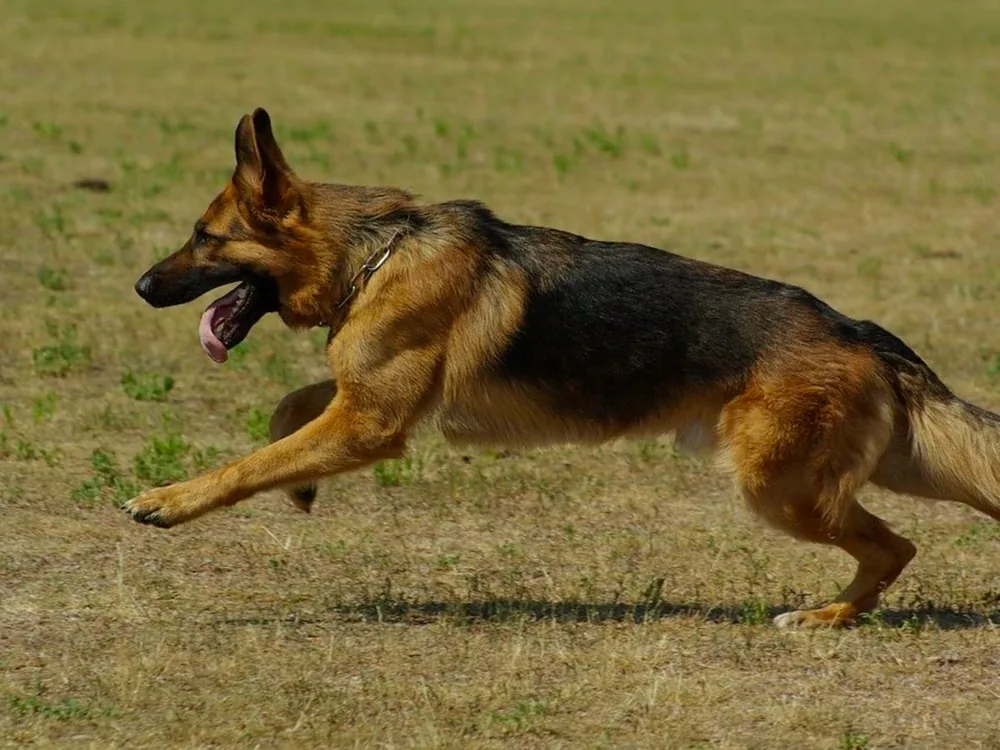
Canine Hip Dysplasia is a debilitating condition of the hip joint which suffers from looseness or partial dislocation (subluxation). The looseness is between the femur and pelvis bones of the dog. Gradually it causes grave damage to the femoral head and socket. This leads to an acute arthritic change and it has often been diagnosed that osteoarthritis accompanies Hip Dysplasia. With this change the motion of the animal gets hindered, accompanied by inflammation and pain. Osteoarthritis, as a degenerative joint disease, causes additional pain, discomfort, and disability.
If there is a discrepancy between the muscle and bone development of the hind limbs it results in an imbalance of muscular support and skeletal growth. It has been found that if a dog has a greater amount of musculature in the rear limbs there is a lower chance of Dysplasia. This is a proven fact in a German Shepherd dog.
The Gene Connection
Genes play a vital role in Hip Dysplasia but the nature of it is complex because several pairs of genes (either 2, 4, or more) are involved in this hereditary issue. The influence of multiple genes points out that it is a polygenic mode of inheritance. Even two dogs with identical genetic patterns might have varied degrees of the disease. Unfortunately, there is no genetic test to detect Hip Dysplasia right at the outset. This disease can easily be passed on to offspring even if two normal but carrier dogs are bred. Interestingly enough, it has been seen that hip joints which develop Dysplasia in later stages are perfectly normal at birth. Either one or both the hip joints of the dog can develop this disease.
The Visible Signs of Hip Dysplasia
Early signs are easy to write off as your dog getting older or being lazy. Watch for a reluctance to stand up after resting, especially first thing in the morning or after a long nap; a stiff or swaying walk that loosens up after a few minutes; and the bunny hop, where both back legs move together instead of alternating.
Other things owners report: hesitating at stairs or refusing to jump into the car, sitting with one leg splayed out to the side, a narrower stance at the back than at the front, and visibly less muscle over the hindquarters than the shoulders, because the dog has been shifting weight forward for months.
None of these is proof on its own. A limp can be a soft-tissue injury, a nail problem, or a cruciate tear, and those are treated very differently. What the signs do tell you is that it is time for a physical exam rather than a wait-and-see.
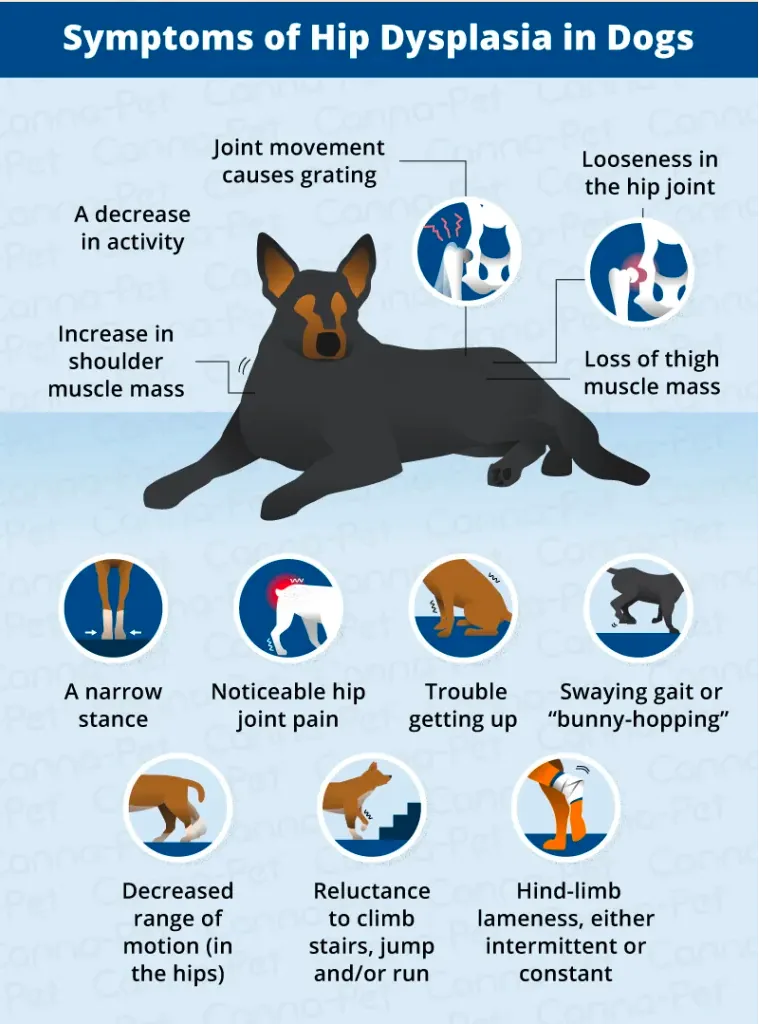
Pain to rise from sleep in the morn and difficulty in leaping are the most prominent signs of Hip Dysplasia. But why this happens? The lameness is due to joint laxity which forces the femoral head into an abnormal position. Additionally, Hip Dysplasia might cause weight loss and reduced appetite.
How Is Hip Dysplasia Diagnosed in German Shepherds?
Hip dysplasia is diagnosed with X-rays combined with a physical exam and palpation of the joint, according to Cornell University College of Veterinary Medicine. During the exam your vet checks for the Ortolani sign, which is the feel of the hip slipping and then clunking back into the socket, and it is one of the clearest indicators of the laxity behind the condition.
The X-rays need very specific positioning, which means your dog will be sedated or anaesthetised for them. That surprises a lot of owners who expect a quick snapshot, so budget for it as a short procedure rather than a five-minute appointment.
There is more than one scoring method. Cornell notes two common radiographic evaluation approaches plus a third, the Cornell dorsolateral subluxation method, which images the hips while the dog kneels and correlates well with what the vet feels during the Ortolani test. If you are buying a puppy, hip scoring is the paperwork to ask a breeder for by name.
One point Cornell is blunt about and that responsible breeders already follow: dogs with hip dysplasia should never be bred. The condition is inherited, and breeding an affected dog passes the problem on.
Ways to Treat Hip Dysplasia
Most dogs with hip dysplasia are managed medically first, and only those who respond poorly get referred to a board-certified veterinary surgeon. Two salvage procedures come up most often, and which one fits depends heavily on your dog’s size. A femoral head and neck ostectomy (FHO) removes the ball of the joint and lets scar tissue form a false joint; Cornell University College of Veterinary Medicine notes it gives good function particularly in dogs under 40 lbs, which is well below a typical German Shepherd’s weight. Total hip replacement (THR) costs more but is the more common choice for large breeds, and dogs who have one can regain a normal gait and range of motion. If your Shepherd is a puppy diagnosed before arthritis has set in, ask about joint-preserving procedures too, because those only work inside a narrow age window. Your vet, not this article, is the one who should weigh these against your dog’s specific X-rays and age. The most curative of them is ‘total hip’ surgery – it involves the replacement of the femur head and pelvic socket with artificial components. Another option is in repositioning the pelvic sides and aligning them with the femur head. There’s one more which has limited usage on large-sized dogs. It is called head and neck excision of the femur. In this case, a false fibrous joint is created by eliminating bone-to-bone contact. This also happens to be a cost-effective solution for people who cannot afford a total hip replacement. All of these are surgical options in hand but the disease can be managed with pain-relieving medicines if the dog is not required to work hard physically. There are more alternative, non-surgical treatments like the application of Glucosamine and Chondroitin – products that have provided a magic cure for osteoarthritis pain down the years. There’s one more medical approach to treating dogs with degenerative arthritis. It is by the use of a product called polysulfated glycosaminoglycans or PSGAGs, which enhances the production of joint fluid.
It must be noted, that with time, analgesic medicines fail to show their effect. Then surgery becomes a dire need for your pet. The veterinary surgeon is the best person to take the call for a conservative mode of treatment or consider surgery. Hydrotherapy treatment is one of the most effective ways to treat hip and elbow dysplasia.
Hydrotherapy Treatment for Dogs
Since ancient times hydrotherapy is considered an effective treatment for human beings. Documentations have proved that several attempts had been made to formalize the practice of hydrotherapy as a treatment during the 18th century.
Until recent times canine experts did not spare thoughts over hydrotherapy as an effective treatment for a number of conditions in dogs – especially in medium to large purebred dogs such as German Shepherds, Labrador Retrievers, Rottweillers, Mastiffs, etc. Certain conditions in canines may worsen or may show almost no improvement due to weight-bearing exercises. As a good alternative to general treatment through medicines and weight-bearing exercises, hydrotherapy is now considered as one of the most effective treatments for such conditions as hip and/or elbow dysplasia, Osteochondritis Dissecans (OCD), Chronic Degenerative Radiculomyelopathy (CDRM), etc.
Degenerative Myelopathy (DM), which is a progressive disease of the spinal cord in older dogs – especially found in medium to large breeds can be effectively treated by hydrotherapy. Hydrotherapy treatment has also proved to be quite effective in small breeds of dogs having Luxating Patella or floating kneecaps. Modern veterinary science also recommends hydrotherapy treatment for dogs having ligament injuries, obesity problems, and any other mobility issues. Significant development can be noticed with this treatment method by employing a professional canine hydrotherapist.
Veterinarians and experts consider that swimming or moving in water has favorable therapeutic effects in pre and post-surgical rehabilitation, increasing body awareness, developing mental and physical balance, and last but not least, maintaining general fitness and developing muscle tone.
What Is the Outlook for a German Shepherd With Hip Dysplasia?
This is the question most owners actually want answered, and the honest version is better than they expect. Cornell University College of Veterinary Medicine states that dogs with hip dysplasia can lead good-quality lives with proper care, depending on severity. Some need very little support. Others need a multi-modal plan that combines weight control, managed exercise, pain relief and physical therapy.
Two things move the outcome more than anything else: keeping your dog lean, and working with your vet on a plan rather than treating flare-ups as they come. Excess weight is the single factor most within your control, and every extra kilo is load going through a joint that is already unstable.
Where surgery is needed, the outcomes differ. Dogs who have a total hip replacement can regain a normal gait and normal range of motion. Dogs who have an FHO usually end up with reduced range of motion but still good function, which is why size matters so much in that decision. For puppies caught early, joint-preserving procedures can succeed at eliminating the laxity as the puppy grows, provided they are done inside the right age window.
What this means day to day is that a hip dysplasia diagnosis is not the end of a normal life for your Shepherd. It is the start of managing one, and dogs whose owners stay on top of weight and follow a vet-set plan often do well for years.
Easy Ways to Keep Dysplasia Pain at Bay
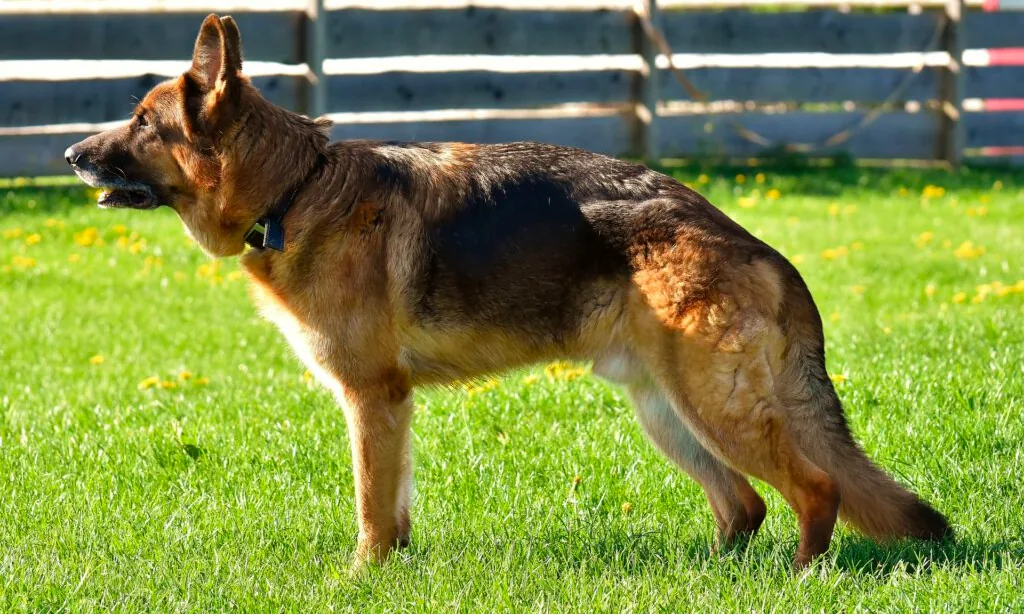
Lifestyle changes like proper weight management and controlled exercise can have a positive effect in relieving arthritic pain. Weight management is possible only through proper nutrition and balanced exercise can really help in stabilizing the dysplastic joint while toning up the muscles and increasing their strength. Food should be taken in proper amounts; poor or excessive food is not good for dogs which have a genetic potential for Dysplasia. Excessive weight gain is detrimental. Swimming, walking and jogging are good options too. The body size and pattern of growth in the dog also matter. So, strict monitoring must be maintained in this regard.
Testing of Hip Dysplasia Always Helps You can now get your two-year-old German Shepherd tested for Hip Dysplasia. You can get Hip Dysplasia free certified from Orthopedic Foundation for Animals (OFA). The X-ray report sent to OFA is examined by expert radiologists and is graded as per the actual appearance of the hips. The grades are:
- Excellent
- Good
- Fair
- Borderline
- Mildly dysplastic
Moderately dysplastic - Severely dysplastic
The acute pain of Hip Dysplasia is crippling – so it is better to take positive measures beforehand. There’s another purpose behind OFA certification. It is to stop breeding with affected or carrier dogs and hence stop the perpetuation of the disease in future progeny.
Hip dysplasia is one of several conditions the breed is prone to. See how it sits alongside the other German Shepherd health problems.
 Elbow Dysplasia in German Shepherds: Symptoms, Causes, and Treatments