Border collies and Australian shepherds are so similar in size, appearance, and behavior that they’re often confused for one another. Both breeds were made to work, independently herding sheep in the fields, and then come home and be a loving companion dog. Thus, a border collie/Australian mix, often called a Border Aussie, is also a hardworking, affectionate, intelligent dog.
Although this hybrid breed isn’t right for every owner, for the right person or family, a Border Aussie might be the perfect pet. Read on to find out whether you might be the right home for a Border Aussie.
Border Collie
Border collies are extremely intelligent, hardworking, and lively herding dogs. To learn more about them, read our article on border collie mix.
Australian Shepherd
Another herding dog, the Australian shepherd isn’t actually from Australia at all. Instead, it’s a breed that was developed in the American West in the late 19th and early 20th century. It was originally known by several other names, including the Spanish shepherd and the Austrian shepherd, further confusing its origins, though it probably descended from a variety of English sheepdogs. What is indisputable, though, is that the Aussie shepherd was bred to work. They are intelligent, energetic, and eager to please, making them highly trainable.
Aussie shepherds are genetically similar to border collies, and indeed, they look similar. However, Australian shepherds are more likely to have merle coloring to that is, a patchwork of dark and light fur that’s referred to as either blue merle (gray and black spots) or red merle (cream and copper spots). Additionally, many Australian shepherds have striking blue eyes or heterochromia to eyes of two different colors.
Border Collie Vs. Australian Shepherd
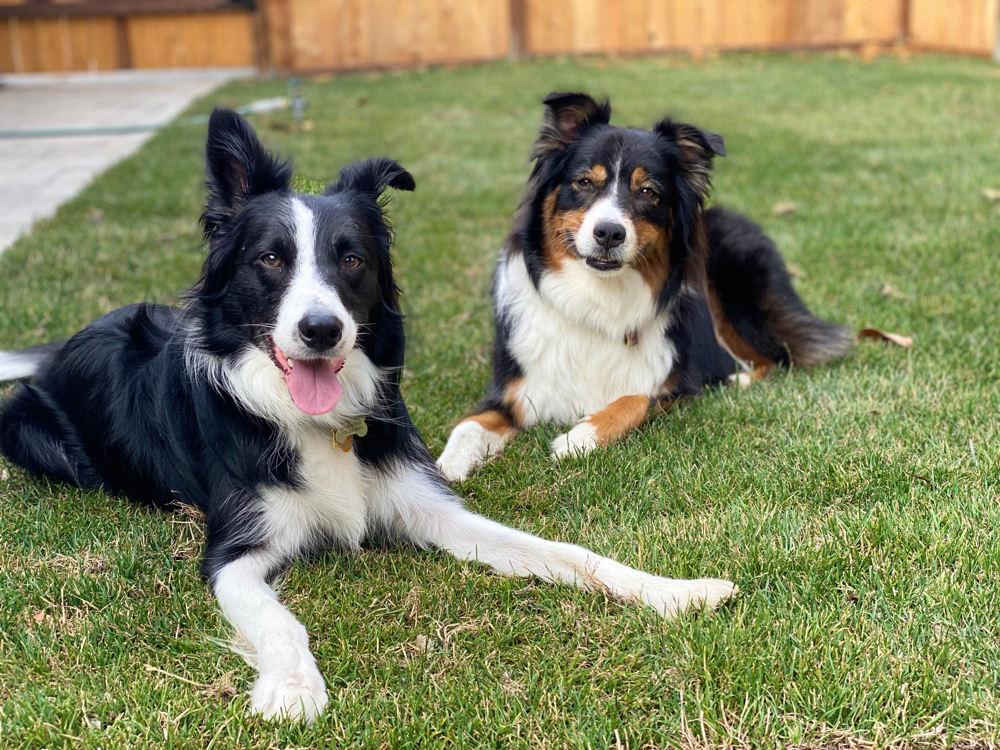
| Items | Border Collie | Australian Shepherd |
| Type | Herding dog | Herding dog |
| Origins | 19th century | Early 20th century |
| Country of Origin | Scotland and England | United States |
| Size | Medium | Medium |
| Height | 18” to 22” | 18” to 23” |
| Weight | 27 to 45 lbs. | 40 to 65 lbs. |
| Life Span | 12 to 18 years | 12 to 15 years |
| Coat | Rough or smooth | Straight or wavy |
| Coloring | Black and white, bicolor, tricolor, merle, any solid color (except white) | Tricolor, bicolor, red or blue merle, black |
| Shedding | Seasonal and moderate | Moderate |
| Temperament | Obedient, intelligent, energetic, eager | Active, loyal, intelligent |
| Trainability | Easy | Easy |
| Kid friendly? | Yes | With training |
READ MORE:
Border Aussie
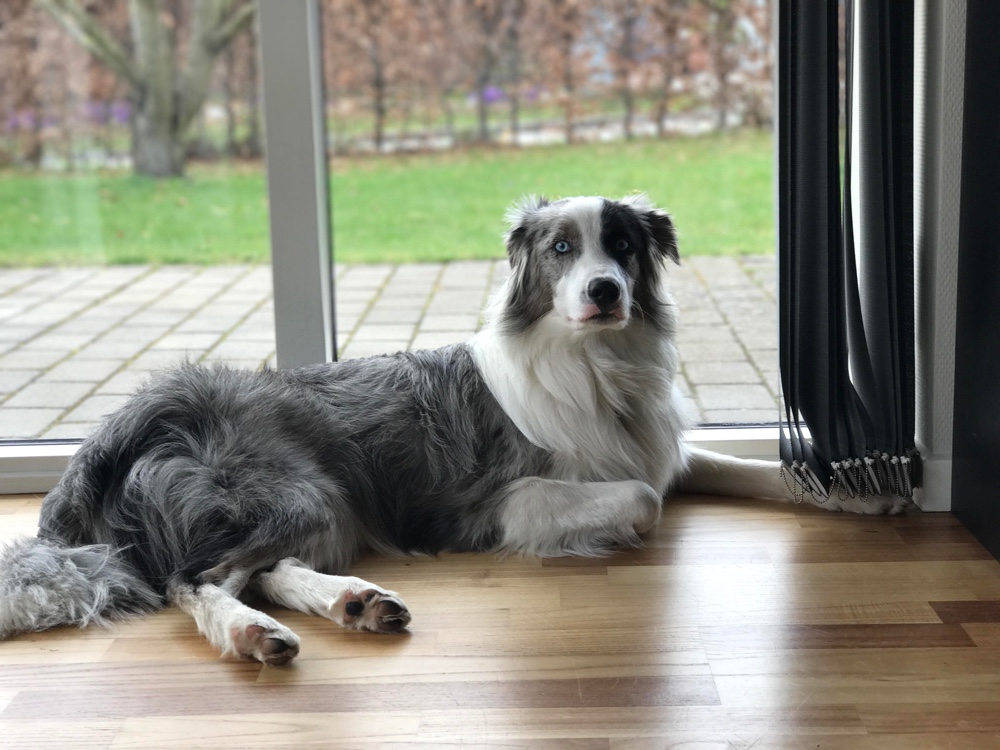
As you might expect from breeding two smart, active herding dogs, a border collie Australian shepherd mix is an energetic, hardworking, affectionate dog. They’re most commonly called Border Aussies, but you may hear them referred to as Aussie collies. These medium-sized dogs are often sold as family pets, but they require plenty of exercise and mental stimulation to be happy and healthy. Although they are loving companions, they’re recommended for experienced owners, particularly those with prior experience with herding dogs.
Border Aussies are designer hybrid dogs to that is, most breeder organizations don’t recognize them as a breed of their own yet. Instead, they are a combination of two pure breeds. Because of this, organizations like the American Canine Hybrid Club, the Designer Dogs Kennel Club, the Dog Registry of America, and the International Designer Canine Registry do recognize the Border Aussie as a designer breed.
Quick Summary of the Border Aussie
| Items | Values |
| Popularity | Unknown |
| Lifespan | 12 to 15 years |
| Temperament | Energetic, loyal, affectionate, work-oriented |
| Average Height | 18” to 22” |
| Average Weight | 30 to 65 lbs. |
| Coat Type | Dense, wavy, medium to long |
| Hypoallergenic? | No |
| Grooming Needs | Moderate |
| Shedding | Moderate to high, seasonal |
| Brushing | 1-3 times a week |
| Touchiness | High |
| Tolerant to Solitude? | Low |
| Tolerance to Heat | High |
| Tolerance to Cold | High |
| Barking | Moderate to high |
| Good Family Pet? | For active families |
| Good with Children? | With training |
| Good with Other Dogs/Pets? | With training |
| Good Apartment Dweller? | No |
| Trainability | Easy |
| Exercise Needs | 60 to 90 minutes a day |
| Tendency to Gain Weight | Moderate |
| Common Health Concerns | Epilepsy, cataracts, thyroid disease, cancer, hip dysplasia, collie eye anomaly |
| Average New Puppy Price | $1,000-$1,500 |
| Average Annual Medical Expense | $250-$320 |
| Yearly Cost to Own This Breed | $1,500-$2,100 |
Pros and Cons to Owning a Border Aussie
Pros
- Intelligent, active, affectionate pet
- Great jogging (or another outdoor exercise) buddy
- Healthy hybrid breed
Cons
- Requires quite a lot of daily exercise
- May become loud or destructive when bored
- Low availability from breeders and rescue organizations
Fun Facts about the Border Aussie
- Both border collies and Australian shepherds are collie dogs, a classification that also includes the Old English sheepdog and the rough collie (a.k.a. Lassie).
- Australian shepherds were originally associated with Western ranchers and cowboys and worked alongside their horses. Thus, many American crowds were first introduced to this breed as a rodeo dog.
- Many experts consider the border collie to be the most intelligent dog breed. In fact, Chaser to who could recognize over 1,000 words and was often called “the smartest dog in the world” to was a border collie. Though she passed away in 2019, she had a long and happy life with her owners/trainers.
- One hypothesis for the Australian shepherd’s name is that other herding dogs from the “land down under” (Aussie cattle dogs, kelpies, etc.) have the distinctive merle coloring. Ranchers may have assumed any merle dogs were Australian in origin.
- The border collie breed is almost certainly an ancestor of the Australian Shepherd breed.
Border Aussie Generations
Most of the Border Aussies currently available for sale or adoption are what’s called F1 generation dogs. That means one parent is a purebred border collie and the other is a purebred Australian shepherd. Genetically speaking, F1 hybrid dogs are 50% one breed and 50% another breed. Breeding two F1 Border Aussies would create an F2 generation of hybrid dogs.
Some hybrid breeders will begin to introduce more of one or the other parent breed into the gene pool by breeding an F1 dog with a purebred dog of the original parent breed. For example, this is often done with Bordoodles (border collie/poodle hybrids) to increase the percentage of poodle genetics in future generations. This is called an F1b generation. There don’t appear to be any breeders creating F1b Border Aussies yet, but since this breed is so new, this may happen in the near future.
Border Aussies Temperament
Border collies and Australian shepherds are similar in temperament, so the temperament of Border Aussies is fairly consistent, even though it’s a hybrid breed. Border Aussies are very smart and eager to please their owners. They have the energy and stamina to work hard during the day, but they also love to cuddle with their people after a long day. As herding dogs, they are highly loyal to their family but may be wary of strangers. However, good socialization when the dog is young can help smooth this out.
Because Border Aussies are both smart and sensitive, they can read and respond to their owner’s emotions. This can be a wonderful trait in a companion animal, but it can also mean that they’ll react fearfully to your anger or anxiety. Never direct these emotions at your dog. If you find a training session with your Border Aussie is becoming frustrating to either for you or the dog to take a break.
Border Aussies Size & Appearance
The Border Aussie is a medium-sized dog, just like its parent breeds. The somewhat large variation in weight may be attributable to the fact that one of the parent dogs could be a “miniature” Australian shepherd. Although the American Kennel Club and similar organizations only recognize the standard Aussie shepherd (approximately 50-65 lbs.), some breeders try to create smaller dogs in the 30-45 pound range. Therefore, Border Aussies may be as small as 30 lbs. or as large as 65 lbs. A Border Aussie will also have the same triangular ears and tapered muzzle as both of its parent breeds.
Border Aussies Coat & Colors
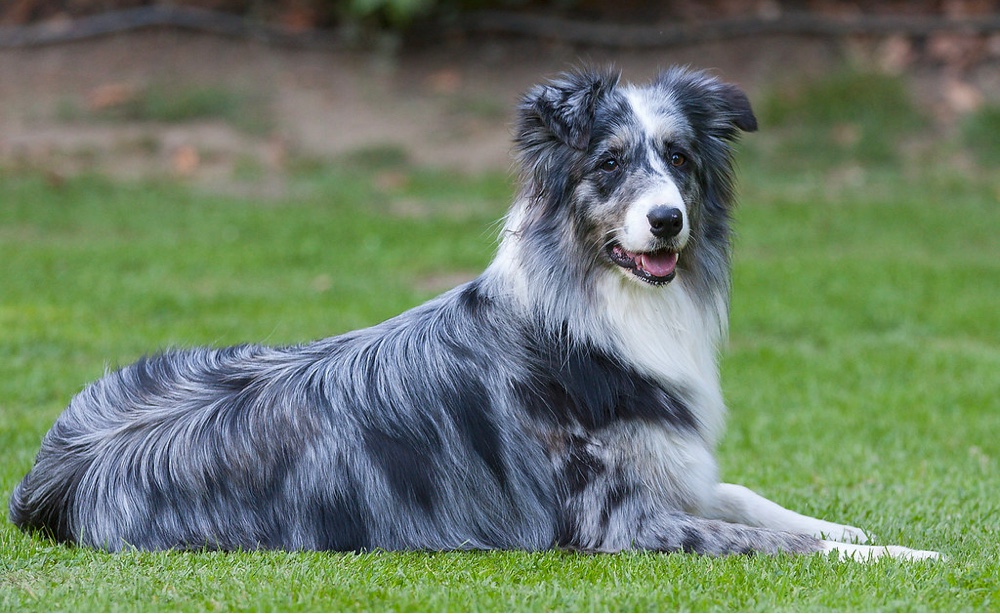
A border collie’s coat is medium length, straight or wavy, with a bit of feathering around the legs and britches. An Australian shepherd’s coat may either be rough or smooth in texture with much more feathering around the legs, chest, and haunches. Because most Border Aussies are F1 dogs, they might have a coat that resembles either parent breed or anything in between.
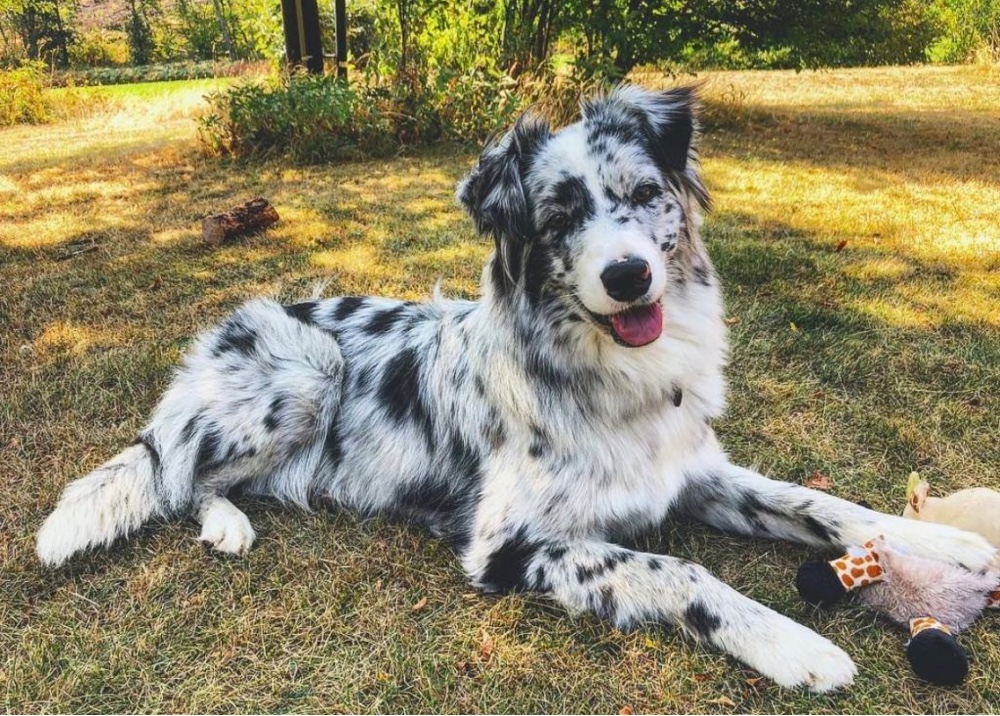
There can be quite a variation in Border Aussie colors, thanks mostly to the border collie lineage. While most people think of the typical black and white coloring, border collies can actually come in any solid color except white (black, chocolate, tan, red, blue, etc.) or combination of colors (bicolor, tricolor, blue merle, red merle). Thus, a Border Aussie can also come in nearly every color or combination of colors. However, because of the Australian shepherd parentage, the most common are black and white, tricolor, blue merle, and red merle.
Border Aussies Exercise & Living Conditions
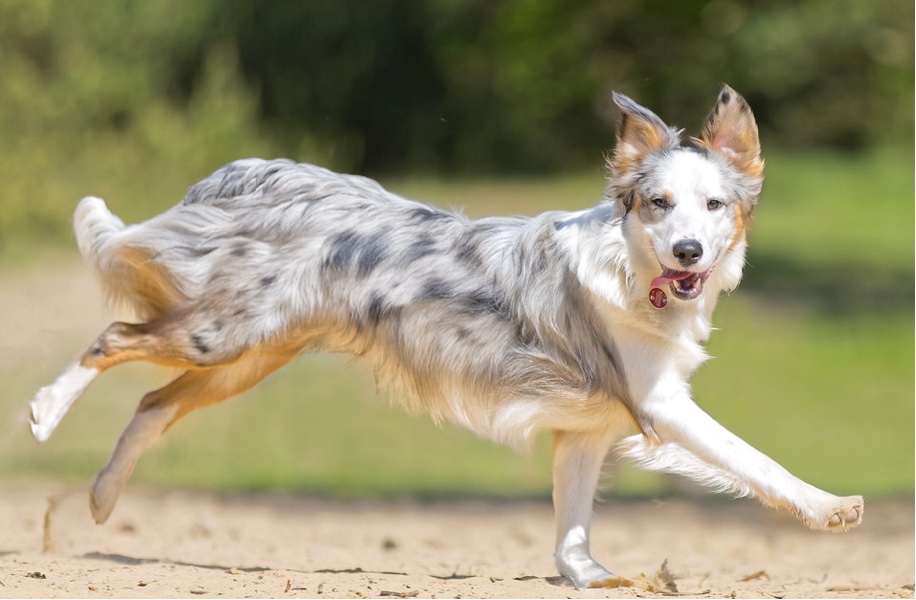
There’s no getting around it to Border Aussies need a lot of exercises. Both border collies and Australian shepherds were bred specifically to run after sheep all day, so they have the energy to spare. Your Border Aussie will need between one and two hours of exercise every single day. Because of this, they won’t make good apartment dogs unless you can be very diligent about wearing them out every day. Otherwise, they’re best for active people and families who have plenty of room for them to run and play.
Additionally, because these dogs are so smart, they require mental stimulation, as well. Social interaction with people or other dogs, active play, puzzle toys, and obedience or agility training are all good for Border Aussies. If your Border Aussie is left alone without something to occupy itself, it will likely become bored and then destructive. If you own a Border Aussie, you’ll want to set aside plenty of time daily for both exercise and play.
Guide to Train Border Aussies
It should come as no surprise that this intelligent, obedient hybrid breed is easy to train. They enjoy learning, so as long as you use consistent, positive reinforcement, your Border Aussie will quickly learn to please you. These dogs are moderately prone to weight gain, however, so you may want to try rewards other than treats. You may find your Border Aussie responds very well to praise or toys. Keep in mind that Border Aussies are very sensitive to human emotions, so keeping training positive to without anger or shouting to is extremely important.
If you’ve always admired dogs who can race through agility training courses and wanted to try this kind of training with your pet, the Border Aussie is the right dog for you. Both parent breeds are aces at events like obstacle courses, flyball, tracking, and other sporting activities, so your Border Aussie will likely enjoy the combination of physical and mental activity.
Three Risks That Stack in This Particular Cross
Most crossbreed advice says the same thing: two breeds, so the problems get diluted. For the Border Aussie that is the wrong way round on three counts, and it is worth understanding why before you talk to a breeder.
The Border Collie and the Australian Shepherd are close relatives. They are both herding breeds, and they carry the same three inherited risks. When two parents come from the same risk pool, a puppy can inherit from either side or both. Dilution is what happens when the parent breeds do not share a condition. Here they do.
1. Merle to merle, the one that is a breeding decision rather than a health test
Merle is common in both parent breeds, which is why this page mentions it so often. It is also the one item on this list you cannot fix after the fact.
The genetics are settled. Merle “is inherited in an autosomal, incompletely dominant fashion” (Clark LA, Wahl JM, Rees CA, Murphy KE, Proceedings of the National Academy of Sciences, 2006;103(5):1376-1381, retrieved 2026-08-14). And “dogs homozygous for merle (MM) are known as double merles and are predominantly white” (retrieved 2026-08-14).
The consequence, from the same paper: “dogs having Mm and MM genotypes typically have blue eyes and often exhibit a wide range of auditory and ophthalmologic abnormalities” (retrieved 2026-08-14).
And the conclusion the authors state outright: “merle-to-merle breedings are strongly discouraged” (retrieved 2026-08-14).
Because both parent breeds commonly carry merle, this cross is one of the pairings where it can actually happen. The question to ask is direct: is either parent merle, and if both are, walk away. There is no test to run on the puppy afterwards that undoes it.
One honest caveat, because merle attracts more alarm than the evidence supports for single-merle dogs. A review of the genetics of deafness in domestic animals notes that “the prevalence of deafness in dogs carrying merle is similar to that of breeds with piebald” (Strain, Frontiers in Veterinary Science, retrieved 2026-08-14). The same review adds that merle-carrying breeds “were long considered to be tainted with a high deafness prevalence based on a flawed study in Dachshunds” (retrieved 2026-08-14).
So a single merle dog is not a problem. Two merle parents are.
2. MDR1, where these two breeds are furthest apart
The MDR1 mutation, also written ABCB1, changes how a dog processes several common drugs. An affected dog has “abnormal p-glycoprotein and a non-functional p-glycoprotein system” (VCA Animal Hospitals, retrieved 2026-08-13).
What makes it worth a section on this page specifically is the gap between the two parents. VCA gives Australian shepherds at roughly 50% and Border collies at roughly 5% (retrieved 2026-08-13).
VCA also gives mixed breeds a general figure of 5%. Do not apply that figure to this cross. It describes mixes at large; a dog with one parent from a 50% breed is not that dog. This is the pairing on this site where the general mixed-breed number is most misleading.
The affected drugs include “ivermectin and related drugs” at high doses, “loperamide (Imodium®)”, “Sedatives, such as those commonly given as components of a balanced anesthetic protocol (acepromazine, butorphanol)” and “Chemotherapy drugs” (retrieved 2026-08-13).
Routine heartworm prevention is not the worry: “at low doses, such as those used in heartworm prevention, ivermectin is safe even for pets with the ABCB1 (MDR1) mutation” (retrieved 2026-08-13). The sedative entry is the practical one, because it turns a routine anaesthetic into something your vet would plan differently. If your dog tests positive, put it on the file at every practice that treats it.
3. Collie Eye Anomaly, where both parents are on the list
The Orthopedic Foundation for Animals describes it as “an autosomal recessive hereditary disorder of eye development that results from a mutation in the NHEJ1 gene” (OFA, retrieved 2026-08-14).
OFA’s affected-breed list includes both Border Collie and Australian Shepherd (retrieved 2026-08-14). Since the condition is recessive, a puppy needs one copy from each parent, and in this cross both parents can supply one.
The line that decides how you shop: OFA states that “dogs with mild signs can produce puppies with severe CEA” (retrieved 2026-08-14). Severity ranges from none to complete blindness, so a parent that sees perfectly well can still pass on the severe form. Meeting the parents settles nothing here. Only the DNA test does.
OFA’s breeding guidance is that a carrier should “only be bred to dogs DNA-tested NORMAL for this mutation” (retrieved 2026-08-14).
What to actually ask
Four questions, and every one produces a document or a straight yes or no:
- Is either parent merle? Are both? If both, that litter is one the source above says should not have been bred.
- Have both parents been DNA tested for CEA, and may I see the results?
- Have both parents been MDR1 tested? The Australian Shepherd side is the one that matters most.
- Hips and elbows on both parents, since both are active medium-sized working breeds.
None of this makes the Border Aussie a bad choice. It is a specific, testable list, and a breeder who can answer all four has done the work. One who cannot has told you something useful too.
For the wider picture, see our roundups of Border Collie mixes and Australian Shepherd mixes, both of which list this cross among many others.
Border Aussies Health
Like most hybrid breeds, the Border Aussie is commonly a healthy dog. However, it can still fall pretty to some of the health problems that affect its parent breeds. A responsible breeder will know how to pair dogs so that the chance of inheriting diseases or other conditions is low. However, here are some of the most common Border Aussie health problems:
- Hip dysplasia
- Epilepsy
- Collie eye anomaly
- Hemangiosarcoma
- Lymphoma
- Cataracts
- Elbow dysplasia
- Thyroid disease
Since both Australian shepherds and (less commonly) border collies can have the merle coloring trait, it’s important for Border Aussie owners to know about the problems that come with “double-merle” dogs. When two dogs of any breed with the merle trait are bred together, the offspring can have serious health problems about 25% of the time. Double-merle dogs are mostly or all white, but more importantly, they may be congenitally deaf and/or blind due to a number of untreatable birth defects.
Because of this, most responsible breeders won’t pair two merle dogs together. However, some unethical breeders may attempt to sell you a “rare” all-white or mostly-white Border Aussie. Instead, they may be selling you a dog with serious health problems. Although many deaf or blind dogs can lead happy lives, they require quite a bit of extra care and training from their owners.
How much food do Border Aussies need daily?
Like most medium-sized dogs, Border Aussies usually need 1.5 to 2 cups of high-quality dry food a day, divided into two meals. If your Border Aussie is a working dog rather than a companion dog, you’ll likely need to add a little more. Otherwise, stick to consistent measurements so your dog doesn’t gain unnecessary weight.
How to Grooming Border Aussies
Your Border Aussie likely won’t require extensive formal grooming, but it will shed. Both Australian shepherds and border collies are moderate shedders that also shed seasonally, so keep the brush close by. Depending on what kind of coat they inherit from their parents, Border Aussies will need brushing between one and three times per week to keep their coat clean and tangle-free.
Otherwise, you can bathe your Border Aussie every 2-4 weeks, depending on how much time it spends outside and how dirty it gets. Make sure to keep on top of other grooming activities like teeth brushing, ear cleaning, and nail clipping as well. The Border Aussie’s needs aren’t too extensive in this department, but every dog breed will benefit from regular “maintenance” grooming.
Border Aussies Breeders & Puppy Costs
There aren’t many Border Aussie breeders out there yet, but with a little searching, you should be able to find one. Although we always recommend adopting over shopping, if you have your heart set on a Border Aussie, you may need to find a breeder. As always, do your homework to make sure the breeder is licensed and has a good reputation.
Of course, dogs from reputable breeders can be expensive, and indeed, a new Border Aussie puppy will cost between $750 and $2,000, with most falling in the $1,000 to $2,000 range. However, the expense is worth it for a healthy dog from a well-socialized environment. Good breeders know how to pair dogs to get offspring with the best health and temperament.
Border Aussies Rescue & Shelters
Because Border Aussies are hybrid dogs just starting to gain in popularity, there aren’t yet any rescue organizations dedicated solely to this breed. Instead, you might have more luck at rescues dedicated to the parent breeds. Here are a few of these border collie or Australian Shepherd rescues. Keep in mind that some are actual shelters, but others are loose organizations of volunteers who foster dogs.
- Aussie Rescue SoCal (southern CA): This volunteer network houses and adopts out Aussie shepherds and Aussie mixes. They create lengthy profiles for each dog so you’ll know who you’re adopting.
- Southeast Border Collie Rescue League (Deland, FL). This is a Facebook group rather than an actual shelter, but its members can point you towards border collie mixes who need homes.
- Aussie and Me Animal Rescue (Sarasota, FL): This partner with the FL Department of Agriculture specializes in both Aussie shepherd and border collie rescues, so your chances of finding a Border Aussie may be good. However, they take in other breeds as well.
- New England Border Collie Rescue (MA, CT, RI, ME, NH, VT): This is another loose organization of volunteers working to care for and rehome border collie mixes. Although they are based in Massachusetts, their coverage area includes much of the northeast US.
- Border Collie Rescue of Minnesota: This volunteer foster organization posts detailed, honest notes on each available dog to both good and bad to so you’ll know what you’re getting yourself into.
- Herd U Needed a Home (Bend, OR): HUNAH rescues herding breeds including border collies and border collie mixes. Since many herding dogs have a great deal of energy and intelligence, they can be too much for some owners. HUNAH makes sure these dogs are fostered and then adopted into forever homes.
- Border Collie Rescue and Rehab (Royse City, TX): This is another network of foster homes for border collies and border collie mixes. They are dedicated to the unique needs of border collies and specialize in rehabilitating traumatized dogs.
- Utah Herding Breed Rescue (Salt Lake City, UT): The most recent posts on this Facebook page are several years old, but if you live in Utah and want to inquire about Border Aussies, you may have some luck making contacts here.
- Glen Highland Farm (Gloucester, VA): This is the only pet rescue in the U.S. dedicated solely to rescuing senior border collies and mixes. Originally located in New York, Glen Highland provides a home for older herding dogs (age 9+), but the organization also adopts out these senior dogs to good homes.
Border Aussie Breeders
Because the Border Aussie is a relatively recent hybrid breed, you’ll probably have more luck finding one from a breeder. Unfortunately, there aren’t many yet, but here are the ones we know of.
- Rickerson Border Aussies (Georgetown, TX): This is a small breeder with one male and one female F1 Border Aussie, so they only have a few puppies at any one time. Puppies cost between $750 and $1,500 with a non-refundable deposit of $250.
- Kittelson Kennel (central Oregon): Kittelson is another small breeder that expects litters each summer and winter. A puppy adoption package is $2,000 and includes a travel crate and a starter supply of food.
- Milky Way Aussies (Garland, ME): Breeding both purebred Australian shepherds and Border Aussies, Milky Way focuses on creating family dogs with sweet temperaments and moderate energy drives. All puppies are $1200, and you’ll need to apply to be on a waiting list.
- Hill Top Farm (Crete, IL): This breeder of border collies, Aussie shepherds, and Border Aussies puts a premium on the health of all their dogs, purebred and hybrid alike. While they don’t currently have any litters available, they encourage you to contact them about the possibility of owning a Border Aussie.
Border Aussies as Family Pets
A Border Aussie can make a great family pet to with some qualifiers. First, you’ll need to have a fairly active family. If everyone’s a couch potato, a Border Aussie will become bored and restless pretty quickly. Also, while both border collies and Aussie shepherds are good with children, they’re both athletic, high-energy dogs, so Border Aussies may inadvertently knock smaller children down. Having a house with a yard will definitely help them get their energy out in other ways.
Since herding dogs are bred to work independently in the fields, they may be initially suspicious of strangers, both human and canine. However, proper socialization of your young Border Aussie will help overcome this. As always, it’s important for a dog to learn to be around young children, but it’s just as important to teach children how to behave around a dog. With a Border Aussie in the home, just as with any dog, teach your kids how to play nicely without pulling on ears or tails or interrupting your dog’s mealtime. Keeping this in mind, a Border Aussie can get along great with children.
Border Aussies are wonderful dogs, but they’re best suited to certain owners. Experienced dog owners who love to stay active and spend time outdoors will be happiest with this hybrid herding breed. But don’t worry to after a long day of exercise, your Border Aussie will love to curl up next to you on the couch and give you all the affection you expect from a loyal companion.
Disclaimer: PetVR shares general information based on our contributors’ firsthand experience with German Shepherds — it is not veterinary advice. Always consult a licensed veterinarian about your dog’s health, diet, or behavior. Read our full disclaimer.
 Top 18 Most Popular Catahoula Leopard Dog Mixes