
⚠️ Veterinary Disclaimer: This article is for informational purposes only and does not replace professional veterinary diagnosis or emergency care. If your German Shepherd is seizing right now, call your vet or emergency animal hospital immediately.
German Shepherd seizures are episodes of abnormal electrical activity in the brain that cause uncontrolled muscle movements, loss of consciousness, or behavioral changes. Most last one to three minutes and dogs recover fully. German Shepherds have a documented higher prevalence of idiopathic epilepsy than many breeds, which means knowing what to do in the moment matters for this breed specifically.
Watching your German Shepherd collapse, shake, and lose control of their body is one of the most frightening things a dog owner can experience. Your hands are shaking. You don’t know whether to touch them. You don’t know if they’re dying.
“I currently have a two year-old white German shepherd named Wally who, as of two weeks ago, started having grand mal seizures.”
That moment, not knowing what’s happening, not knowing what to do, not knowing if it will happen again, is exactly why this guide exists. German shepherd seizures are more common than many owners realize, and most episodes last one to three minutes with a full recovery. But you need to know what to do in the moment, when to call the emergency vet, and what comes next.
This guide covers first aid and emergency thresholds, how to recognize different seizure types, why German Shepherds are prone to seizures, age-specific considerations, diagnosis and long-term management, and the harder quality-of-life questions. Every claim is sourced from Tier 1-2 veterinary authorities. This is educational information, not a substitute for professional veterinary care.
German shepherd seizures are frightening, but most last one to three minutes and dogs often recover fully. German Shepherds have a documented higher prevalence of idiopathic (inherited) epilepsy than many breeds.
- During a seizure: Stay calm, clear the area, time the episode, never put your hand near the mouth.
- Call the vet immediately if: The seizure lasts over 5 minutes, seizures come back-to-back, it’s the first-ever episode, or your dog struggles to breathe.
- After the seizure: Expect a post-ictal recovery phase of minutes to hours, disorientation is normal.
- The Observe-Time-Act Protocol: Observe safely, Time the episode, Act on the emergency thresholds.
What to Do When Your German Shepherd Has a Seizure
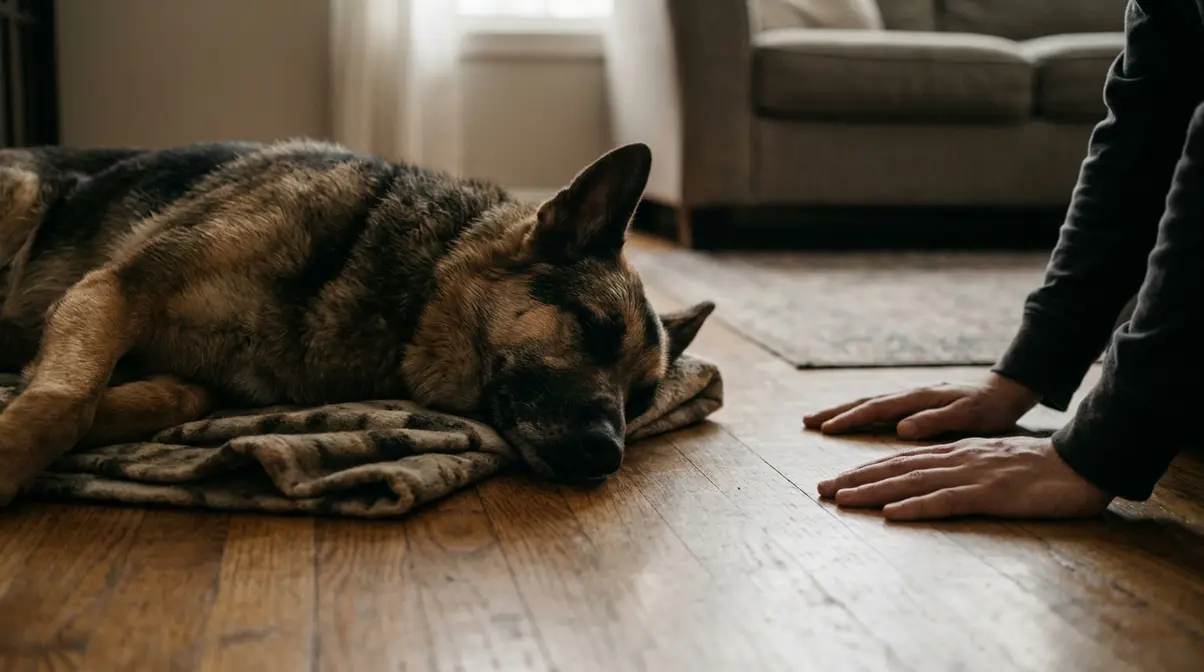
Most German shepherd seizures last one to three minutes, and dogs often recover fully with supportive care. Your job in the moment isn’t to stop the seizure, it’s to keep your dog safe, start a timer, and know when the situation crosses into an emergency. The Observe-Time-Act Protocol gives you three clear steps: Observe safely (don’t touch the mouth, move hazards), Time the episode (start a timer the instant it begins), and Act on the thresholds (call the vet if the seizure passes 5 minutes, clusters back-to-back, is your dog’s first-ever episode, or if your dog struggles to breathe).
You’ll find detailed first-aid steps below. But the most important thing to understand right now: a seizure lasting over 5 minutes is a medical emergency called status epilepticus, a prolonged seizure state that can cause brain damage if untreated. Call your vet or emergency animal hospital immediately.
The Three Phases: What’s Happening Before, During, and After
A seizure doesn’t start when your dog hits the floor. Veterinary guidance describes three distinct phases, and recognizing all of them helps you give your vet a complete picture of what happened.
The pre-ictal phase (before the seizure) can appear as restlessness, anxiety, hiding, whining, or blank staring, sometimes minutes, sometimes hours before the physical event. Not every dog shows these signs, and some owners only recognize them in hindsight. A GSD that starts hiding under the bed 20 minutes before a grand mal episode is experiencing the pre-ictal phase, also called an aura.
The ictal phase is the seizure itself. In a generalized (grand mal) episode, this means loss of consciousness, muscle rigidity, paddling of all four legs, jaw chomping, drooling, and often loss of bladder or bowel control. Focal seizures look subtler, localized twitching, fly-biting, or blank staring. This phase typically lasts one to three minutes. Anything over five minutes is a medical emergency.
The post-ictal phase begins when the seizure ends. According to MedVet emergency guidance, expect disorientation, temporary blindness, pacing, stumbling, or unusual exhaustion, all normal recovery signs. This phase can last minutes to several hours depending on the dog and the severity of the episode.
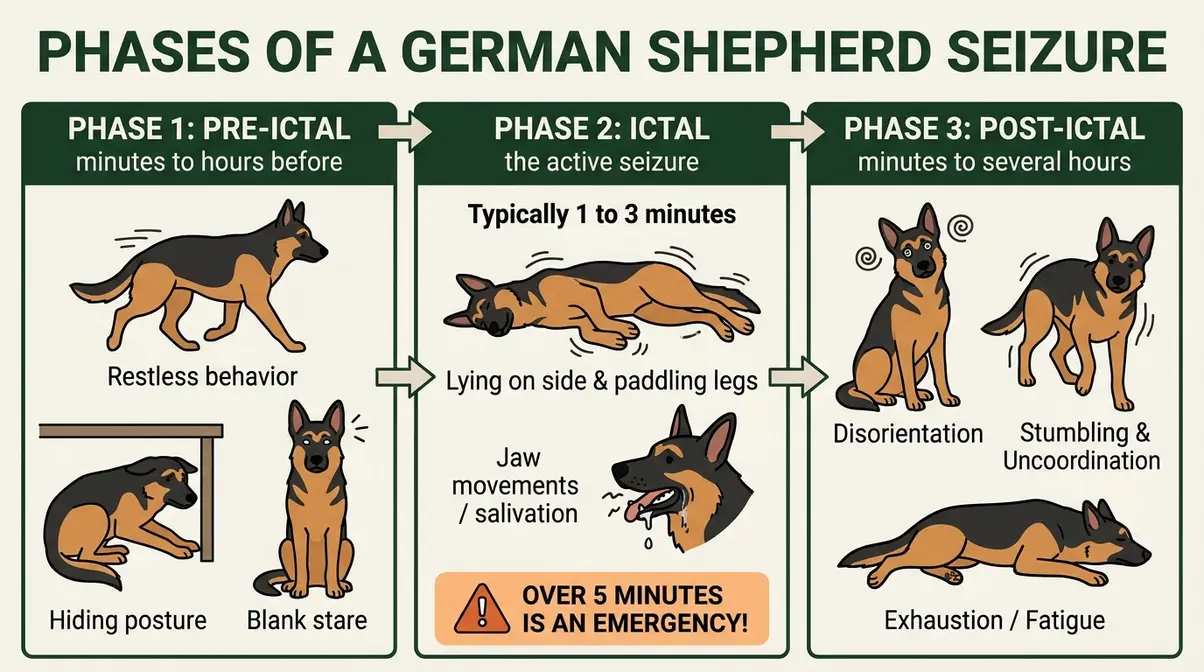
⚠️ This diagram is for educational purposes only and does not replace professional veterinary diagnosis or emergency care.
The diagram above shows what to expect at each stage. Now that you know what’s happening in your dog’s body, here’s exactly what to do, and what to avoid, while the seizure is active.
Step-by-Step: What to Do During a Seizure (The Observe-Time-Act Protocol)
Most dog seizures last one to three minutes, and dogs often recover fully with supportive care, according to MedVet’s emergency guidance. Your goal is to keep your dog safe and gather information for your vet, not to intervene in the seizure itself.
Follow these steps in order:
- Stay calm and don’t restrain your dog. Restraint can injure both your dog and you. Your dog is unconscious or semi-conscious and cannot respond to commands, holding them down does nothing helpful and can cause broken bones or bites.
- Move hazards away immediately. Push furniture back, block access to stairs, and remove sharp objects from the area. If your dog is on a hard floor, slide a folded blanket or cushion under their head.
- Start a timer the moment the seizure begins. This is the single most important action you can take. Duration determines whether you have an emergency. Pull out your phone and start a stopwatch now.
- Never put your hand near the dog’s mouth. Dogs cannot swallow their tongues, this is a myth. Putting your fingers near the mouth during a seizure risks a serious bite. The jaw movements are involuntary and powerful.
- Dim the lights and keep the room quiet. Reduce sensory stimulation during and after the seizure. Speak softly if you speak at all.
- Record a short video from a safe distance. A 30-second clip showing the seizure type and the dog’s body position gives your vet far more information than a verbal description.
- Common mistakes to avoid:
- Putting hands near the mouth (dangerous, see step 4)
- Restraining the dog (causes injury)
- Offering water or food immediately after, wait until your dog is fully alert and oriented
- Assuming the dog is fine because the seizure was brief, a first-ever seizure still needs a vet visit
When to call the vet or emergency animal hospital immediately:
| Threshold | Why It’s an Emergency |
|---|---|
| Seizure lasts over 5 minutes | Risk of status epilepticus and brain damage |
| Two or more seizures within 24 hours (cluster seizures) | Brain doesn’t recover between episodes |
| First-ever seizure | Cause is unknown; urgent workup needed |
| Dog struggles to breathe | Airway compromise, life-threatening |
| Dog doesn’t regain consciousness | Prolonged ictal phase, emergency |
A note on the 3-minute vs 5-minute discrepancy: Some sources recommend calling the vet if a seizure passes 3 minutes; others use 5 minutes as the threshold. Veterinary guidance from the Cornell Riney Canine Health Center and MedVet uses 5 minutes as the clinical threshold for status epilepticus. Calling your vet or emergency animal hospital the moment a seizure passes 3 minutes is the safer approach, the difference in outcome risk is not worth waiting to find out which threshold applies to your dog. When in doubt, call immediately.
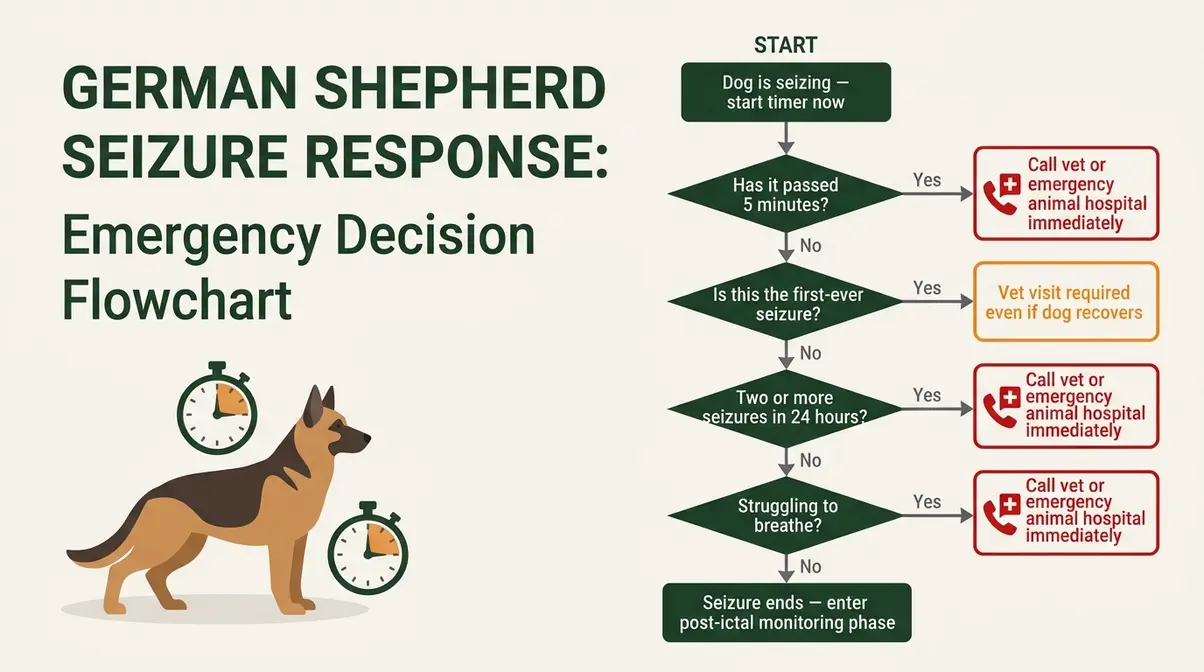
⚠️ This flowchart is a general guide only, always call your vet or emergency animal hospital when in doubt. This content does not replace professional veterinary diagnosis or emergency care.
Once the seizure ends, your dog enters the post-ictal phase, a recovery period that can look alarming but is usually normal.
What Happens After: The Post-Ictal Recovery Phase
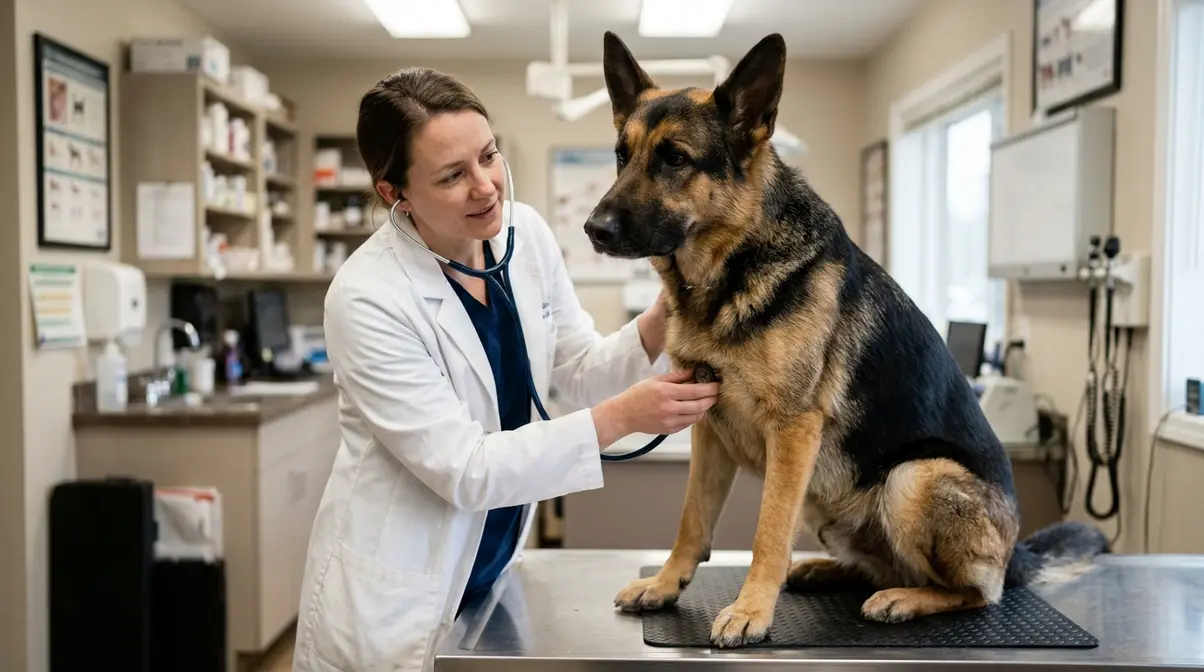
The brain typically begins recovering from a seizure within minutes of the episode ending, but full recovery can take several hours. Can a dog have a seizure and be okay? Yes, many brief seizures resolve without lasting harm, and dogs often return to normal behavior after a rest period. However, a first-ever seizure still warrants an emergency vet visit even if your dog seems fully recovered afterward.
The post-ictal phase looks like this: your dog may seem blind, stumble into walls, pace without purpose, drink water frantically, or simply collapse in exhaustion. A GSD that appears blind and stumbles for 30 minutes after a grand mal is experiencing post-ictal recovery, not a second seizure. This is normal and not a reason to panic, though it is deeply unsettling to watch.
Contact your vet even after the seizure ends if your dog doesn’t regain consciousness, struggles to breathe, or remains severely disoriented for more than a few hours, according to MedVet emergency guidance. These signs suggest the seizure may have been more serious than it appeared, or that a second episode is possible.
Keep the room dim and quiet during the post-ictal phase. Don’t offer food or water until your dog is fully alert. Sit nearby and speak softly, your presence is calming even if your dog can’t fully register it yet.
Knowing what a seizure looks like, and what it isn’t, helps you describe the episode accurately to your vet.
How Do You Know If Your German Shepherd Is Having a Seizure?
German Shepherd seizures can look very different depending on the type, from full-body convulsions (the grand mal that owners describe as “fits”) to subtle jaw movements or blank staring (focal seizures). Owners often describe these episodes using their own terms: “fits,” “chewing gum fit,” “petit mal.” Knowing the difference helps you describe the episode accurately to your vet, which is the first step in the Observe-Time-Act Protocol, observe means knowing what you’re actually looking at.
Focal seizures in dogs can appear as subtle signs, fly-biting, blank staring, or localized twitching, and are often mistaken for behavioral quirks, according to WebMD Pets. This distinction matters: focal seizures can progress to generalized seizures, and owners who miss them may underreport the full picture to their vet.
Generalized Seizures (Grand Mal): What They Look Like
A generalized seizure, the “grand mal” that most owners picture, involves the whole brain and typically causes loss of consciousness, muscle rigidity, paddling of all four legs, jaw chomping, drooling, and loss of bladder or bowel control. The clinical term is “generalized tonic-clonic seizure.” Both names are correct; use whichever your vet uses.
Duration is typically one to three minutes. Anything over five minutes is a medical emergency, as described above. According to MedVet emergency guidance, generalized seizures are the most recognizable type and the most likely to prompt an owner to seek emergency care.
Think of Wally, the two-year-old white GSD from the introduction. A grand mal episode for a dog like Wally would involve full-body convulsions, loss of consciousness, and a 20-to-30-minute post-ictal recovery. Frightening to witness, but often not the emergency it appears, provided it ends within five minutes and doesn’t cluster.
Not all seizures look this dramatic, focal seizures can be easy to miss.
Focal Seizures (Petit Mal-Type): The Subtle Signs
Focal seizures, sometimes called “petit mal” by owners, though the clinical term is different, involve only part of the brain. Signs include fly-biting at the air, blank staring, localized twitching of one limb or the face, or sudden, unexplained behavioral changes like fear or aggression. These are the “fits” that owners sometimes dismiss as quirks.
Why they matter: focal seizures can progress to generalized seizures, and they’re often missed or attributed to behavioral issues. Many dogs with focal seizures go undiagnosed for months. According to WebMD Pets, focal seizure signs in dogs are frequently subtle enough to be overlooked without a careful eye.
A note on the term “petit mal”: in human medicine, this refers to absence seizures, brief lapses in consciousness. In dogs, the term is used loosely by owners to describe any mild episode. Tell your vet exactly what you saw rather than using a label. “My dog was staring blankly and snapping at the air for about 30 seconds” is far more useful than “he had a petit mal.”
One type of focal seizure has a name you may have seen in GSD forums: the “chewing gum fit.”
What Is a “Chewing Gum Fit” in Dogs?
“Chewing gum fit” is an informal owner term for a seizure, the name describes the jaw movements seen in some focal or generalized episodes. It’s not a separate seizure type. It describes a symptom: jaw clacking, chomping, fly-biting, drooling, or repetitive chewing motions that can appear in both focal and generalized seizures.
If you see these signs, apply the Observe-Time-Act Protocol: time the episode, record a short video from a safe distance if it’s safe to do so, and call your vet. According to MedVet emergency guidance, focal seizure signs including jaw movements are a genuine seizure presentation and should be reported to a vet, not dismissed as a behavioral quirk.
Your vet will classify the seizure type based on the full clinical picture, including your description and any video you recorded. “Chewing gum fit” tells your vet the symptom; the workup tells them the cause.
Some episodes that look like seizures aren’t, here’s how to tell the difference.
What Can Be Mistaken for Seizures in Dogs?
Several conditions can look like German shepherd seizures symptoms, which is exactly why a vet should evaluate any episode you witnessed. Recording a video is the most useful thing you can do before the appointment.
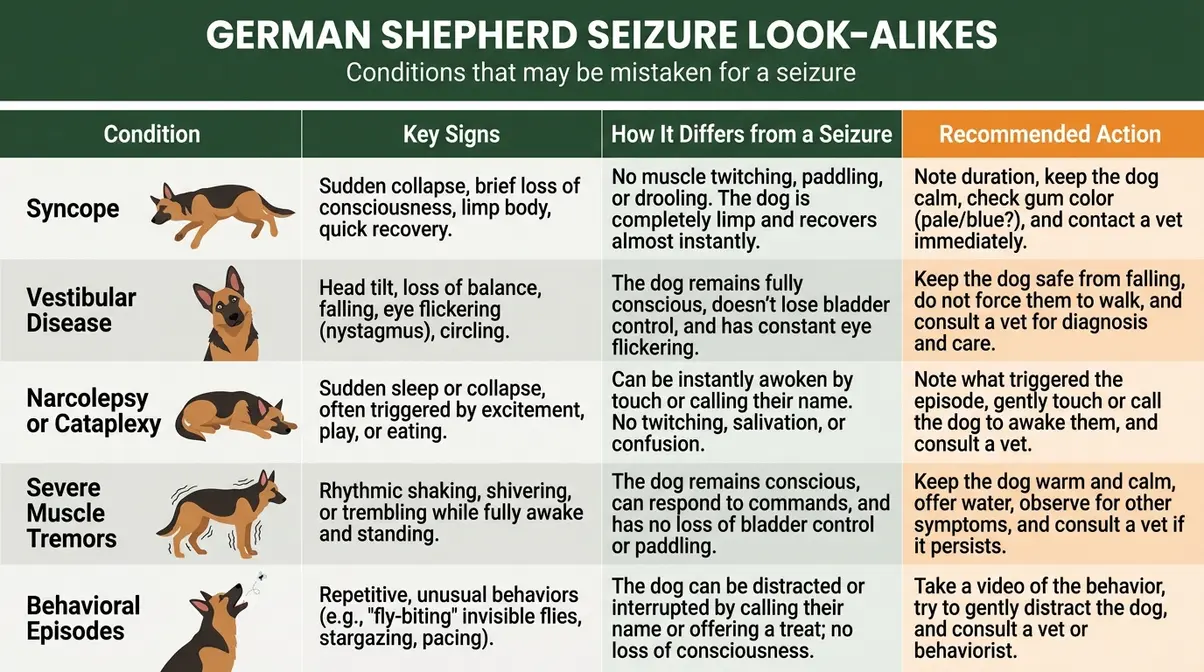
⚠️ This table is for educational purposes only. A veterinarian should evaluate any episode that looks like a seizure.
The table below summarizes the key conditions that can be mistaken for seizures, along with how to tell them apart:
| Condition | Key Signs | How It Differs from a Seizure | Action |
|---|---|---|---|
| Syncope (fainting) | Sudden collapse, rapid recovery | No paddling or jaw movements; dog stays conscious or recovers almost immediately | Contact vet; may indicate cardiac issue |
| Vestibular disease | Head tilt, rolling, loss of balance | Dog stays conscious; no convulsions or jaw chomping | Vet evaluation; often resolves on its own |
| Narcolepsy/cataplexy | Sudden muscle weakness or collapse, often triggered by excitement | Dog remains conscious; no involuntary muscle movements | Vet evaluation for underlying cause |
| Severe muscle tremors | Shaking without loss of consciousness | Dog is aware of surroundings; no paddling or post-ictal phase | Contact vet; may indicate toxin or metabolic issue |
| Behavioral episodes | Fly-biting, repetitive behaviors | No loss of consciousness; behavior can be interrupted | Video the episode; describe to vet |
According to WebMD Pets, conditions that can be mistaken for seizures include syncope, vestibular disease, narcolepsy/cataplexy, severe muscle tremors, and behavioral episodes.
Focal seizures are the most likely to be mistaken for behavioral quirks, blank staring, fly-biting, or localized twitching can look identical to an attention-seeking behavior. Describe exactly what you saw (date, time, duration, recovery) rather than a label, and bring that video.
Compiled from Cornell University College of Veterinary Medicine and MedVet guidance.
Once you know what you’re dealing with, the next question is: why is it happening?
Why Do German Shepherds Get Seizures?
German Shepherd seizures have three main cause categories: idiopathic (inherited), structural (brain abnormalities), and reactive (triggered by something in the body or environment). German Shepherds have a documented higher prevalence of idiopathic epilepsy than many breeds, a genetic predisposition that owners of this breed should know about. Identifying the cause requires vet testing: blood work, urinalysis, and sometimes MRI. The “Act” step of the Observe-Time-Act Protocol continues here, knowing the cause category determines the right long-term response.
A key reassurance for worried owners: reactive causes (toxins, low blood sugar, organ disease) are sometimes treatable and even curable when the underlying problem is addressed. Idiopathic epilepsy requires long-term management. Separating the three categories reduces panic and sets realistic expectations before the vet appointment.
Are German Shepherds Prone to Seizures?
Yes, German Shepherds are among the dog breeds with a documented higher prevalence of idiopathic epilepsy, according to a genome-wide study of idiopathic epilepsy in dog breeds published in PubMed Central. Idiopathic epilepsy is an inherited seizure disorder where the brain produces abnormal electrical activity without an identifiable structural or metabolic cause.
The IVETF review of genetic epilepsy in purebred dogs (International Veterinary Epilepsy Task Force) similarly documents the breed-specific nature of idiopathic epilepsy across several breeds, including those genetically related to the German Shepherd. Epilepsy is the most common long-term neurological disorder in dogs, and idiopathic epilepsy accounts for the majority of cases in predisposed breeds.
Being “prone” doesn’t mean every GSD will develop seizures. It means the breed carries a higher genetic risk than average, and owners should know the signs. Idiopathic epilepsy in German Shepherds typically first appears in young to middle-aged adults. Veterinary guidance generally places onset between approximately 1 and 6 years of age, though this range should be confirmed against your vet’s clinical assessment for your individual dog, as some sources cite a narrower window. A GSD that has its first seizure well outside this range, particularly a very young puppy or a senior dog, is more likely to have a structural or reactive cause.
A genetic predisposition is not a death sentence. Many German Shepherds with idiopathic epilepsy live full, active, and happy lives with appropriate veterinary management.
Beyond genetics, three distinct cause categories explain why any individual GSD might have seizures.
The Three Cause Categories: Idiopathic, Structural, and Reactive
Idiopathic epilepsy is the most common cause of seizures in German Shepherds. Idiopathic epilepsy is an inherited condition characterized by recurrent seizures without an identifiable structural or metabolic cause, the diagnosis is made by exclusion, after ruling out everything else. Onset typically occurs in young to middle-aged adult dogs.
Structural causes involve a physical problem in the brain itself: tumors, inflammation (encephalitis), head trauma, or hydrocephalus. These are identified via MRI. Structural causes are more common in older dogs or dogs showing other neurological signs alongside seizures.
Reactive causes are systemic problems that trigger seizures: low blood sugar (hypoglycemia), liver or kidney disease, electrolyte imbalances, or toxin exposure. These are the first things ruled out through blood work and urinalysis, and importantly, they’re often treatable or reversible when the underlying cause is addressed.
According to the Cornell Riney Canine Health Center, this three-category classification guides the diagnostic workup: reactive causes first (blood work), structural causes second (MRI), and idiopathic epilepsy confirmed when both are excluded.
A practical example: a 2-year-old GSD with recurring seizures and no other clinical signs points toward idiopathic epilepsy. A 10-year-old GSD with a first-ever seizure points toward structural or reactive causes, the vet will prioritize MRI and metabolic testing.
The table below compares all three cause categories at a glance:
| Cause Type | Description | Typical Onset | Diagnostic Test | Reversible? |
|---|---|---|---|---|
| Idiopathic epilepsy | Inherited; recurrent seizures with no identifiable structural or metabolic cause | Young to middle-aged adults (approx. 1-6 years) | Diagnosis by exclusion (after ruling out structural and reactive causes) | No, requires long-term management |
| Structural | Brain tumor, encephalitis, head trauma, hydrocephalus | Any age; more common in older dogs | MRI | Depends on cause and severity |
| Reactive | Toxin exposure, low blood sugar, liver/kidney disease, electrolyte imbalance | Any age | Blood work, urinalysis | Often yes, treat the underlying cause |
⚠️ This table is for educational reference only. Your vet will determine which cause applies to your dog through diagnostic testing.
German Shepherds face one additional breed-specific risk that owners, and vets, should know about.
The MDR1 Gene: A German Shepherd-Specific Risk
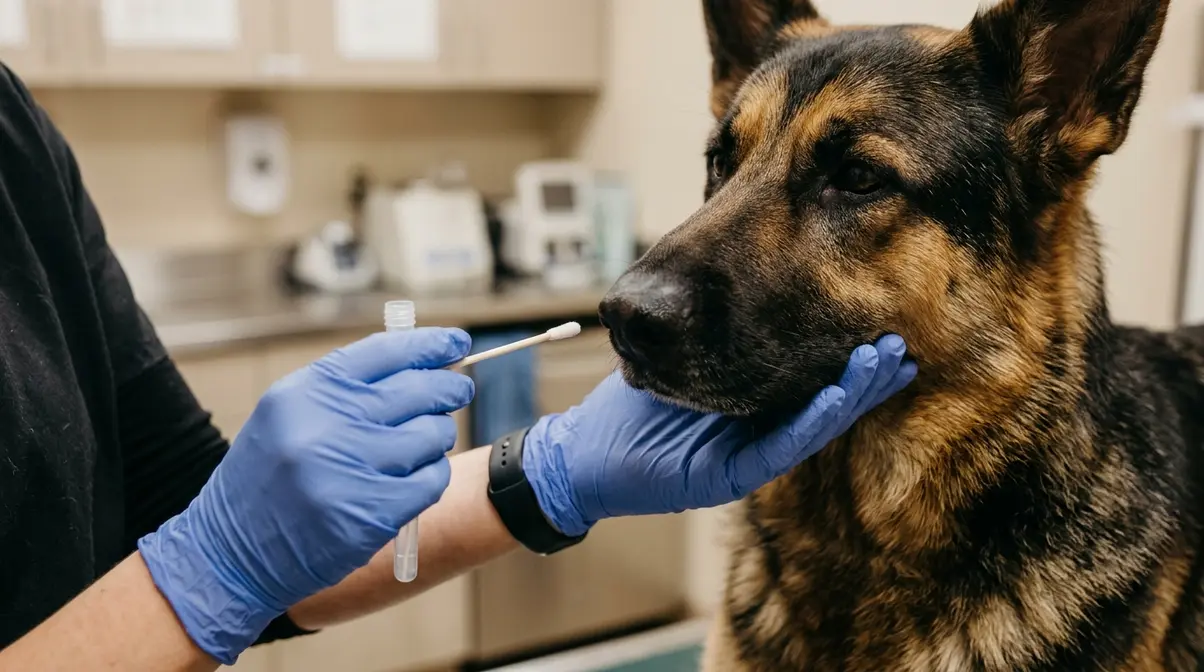
The MDR1 gene (also called ABCB1) affects how some dogs metabolize certain drugs. Dogs with the MDR1 mutation can have severe or even life-threatening reactions to drugs that are safe in other breeds. The mutation affects the P-glycoprotein pump that normally prevents drugs from crossing the blood-brain barrier, without it, some medications accumulate to toxic levels in the brain.
This is directly relevant to seizure treatment in German Shepherds. Some medications used in neurological workups or as anti-seizure drugs may be affected by MDR1 status. Specific drug interactions should be confirmed with your vet against current veterinary pharmacology guidance. We do not name specific drugs here to avoid outdated or context-specific recommendations. According to the ACVIM consensus statement on seizure management in dogs, drug selection in canine seizure management involves careful consideration of the individual dog’s profile, including breed-specific factors that may influence how medications are processed.
Ask your vet about MDR1 testing before starting any new medication. Testing is available through veterinary genetics labs and requires a simple cheek swab. Not all German Shepherds carry the MDR1 mutation, testing tells you your dog’s specific status and allows your vet to make safer drug choices.
Alongside genetics, certain triggers can set off a seizure even in a dog that hasn’t had one before.
What Triggers Seizures in German Shepherds?
No single trigger applies to every dog. Reactive seizures can be set off by toxin exposure, severe low blood sugar, liver or kidney disease, or electrolyte imbalances, according to MedVet emergency guidance. For idiopathic epilepsy, there may be no identifiable external trigger, the seizures arise from the brain’s own electrical activity.
Common trigger categories for reactive seizures:
- Toxin exposure, certain foods and household substances can trigger reactive seizures. Foods that are toxic to German Shepherds include substances like chocolate, caffeine, xylitol, and grapes. Confirm specific food triggers with your vet or a pet poison hotline, and see our guide to foods that are toxic to German Shepherds for a fuller breakdown of dietary hazards.
- Metabolic imbalances, low blood sugar (particularly in puppies), liver disease, kidney disease, or electrolyte abnormalities
- Head trauma, physical injury to the brain can trigger seizures as a structural consequence
- Severe infections, certain infections affecting the brain or nervous system
Why Does My German Shepherd Keep Having Seizures?
Repeated seizures in a German Shepherd most often point to idiopathic epilepsy, an inherited condition documented in the breed. However, structural causes such as brain tumors or inflammation, and reactive causes such as low blood sugar, liver or kidney disease, electrolyte imbalances, or toxin exposure can also produce recurring episodes. Your vet needs blood work, urinalysis, and sometimes MRI to identify which cause applies to your dog. For the question “What is the biggest trigger for seizures in dogs?”, there is no single answer. Toxin exposure is the most immediately actionable (remove the toxin, contact the vet), while idiopathic epilepsy produces seizures without consistent external triggers.
Keeping a seizure diary, recording date, time, length, suspected trigger, and recovery time, helps your vet spot patterns over multiple episodes. The diary template appears in the management section below.
Understanding the cause is the foundation for everything that comes next, diagnosis, treatment, and long-term management.
Does Your German Shepherd’s Age Change the Risk?
A first seizure in a German Shepherd under 5 years old is more likely to be idiopathic epilepsy, while a first seizure in a dog over 7 years old warrants investigation for structural or reactive causes, according to guidance from the Cornell Riney Canine Health Center. Age doesn’t change the emergency response, the Observe-Time-Act Protocol applies regardless, but it changes the questions your vet will prioritize.
This framing is more useful than a generic “all ages can have seizures” statement: age shifts the probability of cause, which shapes the diagnostic approach and sets realistic expectations for the owner before the appointment.
Seizures in German Shepherd Puppies
Seizures in young German Shepherd puppies, particularly those under 6 months old, are less likely to be idiopathic epilepsy and more likely to be reactive. Low blood sugar (hypoglycemia), toxin ingestion, infections, or congenital problems are the first causes a vet will investigate, according to the Cornell Riney Canine Health Center.
Idiopathic epilepsy typically first appears in young adult to middle-aged dogs. A seizure in a very young puppy is a red flag for an underlying reactive or congenital cause that needs urgent attention, don’t wait to see if it happens again.
Before the vet visit, note whether the puppy has eaten anything unusual, had recent vaccinations or medications, or shown any other signs of illness. These details help your vet narrow the cause quickly.
A practical scenario: a 3-month-old GSD puppy seizes after getting into the trash. Toxin ingestion is the first thing to rule out. Contact your vet immediately and bring any packaging from what the puppy may have eaten.
- Questions to ask your vet:
- Has the puppy eaten anything unusual or gotten into a household product?
- Could this be related to a recent vaccination or medication?
- Are there signs of infection or a congenital problem?
At the other end of the age spectrum, a first seizure in a senior GSD raises a different set of questions.
Seizures in Senior German Shepherds
A first seizure in an old German Shepherd dog, particularly one over 7 years of age, is more likely to have a structural cause (brain tumor, inflammation) or a reactive cause (organ disease, metabolic imbalance) than idiopathic epilepsy. This is a red flag for an underlying condition that needs prompt diagnosis, not watchful waiting.
Idiopathic epilepsy typically first appears in younger dogs. When a senior GSD has a new-onset seizure, the vet will prioritize blood work and urinalysis to rule out metabolic causes, and may recommend MRI if those tests are normal, according to the Cornell Riney Canine Health Center.
A practical scenario: a 9-year-old GSD has its first-ever seizure. The vet runs blood work and urinalysis; if those are normal, an MRI follows to look for structural causes. The prognosis depends entirely on what the testing finds.
- Questions to ask your vet:
- Are there any other neurological signs, head tilt, circling, behavior changes?
- Has there been any change in appetite, thirst, or urination?
- Is MRI recommended at this stage, or do we start with blood work?
A reassuring note: recurring seizures in a senior dog managed with medication can still allow a good quality of life. The prognosis depends on the underlying cause, and that’s exactly what the workup is designed to find.
Whatever your dog’s age, the next step after a seizure is the same: a vet workup to find the cause and build a management plan.
What Happens After the Seizure: Diagnosis and Long-Term Care
German Shepherd seizure diagnosis and long-term management begins with a structured vet workup. After the acute crisis, the Observe-Time-Act Protocol shifts from emergency response to ongoing care. Your vet will work through blood work, urinalysis, and if needed, MRI, before building a management plan. Many dogs on anti-seizure medication live active, full lives, in a clinical study of 32 dogs given levetiracetam as a third-line drug, 27 were treated successfully and the drug was well tolerated with infrequent adverse effects, according to the ACVIM 2015 consensus statement on seizure management in dogs.
A common fear among owners: that starting anti-seizure medication means their dog will be sedated, diminished, or “drugged” for life. The evidence doesn’t support that fear. Many dogs on anti-seizure medication live active, full lives, the goal is seizure control, not sedation.
What Your Vet Will Do: The Diagnostic Workup
The first appointment after a seizure typically starts with blood work and urinalysis. These tests rule out reactive causes, liver disease, kidney disease, low blood sugar, and electrolyte imbalances. Reactive causes are investigated first because they’re often treatable, and because treating an underlying metabolic problem can stop the seizures without long-term medication.
If blood work and urinalysis come back normal and seizures continue, your vet may recommend an MRI. MRI identifies structural causes: brain tumors, inflammation (encephalitis), or hydrocephalus. Not every dog needs an MRI immediately, your vet will guide the sequence based on your dog’s age, seizure pattern, and clinical signs. According to the Cornell Riney Canine Health Center, the diagnostic workup for canine seizures follows this stepwise approach.
Idiopathic epilepsy is a diagnosis of exclusion, there is no single test that confirms it. The diagnosis is made when structural and reactive causes have been ruled out.
Bring this question list to your first appointment:
- When did the seizures start, and how many have there been?
- How long did each seizure last?
- What did the seizure look like, generalized or focal?
- Has anything changed in the dog’s environment, diet, or routine?
- Is there a family history of seizures?
- Should we test for the MDR1 gene mutation before starting any medication?
A practical scenario: a 2-year-old GSD with two grand mal seizures in a month. The vet starts with blood work and urinalysis; if normal, discusses whether to start medication or monitor for a third episode.
If the workup points to idiopathic epilepsy, your vet may recommend starting anti-seizure medication.
Anti-Seizure Medications: What to Know
Vets typically recommend starting anti-seizure medication when seizures are frequent (more than one per month), severe, or when the diagnosis is confirmed idiopathic epilepsy. Your vet makes this decision based on your dog’s full clinical picture, there is no universal rule.
Common anti-seizure medications used in dogs (names only, no dosing; all medication decisions belong to your vet):
- Phenobarbital, one of the most established anti-seizure drugs in veterinary medicine, widely used as a first-line agent in canine epilepsy management
- Levetiracetam, increasingly used as both a first-line and add-on agent; in a clinical study of 32 dogs, 27 were treated successfully with levetiracetam as a third-line drug and the medication was well tolerated with infrequent adverse effects, according to the ACVIM consensus statement on seizure management in dogs
- Potassium bromide, often used in combination with phenobarbital
- Zonisamide, used as an alternative or add-on agent in some cases, per the ACVIM consensus statement on seizure management in dogs
Never stop or skip anti-seizure medication abruptly. This can trigger a dangerous rebound seizure or status epilepticus, a life-threatening emergency. If you think the medication isn’t working or is causing side effects, call your vet. Don’t adjust doses on your own.
MDR1 reminder: if your GSD hasn’t been tested for the MDR1 gene mutation, ask your vet before starting any new medication. The mutation affects how some drugs are processed in the brain.
⚠️ This table is for informational purposes only. Never start, stop, or adjust anti-seizure medication without veterinary guidance.
Between vet visits, the most useful thing you can do is keep a seizure diary.
Keeping a Seizure Diary and Monitoring Your Dog

A seizure diary helps your vet spot patterns, assess whether medication is working, and identify potential triggers. It’s also one of the most practical things you can do between appointments, turning passive worry into useful action.
Record the following after every episode:
- Date and time of the seizure
- Duration, start a timer the moment it begins
- Seizure type, generalized (full body) or focal (localized)
- Suspected trigger, stress, food, activity, weather change, or none apparent
- Recovery time and post-ictal signs (disorientation, blindness, exhaustion)
- Any medication given and the time it was administered
A short video from a safe distance is the most useful supplement to the diary, it shows your vet exactly what happened in a way that words can’t fully capture. According to MedVet monitoring guidance, seizure diary records and video documentation are among the most valuable tools owners bring to follow-up appointments.
Call your vet between scheduled appointments if seizure frequency increases, if a seizure lasts longer than usual, or if post-ictal recovery takes noticeably longer than previous episodes.
One question owners often ask is whether diet plays a role in seizure control.
Can Diet Affect German Shepherd Seizures?
No specific food has been shown in veterinary guidance to stop or prevent German shepherd seizures. Seizure control starts with identifying the cause through vet testing and, when needed, daily anti-seizure medication. This is the honest answer, and it matters, because owners searching for dietary solutions may delay appropriate treatment.
Food does matter in one specific way: certain foods and toxins can trigger reactive seizures. Chocolate, caffeine, xylitol, and grapes are examples of substances that are toxic to dogs and can precipitate a reactive seizure in a dog that ingests them. Avoiding known toxins is important, but this is toxin avoidance, not seizure treatment.
A 2020 study (Molina et al.) explored diet and seizure frequency in dogs. This study should be interpreted with caution: it was a non-blinded trial, and the authors had affiliations with Nestlé Purina. This affiliation is noted here in the interest of transparency, the evidence base for diet as a primary seizure treatment in dogs remains limited.
Talk to your vet before making any changes to your dog’s diet. Never stop prescribed medication to try a dietary approach, according to MedVet dietary guidance. Dietary changes may be appropriate as a complement to medication in specific cases, but that decision belongs to your vet.
For some owners, the hardest conversation isn’t about medication, it’s about quality of life.
When Seizures Become a Quality-of-Life Question
German Shepherd seizure management sometimes raises quality-of-life questions that go beyond medication. When seizures are uncontrolled despite treatment, or when an underlying cause is progressive, owners face difficult decisions best made with veterinary guidance. According to MedVet treatment guidance, treatment decisions depend on cause, frequency, severity, and response to management, there is no universal threshold.
This is the hardest section to write and the hardest to read. If you’re here, you’re probably not just worried, you’re grieving a little, too. That’s a completely reasonable response to watching your dog suffer. These questions deserve a direct, honest answer.
Do I Have to Put My Dog Down If He Has Seizures?
Not necessarily. The decision depends on the underlying cause, how frequent and severe the seizures are, and your dog’s overall quality of life, and it should never be made alone. Many dogs with idiopathic epilepsy live full, active lives with daily anti-seizure medication. The goal of treatment is seizure control, not cure, and for many dogs that goal is achievable.
The question becomes harder when seizures are uncontrolled despite medication, when the underlying cause is a progressive condition such as a brain tumor, or when the dog’s quality of life is significantly impaired between episodes, not just during them. In those situations, euthanasia may be a compassionate option. But this is a decision to make with your vet, who can assess your dog’s full picture and guide you through quality-of-life evaluation tools.
According to MedVet treatment guidance, treatment decisions for dogs with seizures depend on cause, frequency, severity, and response to management, there is no universal threshold. We cannot make this decision for you, and no responsible guide should try. Ask your vet directly: “What would you watch for that would tell you the quality of life has declined beyond what medication can address?”
The related question, how long can a dog with seizures live, has a similarly nuanced answer.
What Is the Life Expectancy of Dogs with Seizures?
No single figure fits every dog. Life expectancy depends on the underlying cause, the severity and frequency of seizures, and how well they respond to management.
Dogs with well-controlled idiopathic epilepsy can live normal lifespans. Dogs with structural causes, such as brain tumors, may have a shorter prognosis that depends on the tumor type and location. Reactive causes that are treated successfully may resolve entirely, with no ongoing seizure risk.
No Tier 1-2 veterinary source provides a single life-expectancy figure that applies across cause categories. Stating a number without that support would be misleading, and potentially harmful. According to the Cornell Riney Canine Health Center, prognosis for canine seizures is cause-specific and should be discussed with your vet after diagnostic testing.
Ask your vet for a cause-specific prognosis once the workup is complete. That conversation will be far more useful than any general figure.
Frequently Asked Questions About German Shepherd Seizures
What Is the Life Expectancy of Dogs with Seizures?
No single figure applies to every dog. Life expectancy with seizures depends entirely on the underlying cause, idiopathic epilepsy, structural brain disease, or a reactive cause like organ disease. Dogs with well-controlled idiopathic epilepsy often live normal lifespans. Dogs with structural causes may have a shorter outlook. Your vet can only give a cause-specific prognosis after diagnostic testing such as blood work and MRI.
How Long Does It Take for the Brain to Recover After a Seizure?
After the seizure ends, your dog enters the post-ictal phase, a recovery period that can last from a few minutes to several hours. During this time, expect disorientation, temporary blindness, pacing, stumbling, or unusual exhaustion. This is normal and not a second seizure. Contact your vet immediately if your dog doesn’t regain consciousness, doesn’t recover within a few hours, or struggles to breathe.
What Is a “Chewing Gum Fit” in Dogs?
“Chewing gum fit” is an informal owner term for a seizure, the name describes the jaw movements seen in some episodes. Focal seizures can show up as jaw clacking, fly-biting, or repetitive chewing motions, while generalized seizures may include chomping and drooling. It’s not a separate seizure type, it describes a symptom. If you see these signs, time the episode, record a short video if safe, and call your vet.
Why Does My German Shepherd Keep Having Seizures?
Repeated German Shepherd seizures are often linked to idiopathic epilepsy, an inherited condition documented in the breed. Other causes include structural problems such as brain tumors or inflammation, and reactive causes such as low blood sugar, liver or kidney disease, electrolyte imbalances, or toxin exposure. Your vet needs blood work, urinalysis, and sometimes MRI to identify which cause applies to your dog.
Do I Have to Put My Dog Down If He Has Seizures?
Not necessarily. The decision depends on the underlying cause, how frequent and severe the seizures are, and your dog’s quality of life, and it should be made together with your veterinarian. Many dogs with idiopathic epilepsy live full, active lives with daily anti-seizure medication. Once medication is started, never stop or skip doses abruptly. Your vet is the right person to guide this decision.
What Is the Biggest Trigger for Seizures in Dogs?
No single trigger applies to every dog. Reactive seizures can be set off by toxin exposure, severe low blood sugar, liver or kidney disease, or electrolyte imbalances. Idiopathic epilepsy produces recurrent seizures without a consistent external trigger, they arise from the brain’s electrical activity. Keeping a seizure diary with date, time, duration, suspected trigger, and recovery time helps your vet spot patterns over time.
Can a Dog Have a Seizure and Be Okay?
Yes, many dog seizures are brief, lasting one to three minutes, and dogs often recover fully after a post-ictal rest period. However, a first-ever seizure still warrants an emergency vet visit even if your dog seems fine afterward. Go immediately if a seizure lasts over five minutes, seizures come back-to-back, or your dog struggles to breathe. Brief doesn’t always mean safe.
What Can Be Mistaken for Seizures in Dogs?
Several conditions can look like seizures in dogs, which is why a vet should evaluate any episode you witnessed. Focal seizures in particular can appear as subtle signs: fly-biting, blank staring, or localized twitching that looks like a behavioral quirk. Recording a short video from a safe distance gives your vet the clearest picture. Describe exactly what happened, date, time, duration, and recovery, rather than a label.
What Household Items Cause Seizures in Dogs?
Common household toxins that can trigger reactive seizures in dogs include chocolate, caffeine, xylitol (found in sugar-free gum and some peanut butters), grapes, and raisins. Certain medications, cleaning products, and pesticides can also be dangerous. If you suspect your German Shepherd ate something harmful, contact your vet or the ASPCA Animal Poison Control Center immediately and tell them what was eaten and when.
What Calms Seizures in Dogs?
Stay calm and speak softly, your dog can sense your anxiety. Clear sharp objects, stairs, and furniture away, and slide a blanket under the head if your dog is on a hard floor. Never put your hands near the mouth. Dim the lights, keep the room quiet, and time the seizure. Call your vet if it passes five minutes. Vets may prescribe rescue medication for dogs with frequent or prolonged episodes.
Why Is My Dog Having Seizures Out of Nowhere?
Seizures can seem sudden, but a pre-ictal warning phase, restlessness, anxiety, hiding, or whining, may come minutes to hours before the physical event. Underlying causes include idiopathic epilepsy, structural brain problems such as tumors or head trauma, and reactive causes such as low blood sugar, organ disease, or toxins. A first-ever seizure needs a vet visit even if your dog recovers quickly and seems completely normal afterward.
What Foods Stop Seizures in Dogs?
No specific food has been shown in veterinary guidance to stop seizures in dogs. Control usually starts with identifying the cause through vet testing and, when needed, daily anti-seizure medication such as phenobarbital, levetiracetam, or potassium bromide. Certain foods and toxins can trigger reactive seizures, avoiding known toxins matters. Talk to your vet before changing your dog’s diet, and never stop prescribed medication to try a dietary approach.
Are German Shepherds Prone to Seizures?
Yes, German Shepherds are among the dog breeds with a documented higher prevalence of idiopathic epilepsy, an inherited seizure disorder. This doesn’t mean every GSD will have seizures, but the breed carries a higher genetic risk than average. Idiopathic epilepsy typically first appears in young to middle-aged adults. Many German Shepherds with epilepsy live full, active lives with appropriate veterinary management and medication.
What to Do Next: A Calm Path Forward
For German Shepherd owners, seizures are frightening but manageable. Most german shepherd seizures last one to three minutes, and dogs often recover fully, a finding consistent with MedVet’s emergency guidance and supported by the broader veterinary literature. The Observe-Time-Act Protocol gives you a clear framework for the moment it happens: observe safely (don’t touch the mouth, move hazards), time the episode (start a timer immediately), and act on the emergency thresholds (call the vet if the seizure passes 5 minutes, clusters back-to-back, is your dog’s first-ever episode, or if breathing is affected).
The three steps won’t stop a seizure, but they’ll keep your dog safer, give your vet the information they need, and give you something to do when panic wants to take over. That’s not a small thing, it’s the difference between a controlled response and a frightening blur that leaves you with nothing useful to report.
If your German Shepherd has had a seizure, book a vet appointment this week, even if they seem fully recovered. Bring your seizure diary, a video if you have one, and the question list from this guide. Your vet can’t build the right management plan without the full picture, and you deserve answers, not just reassurance.
 German Shepherd Guard Training: 4-Phase Safety Plan